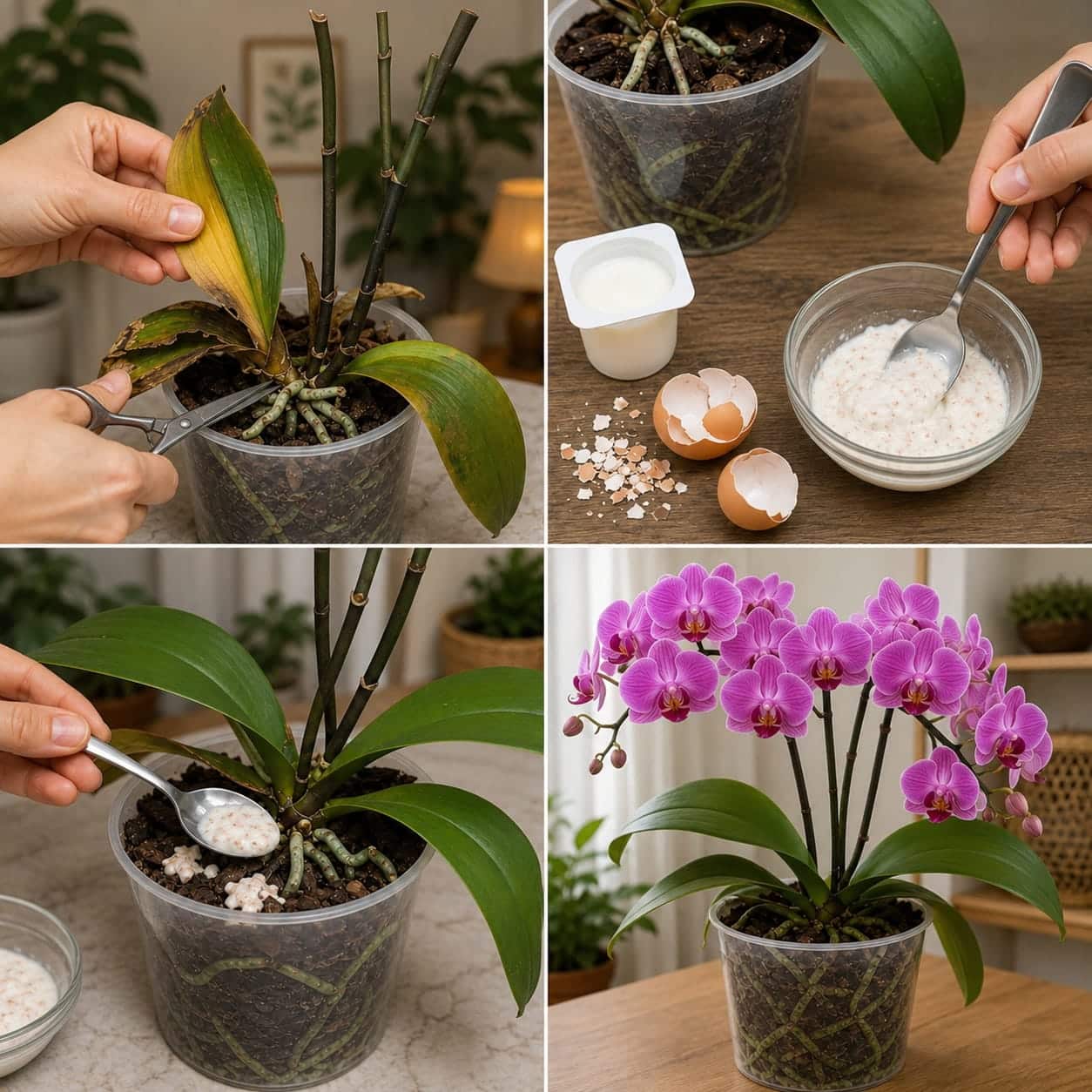
Best Pot for Orchids
The orchid in the image is in a clear plastic pot. This is excellent because it allows you to see the roots and moisture level. Clear orchid pots are useful for beginners because orchid roots change color depending on moisture. Using the right orchid pot with drainage prevents overwatering.
Healthy orchid roots usually look:
- Green when wet
- Silvery when dry
- Firm and plump
Unhealthy orchid roots may look:
- Brown
- Black
- Mushy
- Hollow
- Slimy
Always check the roots before feeding.
When Not to Use Yogurt and Eggshell Tonic
Do not use this trick if the orchid is already suffering from rot or pest problems. Avoid these situations for safe organic orchid care.
Avoid the mixture if:
- The orchid has root rot
- The crown is soft
- The bark smells sour
- The potting mix stays wet too long
- Fungus gnats are present
- The orchid was recently repotted
- The plant is not actively growing
- The room is cold
- The orchid is in dense moss
- You already used fertilizer recently
A weak orchid needs root recovery before any homemade tonic.
How to Rescue an Orchid With Root Rot
If the orchid has yellow leaves and bad roots, do not apply yogurt. Fix the roots first. This rescue method is a must-know orchid care technique.
- Remove the orchid from the pot.
- Shake away old bark.
- Cut off mushy or hollow roots with clean scissors.
- Keep firm green or silver roots.
- Let cuts dry briefly.
- Repot into fresh orchid bark.
- Water lightly after repotting.
- Keep in bright indirect light.
Wait several weeks before using any tonic or fertilizer.
How to Water Orchids Correctly
Most Phalaenopsis orchids should be watered when the roots turn silvery and the potting mix is mostly dry. Do not water on a strict schedule without checking the roots. Proper watering is the number one orchid bloom secret.
Watering Steps
- Take the orchid to a sink.
- Run room-temperature water through the bark.
- Let the pot drain fully.
- Do not let water sit in the crown.
- Return the orchid to its decorative pot only after draining.
Never let an orchid sit in standing water.
Best Light for Orchid Blooms
Orchids need bright indirect light to bloom well. Too little light is one of the biggest reasons Phalaenopsis orchids produce leaves but no flowers. Providing optimal light for indoor orchids is essential.
Best light conditions:
- East-facing window
- Bright filtered light
- Near a south or west window with sheer curtain
- Grow light support in dark rooms
Leaves should be medium green. Very dark green leaves may mean low light. Yellow scorched patches may mean too much direct sun.
How to Encourage Orchid Reblooming
After an orchid finishes blooming, it needs a rest and recovery period. To encourage reblooming, follow these professional orchid reblooming strategies:
- Give bright indirect light
- Use proper orchid fertilizer at low strength
- Allow roots to dry slightly between waterings
- Keep good airflow
- Remove dead spikes
- Provide a slight nighttime temperature drop
- Keep the plant stable and stress-free
Homemade tonics can support the plant, but light and root health are the real bloom triggers.
Can You Use Yogurt as Orchid Fertilizer?
Yogurt is not a complete orchid fertilizer. It may provide mild microbial support and small amounts of nutrients, but it does not replace a balanced orchid fertilizer. For best orchid feeding schedule, stick with products made for orchids.
A proper orchid fertilizer provides nutrients in a form orchids can use more reliably. If you use yogurt, use it only as an occasional supplement, not the main feeding routine.
Better Regular Fertilizer Routine for Orchids
For regular care, use a balanced orchid fertilizer diluted to quarter strength. This is the top recommended orchid nutrition plan.
A simple routine:
- Feed every 2 to 4 weeks during active growth
- Use quarter-strength orchid fertilizer
- Water with plain water between feedings
- Flush the pot monthly to remove buildup
- Reduce feeding during winter or rest periods
Do not combine yogurt tonic and commercial fertilizer on the same day.
What If the Yogurt Mixture Smells Bad?
If the pot smells sour after using yogurt, remove the top layer of bark and flush the pot with clean water. If the smell remains, repot the orchid in fresh bark. Acting fast protects your orchid investment.
Fix Steps
- Remove visible yogurt residue.
- Take out contaminated bark pieces.
- Flush the pot with clean water.
- Let it drain completely.
- Improve airflow.
- Repot if smell continues.
A sour smell means the mixture is breaking down badly.
Can Yogurt Attract Fungus Gnats?
Yes. Fungus gnats are attracted to moist organic material. A thick yogurt mixture on damp bark can create a perfect place for pests. Avoid this by following pest-free orchid care tips.
To prevent gnats:
- Use only a tiny amount
- Dilute heavily
- Keep the bark from staying wet too long
- Remove residue after a few days if needed
- Improve airflow
- Avoid using yogurt in cool rooms
Can Eggshells Attract Pests?
Clean dry eggshell powder usually does not attract pests. Eggshells with egg residue can attract insects and smell bad. Always rinse and dry shells completely before use.
Orchid Care Table
| Care Factor | Best Method | Why It Matters |
|---|---|---|
| Light | Bright indirect light | Supports reblooming |
| Watering | When roots turn silvery | Prevents root rot |
| Potting mix | Loose orchid bark | Allows root airflow |
| Pot | Clear pot with drainage | Helps monitor roots |
| Fertilizer | Quarter-strength orchid feed | Supports steady growth |
| Eggshell tonic | Very mild and occasional | Adds gentle calcium support |
| Yogurt tonic | Highly diluted, tiny amount | Avoids spoilage and pests |
Simple Yogurt and Eggshell Orchid Recipe
Ingredients
- 1 teaspoon plain unsweetened yogurt
- 1 cup water
- ¼ teaspoon fine clean eggshell powder
Instructions
- Mix yogurt into water until very thin.
- Add fine eggshell powder.
- Stir well.
- Use only 1 to 2 teaspoons on the bark surface.
- Keep away from the crown and leaf bases.
- Let the pot drain fully.
- Use only once every 2 to 3 months during active growth.
Safer Eggshell Tea Recipe
Ingredients
- 2 clean dried eggshells
- 1 liter water
Instructions
- Crush the clean dry shells.
- Steep them in hot water overnight.
- Strain completely.
- Let the liquid cool.
- Apply lightly to orchid bark after normal watering.
- Use rarely during active growth.
Common Mistakes to Avoid
- Using thick yogurt paste
- Applying yogurt to the orchid crown
- Coating roots with dairy mixture
- Using sweetened or flavored yogurt
- Using dirty eggshells
- Applying the tonic too often
- Using it on rotten roots
- Using it in cold rooms
- Ignoring yellow leaves and root rot
- Expecting instant blooms
Signs the Trick Is Helping
Orchids recover slowly. You will not see overnight flowers from a homemade tonic. Look for root and leaf improvements first. These are positive indicators of orchid health.
Good signs include:
- New green root tips
- Firm healthy leaves
- No sour smell
- No mold on bark
- New leaf growth
- Stable crown
- Fresh flower spike later in the season
Signs You Should Stop
Stop using the mixture if you notice:
- Sour smell
- White mold on bark
- Fungus gnats
- Sticky residue
- Yellowing leaves after application
- Mushy roots
- Crown softness
- Bark staying wet too long
Flush the pot and repot if needed.
Short Caption for This Trick
“For orchids, use the yogurt and eggshell trick only as a tiny diluted calcium tonic. Mix 1 teaspoon plain yogurt with 1 cup water and ¼ teaspoon fine clean eggshell powder. Apply only 1 to 2 teaspoons to the bark surface, keep it away from the crown, and use rarely during active growth.”
Frequently Asked Questions
Is yogurt good for orchids?
Yogurt can be used only in a very diluted form and in tiny amounts. Thick yogurt can spoil, attract pests, and damage orchid roots.
Are eggshells good for orchids?
Clean eggshells can provide mild calcium support, but they break down slowly and do not replace orchid fertilizer.
Can yogurt and eggshell make orchids bloom?
Not directly. The mixture may support plant health, but orchid blooms depend on light, roots, watering, temperature, and proper care.
How often should I use this orchid trick?
Use it rarely, about once every 2 to 3 months during active growth. Stop if there is smell, mold, or pests.
Can I put yogurt directly on orchid roots?
No. Do not coat orchid roots with yogurt. Apply a tiny diluted amount to the bark surface only.
Can I use flavored yogurt?
No. Use only plain unsweetened yogurt. Flavored yogurt contains sugar and additives that can attract pests.
What is better than yogurt for orchids?
A balanced orchid fertilizer diluted to quarter strength is more reliable for regular feeding. Eggshell tea is safer than thick yogurt mixtures.
Why are my orchid leaves turning yellow?
Yellow leaves can come from old age, overwatering, root rot, low light, sunburn, nutrient stress, or crown problems. Check the roots first.
Should I cut yellow orchid leaves?
Cut fully yellow or rotten leaves with clean scissors. Do not remove firm partly green leaves unless they are diseased.
Can orchids grow in regular soil?
No. Most Phalaenopsis orchids need loose orchid bark or a special orchid mix, not dense potting soil.
Final Thoughts
The yogurt and eggshell orchid trick is a visually appealing homemade plant care method, but orchids need a careful approach. The image shows damaged leaves being trimmed, a creamy mixture being prepared, the tonic being applied near the roots, and a final orchid full of beautiful pink blooms. The safe interpretation is a very diluted yogurt and eggshell calcium tonic used as an occasional supplement. For premium orchid bloom results, always prioritize root health and light.
For real orchid care, thick yogurt should never be poured heavily into the pot. It can spoil, smell sour, attract fungus gnats, grow mold, and suffocate roots. Orchids need air around their roots, clean bark, proper drainage, and bright indirect light. If roots are unhealthy, fix the roots first before using any homemade mixture. These professional orchid growing secrets will save your plants.
The safest version is simple: use plain unsweetened yogurt, dilute it heavily, add only a small amount of clean eggshell powder, and apply just 1 to 2 teaspoons to the bark surface. Keep it away from the crown, leaves, and flower spikes. Use it only during active growth and only rarely. This is one of the best natural orchid bloom boosters when done correctly.
For many orchid owners, eggshell tea is the better option because it gives mild calcium support without the risks of dairy spoilage. Combine gentle mineral support with correct orchid watering, bright indirect light, healthy roots, and a proper bark mix, and your orchid will have a much better chance of producing strong leaves, fresh roots, and beautiful long-lasting flowers. Follow this complete orchid care guide for stunning blooms year after year.