Best Soil for a Shaped Snake Plant
A trained snake plant needs fast-draining soil. Heavy potting soil holds too much water and can weaken the roots. Use cactus mix, succulent mix, or a homemade blend with extra drainage.
A simple mix can include:
- 2 parts cactus or succulent soil
- 1 part perlite or pumice
- 1 part orchid bark or coarse sand
This mix allows water to flow through quickly and gives roots oxygen. Strong roots support strong leaves. If the roots are weak, the trained leaves may become soft, limp, or unstable.
Best Pot for a Sculptural Snake Plant
The pot should be stable because shaped leaves can make the plant top-heavy. Terracotta pots are excellent because they are heavy, breathable, and help soil dry faster. Concrete-style pots also look beautiful with modern shaped snake plants.
Make sure the pot has drainage holes. A decorative pot without drainage may look good, but it can cause root rot. If you want to use a decorative outer pot, keep the snake plant in a nursery pot inside it and remove excess water after watering.
The pot should also match the design. A simple pot is usually best because it lets the sculptural plant shape stand out. Too many colors or patterns can distract from the plant’s form.
How to Keep the Shape Over Time
Once the plant is shaped, you need to maintain it. Check ties and clips regularly. As leaves grow or shift, supports may need adjustment. A tie that was loose at first can become tight later.
If a leaf begins to hold its shape naturally, you may gradually loosen or remove some supports. Do not remove everything at once if the leaf still needs guidance. Slowly reducing support helps you see whether the shape will stay.
New leaves may grow straight, which can change the design. You can either train new leaves into the same style or let them grow naturally for contrast. Some of the most beautiful plants combine shaped older leaves with fresh upright growth.
Can You Train New Snake Plant Pups?
Yes, snake plant pups are often the best material for shaping. Pups are young plants that grow from the base of the mother plant. Their leaves are usually smaller and more flexible, making them easier to guide.
You can leave pups attached and shape them as part of the main display, or you can separate them into small pots and create mini sculptural plants. A collection of small trained snake plants can look very stylish on a shelf or table.
To separate pups, remove the plant from the pot, gently divide the pup from the main rhizome with clean tools, and pot it into fresh well-draining soil. Allow it to establish before heavy shaping.
Can You Train Other Plants into Unique Shapes?
Yes, many plants can be trained into unique shapes. Vining plants like pothos, hoya, philodendron, and ivy can be guided around hoops, hearts, trellises, or walls. Climbing plants can be trained on moss poles. Bonsai trees can be shaped with careful pruning and wire. Even some succulents can be arranged into sculptural displays.
Snake plants are special because they are bold and rigid. They do not trail or climb, so shaping them feels more dramatic and unexpected. When a snake plant is trained into loops and spirals, it looks almost impossible, which is why the result attracts so much attention.
If you enjoy this project, you may want to experiment with other plants too. Plant training opens a whole new world of creative indoor gardening.
Common Mistakes to Avoid
Forcing the Leaves
The biggest mistake is bending leaves too quickly. Snake plant leaves can crack or crease if forced. Always shape slowly and gently.
Using Sharp Wire
Sharp or bare wire can cut into the leaf. Use coated wire, soft ties, or padded clips.
Making Ties Too Tight
Tight ties can leave permanent scars. The support should hold the leaf without squeezing it.
Training an Unhealthy Plant
A weak plant should recover before styling. Do not train plants with root rot, soft leaves, or severe stress.
Overwatering After Training
Shaping does not mean the plant needs extra water. Snake plants still prefer dry-down between waterings.
Expecting Instant Results
Beautiful plant training takes time. A polished spiral or sculptural shape develops gradually.
Signs Your Plant Is Handling Training Well
A snake plant that is handling training well will keep firm leaves, stable color, and healthy growth. The shaped leaves should not become mushy, cracked, or yellow. New growth may continue during the active season.
If the leaf remains firm after a week or two, the curve is probably gentle enough. If it starts to crease, soften, or discolor, loosen the support immediately. The plant is telling you the pressure is too much.
Always listen to the plant. A slightly less dramatic shape is better than a damaged leaf.
Signs You Should Stop Training
Stop or reduce training if you see cracks, folds, soft spots, yellowing, browning, or a leaf beginning to split. Also stop if the plant becomes unstable in the pot or if roots are disturbed by the supports.
If a leaf is badly damaged, you may need to remove it at the base with clean scissors. But do not rush to prune minor cosmetic marks. Sometimes a leaf can continue functioning even with a small crease.
Give the plant time to recover before trying again. Plant styling should be enjoyable, not stressful for the plant.
How to Make the Final Display Look Professional
The final presentation matters. Once your plant has a sculptural shape, style it like a decor piece. Choose a clean pot that complements the plant. Add decorative stones to the soil surface if desired. Place it where the shape can be seen clearly.
A shaped snake plant looks beautiful on a side table, console table, plant stand, windowsill, or office shelf. Give it enough space around it so the loops and curves are visible. Avoid crowding it between too many other plants.
Lighting also affects the display. Bright indirect light from the side can highlight the curves and variegation. A simple background, like a plain wall or window, makes the shape stand out even more.
Why This Trick Feels So Impressive
Training a plant into a unique shape feels impressive because it changes how we see houseplants. Most people think plants can only grow one way. When they see a snake plant shaped into spirals and loops, it looks surprising, almost impossible.
The effect is especially strong because snake plants are known for being straight and sword-like. Turning those stiff leaves into curves creates contrast. It feels like plant design, not just plant care.
This trick is also satisfying because it combines creativity and patience. You are not just buying a decorative object. You are making one with a living plant. That gives the final result more personality and meaning.
Does Training Hurt the Plant?
Training does not have to hurt the plant if it is done gently and gradually. Plants are often guided in gardening, from climbing vines to bonsai trees. The problem comes when shaping is rushed or too forceful.
Snake plant leaves are not as flexible as vines, so they require extra care. The goal is to create a natural curve, not crush the leaf tissue. Using soft supports, wide loops, and slow adjustments keeps the plant safer.
If you are unsure, start with a very mild shape. You can always increase the design later, but you cannot undo a broken leaf.
Can the Plant Grow Normally After Shaping?
Yes, a shaped snake plant can continue growing normally if it remains healthy. New leaves may appear from the base. These leaves will usually grow in their natural upright form unless you train them too.
The plant’s roots and rhizomes continue functioning as long as watering, light, and soil conditions are good. Shaping the leaves does not stop the plant from growing, but rough handling can stress it. That is why careful technique matters.
Over time, your plant may become even more interesting as new leaves combine with the trained older leaves.
Should You Fertilize a Trained Snake Plant?
You can fertilize lightly during the growing season, but do not overfeed. Snake plants are not heavy feeders. Use a diluted cactus or houseplant fertilizer once every one or two months in spring and summer.
Do not fertilize immediately after heavy shaping if the plant seems stressed. Let it rest first. Also avoid fertilizing during winter unless the plant is actively growing under strong light.
Good light and correct watering are more important than fertilizer for a trained snake plant.
How to Water Without Disturbing the Shape
When watering a shaped plant, pour carefully at the soil level. Avoid splashing water into loops, clips, or tight leaf areas. Water trapped between leaves can encourage rot if airflow is poor.
Water until excess drains from the bottom, then empty the saucer. If the pot is heavy or the shape is delicate, use a narrow-spout watering can so you can control the flow.
Do not mist the plant heavily. Snake plants do not need misting, and water sitting on shaped leaves can cause spots or problems.
How to Clean a Shaped Snake Plant
Dust can collect on curved leaves and around supports. Clean the leaves gently with a soft damp cloth. Support each leaf with your hand while wiping so you do not pull against the trained shape.
Clean around clips and ties carefully. If dust builds up under a tie, loosen it and wipe the area. This prevents marks and keeps the display looking fresh.
A clean shaped plant looks much more professional. Because the plant is being used as decor, regular cleaning is worth the effort.
How to Use Plant Training as Home Decor
A trained plant can be styled like a sculpture. Place it where it can be admired from different angles. A simple plant stand can elevate it and make the curves easier to see. A decorative pot can match your interior style.
For a modern room, use a concrete, white, black, or matte ceramic pot. For a natural room, use terracotta, stone, or woven textures. For a luxury look, choose a sleek metallic or glazed ceramic planter.
You can also group the trained snake plant with simpler plants. Let the shaped plant be the star and surround it with plain foliage plants for contrast. This makes the unique shape stand out even more.
Creative Shape Ideas to Try
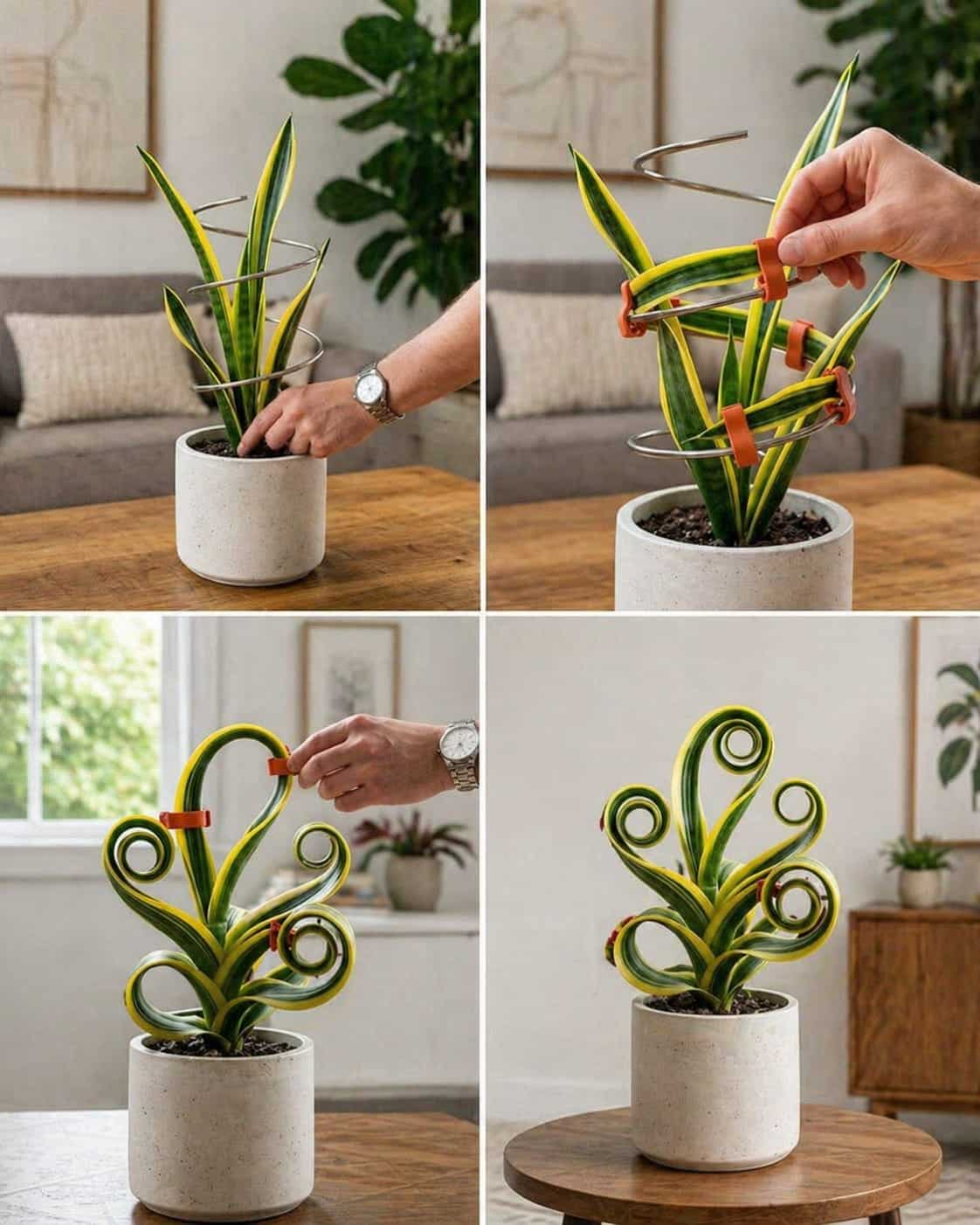
There are many ways to style a snake plant. You can create a single tall spiral in the center, several small loops around the outside, a wave pattern, a fan shape, or a balanced sculptural form with leaves curving in different directions.
Some people train the leaves around circular hoops. Others use metal spiral rods. Some create heart-like loops, while others prefer abstract modern curves. The best design depends on your plant’s size and natural growth.
Start simple. Once you gain confidence, you can try more complex shapes. The most successful designs usually look balanced, airy, and intentional.
Frequently Asked Questions
Can I train any snake plant into unique shapes?
You can train many snake plants to some degree, but younger and more flexible leaves are easier to shape. Mature stiff leaves may only tolerate gentle curves.
How long does it take to shape a snake plant?
A basic curve can be started in one day, but a polished spiral or loop design usually takes weeks or months of gradual training.
Will the leaves break?
They can break if forced too quickly. Use gentle pressure, wide curves, and soft supports to reduce the risk.
What should I use to hold the leaves?
Use soft plant ties, coated wire, gentle clips, or smooth shaping frames. Avoid sharp wire or tight string.
Does shaping stop the plant from growing?
No, a healthy plant can continue growing. New leaves may appear naturally and can be trained later if desired.
Can I remove the supports later?
Sometimes yes. If the leaf begins holding its shape, you can gradually loosen supports. Some designs may need support long-term.
Should I water more after training?
No. Continue normal snake plant watering. Let the soil dry between waterings.
Is this safe for beginners?
Yes, if you start with gentle shapes and do not force the leaves. Beginners should begin with soft curves or large loops rather than tight spirals.
Can I train other houseplants this way?
Many plants can be trained, especially vines and climbing plants. Snake plants require more care because their leaves are thicker and less flexible.
Final Thoughts
Training your plant into unique shapes is one of the most creative ways to make indoor gardening feel fresh and exciting. A snake plant, already known for its bold upright leaves, can become a stunning living sculpture when guided into spirals, loops, waves, or artistic curves. The result is a houseplant that feels custom, modern, and unforgettable.
The most important secret is patience. Do not force the leaves. Do not rush the shape. Use soft ties, gentle supports, and gradual adjustments. Start with a healthy plant, choose flexible leaves, and work with the plant’s natural direction instead of fighting against it.
Once shaped, care for the plant properly. Give it bright indirect light, fast-draining soil, a pot with drainage, and careful watering. Keep the leaves clean and check the supports often. A trained plant should be beautiful, but it should also remain healthy.
This project is perfect for anyone who loves both plants and design. It allows you to create something personal with your own hands. Instead of simply placing a plant in a pot, you are shaping it into a piece of living decor. Whether you create a simple wave or a dramatic spiral, the final result can transform an ordinary corner into a stylish plant display.
With time, care, and imagination, your snake plant can become far more than a low-maintenance houseplant. It can become a living artwork that grows with you.