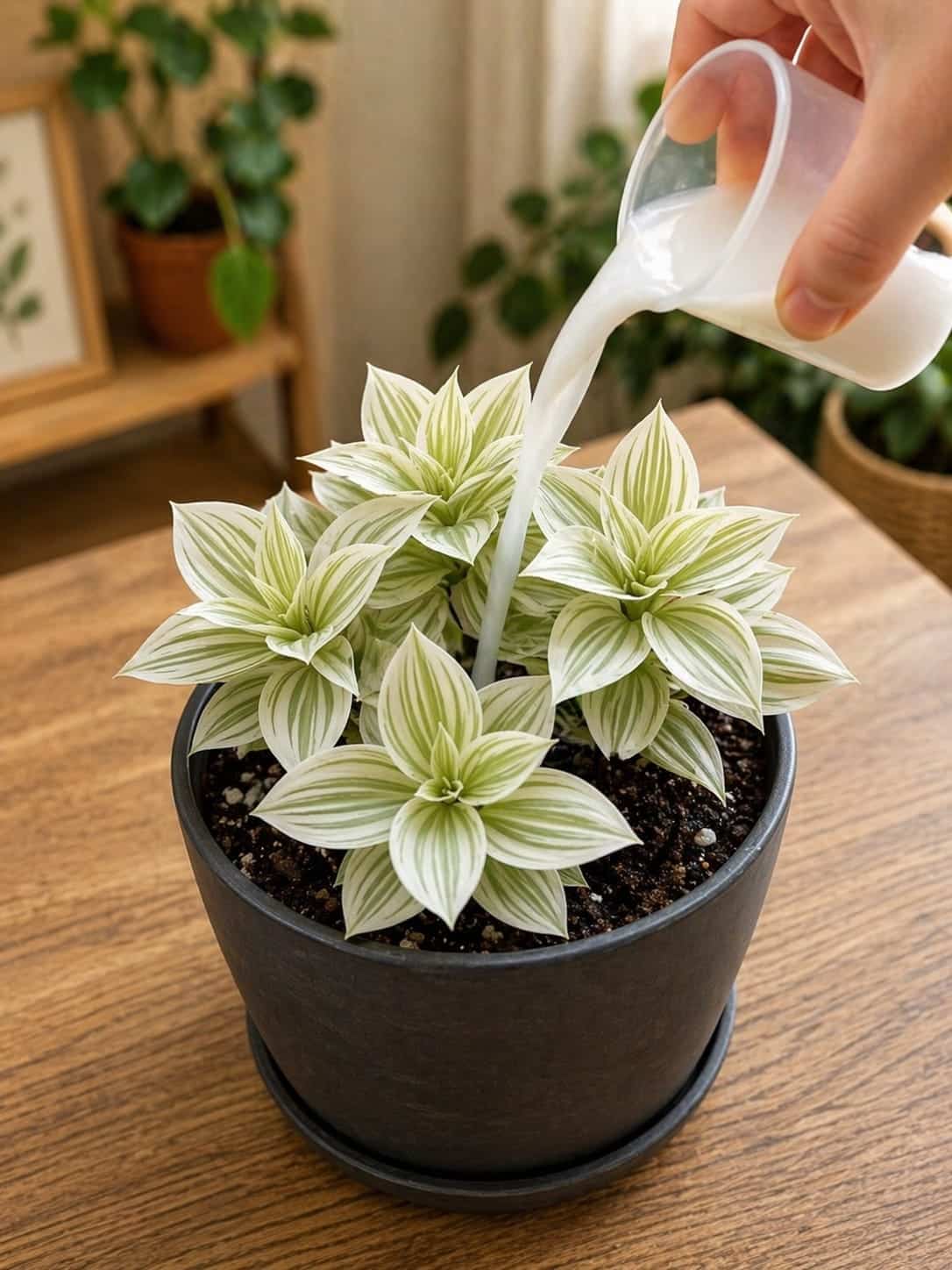
Common Mistake: Chasing Miracle Tricks
A lot of videos show cloudy liquids, milk, powders, or homemade mixtures being poured into the pot. These can look convincing, but blooming is usually not caused by one mystery ingredient. Indoor flowering comes from:
· Better light – the #1 factor.
· Fuller growth – from regular pruning.
· Healthier roots – from proper watering and drainage.
· Light feeding – not overfeeding.
· Consistent care – stability over time.
Save your kitchen ingredients for cooking. For Wandering Jew, the best “trick” is good horticulture.
A Simple Year‑Round Routine for Blooms
Here is a weekly and seasonal plan to keep your Wandering Jew healthy and blooming.
Weekly
· Check soil moisture. Water if top inch is dry.
· Inspect for pests (spider mites, aphids).
· Rotate the pot for even light.
Every 2–3 Weeks (Spring & Summer)
· Pinch back stem tips to encourage branching.
· Fertilize with half‑strength balanced fertilizer.
Monthly
· Wipe leaves with a damp cloth to remove dust.
· Remove any dead or yellow leaves.
· Trim back any leggy stems.
Seasonal
Spring & Summer (Active growth)
· Bright indirect light (10–12 hours).
· Water every 5–7 days (when top inch dries).
· Fertilize once a month.
· Prune regularly for fullness.
· Watch for flower buds at stem tips.
Fall & Winter (Resting period)
· Still bright light, but days are shorter – consider a grow light.
· Water less often (every 10–14 days).
· Stop fertilizing.
· Maintain warmth (avoid cold drafts).
What Do Wandering Jew Flowers Look Like?
When conditions are right, you will see small, delicate flowers with three petals. Colors vary by variety:
· Tradescantia zebrina – Small purple or pink flowers.
· Tradescantia fluminensis – White flowers.
· Tradescantia pallida (Purple Heart) – Pink to purple flowers.
The flowers are not large or showy, but they add a charming, delicate touch to the trailing vines. They typically appear at the tips of healthy stems in spring and summer.
Frequently Asked Questions (Wandering Jew Blooms)
How long does it take for Wandering Jew to bloom indoors?
With ideal conditions (bright light, regular pruning, light feeding), you may see flowers within 2–4 months. Mature plants bloom faster than young cuttings.
Can I force my Wandering Jew to bloom?
You cannot force it, but you can create the conditions that encourage blooming: bright light, compact growth, balanced watering, and light feeding. Do not use “miracle” products.
Why are my leaves losing their purple color?
Too little light. Move the plant closer to a window or add a grow light. The purple and silver colors intensify with good light.
Should I cut off the flowers after they fade?
Yes. Deadheading (removing spent flowers) encourages the plant to produce more blooms. Simply pinch off the faded flower at the base.
Can Wandering Jew bloom in winter?
It is possible if you provide bright light (grow lights) and keep the plant warm. However, most plants naturally bloom in spring and summer.
Is Wandering Jew toxic to pets?
Yes. Tradescantia can cause skin irritation and gastrointestinal upset in cats and dogs. Keep it out of reach.
How do I propagate Wandering Jew for more plants?
Take 3–4 inch stem cuttings, remove the bottom leaves, and place in water or moist soil. Roots form in 1–2 weeks. Propagated cuttings will eventually bloom when mature.
My plant is full and healthy but still no blooms – what else can I do?
Check your fertilizer. Too much nitrogen promotes leaves, not flowers. Switch to a bloom‑booster fertilizer (higher phosphorus, like 10‑20‑10) for a few weeks. Also, ensure you are giving it a period of slightly cooler nights (60–65°F) to simulate natural seasonal changes.
The Joy of Seeing Those First Blooms
There is a special satisfaction when your Wandering Jew finally produces flowers. After weeks of pruning, adjusting light, and careful watering, those tiny purple, pink, or white blossoms feel like a reward. They are proof that you have moved your plant from survival mode to thriving mode.
And once it starts blooming, it will often continue through the growing season, with new flowers appearing at the tips of each new branch.
So do not settle for a plant that just trails. Give it the bright light, regular pinching, and balanced care it needs. Then enjoy the full beauty of Wandering Jew — leaves and flowers alike.
Final Thoughts
If you want your Wandering Jew to bloom indoors, focus on the plant’s overall strength first. Give it brighter light, pinch it back often, water carefully, and feed lightly during active growth. Once it is full, healthy, and getting enough energy, those small, pretty blooms become much more possible.
Because with this plant, flowers are usually not about one dramatic hack. They are the reward for keeping it bright, compact, and thriving.
So move it closer to that window. Snip those leggy stems. Water when the soil tells you to. And then wait. One morning, you will notice tiny buds at the tips of the vines. A few days later, delicate flowers will open.
That is the magic of good care — and it works every time.
Have you gotten your Wandering Jew to bloom indoors? Share your experience in the comments below. And if you found this guide helpful, save it for later or send it to a friend who wants more than just foliage from their trailing plant.
This article is for informational purposes only. Growing conditions vary. Always observe your plant and adjust care as needed. When in doubt, focus on light, pruning, and proper watering.