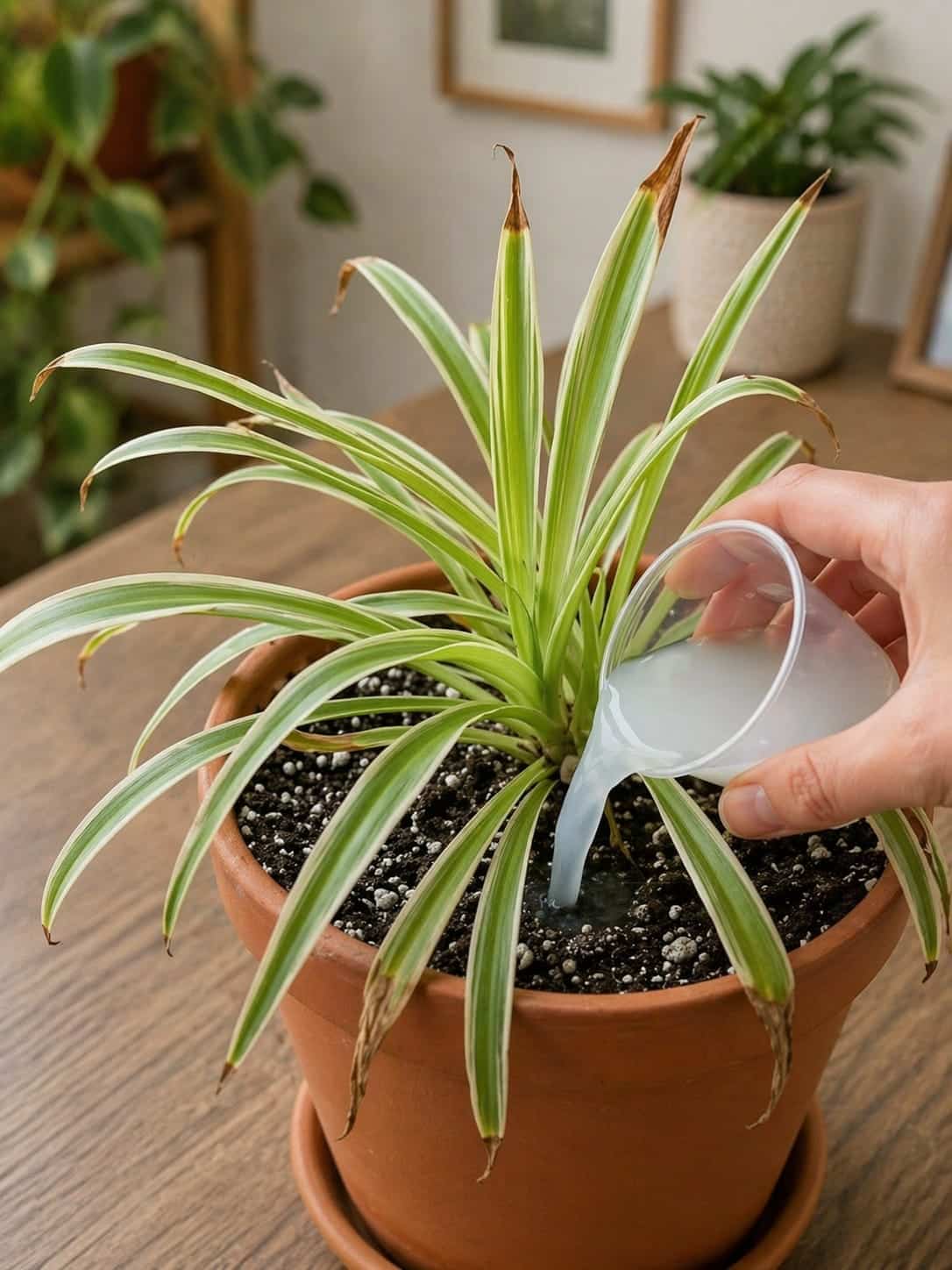
Spider plants are some of the easiest and most rewarding houseplants to grow. They are fast, graceful, and full of personality, especially when they start sending out long arching stems with baby plantlets. But there is one problem almost every spider plant owner runs into sooner or later: brown tips.
The plant may still be alive and growing, but those dry brown ends can make it look stressed, messy, and less healthy than it really is.
The good news is that brown tips are usually not a mystery. In most cases, they are your plant’s way of reacting to a few very common care issues — and once you fix them, new growth often starts looking much better.
In this guide, you will learn exactly why spider plants get brown tips, the simple fixes that actually work, and how to keep your spider plant looking lush, green, and beautiful year‑round.
Why Spider Plants Get Brown Tips (The Real Reasons)
Brown tips usually happen when the plant is under mild stress. The most common causes are:
· Inconsistent watering – Going from bone dry to soaking wet stresses the roots.
· Low humidity – Dry indoor air, especially in winter, causes leaf edges to crisp.
· Fluoride or salts in tap water – Spider plants are sensitive to chemicals in municipal water.
· Too much fertilizer – Salt buildup from overfeeding burns leaf tips.
· Root crowding – A severely root‑bound plant struggles to take up water evenly.
· Strong direct sun – Harsh afternoon sun can scorch leaf tips.
Sometimes it is only one of these. Often it is a combination. That is why random “miracle liquids” do not always solve the problem. The real answer is usually in the plant’s routine.
Let us go through each cause and its solution.
Use Better Water (This Is the #1 Fix)
One of the biggest hidden causes of brown tips on spider plants is tap water quality. Spider plants can be sensitive to:
· Fluoride – Added to many municipal water supplies.
· Chlorine – Also common in tap water.
· Mineral buildup – Calcium, magnesium, and other dissolved solids.
· Salts – From water softeners or old pipes.
If your plant keeps getting crispy tips even though the rest of the care seems fine, water may be the issue.
Better Water Options:
· Filtered water – A simple carbon filter (like Brita) removes chlorine and some minerals.
· Rainwater – Ideal, if you can collect it.
· Distilled water – No minerals, no chemicals. Perfect for sensitive plants.
· Tap water left out overnight – Chlorine evaporates, but fluoride does not. This helps only slightly.
Pro tip: Switch to filtered or distilled water for 4–6 weeks. If new growth comes in without brown tips, your water was the problem. This simple change often makes a noticeable difference over time.
Water More Consistently (Not Too Dry, Not Too Wet)
Spider plants do not want to stay bone dry for too long, but they also do not want soggy roots. If the soil repeatedly swings from very dry to soaking wet, the leaf tips may start browning.
A Better Watering Routine:
· Water when the top inch of soil feels dry – Stick your finger in.
· Water thoroughly – Pour until water runs from the drainage holes.
· Let excess water drain out – Empty the saucer after 15 minutes.
· Do not leave the pot sitting in water – This causes root rot.
How Often to Water:
· Spring & summer (active growth): Every 5–7 days.
· Fall & winter (resting period): Every 10–14 days.
The goal is steady moisture, not extremes. Consistent watering prevents the stress that leads to brown tips.
Do Not Overfertilize (Less Is More)
Too much fertilizer can cause salt buildup in the soil, and that often shows up as brown leaf tips. Spider plants are not heavy feeders. They usually do best with:
· Light feeding – Use a balanced houseplant fertilizer (10‑10‑10) diluted to half strength.
· Only during active growth – Spring and summer.
· Not too often – Once a month is plenty.
Signs You Are Overfertilizing:
· White crust on the soil surface.
· Brown tips that get worse after feeding.
· Leaves turning yellow or brown at the edges.
The fix: Stop fertilizing for 2–3 months. Flush the soil with plain water (run water through the pot for 1–2 minutes) to wash away excess salts. Then resume with a weaker, less frequent schedule.
Raise Humidity a Little (Especially in Winter)
Brown tips can also happen when indoor air is very dry, especially in heated or air‑conditioned rooms. Spider plants are adaptable, but they still appreciate moderate humidity (40–60%).
How to Increase Humidity Without a Humidifier:
· Keep them away from heating vents – Hot, dry air blows directly on leaves.
· Group plants together – They create a microclimate.
· Place them in a naturally more humid room – Bathrooms or kitchens often work.
· Use a pebble tray – Fill a shallow tray with pebbles and water. Place the pot on top (not in the water).
· Lightly mist the leaves in the morning – Not too often; wet leaves can invite fungus.
You do not need a jungle setup. Even a small humidity improvement can help reduce brown tips.
- Check the Light (Not Too Harsh)
Spider plants like bright indirect light. Too much harsh direct sun can stress the leaves and contribute to browning, especially near a hot south or west window.
Ideal Light Conditions:
· East‑facing window – Gentle morning sun.
· North‑facing window – Bright indirect light all day.
· South or west window with a sheer curtain – Diffuses harsh rays.
Signs of Too Much Sun:
· Leaves that are pale, yellow, or bleached.
· Brown, crispy tips and edges.
· Leaves curling or wilting even when soil is moist.
If your spider plant is getting strong midday sun, move it to a brighter filtered spot instead. The right light helps the plant stay strong without scorching the leaf tips.
Continue to Page 2
Continue to page 2 for more details about this article and the key points many readers miss on the first page.