Repot if Roots Are Too Crowded
Spider plants can tolerate being a little snug, but if the pot is extremely root‑bound, the plant may struggle to take up water evenly. This can lead to brown tips, wilting, and slow growth.
Signs It May Need Repotting:
· Roots pushing out of the drainage holes.
· Roots circling densely at the surface.
· Soil drying out extremely fast (within 2–3 days).
· Weak growth and constant browning despite better care.
How to Repot:
- Choose a pot only 1–2 inches larger in diameter.
- Use fresh, well‑draining potting mix (add perlite for drainage).
- Gently loosen the root ball and trim any dead or mushy roots.
- Repot at the same depth as before.
- Water lightly and place in bright indirect light.
A slightly larger pot with fresh soil can give the roots a reset and reduce brown tip stress.
Trim Damaged Tips the Right Way
Brown tips do not turn green again, so it is fine to trim them for appearance. This does not cure the cause, but it makes the plant look much neater while you fix the real issue.
How to Trim:
· Use clean, sharp scissors.
· Follow the natural point of the leaf (cut at an angle).
· Cut just the brown part, leaving a thin margin of green.
· Avoid slicing straight across — that looks unnatural.
Pro tip: If the brown tip is very long, you can cut back into the green part, but leave at least ½ inch of green to avoid stressing the leaf further.
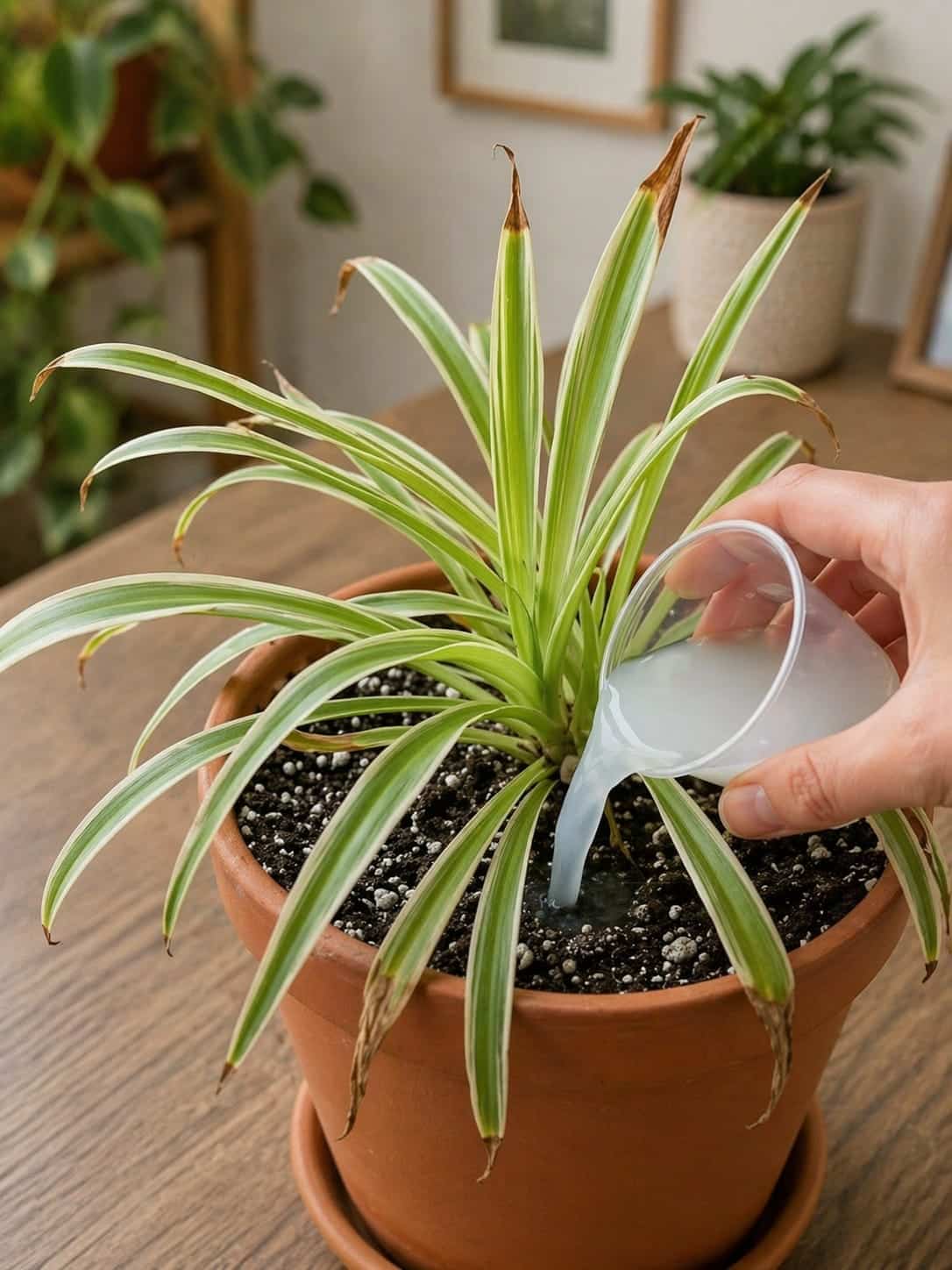
What About Pouring Homemade Liquids into the Pot?
A lot of viral videos show cloudy liquids, milk‑like mixtures, or homemade solutions being poured into the soil as a quick fix for brown tips. Be careful with that.
Spider plants usually respond better to:
· Cleaner water
· Steadier watering
· Less salt buildup
· Proper light
Random homemade mixes can sometimes make the problem worse by:
· Adding residue to the soil
· Increasing odor
· Encouraging fungus or gnats
· Stressing the roots
For brown tips, simpler is usually safer. Stick to the basics before trying any “miracle” remedy.
Signs Your Spider Plant Is Recovering
Once conditions improve, the old brown tips will stay brown, but new growth should start looking:
· Greener – Rich, vibrant color.
· Cleaner – No brown edges or spots.
· Stronger – Leaves feel firm, not limp.
· Less crispy at the edges – Fresh leaves emerge healthy.
That is the real sign that your fix is working. Be patient — it may take 4–6 weeks to see new, healthy growth.
A Simple Spider Plant Care Routine to Prevent Brown Tips
Here is a weekly and seasonal plan that keeps brown tips away.
Weekly
· Check soil moisture. Water if top inch is dry.
· Wipe leaves with a damp cloth to remove dust.
· Rotate the pot for even light.
Monthly
· Flush the soil with plain water to remove salt buildup.
· Trim any brown tips that have appeared.
· Inspect for pests (spider mites, aphids, mealybugs).
Spring & Summer (Active Growth)
· Bright indirect light.
· Water every 5–7 days (when top inch dries).
· Feed once a month with half‑strength balanced fertilizer.
· Maintain moderate humidity.
Fall & Winter (Resting Period)
· Still bright light, but days are shorter — consider a grow light.
· Water less often (every 10–14 days).
· Stop fertilizing.
· Keep away from cold drafts and dry heating vents.
Annually
· Repot every 1–2 years with fresh, well‑draining potting mix.
· Divide if the plant is overcrowded.
· Trim any dead or brown roots.
Frequently Asked Questions (Spider Plant Brown Tips)
Why does my spider plant have brown tips even though I water it correctly?
The most common hidden cause is tap water quality. Try switching to filtered or distilled water for a month. Also check for low humidity, salt buildup from fertilizer, or root crowding.
Can I cut off the brown tips?
Yes. Use clean scissors and cut at an angle following the natural leaf shape. This improves appearance but does not fix the underlying cause.
Is Epsom salt good for spider plant brown tips?
Only if the plant has a magnesium deficiency (yellowing between leaf veins). Epsom salt will not fix brown tips from water quality or humidity. Use 1 teaspoon per gallon of water once a month, if needed.
How do I know if my spider plant is getting too much sun?
Leaves become pale, yellow, or bleached, and brown tips appear on the side facing the window. Move to a spot with bright indirect light.
Can I use coffee grounds to prevent brown tips?
Not recommended. Coffee grounds can compact the soil and acidify it. They do not address the common causes of brown tips. Stick to clean water and proper watering.
Why are the tips brown but the rest of the leaf is healthy?
This is the classic sign of stress from water quality, inconsistent moisture, or low humidity. The plant is still healthy overall, but the leaf edges are the most sensitive part.
How often should I flush the soil?
Once a month. Run room‑temperature water through the pot for 1–2 minutes to wash away excess salts and minerals. Let it drain completely.
Will misting my spider plant prevent brown tips?
Light misting can help in dry conditions, but it is not a substitute for proper watering and water quality. Mist in the morning so leaves dry by evening. Do not mist if your tap water is high in minerals.
The Emotional Reward of a Healthy Spider Plant
Spider plants are forgiving, but they also communicate. Brown tips are their way of saying, “Something is off.” When you listen and adjust — better water, steadier moisture, a little humidity, less fertilizer — they reward you with lush, arching leaves and those charming baby plantlets.
There is a quiet satisfaction in watching a new leaf unfurl, green and crisp, with no brown in sight. It means you figured it out. You gave the plant what it needed.
Final Thoughts
If your spider plant has brown tips, do not panic. It does not usually mean the plant is dying. More often, it is reacting to small but fixable stress. The best way to prevent brown tips is to focus on the basics:
· Use cleaner water – Filtered, distilled, or rainwater.
· Water consistently – When the top inch of soil is dry.
· Avoid overfeeding – Light fertilizer, only in spring and summer.
· Give bright indirect light – No harsh direct sun.
· Keep humidity reasonable – Away from vents, use pebble trays.
· Repot if roots are overcrowded – Give them room to breathe.
Because in most cases, the healthiest spider plants are not getting complicated treatments. They are just getting the simple things right, again and again.
So check your water. Adjust your watering. Flush the soil. Move it away from that hot window. And watch as new growth comes in green, vibrant, and free of brown tips.
Your spider plant will thank you — with arching leaves, cascading babies, and a fresh, healthy look that makes your whole space feel more alive.
Have you struggled with brown tips on your spider plant? Share your experience in the comments below. And if you found this guide helpful, save it for later or send it to a friend who needs a spider plant rescue plan.
This article is for informational purposes only. Growing conditions vary. Always observe your plant and adjust care as needed. When in doubt, start with water quality and consistency.