What Kinds of Plants May Like Coffee Grounds
Some plants appreciate richer organic matter more than others. But even then, moderation matters.
Plants That Generally Tolerate or Enjoy Coffee Grounds (In Moderation):
· Acid‑loving plants – Azaleas, rhododendrons, blueberries, hydrangeas (for blue flowers).
· Vegetables – Tomatoes, carrots, radishes, and root crops benefit from the extra organic matter.
· Houseplants – Peace lilies, African violets, ferns, and philodendrons can handle a light sprinkle mixed into soil.
· Lawns – A thin dusting of used grounds over the grass can add nitrogen.
Plants That May Not Appreciate Coffee Grounds:
· Succulents and cacti – They prefer lean, fast‑draining soil. Coffee grounds retain moisture.
· Orchids – Their bark medium does not mix well with fine, moisture‑holding grounds.
· Geraniums – Some growers report negative reactions.
· Seedlings – The caffeine residue can inhibit germination and root development.
When in doubt, test a small amount on one plant before applying to all.
Can You Make Liquid Fertilizer from Coffee Grounds?
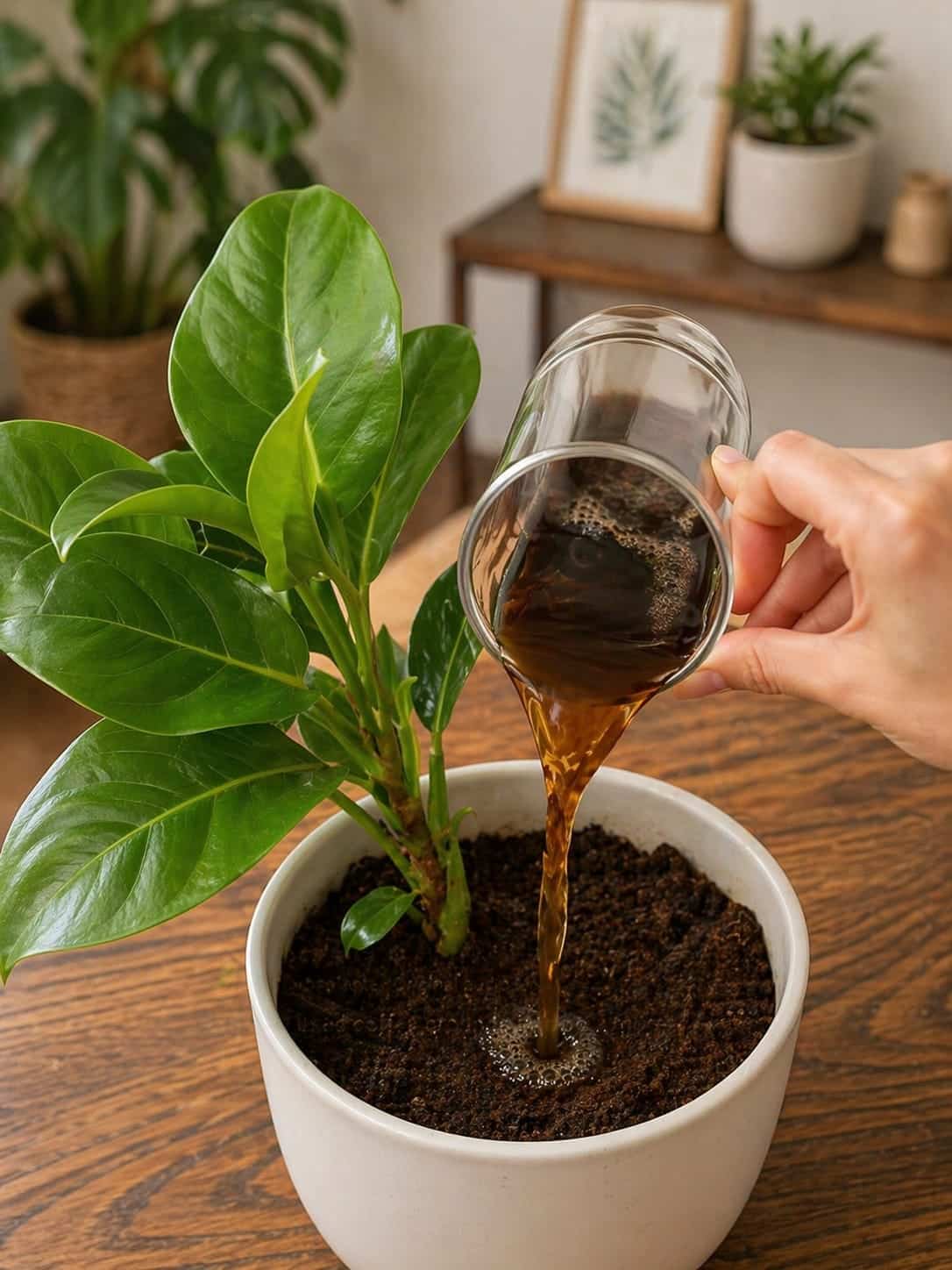
Yes. Some people soak used grounds in water to create a mild coffee‑ground tea for plants. This can sometimes be used as a light homemade soil drench, but it should be weak, well‑strained, and used carefully.
Simple recipe:
· 1 cup used coffee grounds
· 1 gallon water
· Let steep for 24 hours
· Strain through a fine mesh or cheesecloth
· Use to water plants once a month
The risk with stronger mixtures is that they may:
· Leave residue on the soil surface
· Sour quickly if left too long
· Smell unpleasant
· Create imbalance in the pot
If you try this method, it should be light and occasional, not a heavy regular treatment. Do not use it on plants that prefer dry conditions.
Signs You Are Using Too Much Coffee Grounds
If coffee grounds are causing trouble, you may notice:
· Mold on the soil surface – White, green, or fuzzy growth.
· A crusty, compact top layer – Water pools or runs off instead of soaking in.
· Sour, musty smell – Anaerobic decomposition.
· Soil staying wet too long – Reduced drainage.
· Slower growth instead of stronger growth – Roots are stressed.
· Yellowing leaves – Nutrient imbalance or root issues.
These signs mean the plant likely needs a reset, not more grounds. Remove the excess grounds, repot with fresh mix if needed, and return to a lighter application schedule.
A Better Mindset for Using Coffee Waste in Gardening
The smartest way to think about coffee grounds is this: They are not really a miracle fertilizer. They are a reusable organic resource.
That is a much better role for them. They shine when they are composted, blended, diluted, used lightly, and added as support, not as the whole feeding system.
Do Not Rely on Coffee Grounds Alone
Plants need a complete range of nutrients: nitrogen, phosphorus, potassium, calcium, magnesium, sulfur, and trace elements. Coffee grounds provide mostly nitrogen and organic matter. For a balanced feeding, combine them with other amendments like compost, worm castings, or a balanced organic fertilizer.
Coffee Grounds and Soil pH: The Truth
A common myth is that coffee grounds are highly acidic. Used coffee grounds are actually near neutral (pH 6.5–6.8). The acid in coffee is water‑soluble and mostly ends up in your cup, not in the grounds. Fresh, unbrewed grounds are acidic, but used grounds are not.
That means you can safely add used coffee grounds to most garden soils without worrying about dramatically lowering pH. However, if you are trying to acidify soil for blueberries or azaleas, use a specific acidifying fertilizer instead.
Coffee Grounds in Compost: A Perfect Match
If you only take one tip from this guide, let it be this: compost your coffee grounds. Composting transforms them from a potential problem into a stable, rich soil conditioner.
How to Compost Coffee Grounds:
· Add used coffee grounds to your compost bin or pile.
· Mix with “brown” materials like dried leaves, shredded paper, cardboard, or wood chips. Aim for 1 part grounds to 3 parts browns.
· Keep the pile moist but not wet.
· Turn the pile every few weeks.
· In 2–4 months, you will have dark, crumbly compost.
Finished compost is safe for all plants, improves soil structure, and provides a balanced nutrient profile. No risk of mold, compaction, or nitrogen burn.
Frequently Asked Questions (Coffee Grounds as Fertilizer)
Can I put coffee grounds directly on my houseplants?
Yes, but only a very small amount (1–2 teaspoons for a 6‑inch pot), mixed into the topsoil. Do not pile them on the surface. Limit to once every 2–3 months. For most houseplants, composting the grounds first is safer.
Do coffee grounds attract pests?
Fresh used grounds are not particularly attractive to pests, but if left in a thick, wet layer, they can attract fungus gnats. Composting eliminates this risk.
Can I use coffee grounds on my lawn?
Yes. Sprinkle a thin, even layer over the grass and water in. Use about 1 pound per 1,000 square feet. Do not overdo it.
Are coffee grounds good for tomato plants?
Yes, in moderation. Mix a small amount (¼ cup per plant) into the soil around the base, or add them to your compost. Tomatoes appreciate the organic matter and slow‑release nitrogen.
How often should I add coffee grounds to my garden?
If using directly, once every 3–4 months. If composting, you can add grounds daily to your compost pile.
Can I use coffee grounds from a coffee shop?
Yes. Many coffee shops give away used grounds for free. They are already brewed and safe to use. Just be aware that they may be very wet and need to be mixed with dry materials or composted promptly.
Do coffee grounds repel slugs or snails?
Some gardeners claim that a barrier of coffee grounds deters slugs, but the effect is inconsistent. Grounds can become moist and lose their repellent properties. Do not rely on them as a primary pest control.
Can I use coffee grounds on succulents?
Not recommended. Succulents prefer lean, fast‑draining soil. Coffee grounds retain moisture and can lead to rot.
A Simple Coffee Grounds Usage Summary
Method Safety Best For Frequency
Compost Very safe All plants, soil building Ongoing
Mixed into potting soil (small amount) Safe for hardy plants Outdoor containers, vegetable beds Once every 2–3 months
Coffee ground tea Mildly safe Quick nutrient boost for foliage plants Once a month
Thick layer on top Risky Not recommended Avoid
Fresh, unbrewed grounds Unsafe Do not use Never
The Environmental Bonus: Reducing Waste
Beyond plant benefits, reusing coffee grounds is an excellent way to reduce kitchen waste. Coffee grounds are a significant component of household organic waste. By composting or directly applying them to your garden, you keep them out of landfills where they would generate methane, a potent greenhouse gas.
Every pound of coffee grounds diverted from the trash is a small victory for the planet. And when those grounds help your plants grow, the cycle of sustainability continues.
Final Thoughts
Turning used coffee grounds into a plant booster is a great idea when done properly. It is sustainable, satisfying, and a smart way to make kitchen waste more useful. But the real magic comes from using them in moderation and understanding what they are best for.
Used coffee grounds can absolutely become part of a healthier plant routine — especially through composting or light soil enrichment — but the best plant results still come from the basics: good light, balanced watering, healthy roots, and the right growing mix.
Because in the end, the true transformation is not just coffee waste becoming fertilizer. It is waste becoming something that helps life grow again.
So save those grounds. Compost them, brew a weak tea, or sprinkle lightly into your garden beds. Then watch as your plants — and the soil beneath them — become richer, healthier, and more alive.
And tomorrow morning, when you pour that cup of coffee, you will know that what is left behind still has value.
Have you used coffee grounds in your garden? Share your experience in the comments below. And if you found this guide helpful, save it for later or send it to a friend who wants to turn kitchen waste into plant power.
This article is for informational purposes only. Always test any new amendment on a small area first. When in doubt, compost your coffee grounds before applying to sensitive plants.