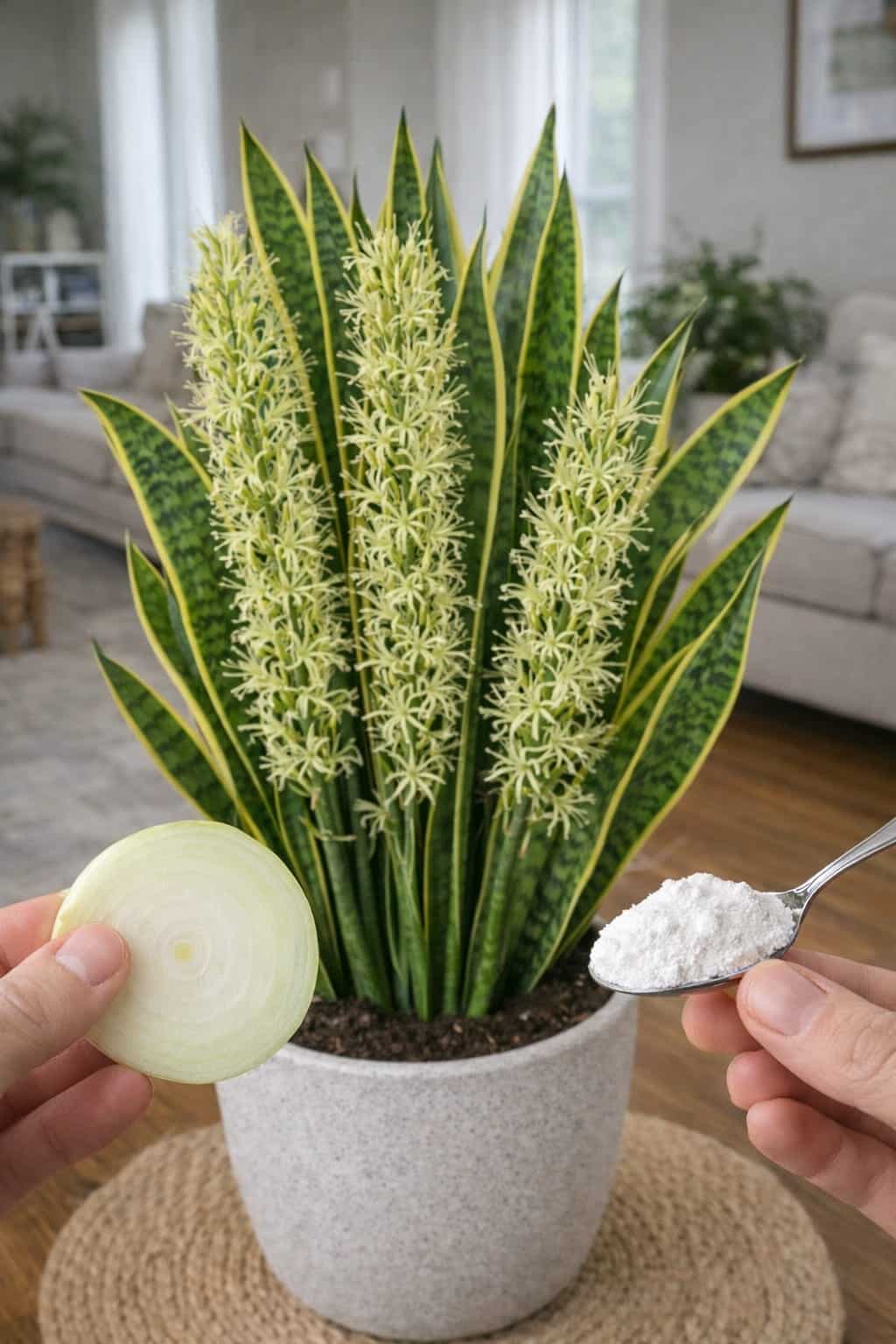
The Real Secret to Getting a Snake Plant to Bloom
If you truly want flowers, focus on these conditions first.
- Bright Indirect Light
Snake plants survive low light, but blooming is much more likely when they get brighter filtered light. A strong bright room makes a big difference. For indoor plant flowering tips, light is always the first thing to check.
- Slight Root Crowding
Snake plants often flower when they are a little snug in the pot. If the roots are too comfortable in a huge container, the plant may focus only on leaf growth.
- Careful Watering
This is one of the biggest factors. Let the soil dry well between waterings. Constantly wet soil weakens the roots and reduces the chance of flowering.
- Stable Conditions
Snake plants respond better when they stay in one place and get a consistent routine. Too much disturbance can slow everything down.
- Maturity
A young plant usually will not bloom. Older, established snake plants are much more likely to surprise you with flower stalks.
How to Make a Safe Homemade Fertilizer for Snake Plants
If you still want to try a two-ingredient approach, do it safely. Here is a simple recipe that uses onion and Epsom salt in a responsible way.
Ingredients
· 1 medium onion (organic if possible)
· 1 teaspoon Epsom salt (pure, no fragrances)
· 1 gallon of filtered water
Instructions
- Chop the onion into small pieces.
- Add to the water and let it sit for 24 hours.
- Strain out the onion solids.
- Stir in the Epsom salt until dissolved.
- Dilute this mixture further: use 1 cup of the tonic per 2 cups of clean water.
How to Apply
Use this homemade fertilizer for snake plants only once every 6–8 weeks. Pour it gently onto the soil, avoiding the center of the plant. Never use it on dry, stressed soil. Water your plant normally the day before.
This mild organic plant booster will not force blooms overnight, but it supports overall health without risking root burn.
Signs Your Snake Plant Is Getting Ready to Bloom
If your plant is moving in the right direction, you may notice:
· very strong upright leaves
· a settled, mature clump
· healthy pups at the base
· a tall central stalk emerging
· small clustered buds forming along that stalk
Once that happens, the plant is doing something rare and special. The flowers are usually white or cream, fragrant at night, and produce sticky nectar.
Common Mistakes That Stop Blooming
If your snake plant never blooms, these may be the reason:
· too little light
· overwatering
· heavy wet soil
· repotting too often
· overfeeding with synthetic fertilizers
· expecting a young plant to flower
· keeping the plant in a drafty or cold spot
All of these can keep the plant in survival or simple growth mode instead of bloom mode.
Can Epsom Salt for Plants Trigger Blooms on Its Own?
Epsom salt is one of the most searched high-value terms in gardening. Many gardeners swear by it. But here is the truth: Epsom salt provides magnesium and sulfur. These are important for chlorophyll and enzyme function. However, a magnesium deficiency is not the main reason snake plants fail to bloom.
If your plant has yellowing lower leaves or slow growth, a small amount of Epsom salt may help. But adding Epsom salt to a healthy plant in low light will not produce flowers. It is a supplement, not a trigger.
Use Epsom salt for plants only when needed, and always in dilution (1 teaspoon per gallon of water).
The Truth About Organic Plant Boosters and Viral Hacks
The internet is full of dramatic claims. “Two ingredients and your plant will explode with flowers!” sounds exciting, but it sells false hope.
Most organic plant boosters work slowly. They improve soil life, add trace nutrients, and support root health. They do not override the basic needs of light, water, and pot size.
A truly effective homemade fertilizer for snake plants will never replace good care. Think of these tonics as a small helper, not a miracle cure.
Step-by-Step Care Routine for Rare Snake Plant Flowers
Here is a month-by-month routine to maximize your chances of seeing blooms.
Spring and Summer (Growing Season)
· Light: Provide bright, indirect light for 10–12 hours daily.
· Water: Water every 2–3 weeks, allowing soil to dry completely.
· Temperature: Keep between 65–85°F (18–29°C).
· Fertilizer: Use a diluted homemade fertilizer once every 6 weeks.
· Airflow: Gentle air movement helps prevent pests.
Fall and Winter (Rest Period)
· Light: Move to a slightly brighter spot if days are short.
· Water: Reduce watering to once a month or less.
· Temperature: Cooler nights (55–65°F / 13–18°C) may encourage blooming.
· No fertilizer during the rest period.
Year-Round
· Do not repot unless roots are cracking the pot.
· Wipe leaves with a damp cloth every few weeks.
· Check for pests like mealybugs or spider mites.
What to Do If Your Snake Plant Finally Blooms
Congratulations! When that tall spike appears, do not change your routine drastically. Here is what to expect:
· The flowers open in the evening and close by morning.
· They release a sweet, jasmine-like fragrance.
· Sticky nectar may drip onto leaves or floor (easy to wipe off).
· Blooms last about 1–2 weeks.
· After blooming, the spike will wither. Cut it off at the base.
Some snake plants produce small berries after flowering, but this is rare indoors.
Frequently Asked Questions (High-Value Search Queries)
How often do snake plants bloom indoors?
Most indoor snake plants bloom every few years at most. Some never bloom. If you get flowers once, you may see them again if conditions remain ideal.
Does onion water really work?
Onion water can provide trace minerals and mild antimicrobial benefits. It does not directly cause blooms. Use it as a supplement, not a primary method.
Is Epsom salt good for snake plants?
Yes, in small amounts. Epsom salt for plants can correct magnesium deficiency. It is not a bloom booster on its own.
Can I use coffee grounds for snake plants?
Coffee grounds are too acidic and dense for snake plants. They can cause mold and root rot. Avoid them.
Why are my snake plant leaves turning yellow?
Overwatering is the most common cause. Check your soil. If it stays wet for more than a week, repot into a drier mix.
How long do snake plant flowers last?
Usually 1 to 2 weeks. The fragrance is strongest at night.
Should I cut the flower stalk after blooming?
Yes. Cut it as close to the base as possible using clean scissors.
Final Thoughts
So, do those two surprising ingredients make a snake plant bloom like never before?
Not on their own.
But if the plant is already healthy, mature, and getting the right care, a gentle homemade boost may support overall vigor and make it more likely to flower eventually.
The real formula is still simple:
· bright indirect light
· dry-down between watering
· airy soil
· a slightly snug pot
· patience
That is what makes a snake plant truly shine.
And when those fragrant flower stalks finally appear, the plant does not just look healthy.
👉 It looks unforgettable.
Have you ever gotten your snake plant to bloom? Share your experience in the comments below. And if you found this guide helpful, save it for later or pass it along to a fellow plant lover.