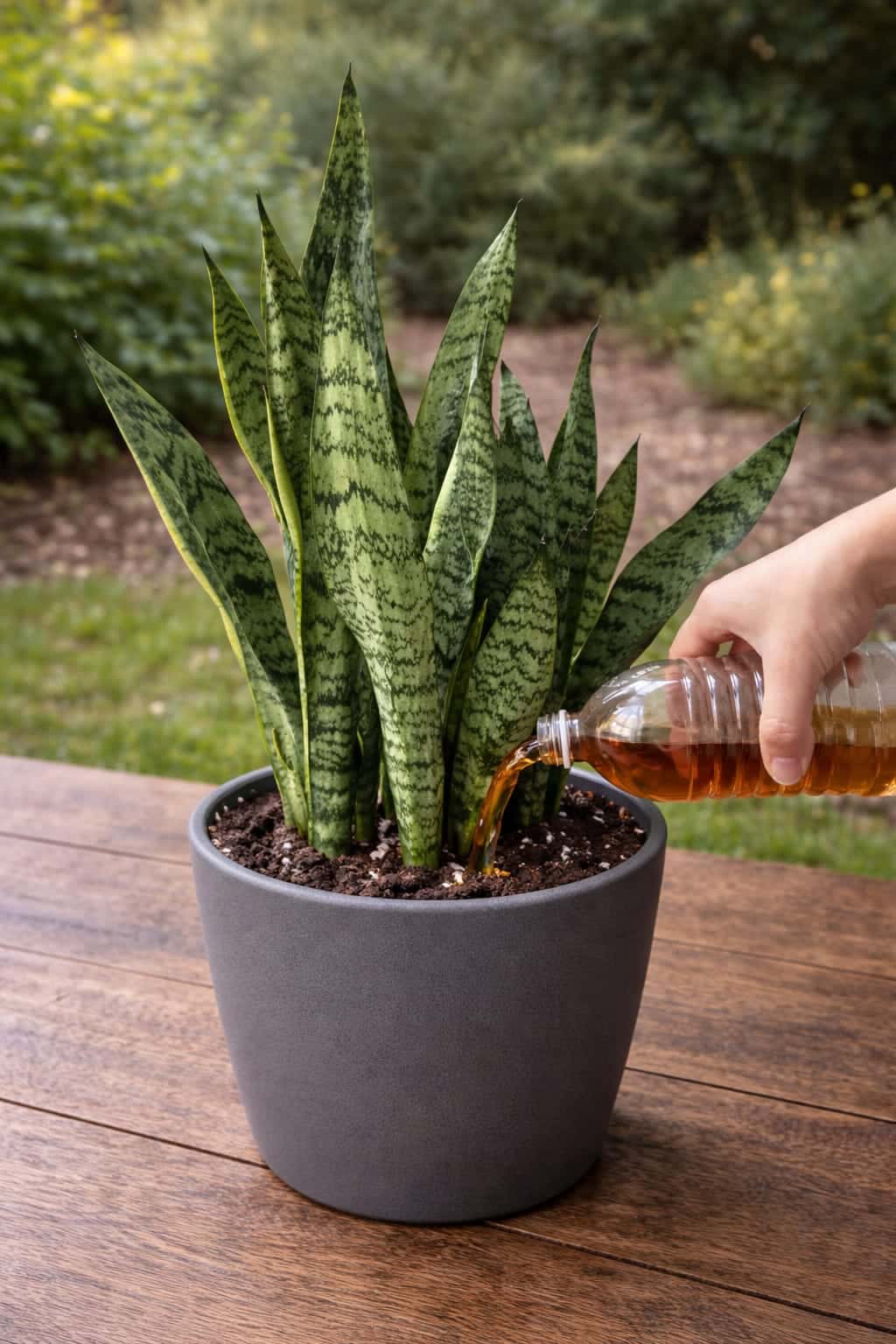
⚠️ Common Snake Plant Care Mistakes
Even with strong plants like snake plants, mistakes can slow growth or damage roots. The natural liquid will not fix these problems.
Common Problems to Avoid:
Mistake Consequence
Overwatering Root rot, soft leaves, yellowing.
Poor drainage Water pools; roots suffocate.
Heavy or compact soil No airflow; roots rot.
Too much fertilizer or liquid Salt buildup, brown tips, root burn.
Very low light Weak growth, pale leaves, no pups.
Snake plants prefer dry, well‑drained conditions. If you fix these basics, the natural liquid can be a small bonus – but it will never fix overwatering or poor drainage.
🌱 Ideal Conditions for Healthy Snake Plants
To get the best results – whether you use a natural liquid or not – focus on these fundamentals.
Factor Ideal Condition Benefit
Light Bright, indirect (east/west window) Encourages steady growth, strong leaves
Soil Fast‑draining mix (cactus soil + perlite) Protects roots and rhizomes
Water Infrequent – let soil dry completely Prevents root rot
Temperature Warm indoor climate (18–30°C / 65–86°F) Stable development
Feeding Light nutrients (occasional, diluted) Supports healthy foliage
With proper care, snake plants can develop new shoots (pups) around the base over time. These are a sign of a healthy, happy plant.
Snake Plant Care Overview – Quick Reference
Factor Ideal Condition Benefit
Light Bright, indirect Encourages steady growth
Soil Fast‑draining mix Protects roots & rhizomes
Water Infrequent (every 2–3 weeks) Prevents root rot
Temperature Warm indoor climate Stable development
Feeding Light nutrients (occasional) Supports healthy foliage
Natural liquid Occasional, diluted (spring/summer) Gentle supplement – optional
Frequently Asked Questions (FAQs)
Q: Why do snake plants grow new shoots (pups)?
They spread through underground rhizomes. Pups are the plant’s natural way of reproducing and filling out the pot.
Q: How often should snake plants be watered?
Every 2–3 weeks depending on light and temperature. Always check that the soil is completely dry before watering.
Q: Can snake plants grow in low light?
Yes, but growth is slower. They survive in low light, but for best health and upright leaves, bright indirect light is better.
Q: Why are leaves soft or mushy?
Usually caused by overwatering. Check soil moisture and roots. If roots are rotten, trim them and repot in dry, well‑draining soil.
Q: Do snake plants need fertilizer?
Only occasionally. Once or twice a year in spring/summer with a diluted balanced fertilizer is plenty. Over‑fertilizing harms them.
Q: Are snake plants beginner‑friendly?
Yes, very easy to grow. They forgive neglect and are perfect for new plant owners.
Q: How long do snake plants live?
They can live for many years – even decades – with proper care. Some are passed down through generations.
Q: Can snake plants grow indoors easily?
Yes, they adapt very well to indoor conditions. They are one of the best houseplants for low‑maintenance living.
Q: Do they produce baby plants?
Yes, pups grow near the base as the rhizomes spread. You can leave them to create a fuller cluster or separate them to propagate new plants.
Q: Are they good for decoration?
Yes, they add a modern, architectural look to any room. Their vertical lines complement minimalist and luxury interiors.
Printable Snake Plant Care Checklist
☐ Place in bright, indirect light (east/west window)
☐ Use a pot with drainage holes (terracotta preferred)
☐ Fill with fast‑draining cactus/succulent soil (add perlite)
☐ Water only when soil is completely dry (check with finger)
☐ Water deeply, then empty saucer
☐ Do not water again for 2–4 weeks (depending on light)
☐ Fertilize lightly once every 4–6 weeks in spring/summer (optional)
☐ Use natural liquid (diluted seaweed or compost tea) occasionally – optional
☐ Do not feed in fall/winter
☐ Wipe leaves with damp cloth monthly
☐ Inspect roots annually – repot if root‑bound or soil degraded
☐ Be patient – growth is slow and steady
Final Thoughts – A Gentle Boost, Not a Miracle
Using a natural liquid on snake plants can be a small, helpful addition to your care routine – but only when used lightly, occasionally, and alongside proper fundamentals. The real drivers of healthy snake plants are bright indirect light, well‑draining soil, infrequent watering, and warm temperatures.
If your snake plant is struggling, don’t reach for a bottle first. Check the soil, adjust your watering, and move it to a brighter spot. Once those basics are right, a little natural liquid every few weeks can give it a gentle nudge – but it’s never the cure.
With patience and the right care, your snake plant will reward you with strong, upright leaves and new pups for years to come.
Now it’s your turn! Have you tried a natural liquid on your snake plant? What worked – or didn’t? Drop a comment below – I’d love to hear your experience.
And if you found this guide helpful, share it with a friend who loves snake plants. Pin it for later, and subscribe to our newsletter for more practical plant care.
Stay bright, stay dry, and watch your snake plant thrive. 🌿✨