How to Repot an Orchid
- Remove the orchid from the pot gently.
- Shake away old potting medium.
- Rinse roots lightly if needed.
- Trim dead, mushy, or hollow roots with clean scissors.
- Choose a pot with drainage and airflow.
- Add fresh orchid mix.
- Place the orchid so the base sits above the mix.
- Fill around roots gently.
- Water lightly after repotting.
- Wait several weeks before using rice water or fertilizer.
After repotting, the plant needs stability. Do not overwhelm it with homemade tonics immediately.
Best Light for Orchids
Most indoor orchids need bright indirect light. Too little light prevents future blooming. Too much direct sun burns leaves.
Good orchid light includes:
- Bright east-facing window
- Filtered south-facing window
- Bright shaded patio
- Grow light setup
- Morning sun with protection from hot afternoon sun
Signs of too little light include dark green leaves, weak growth, and no blooms. Signs of too much light include yellow leaves, brown patches, and scorched tips.
Why Leaves Turn Yellow or Brown
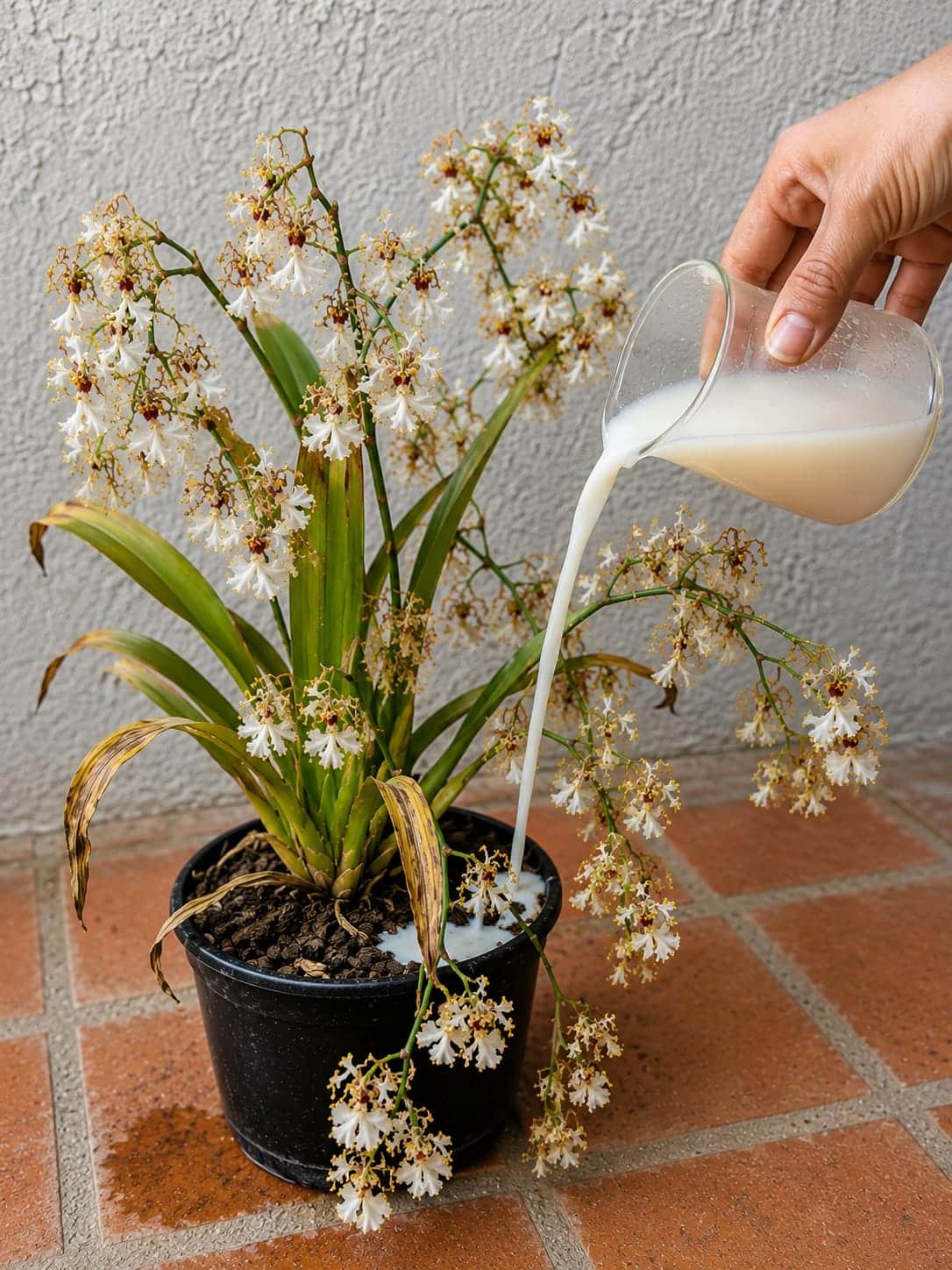
The orchid in the image has yellowing and browning on some leaves. This can happen for many reasons.
Possible causes include:
- Natural aging of old leaves
- Underwatering
- Overwatering
- Root rot
- Too much direct sun
- Fertilizer burn
- Mineral buildup
- Cold damage
- Stress after blooming
Do not assume yellow leaves mean the orchid needs rice water. First check the roots and watering routine.
Can Rice Water Help Yellow Leaves?
Rice water may support future growth if the plant is mildly nutrient-stressed and otherwise healthy. But yellow leaves usually do not turn green again. The goal is to help the orchid produce healthier new growth.
If yellowing is caused by root rot, rice water will not help. If yellowing is caused by too much sun, move the plant. If yellowing is caused by old age, simply remove the leaf once it is fully dry.
How to Use Rice Water After Blooming
The best time to use rice water is after the orchid finishes blooming and begins growing again. Look for new roots, new leaves, or new shoots. That means the plant is actively using nutrients.
Post-bloom rice water routine:
- Remove spent flowers.
- Check roots.
- Make sure the potting mix is healthy.
- Wait until you see active growth.
- Apply diluted rice water once.
- Return to plain water for several weeks.
- Use proper orchid fertilizer lightly if needed.
Should Rice Water Touch Orchid Leaves?
No. Keep rice water off the leaves and flowers. It can leave residue and may encourage spotting or fungal issues. Pour it only through the potting medium.
If rice water splashes on leaves, wipe it off gently with a damp cloth and let the plant dry in good airflow.
Should Rice Water Touch Orchid Flowers?
No. Flowers are delicate. Rice water can leave marks or residue. It will not make flowers last longer. Keep homemade liquids away from blooms.
How Much Rice Water Should You Use?
Use less than you think. For a small orchid pot, a few tablespoons of diluted rice water may be enough. For a medium pot, use about 1/4 to 1/2 cup of diluted rice water, followed by complete drainage. For a large pot, use enough to moisten the medium but not soak it for hours.
The goal is not to fill the pot with rice water. The goal is a light rinse through the root zone.
Can You Use Rice Water With Fertilizer?
Do not use rice water and fertilizer on the same day. Too many inputs at once can stress roots or create buildup.
A simple schedule might look like this:
- Week 1: Plain water
- Week 2: Weak orchid fertilizer
- Week 3: Plain water
- Week 4: Diluted rice water
- Week 5: Plain water
Adjust based on the orchid’s condition and growth.
What If the Pot Smells Bad After Rice Water?
If the pot smells sour, musty, or rotten after using rice water, stop immediately. Flush with plain water and let the pot drain fully. Improve airflow. If the smell continues, repot into fresh orchid mix.
A bad smell means the potting environment is not healthy.
What If Mold Appears?
If mold appears on the bark after rice water, remove the moldy pieces and stop using rice water. Let the pot dry more between waterings. Check whether the bark is old or decomposing.
Mold is a sign that the medium is staying too moist or has too much organic residue.
What If Fungus Gnats Appear?
Fungus gnats usually mean the potting medium is too wet or decomposing. Stop rice water. Allow better drying. Use sticky traps for adults and consider repotting if the mix is old.
Do not keep feeding the problem with starchy liquids.
Better Natural Orchid Supports
If rice water feels too risky, there are safer ways to support orchids naturally.
- Use rainwater or filtered water
- Improve humidity without soaking roots
- Flush the pot with plain water monthly
- Repot into fresh bark
- Give brighter indirect light
- Use a weak orchid fertilizer
- Clean leaves gently with plain water
These basics often do more than homemade tonics.
Quick Rice Water Orchid Method
Best for: healthy orchids in active growth with well-draining bark.
- Rinse 1 tablespoon plain rice in 2 cups water.
- Strain the cloudy water.
- Dilute 1 part rice water with 3 parts plain water.
- Pour a small amount through the orchid mix.
- Keep off leaves and flowers.
- Drain completely.
- Use once every 4 to 6 weeks only.
Short Caption for This Trick
To use rice water safely on orchids, rinse 1 tablespoon of plain rice in 2 cups of water, strain it, then dilute the cloudy water with 3 parts plain water. Pour only a small amount through the orchid bark, keep it off the leaves and flowers, and let the pot drain completely. Use once every 4 to 6 weeks during active growth only. Do not use thick, fermented, sour, or salty rice water, and avoid this trick if the orchid has root rot, mold, fungus gnats, or old soggy bark.
Frequently Asked Questions
Is rice water good for orchids?
Fresh diluted rice water can be used occasionally on healthy orchids, but it is not required. It may gently support the root environment, but it should not replace orchid fertilizer or proper care.
How often should I use rice water on orchids?
Use it no more than once every 4 to 6 weeks during active growth. Do not use it weekly.
Can I use fermented rice water on orchids?
Fermented rice water is risky for orchids because it can become sour and encourage mold or root problems. Fresh diluted rice water is safer.
Can rice water make orchids bloom?
Rice water does not force orchids to bloom. Future blooming depends on healthy roots, proper light, correct watering, temperature, and plant maturity.
Can I pour rice water on orchid flowers?
No. Keep rice water away from flowers. It can leave residue and will not extend bloom life.
Can rice water cause mold?
Yes, if it is too thick, used too often, or applied to old wet bark. Always dilute it and use it rarely.
Can I use cooked rice water?
It is better to use rinse water from uncooked rice. Cooked rice water is often too starchy and must be heavily diluted if used at all.
Should I use rice water on a sick orchid?
Not if the orchid has root rot, sour bark, mold, or fungus gnats. Fix the roots and potting medium first.
Do orchids still need fertilizer?
Yes. Rice water is not a complete fertilizer. Use a balanced orchid fertilizer at a weak dose during active growth.
What should I do if my orchid smells sour after rice water?
Stop using rice water, flush with plain water, improve airflow, and repot if the smell continues.
Final Thoughts
The rice water orchid trick is popular because it looks simple, natural, and gentle. A cloudy homemade liquid poured into a tired orchid pot feels like an easy way to wake the plant up. And when used carefully, fresh diluted rice water may offer a mild support for orchids that are already growing in healthy, airy conditions.
But orchids are sensitive. Their roots need oxygen. Their potting mix must drain. Their bark must stay fresh. A thick, starchy liquid used too often can create exactly the problems orchid roots hate: sour bark, mold, fungus gnats, and poor airflow.
The best way to use rice water is with restraint. Make it fresh. Dilute it heavily. Apply it only to the potting medium. Keep it away from leaves and flowers. Let the pot drain completely. Use it only once every 4 to 6 weeks during active growth.
If your orchid is weak, do not start with rice water. Start with the roots. Check whether they are firm or rotten. Check whether the bark is fresh or broken down. Check whether the pot drains. Check whether the plant gets enough bright indirect light. These basics matter far more than any kitchen tonic.
Rice water may support an orchid, but it cannot replace good care. The real secret to stronger roots and future blooms is a healthy growing environment: airy bark, careful watering, bright indirect light, gentle feeding, and patience. When those conditions are right, your orchid can recover after flowering, push out new roots, grow stronger leaves, and prepare for another beautiful bloom cycle.