What to Do If the Plant Reacts Badly
If leaves develop spots after crystals are sprinkled, gently remove any remaining particles with a soft dry brush. Avoid wetting the leaves unless necessary. If residue remains on the soil, remove the top layer carefully and replace it with fresh African violet mix.
If the plant wilts while the soil is wet, check the roots. Root rot can occur when soil stays too moist. If roots are damaged, repot into fresh airy mix and reduce watering. Do not add fertilizer or crystals while the plant is recovering.
If the plant stops blooming, improve light first. If leaves are healthy but flowers are absent, the plant may need brighter indirect light, steady feeding, or time. Avoid adding stronger and stronger treatments. African violets bloom best with consistency.
Final Thoughts
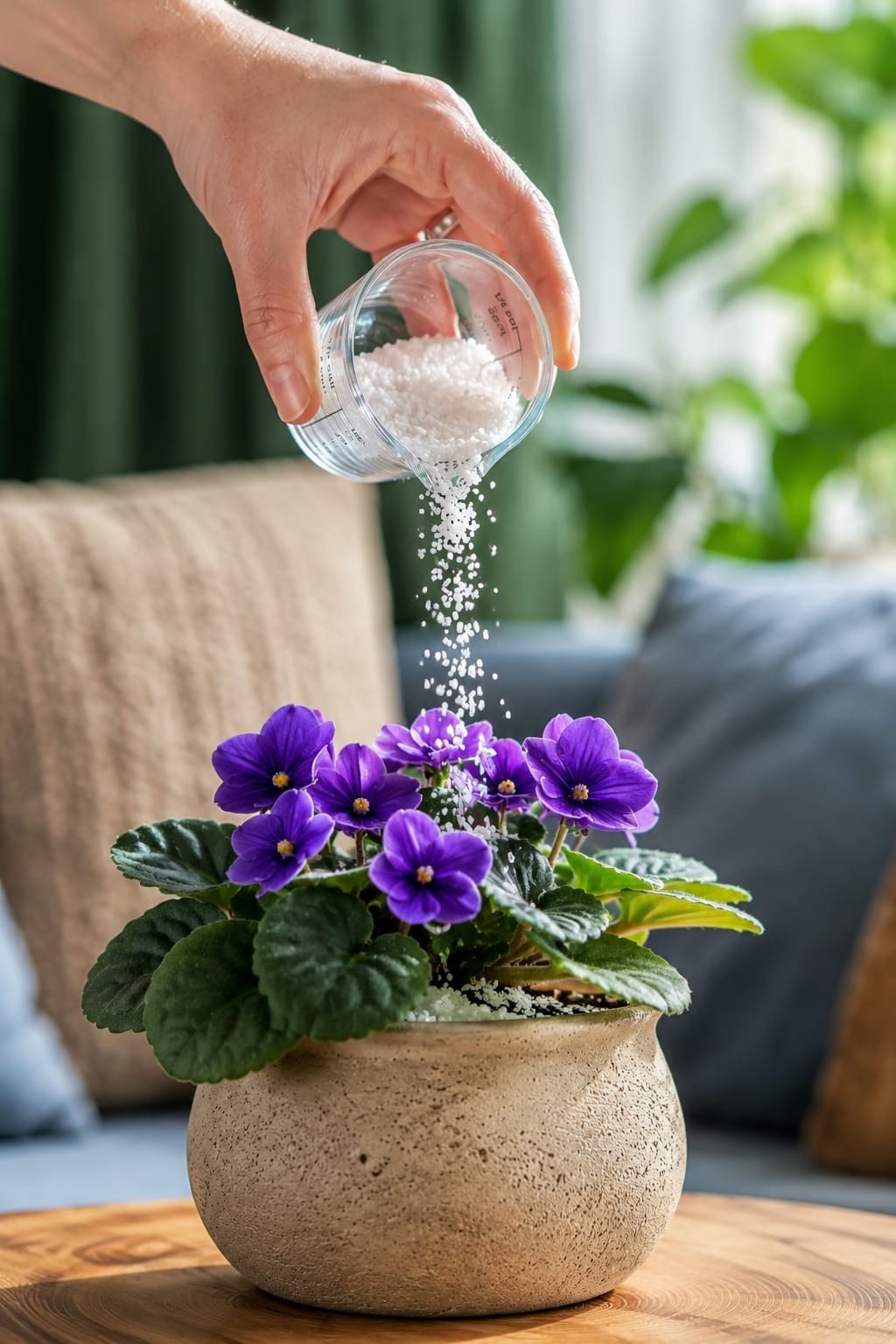
Small white crystals around an African violet may look like an easy bloom trick, but the ingredient matters. Epsom salt, slow-release fertilizer, perlite, and decorative granules all have different effects. Unknown white crystals should never be used. African violets are delicate plants with fuzzy leaves and fine roots, so heavy sprinkling can cause spotting, root burn, residue, or moisture problems.
The real foundation of healthy African violets is bright indirect light, light airy soil, a draining pot, careful watering, steady warmth, moderate humidity, clean grooming, and gentle balanced feeding. If the plant is not blooming, light and overall care should be checked before adding extra products. If the plant is stressed, fix watering and roots first.
With patient care and clean styling, African violets can remain beautiful indoor flowering plants for windowsills, coffee tables, bedrooms, home offices, apartments, plant shelves, and cozy living spaces. Healthy roots, clean fuzzy leaves, steady blooms, and gentle maintenance will always create better results than relying on risky shortcuts.