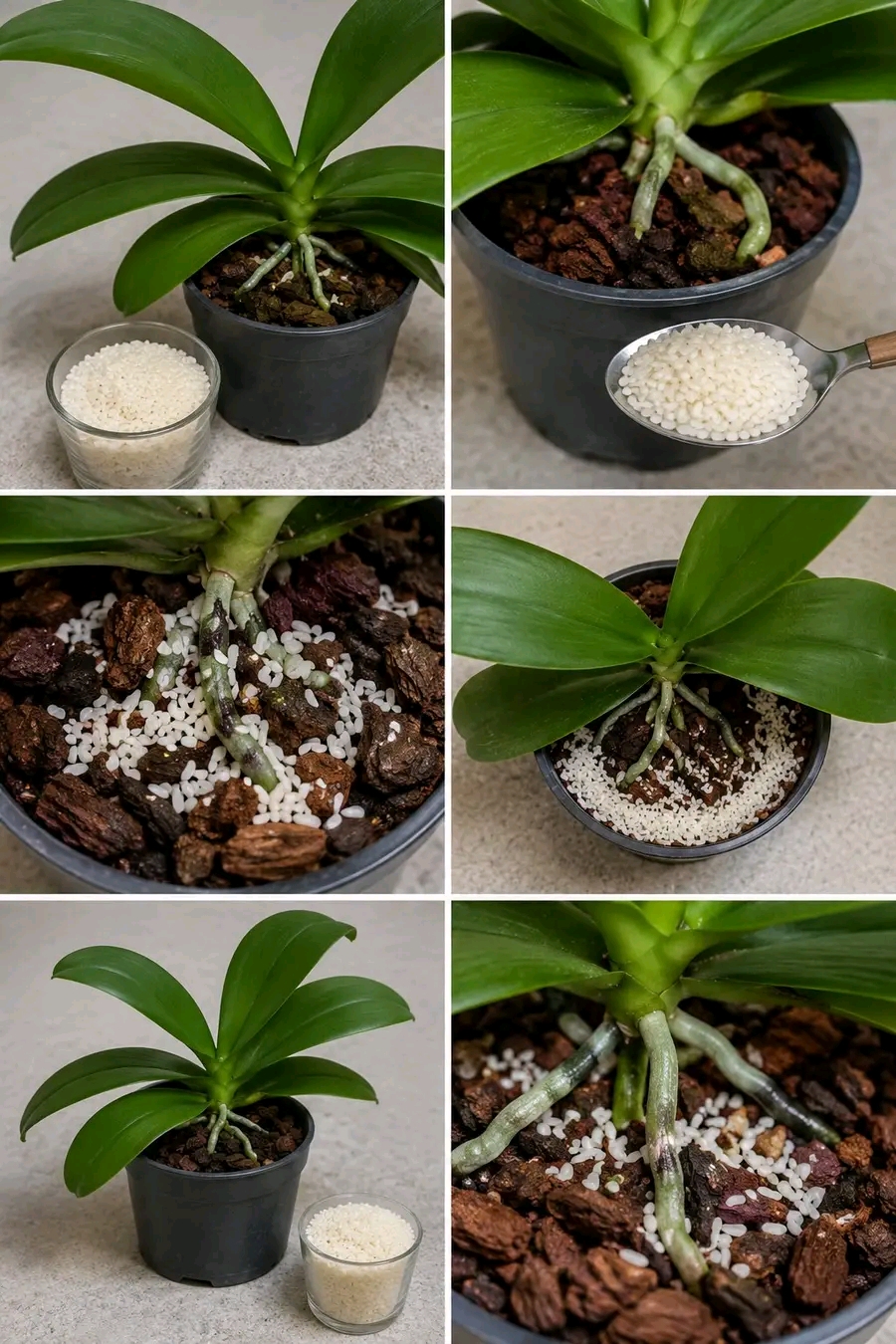
Common Mistakes With Rice and Orchids
One common mistake is using too much rice. A thick layer can hold moisture and attract pests. Another mistake is using cooked rice, which spoils quickly. A third mistake is placing rice deep into the bark where it cannot be monitored. A fourth mistake is using rice on an orchid that already has root problems.
A fifth mistake is expecting rice to replace fertilizer. Rice is not balanced plant food. A sixth mistake is using rice while also overwatering. Damp rice and wet bark can become a fungus gnat problem. A seventh mistake is ignoring light. Orchids need bright indirect light to grow and bloom.
The most serious mistake is treating any kitchen ingredient as automatically safe. Orchids are sensitive. Natural materials can still spoil, ferment, burn, or suffocate roots when used incorrectly.
What to Do If Mold Appears
If mold appears around the rice, remove the rice immediately. Take away any affected surface material and allow the pot to dry more fully. Improve airflow around the plant. Avoid adding more organic materials until the pot is stable.
If the bark smells sour or the roots look unhealthy, repot the orchid into fresh orchid mix. Mold on a few grains may be minor, but sour medium and root rot are more serious. Check the roots carefully. Firm roots can remain. Mushy roots should be removed with clean tools.
After correcting the issue, return to plain water and bright indirect light. Do not apply more rice, milk, coffee, or other homemade tonics while the plant is recovering. Simple care is safest.
Professional Orchid Care Note
In professional orchid care, root health is always the priority. A beautiful orchid display depends on clean medium, healthy roots, controlled watering, balanced light, and gentle feeding. Decorative tricks are secondary. A plant with healthy roots can bloom again. A plant with rotting roots cannot be saved by surface treatments.
Professionals usually prefer predictable fertilizer over kitchen scraps. This does not mean every homemade method is harmful, but it means each method must be judged by how it affects roots, moisture, airflow, and cleanliness. Rice may seem harmless, but in a small damp pot, it can create problems if overused.
The most elegant orchid displays look clean and natural. The leaves are glossy, the roots are firm, the bark is fresh, and the pot matches the room. Any care method that creates smell, mold, residue, or pests works against that premium appearance.
Final Thoughts
Adding small white rice grains around orchid roots is a popular homemade plant-care idea, but it should be used with caution. Rice is not a complete orchid fertilizer, and it does not force instant blooms. Raw rice can soften, mold, attract fungus gnats, and create sour residue if the pot stays damp. Cooked rice should never be used in orchid pots.
The real foundation of orchid health is bright indirect light, fresh airy orchid bark, drainage, good airflow, careful watering, clean leaves, and weak balanced orchid fertilizer during active growth. If the roots are healthy, the plant has a much better chance of producing strong leaves and future flower spikes. If the roots are stressed, rice or any other homemade trick can make the situation worse.
With patient care and clean styling, orchids can remain beautiful indoor plants for windowsills, bedrooms, living rooms, balconies, home offices, commercial interiors, luxury home staging, and premium plant displays. Healthy roots, tidy bark, glossy leaves, and balanced maintenance will always create a better result than relying on risky shortcuts.