How to Keep the Leaves Glossy
Peace lily leaves collect dust because they are broad and smooth. Dust makes them look dull and can reduce light absorption. Wipe the leaves with a damp soft cloth every few weeks. Support each leaf gently while wiping so it does not tear.
Avoid oily leaf shine sprays. They can block the leaf surface and attract dust. Clean water is enough. For extra care, wipe with one cloth dampened in water and follow with a dry cloth to remove streaks.
Clean leaves make the whole plant look fresher, healthier, and more expensive. This simple habit often improves the display more than any soil additive.
How to Remove Spent Blooms
Peace lily flowers eventually turn green, brown, or papery. When a bloom fades, cut the flower stem near the base with clean scissors. Removing spent blooms helps the plant look tidy and directs energy back into leaves and future growth.
Do not pull flower stems by hand because this can damage the crown. Use clean tools and make a neat cut.
Why Leaves Turn Yellow
Yellow leaves can happen for many reasons. Older leaves naturally yellow and die. But many yellow leaves at once may signal overwatering, underwatering, low light, poor drainage, or root stress.
Check the soil first. If it is wet and heavy, reduce watering and improve drainage. If it is bone dry and the plant is drooping, water thoroughly. If the plant is in a dark corner, move it closer to bright indirect light.
Do not automatically add fertilizer or turmeric when leaves yellow. Identify the cause first.
Why Leaf Tips Turn Brown
Brown tips are common on peace lilies. They can be caused by dry air, inconsistent watering, mineral buildup, too much fertilizer, or water quality. Trim brown tips with clean scissors if they bother you, following the natural shape of the leaf.
To reduce brown tips, water consistently, avoid overfeeding, keep humidity moderate, and flush the soil occasionally with clean water. Make sure excess water drains away.
Humidity and Airflow
Peace lilies enjoy moderate humidity. In very dry rooms, leaf edges may crisp. Grouping plants together, using a pebble tray, or running a humidifier can help. However, humidity should not mean stagnant air. Good airflow keeps the soil surface healthier.
Do not mist heavily every day if the room is cool or dark. Constant wet leaves can invite fungal issues. A humid room with gentle airflow is better than repeatedly spraying the plant.
How to Style a Peace Lily Indoors
A peace lily naturally has a refined look, especially when grown in a simple pot. White blooms pair beautifully with terracotta, matte white ceramic, black planters, woven baskets, and warm wood. Place the plant near a window where light can highlight the glossy leaves.
For a clean modern look, use a white square pot or a smooth round ceramic planter. For a natural look, use terracotta and place it on a wooden stool. For a luxury style, use a dark planter with a simple saucer and keep the leaves polished.
A peace lily looks beautiful in living rooms because it softens hard lines and adds freshness. It also works well in bedrooms and offices where calm greenery is wanted.
How to Make the Display Look More Expensive
The easiest way to make a peace lily look expensive is to keep the pot and soil surface tidy. Remove fallen leaves, wipe the pot rim, clean dust from leaves, and rotate the plant so it grows evenly. A messy soil surface can make even a healthy plant look neglected.
Use a matching saucer and avoid water stains on furniture. If the pot is old terracotta with white mineral marks, clean the outside gently or embrace it as rustic texture. Pair it with a wooden windowsill or natural basket for a warm, lived-in look.
Do not overcrowd the plant with too many decorations. Peace lilies already have strong visual elegance. Let the white blooms and dark leaves be the focus.
Can Turmeric Replace Fertilizer?
No. Turmeric should not be treated as a complete fertilizer. Peace lilies need balanced nutrients during the growing season if they are expected to produce strong leaves and flowers. Use a diluted balanced houseplant fertilizer once every four to six weeks in spring and summer.
Always dilute fertilizer more than the label suggests if your plant is sensitive. Too much fertilizer can burn roots and cause brown tips. Do not fertilize a dry or stressed plant.
Turmeric is only an optional soil-care trick. The main feeding routine should still be gentle and balanced.
A Simple Peace Lily Monthly Routine
Once a month, check the plant carefully. Remove dead leaves, trim spent blooms, wipe dust from leaves, check for pests, rotate the pot, and test the soil. Water only when the top inch is dry. If the plant is actively growing, feed lightly during spring and summer.
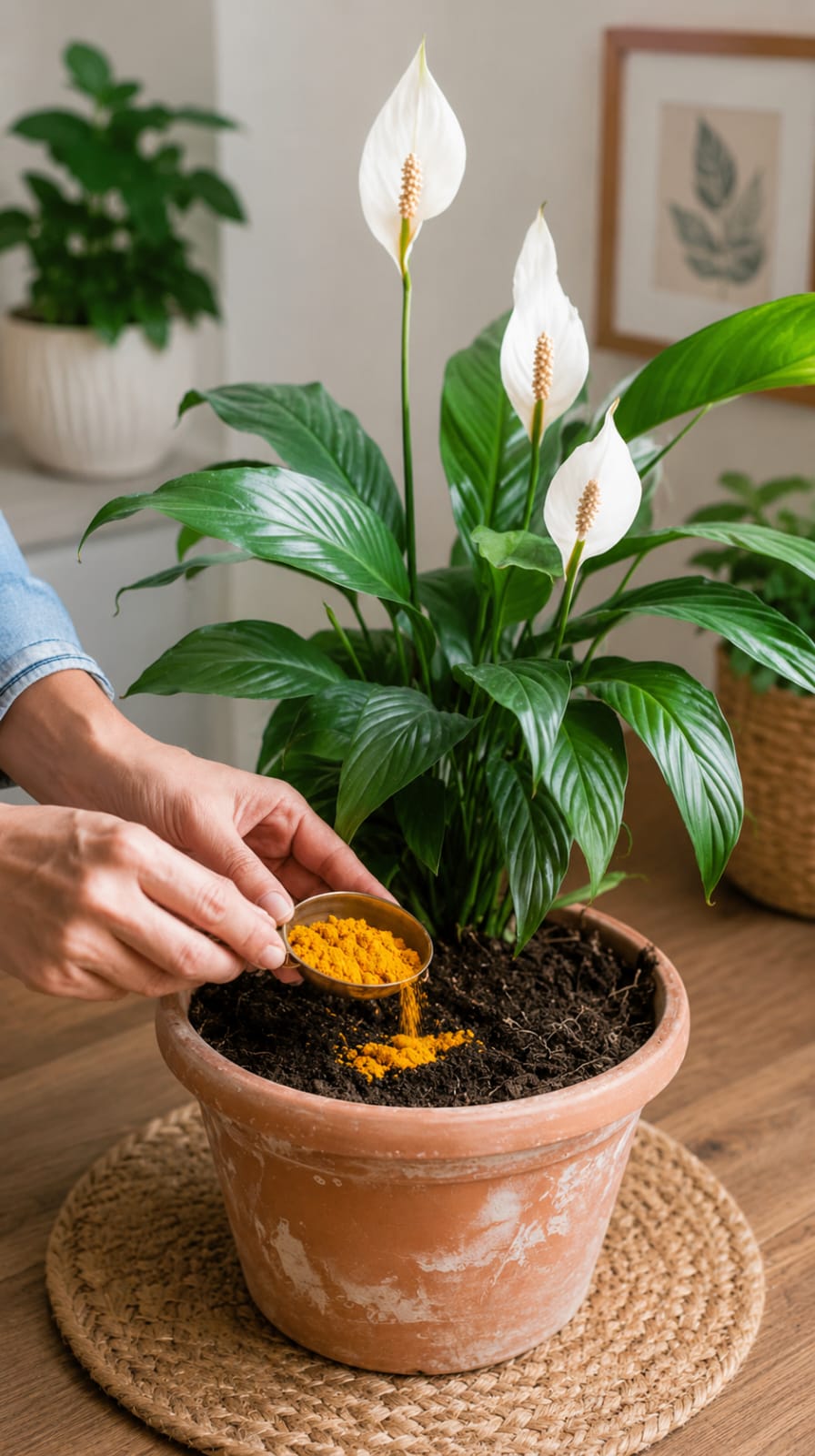
Every few months, refresh the topsoil if it looks compacted. If you want to use turmeric, apply only a tiny pinch and mix it lightly into the surface. Then return to normal care.
This steady routine keeps the plant fresh without overwhelming it.
Common Mistakes to Avoid
The most common mistake is overwatering. Peace lilies need moisture, but they do not want swampy soil. Another mistake is placing the plant in deep shade and expecting flowers. Low light may keep the plant alive, but blooms need brighter indirect light.
Using too much turmeric is another mistake. A thick golden layer may look dramatic, but it is not good care. Use only a pinch. Avoid applying it to wet, moldy, or poorly draining soil.
Also avoid strong homemade mixtures with sugar, milk, oil, vinegar, or salt. These can damage roots, attract pests, and create bad smells indoors.
Signs the Routine Is Working
A happy peace lily will hold its leaves firmly, produce fresh green growth, and eventually send up white blooms when light and maturity are right. The soil should smell fresh, not sour. The pot should dry at a steady pace. Leaves should look clean and glossy.
Do not judge success after one day. Peace lilies respond over time. The best results come from weeks of steady care, not one dramatic treatment.
Final Thoughts
A tiny turmeric sprinkle can be an interesting natural soil-care trick for peace lilies when used carefully and rarely. The key is to keep it light, clean, and controlled. Use only a pinch, keep it away from the crown, avoid wet soil, and never treat it as a replacement for good plant care.
The true foundation of a beautiful peace lily is bright indirect light, breathable soil, correct watering, good drainage, clean leaves, and regular observation. When these basics are right, small extra routines can help the plant look even fresher and more refined.
For homeowners who want a peaceful, elegant indoor display, this plant is one of the best choices. With a simple pot, glossy leaves, tidy soil, and soft white blooms, a peace lily can turn an ordinary windowsill into a calm, expensive-looking plant corner. Keep the care gentle, respect the roots, and let the plant grow at its natural rhythm.