Where to Place Orchids Indoors
A bright windowsill with filtered light is one of the best places for orchids. If the window receives harsh afternoon sun, use a sheer curtain. A kitchen window can be excellent because orchids often enjoy slightly higher humidity. Just keep them away from hot steam, fruit bowls, and cold drafts.
In a living room, place the orchid on a side table, console, or plant stand near bright light. The flowers can become a natural focal point. In a bedroom, orchids create a calm and elegant mood, especially when styled with neutral bedding and soft lighting.
Bathrooms can work only if there is good natural light. Humidity is helpful, but darkness is not. A windowless bathroom is not suitable for long-term orchid growth.
Common Mistakes With Potato Peel Powder
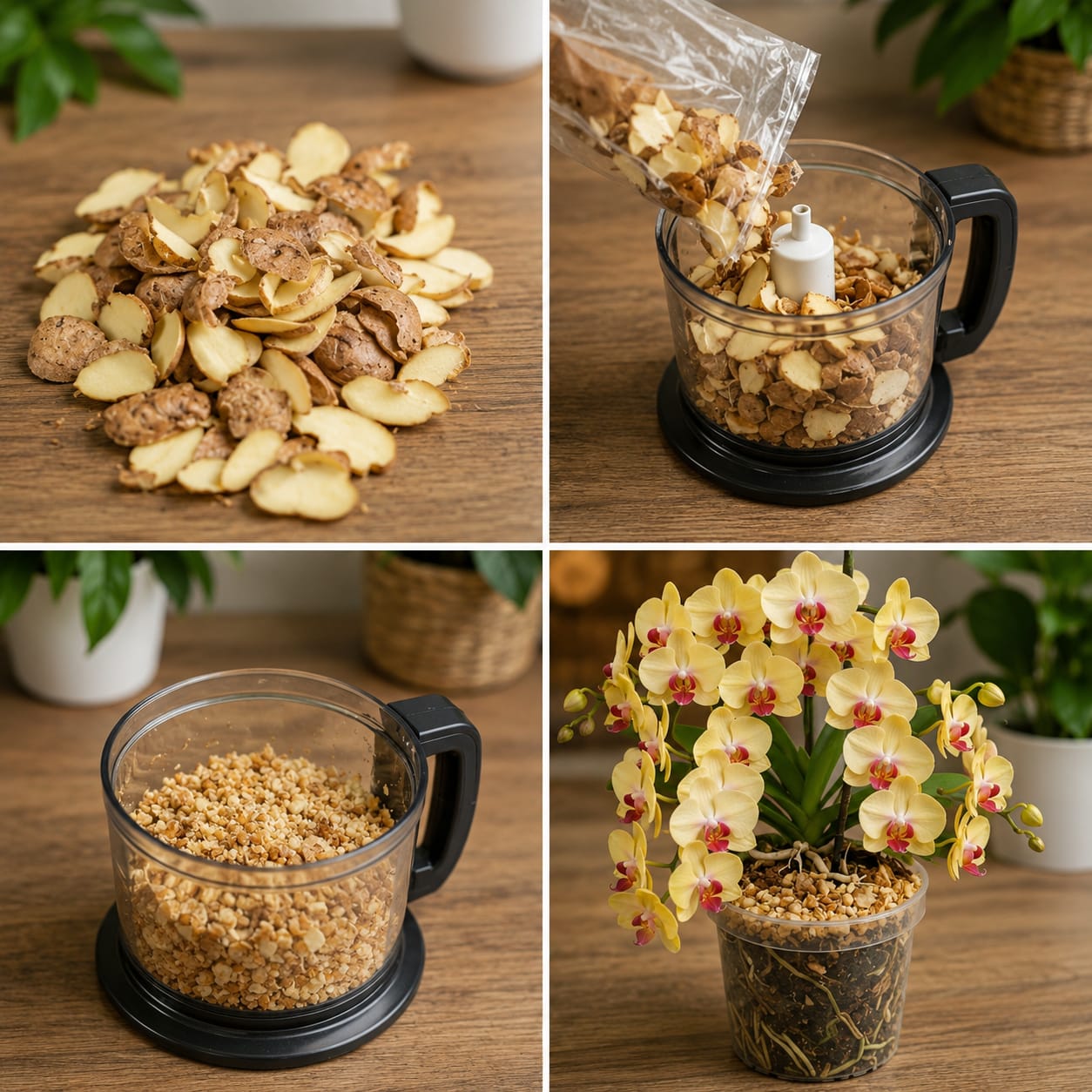
The first mistake is using fresh peels directly in the pot. Fresh peels are too wet and can rot quickly. They may attract pests and create a bad smell. Always dry them completely before use.
The second mistake is using too much. Orchids do not need a thick layer of organic powder. A small amount is enough. If the surface of the pot looks covered like soil dressing, remove some.
The third mistake is using it on a sick orchid. If the roots are already rotting, focus on cleaning and repotting. Homemade additives are not a cure for rot. They are best used on stable plants as a light support routine.
The fourth mistake is mixing too many tricks together. Do not use potato peel powder, rice water, garlic water, banana water, and fertilizer all at once. Orchids prefer consistency. Too many experiments can stress the roots.
A Simple Monthly Orchid Routine
Once a week, check the roots and bark before watering. Water only when the plant is ready. Once every two weeks, wipe the leaves with a soft damp cloth. Dusty leaves absorb less light and make the plant look tired.
Once a month, inspect the pot for pests, mold, or bad smell. Check if the roots look firm. Rotate the plant slightly so it grows evenly toward the light. Remove old yellow leaves only when they are ready to detach or are clearly declining.
Once every six to eight weeks during active growth, you can use a very small amount of dried potato peel powder or a diluted potato peel soak. Keep it light, observe the plant, and stop if the pot becomes too wet or attracts insects.
How to Encourage Reblooming
After orchid flowers fade, do not panic. Orchids naturally rest between bloom cycles. Continue caring for the leaves and roots. A healthy orchid may bloom again when conditions are right.
If the flower spike stays green, you may leave it or trim it above a node to encourage a side spike. If the spike turns brown and dry, cut it near the base with clean scissors. Then focus on light, roots, and feeding.
Use a balanced orchid fertilizer at a weak dose during active growth. Homemade potato peel powder should not replace proper orchid fertilizer completely. It can be a gentle supplement, but orchids still benefit from balanced nutrition when used correctly.
Final Thoughts
The potato peel orchid trick is best understood as a gentle root-support routine, not a miracle bloom formula. When potato peels are cleaned, dried, crushed, and used sparingly, they can become a simple way to add a natural touch to orchid care. The secret is moderation. Orchids need air, drainage, bright indirect light, and careful watering more than they need heavy homemade mixtures.
For the best results, keep the orchid in a breathable bark mix, water only when the roots are ready, give it bright indirect light, and style it in a clean decorative pot. Then, if the plant is healthy and actively growing, a small sprinkle of dried potato peel powder every few weeks can be used as a light seasonal refresh.
With patient care, the orchid can develop cleaner roots, stronger leaves, and a more elegant shape. Over time, healthy roots support better blooms, and the whole plant begins to look fresher, more refined, and more expensive in the home.