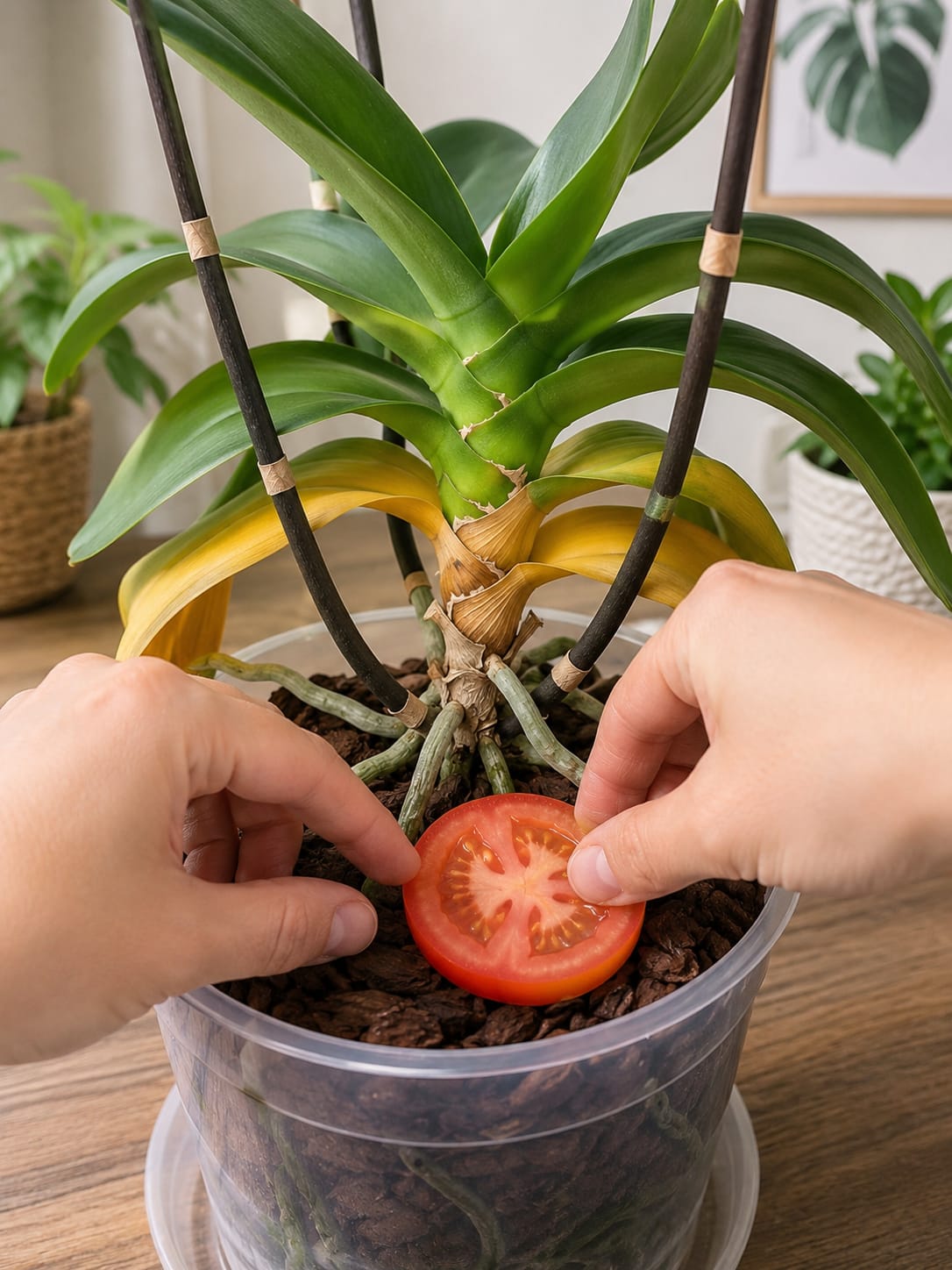
Tomato Trick vs. Orchid Fertilizer
The tomato trick is organic and simple, but it is not as controlled as orchid fertilizer. Fertilizer gives measured nutrients. Tomato is unpredictable because it breaks down differently depending on moisture, temperature, and the potting medium.
| Method | Benefit | Risk |
|---|---|---|
| Tomato slice | Natural organic boost | Mold, pests, rot if left too long |
| Orchid fertilizer | Controlled feeding | Root burn if too strong |
| Fresh bark mix | Better airflow and drainage | Needs replacement over time |
| Correct light | Supports blooming | Too much sun can burn leaves |
The best approach is balanced care. Use natural tricks carefully, but build the plant’s health through roots, light, water, and airflow.
How to Encourage New Orchid Roots
New roots are a great sign. They often appear as small green tips near the base of the orchid. These new roots need humidity, air, and gentle watering.
To encourage new roots:
- Keep the orchid in bright indirect light
- Use fresh airy bark
- Avoid overwatering
- Maintain moderate humidity
- Do not bury aerial roots deeply
- Keep the crown dry
- Avoid moving the plant too often
Once new roots begin, the orchid is usually preparing for stronger growth. Healthy roots can also support future flower spikes.
How to Make an Orchid Rebloom
After the flowers fall, many people think the orchid is finished. It is not. The plant is simply moving into another growth phase. With care, it can bloom again.
To help an orchid rebloom:
- Place it in bright indirect light.
- Keep the roots healthy.
- Water only when needed.
- Feed lightly during growth.
- Allow slightly cooler nights for several weeks.
- Do not cut healthy green flower spikes too early unless needed.
- Be patient.
Reblooming can take months. Orchids move slowly, but the result is worth it.
Orchid Decor: How to Style It Beautifully
An orchid does not need much decoration because the plant itself is already elegant. The best styling choices are clean, simple, and natural.
Beautiful orchid styling ideas include:
- A clear pot inside a white ceramic cachepot
- A wooden windowsill display
- A small tray with pebbles for humidity
- A neutral stone or clay pot
- A minimal plant stand
- Pairing with candles, books, or woven baskets
- Using bark as a natural top layer
White orchids look beautiful in calm neutral rooms. Pink orchids soften bedrooms and vanity corners. Purple orchids bring color to offices and entryways. Yellow orchids brighten kitchens and breakfast areas.
Best Places to Display Orchids at Home
Orchids look luxurious when they are placed where their flowers can be seen clearly. They need good light, but they also need protection from harsh heat and cold drafts.
Best locations include:
- Bright windowsills with filtered light
- Dining table centerpieces
- Bedroom dressers
- Home office desks
- Bathroom counters with bright natural light
- Entryway consoles
- Living room side tables
- Kitchen windowsills
A blooming orchid near a window can become the focal point of the room. Keep the surrounding area uncluttered so the flowers stand out.
How to Keep Orchid Leaves Looking Clean
Orchid leaves are part of the beauty of the plant. Dusty or stained leaves make the whole plant look tired. Clean leaves also help the plant use light better.
To clean orchid leaves:
- Use a soft damp cloth
- Wipe gently from base to tip
- Do not leave water sitting in the crown
- Avoid oily leaf shine products
- Remove yellow dead leaves carefully
Healthy leaves should feel firm and smooth. Limp or wrinkled leaves often mean root or watering problems.
When Not to Use the Tomato Trick
There are times when this method is not a good idea. If the orchid is already weak, moldy, or rotting, tomato can make the situation worse.
Do not use tomato if:
- The roots are mushy
- The pot smells bad
- The bark is already breaking down
- There are fungus gnats
- The crown is soft or black
- The plant is sitting in wet moss
- The home is very humid with poor airflow
- You cannot remove the tomato easily
In these cases, fix the growing conditions first. Fresh bark, correct watering, and better airflow are more important than any homemade trick.
Orchid Care Table
| Care Factor | Best Choice | Why It Matters |
|---|---|---|
| Light | Bright indirect light | Supports roots, leaves, and reblooming |
| Water | When roots turn silvery | Prevents root rot and dehydration |
| Potting mix | Chunky orchid bark | Keeps air around roots |
| Humidity | Moderate humidity | Helps roots and leaves stay fresh |
| Tomato trick | Small, temporary use only | Avoids mold and excess moisture |
| Decor | Clean pot and natural bark | Makes the orchid look elegant indoors |
Frequently Asked Questions
Can tomato help orchids grow?
A small tomato slice may act as a gentle organic boost near the root zone, but it should be used carefully and temporarily. It cannot replace proper orchid care.
Can tomato make an orchid bloom faster?
No single ingredient can guarantee fast blooms. Orchids bloom when they have strong roots, enough light, correct watering, and stable conditions.
Is tomato safe for orchid roots?
It can be risky if left too long. Tomato can mold, rot, or attract pests. Use only a small piece and remove it before it breaks down.
Should tomato touch the orchid crown?
No. Keep tomato and moisture away from the crown. A wet crown can lead to rot.
What is the best way to get an orchid to rebloom?
Give bright indirect light, healthy roots, gentle feeding, correct watering, and slightly cooler nights for a period of time.
Why are my orchid leaves yellow?
Yellow leaves can come from natural aging, overwatering, root problems, too much sun, or stress. Check the roots and potting mix first.
Final Thoughts
The tomato slice orchid trick is an interesting natural plant-care idea, but it must be used wisely. Orchids are not like ordinary garden plants. Their roots need air, their crowns must stay dry, and their potting medium should remain clean and breathable.
A small tomato slice near the root zone may offer a gentle organic boost, but it should never be buried deeply, left to rot, or used on a sick orchid. The real secret to orchid success is still the complete care routine: bright indirect light, healthy roots, fresh bark, careful watering, moderate humidity, and patience.
When those basics are correct, an orchid becomes one of the most beautiful plants in the home. Its glossy leaves, sculptural roots, and elegant flowers create a refined indoor display that feels calm, fresh, and luxurious. A natural trick can support the process, but the true beauty comes from balanced care and a clean, well-styled growing environment.