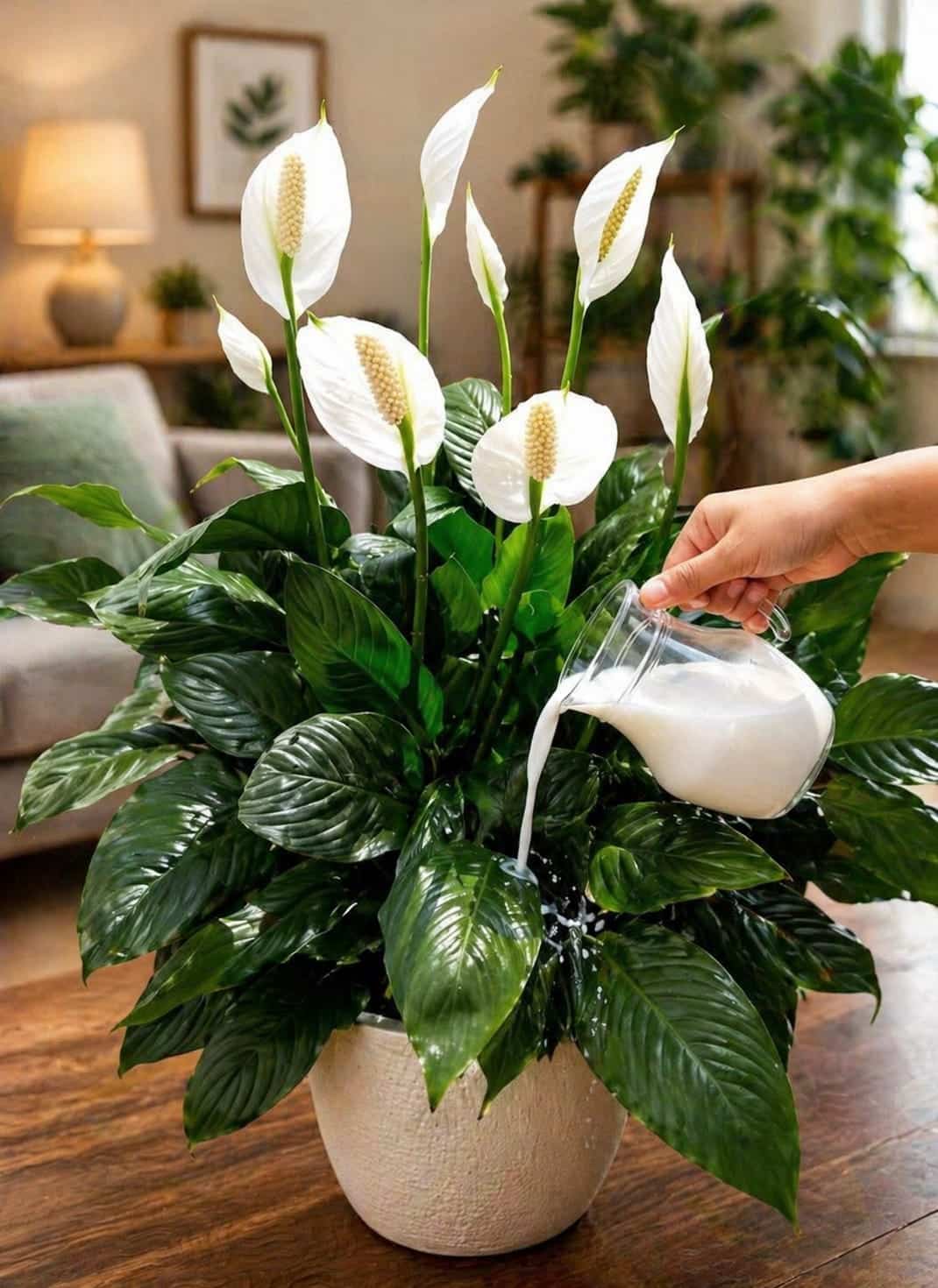
Can Milk Replace Fertilizer?
No. Milk is not a complete fertilizer for peace lilies. It may provide a little calcium and small amounts of other nutrients, but it does not offer a balanced nutrient profile. A proper houseplant fertilizer is more reliable.
During spring and summer, use a balanced liquid houseplant fertilizer at half strength every four to six weeks if the plant is actively growing. If you use milk water, use it separately and occasionally. Do not overfeed.
Too much fertilizer can cause brown tips and root stress. Peace lilies prefer gentle feeding.
Milk Water vs. Rice Water for Peace Lilies
Some plant owners prefer rice water because it is less likely to smell than milk if used correctly. Rice water is the cloudy liquid from rinsing uncooked rice. It should also be diluted and used occasionally.
Milk water may offer calcium, while rice water may provide a mild starch-based organic rinse. Both are optional. Neither should replace proper care. If you are worried about smell or pests, rice water may be the safer kitchen trick.
For peace lilies, the best choice is the one you can use cleanly and moderately. If milk water causes odor or gnats, stop using it.
How to Clean Peace Lily Leaves
Peace lily leaves are large and glossy, so they collect dust easily. Dust blocks light and makes the plant look dull. Cleaning the leaves can make a peace lily look instantly healthier.
Use a soft damp cloth. Wipe each leaf gently from base to tip. Support the leaf from underneath so it does not tear. Avoid leaf shine products and avoid wiping with milk. Plain water is enough.
Clean leaves absorb light better, and better light supports stronger growth and blooming.
How to Encourage More Peace Lily Blooms
To encourage more blooms, focus on the essentials. Place the plant in bright indirect light. Keep the soil lightly moist but not soggy. Feed gently during active growth. Remove old blooms by cutting the flower stem near the base. Keep the plant warm and away from drafts.
Do not overpot the plant. Peace lilies often bloom better when slightly snug rather than swimming in a huge container. Repot only when necessary.
If your peace lily has not bloomed in a long time, the first change should usually be more light. A homemade trick may help slightly, but light gives the plant the energy to flower.
Seasonal Peace Lily Care with the Milk Trick
Spring
Spring is a good time for growth. Increase watering as needed, begin gentle feeding, and consider using diluted milk water once if the plant is healthy and actively growing.
Summer
Summer growth may be strong if the plant has warmth and light. Keep watering consistent and maintain humidity. Use milk water no more than once during this season, or skip it if you are using fertilizer.
Fall
Growth may slow as light decreases. Reduce feeding. Avoid milk water unless the plant is still actively growing in a bright spot.
Winter
Winter is usually not the best time for milk water. Soil dries more slowly, and organic liquids are more likely to smell or attract pests. Use plain water and focus on light and humidity.
Common Peace Lily Problems
Yellow Leaves
Yellow leaves can be caused by overwatering, underwatering, old age, poor drainage, or stress. Check soil moisture and root health before adding any tonic.
Brown Tips
Brown tips often come from dry air, inconsistent watering, minerals, or fertilizer stress. Improve humidity and watering habits.
No Blooms
No blooms usually means not enough light. Move the plant to bright indirect light and feed gently during active growth.
Drooping Leaves
Drooping may mean thirst or root problems. Check the soil. Dry soil means water. Wet soil means inspect roots.
Fungus Gnats
Gnats usually mean the soil is too wet or too rich in organic residue. Reduce watering and stop milk water if gnats appear.
A Safe Peace Lily Milk Routine
If you want to include milk in your peace lily care, keep the routine simple:
- Use only plain milk.
- Dilute heavily with water.
- Apply only to the soil.
- Use only when the plant needs watering.
- Let the pot drain completely.
- Use no more than once every six to eight weeks.
- Avoid using in winter or on weak, rotting plants.
- Stop immediately if you notice odor, mold, or gnats.
This routine gives you the safest version of the trick while reducing the risks.
Frequently Asked Questions
Can I pour milk directly on my peace lily?
No. Straight milk is too rich and can spoil in the soil. Always dilute milk heavily with water before using it, and use it rarely.
How much milk should I use?
Use about 1 tablespoon of milk mixed with at least 10 to 15 tablespoons of water. The mixture should look lightly cloudy, not thick.
How often can I use milk water?
Once every six to eight weeks during active growth is enough. Do not use it every time you water.
Can milk make peace lilies bloom?
Milk water may support general health, but blooms depend mostly on bright indirect light, proper watering, warmth, and balanced feeding.
Will milk attract bugs?
It can if used too strongly or too often. Always dilute it, avoid splashing leaves, and never let it sit in the saucer.
Can I spray milk on peace lily leaves?
It is better not to. Milk can leave residue. Clean leaves with plain water instead.
Can milk save a dying peace lily?
Not if the plant has root rot or poor drainage. Diagnose the problem first. Milk water is only a mild supplement for healthy or recovering plants.
What should I do if the soil smells sour?
Stop using milk, flush the soil with plain water if drainage is good, and repot if the smell continues.
Is milk better than fertilizer?
No. Milk is not a complete fertilizer. A balanced houseplant fertilizer is more predictable.
Can I use plant-based milk?
It is not recommended because many plant-based milks contain oils, sugars, salt, or additives. Plain diluted dairy milk or rice water is simpler.
Final Thoughts
The milk trick for peace lilies is surprising, eye-catching, and easy to understand. A creamy white liquid poured around a lush plant makes it look like you have discovered a secret growth formula. Used carefully, heavily diluted milk water may offer a small calcium-based boost and become part of a gentle care routine.
But milk is not magic. It will not fix bad soil, poor light, overwatering, root rot, or neglect. It must be diluted, used rarely, and applied only to the soil of a healthy plant in a draining pot. Straight milk can spoil, smell, and attract pests, so moderation is essential.
The true secret behind an incredible peace lily is balanced care. Give it bright indirect light, evenly moist but well-drained soil, humidity, warmth, and gentle feeding. Clean the leaves, remove old blooms, and watch the soil before watering. If you choose to try the milk trick, use it as a small extra, not the main care method.
With the right routine, your peace lily can grow glossy leaves, produce elegant white blooms, and become one of the most beautiful plants in your home. Milk may be the surprising detail that gets attention, but your careful, consistent care is what truly makes the plant thrive.