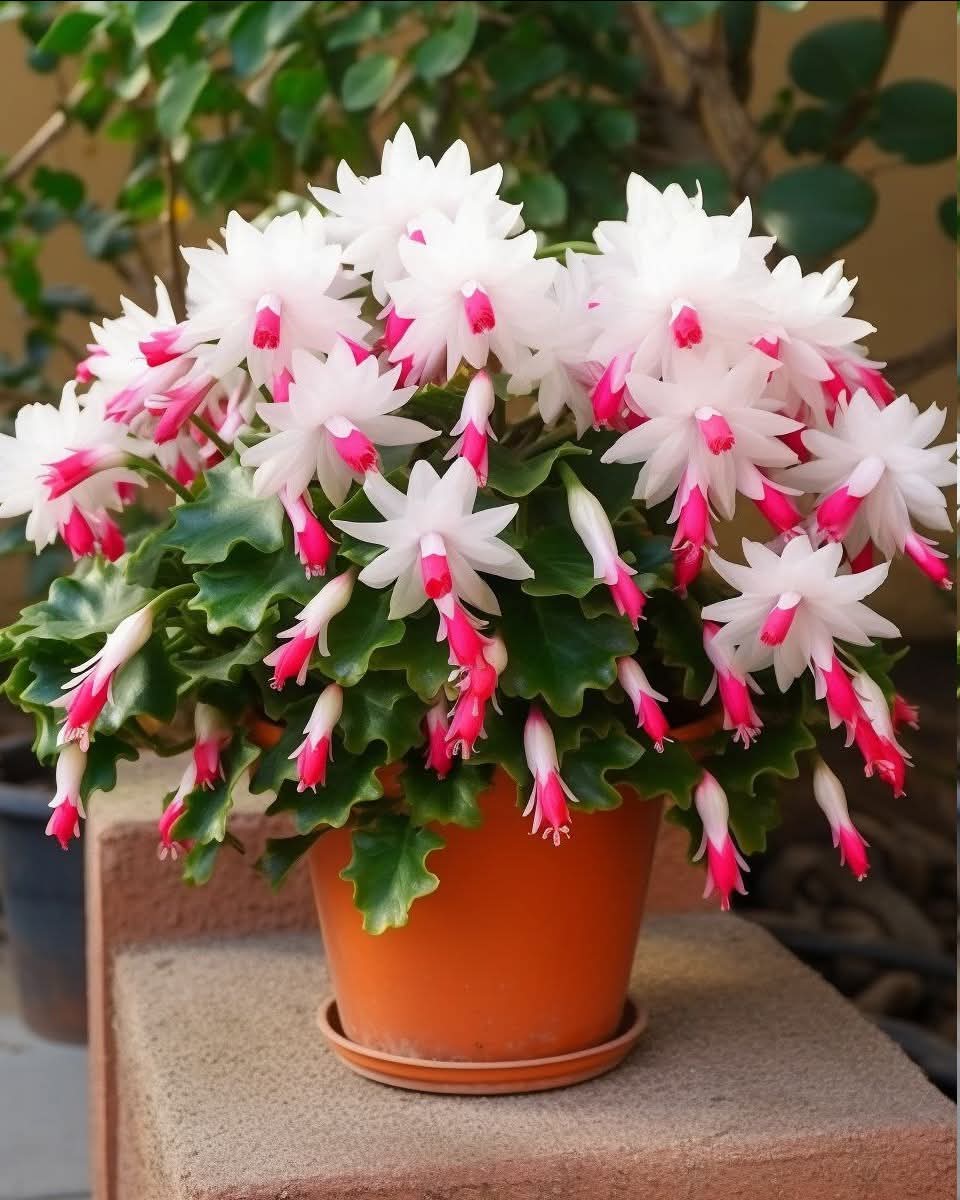
When most people think of holiday plants, poinsettias and evergreens often come to mind. But there’s another festive favorite that has been brightening homes for decades: the Christmas cactus (Schlumbergera bridgesii). With its trailing stems, segmented leaves, and brilliant flowers in shades of pink, red, white, or purple, this plant is a true showstopper during the holiday season. Unlike many houseplants, the Christmas cactus thrives indoors during winter, making it a beloved companion for those cold, dark months.
But while the Christmas cactus is stunning, many people struggle to keep it alive or get it to bloom again year after year. The good news? With the right care, it’s one of the easiest plants to grow—and it can live for decades, sometimes even being passed down through families as a living heirloom.
In this guide, we’ll walk through everything you need to know about successfully growing a Christmas cactus in a pot at home, from choosing soil and watering properly to encouraging those breathtaking holiday blooms.
What Makes the Christmas Cactus Special?
Before diving into care, it’s important to understand where the Christmas cactus comes from. Unlike desert cacti, which are used to hot, dry conditions, the Christmas cactus is a tropical cactus native to Brazil’s rainforests. It naturally grows in shaded, humid environments, often perched on tree branches or nestled in rocky crevices where organic matter collects.
This explains why its care requirements are different from desert cacti:
It needs more water.
It thrives in indirect light.
It prefers slightly cooler temperatures to trigger blooms.
Knowing this background helps us mimic its natural environment indoors, setting it up for success.
Choosing the Right Pot and Soil
Pot Selection
The Christmas cactus does best in a pot with good drainage holes. Since it dislikes soggy soil, avoid containers without drainage. A clay or ceramic pot works well, as it allows extra moisture to evaporate.
Soil Mix
Forget standard cactus soil, which is too sandy and fast-draining for this plant. Instead, use a mix that retains some moisture while still draining well:
2 parts high-quality potting soil
1 part perlite or coarse sand
Optional: 1 part orchid bark for extra aeration
This blend mimics the plant’s natural forest floor environment—moist but never waterlogged.
Light Requirements
Christmas cactus needs bright but indirect light. Place it near a north- or east-facing window, where it gets plenty of natural light without harsh sun. Direct sunlight, especially in summer, can scorch its leaves.
If natural light is limited, grow lights can supplement. Just be sure to avoid 24-hour exposure; the plant benefits from a natural day-night cycle.
Watering the Christmas Cactus
This is where most people go wrong. Remember: while it needs more water than a desert cactus, it doesn’t like sitting in soggy soil.
During active growth (spring and summer): Water when the top 1–2 inches of soil feel dry.
During fall and winter (when blooming): Keep soil evenly moist but not soaked.
After blooming: Reduce watering slightly to give the plant a rest.
Always water thoroughly, allowing excess to drain out of the pot. Never let the plant sit in standing water.
Fertilizing for Growth and Blooms
Like people, plants need food to thrive. Feed your Christmas cactus with a balanced, water-soluble fertilizer (10-10-10 or 20-20-20) every 4 weeks from spring through early fall.
Once fall arrives, switch to a high-phosphorus fertilizer to encourage bud formation. Stop fertilizing during and right after blooming to let the plant rest.
How to Get Your Christmas Cactus to Bloom
The real magic of this plant is its spectacular flowers. To encourage blooming, you need to mimic the shorter days and cooler nights of its native environment.
Light Control: In the fall, give the plant 12–14 hours of complete darkness each night for about 6 weeks. This signals the plant to set buds.
Cooler Temperatures: Keep it in a room around 60–65°F (15–18°C). Avoid placing it near heat vents or drafty windows.
Steady Care: Once buds appear, return the plant to normal light and avoid moving it. Even a small change can cause buds to drop.
If cared for properly, blooms can last for several weeks, brightening your holidays with vibrant colors.
Pruning and Propagating
After the blooming season, lightly prune the plant by snipping off a few stem segments. This encourages branching and fuller growth the following year.
The best part? Those cuttings can be used to propagate new plants. Simply let the cut ends dry for a day, then place them in moist potting soil. Within weeks, roots will form, and you’ll have a new Christmas cactus to share—or keep!
Common Problems and How to Fix Them
Yellow leaves: Often caused by overwatering. Let the soil dry slightly and check drainage.
Bud drop: Usually from sudden changes in light, temperature, or watering. Keep conditions consistent.
Wilting: Can be underwatering, overwatering, or root rot. Inspect the soil to diagnose.
No blooms: Not enough darkness or cool nights in fall. Try a stricter blooming schedule next year.
Tips for Long-Term Success
Repot sparingly – Christmas cacti like to be slightly root-bound. Repot only every 3–4 years.
Rotate regularly – Turn the pot occasionally so growth remains even.
Avoid sudden moves – Stability is key, especially once buds have formed.
Keep humidity in mind – If your home is dry in winter, place a tray of water nearby or use a humidifier.
Why Grow a Christmas Cactus at Home?
Beyond its beauty, the Christmas cactus offers several benefits:
Low-maintenance compared to many flowering plants.
Long lifespan—some specimens live 30+ years.
Eco-friendly gift—instead of cut flowers, give a plant that keeps blooming annually.
Emotional value—many families pass them down as heirlooms, making them a plant full of memories.
Frequently Asked Questions
Can I grow a Christmas cactus outdoors?
Yes, in mild climates (zones 10–12). Otherwise, keep it indoors.
Do I need a special fertilizer?
A standard houseplant fertilizer works, but switching to high-phosphorus in the fall helps blooming.
How long does a Christmas cactus bloom?
Blooms usually last 4–6 weeks, depending on care.
Is it toxic to pets?
Good news: Christmas cactus is non-toxic to cats and dogs, making it a safe houseplant choice.
Final Thoughts
The Christmas cactus is more than just a seasonal decoration—it’s a living tradition. With its brilliant blooms, forgiving nature, and potential to last for generations, this plant is one of the most rewarding houseplants you can grow.
By understanding its rainforest origins and mimicking those conditions at home, you can enjoy lush green growth year-round and a dazzling display of flowers every holiday season. Whether you’re a beginner gardener or a seasoned plant enthusiast, the Christmas cactus is the perfect addition to your home.
So, if you’ve ever admired this festive plant and thought it was too tricky to grow—think again. With the right pot, soil, water, and a little seasonal care, you’ll have a thriving Christmas cactus that brings joy not only during the holidays but all year long.
More Recipes You Might Like
-

Why Some Homeowners Are Using Onion Water Around Orchids and What Usually Helps More for Strong Roots, Healthy Leaves, and Long-Lasting Blooms
Orchids are among the most elegant indoor flowering plants for homeowners who want graceful stems, glossy green leaves, long-lasting blooms, and a refined decorative display that fits beautifully in living rooms, bedrooms, apartments, home offices, bright kitchens, windowsills, covered patios, commercial interiors, luxury home staging, and premium indoor plant styling. A healthy orchid can turn…
-

Why Some Homeowners Are Pouring Aloe Water Around Orchids and What Usually Helps More for Strong Roots, Healthy Leaves, and Long-Lasting Blooms
Orchids are among the most elegant indoor flowering plants for homeowners who want graceful blooms, sculptural roots, glossy leaves, and a premium decorative display that fits beautifully in living rooms, bedrooms, apartments, home offices, bright kitchens, balcony gardens, covered patios, commercial interiors, luxury home staging, and refined indoor plant styling. A healthy orchid can make…
-
Why Some Homeowners Are Adding Brown Powder Around Snake Plants and What Usually Helps More for Strong Roots, Fuller Growth, and Healthy Indoor Leaves
Snake plant is one of the most dependable indoor plants for homeowners who want strong upright leaves, bold green patterning, yellow-edged variegation, easy maintenance, and a clean decorative display that fits beautifully in living rooms, bedrooms, apartments, home offices, bright kitchens, entry corners, sunny windowsills, plant shelves, commercial interiors, luxury home staging, and premium indoor…