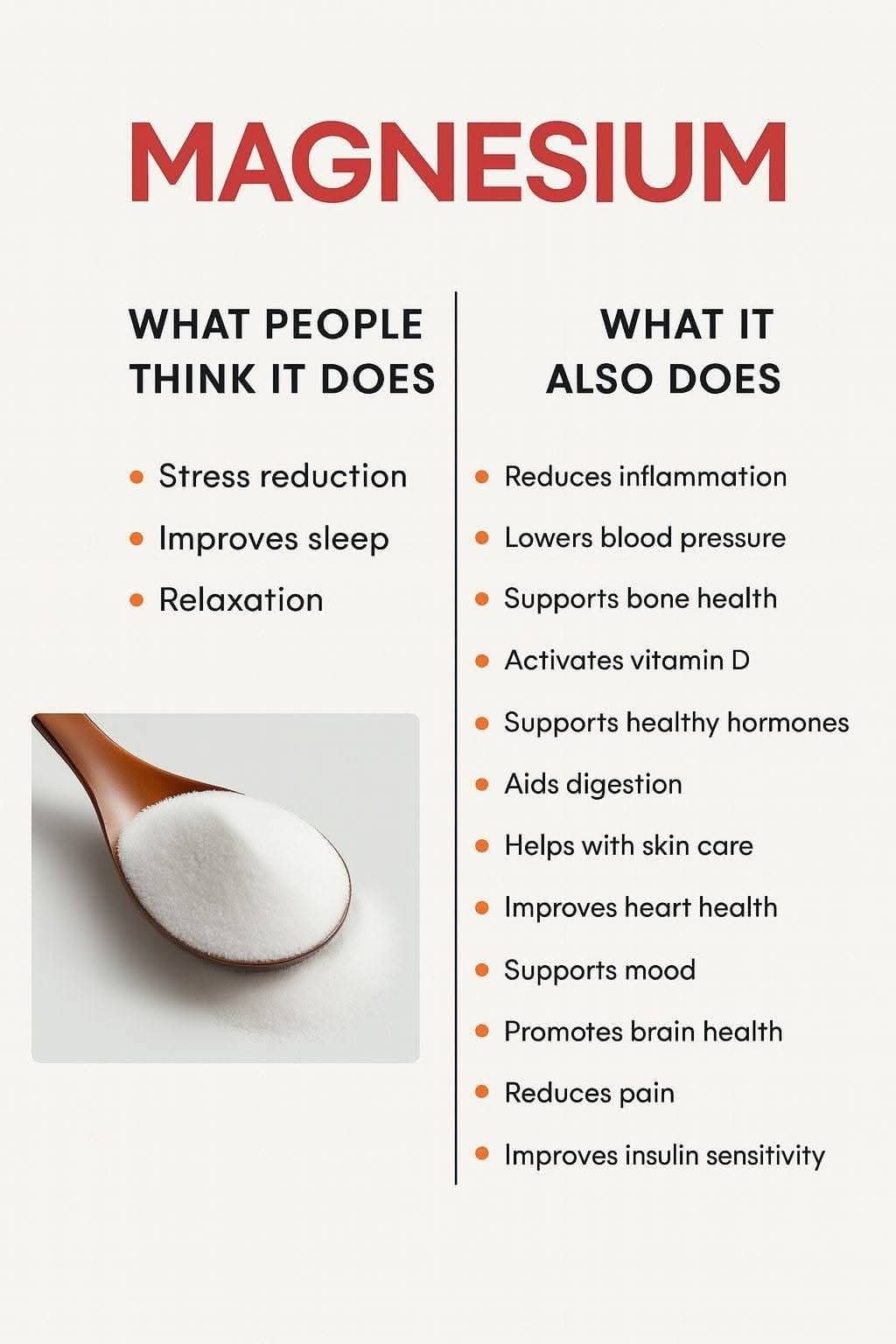
Magnesium is an essential mineral that plays a critical role in the body’s functioning. From supporting bone health to regulating muscle function, magnesium is involved in hundreds of physiological processes. Despite its importance, many people don’t get enough magnesium in their diet, which can lead to a range of health issues. Here’s what you need to know about magnesium and its benefits.
What People Think Magnesium Does
1. Stress Reduction
Magnesium is often touted as a natural stress reliever. It helps regulate the body’s stress response by influencing the production of stress hormones like cortisol. Increasing magnesium intake can promote relaxation and calm the body and mind.
2. Improves Sleep
Magnesium has been linked to better sleep quality. It helps regulate the neurotransmitters that control sleep, especially GABA (gamma-aminobutyric acid), which promotes relaxation and calmness. Magnesium deficiency has been associated with poor sleep, making it a great natural remedy for insomnia.
3. Relaxation
Magnesium helps your body relax by regulating the nervous system and reducing muscle tension. Whether you’re dealing with tight muscles or general anxiety, magnesium can be a calming, soothing option for overall relaxation.
What Magnesium Also Does
1. Reduces Inflammation
Chronic inflammation is linked to many health problems, including heart disease and arthritis. Magnesium has anti-inflammatory properties and helps reduce oxidative stress in the body, promoting better overall health.
2. Lowers Blood Pressure
Several studies suggest that magnesium plays a role in regulating blood pressure. It helps dilate blood vessels, improving circulation and lowering the risk of hypertension. Regular magnesium intake is associated with healthier blood pressure levels.
3. Supports Bone Health
Magnesium is crucial for maintaining strong, healthy bones. It works with calcium and vitamin D to promote bone density and reduce the risk of bone-related issues, such as osteoporosis. Adequate magnesium intake is vital, especially as we age.
4. Activates Vitamin D
Magnesium is needed to activate vitamin D in the body. Vitamin D, in turn, supports calcium absorption, bone health, and immune function. Without enough magnesium, vitamin D may not work efficiently, leading to potential deficiencies.
5. Supports Healthy Hormones
Magnesium helps regulate hormone production, especially in women. It supports the adrenal glands, which produce stress hormones, and plays a role in balancing sex hormones, which can help alleviate symptoms of PMS and menopause.
6. Aids Digestion
Magnesium has a mild laxative effect and can support healthy digestion. It helps to regulate bowel movements and prevent constipation by relaxing the muscles in the intestines. It also supports the production of digestive enzymes.
7. Helps with Skin Care
Magnesium has been shown to improve skin health by reducing inflammation and promoting wound healing. It may help with conditions like acne, eczema, and psoriasis, making it a great addition to skincare routines.
8. Improves Heart Health
Magnesium is a heart-healthy mineral. It supports normal heart rhythm, reduces the risk of arrhythmias, and helps to manage cholesterol levels. Magnesium also works with calcium to maintain proper blood circulation.
9. Supports Mood
Magnesium plays an essential role in mood regulation. It helps balance neurotransmitters in the brain, such as serotonin, which are important for emotional well-being. Low magnesium levels have been linked to anxiety and depression.
10. Promotes Brain Health
Magnesium is vital for cognitive function and memory. It helps protect the brain from oxidative damage, supports healthy neuronal connections, and may even help prevent age-related cognitive decline.
11. Reduces Pain
Magnesium has been shown to help alleviate chronic pain, including migraines, fibromyalgia, and muscle cramps. It works by blocking pain receptors and promoting relaxation of the muscles and nerves.
12. Improves Insulin Sensitivity
Magnesium plays an essential role in regulating blood sugar levels. It helps improve insulin sensitivity, reducing the risk of type 2 diabetes. Adequate magnesium intake supports better glucose control, especially in people with metabolic syndrome.
How to Get More Magnesium in Your Diet
Magnesium is found in a variety of foods, making it easy to incorporate into your diet. Here are some excellent magnesium-rich foods:
Leafy Green Vegetables: Spinach, kale, and Swiss chard are all rich in magnesium.
Nuts and Seeds: Almonds, pumpkin seeds, and sunflower seeds provide a good amount of magnesium.
Whole Grains: Brown rice, oats, quinoa, and barley are excellent sources.
Legumes: Beans, lentils, and chickpeas are packed with magnesium.
Fish: Salmon, mackerel, and other fatty fish provide magnesium and other beneficial nutrients.
Avocados: In addition to being rich in healthy fats, avocados are a great source of magnesium.
Dark Chocolate: Enjoy a small amount of dark chocolate (70% or more) for a delicious magnesium boost.
Bananas: While known for their potassium content, bananas also contain magnesium.
Signs of Magnesium Deficiency
Many people don’t get enough magnesium, which can lead to symptoms like:
Muscle cramps or spasms
Fatigue or weakness
Difficulty sleeping
Irritability or mood changes
Nausea or vomiting
Abnormal heart rhythms
If you experience these symptoms, it might be a sign that you need more magnesium in your diet.
Conclusion: Magnesium’s Vital Role in Your Health
Magnesium is an incredibly important mineral for overall health and well-being. From supporting brain health and digestion to reducing inflammation and improving sleep, the benefits of magnesium are vast. Adding magnesium-rich foods to your diet or considering supplements (if necessary) can help ensure you’re getting enough of this vital nutrient.
Remember, always consult a healthcare provider before taking magnesium supplements, especially if you have existing health conditions or are taking other medications.
More Recipes You Might Like
-

The Tablet in Water Trick for Snake Plants: What It Does, When to Use It, and How to Avoid Burning the Roots
Snake plants are some of the most forgiving indoor plants you can grow, but when their leaves start curling, fading, … Read more
-

How to Save a Dying Snake Plant: The Safe Recovery Method for Yellow Leaves, Dry Soil, and Weak Growth – Best Snake Plant Rescue Guide for Beginners
Snake plants are famous for being almost impossible to kill, but even this tough indoor plant can collapse when the … Read more
-
How to Propagate Rosemary from Cuttings in Water: The Simple Rooting Method for a Fresh Herb Garden at Home – Best Rosemary Propagation Guide for Beginners
Rosemary is one of the most useful herbs you can grow at home. It smells wonderful, looks beautiful in pots, … Read more