Perfect 🌿
Why Spider Plants Get Brown Tips (And How to Fix Them Fast)
Spider plants are one of the most popular indoor plants in the world. They are low-maintenance, beginner-friendly, and known for their beautiful arching green leaves. But even though they are hardy, many plant owners notice one frustrating issue:
Brown leaf tips.
If your spider plant has brown tips, don’t worry — this is extremely common. The good news? It’s usually easy to fix once you understand the cause.
In this complete guide, we’ll cover:
Why spider plants get brown tips
The most common plant care mistakes
How to fix brown leaf tips naturally
The best watering practices
How to prevent brown tips permanently
Expert indoor plant care tips
Let’s dive in 🌿
What Causes Brown Tips on Spider Plants?
Brown tips are usually a sign of environmental stress. Spider plants are resilient, but they react quickly when conditions aren’t ideal.
Here are the main reasons:
1. Tap Water Chemicals (Fluoride & Salt Buildup)
This is the #1 cause.
Many municipal water supplies contain fluoride, chlorine, and dissolved salts. Spider plants are especially sensitive to fluoride. Over time, these chemicals build up in the soil and cause leaf tip burn.
Signs:
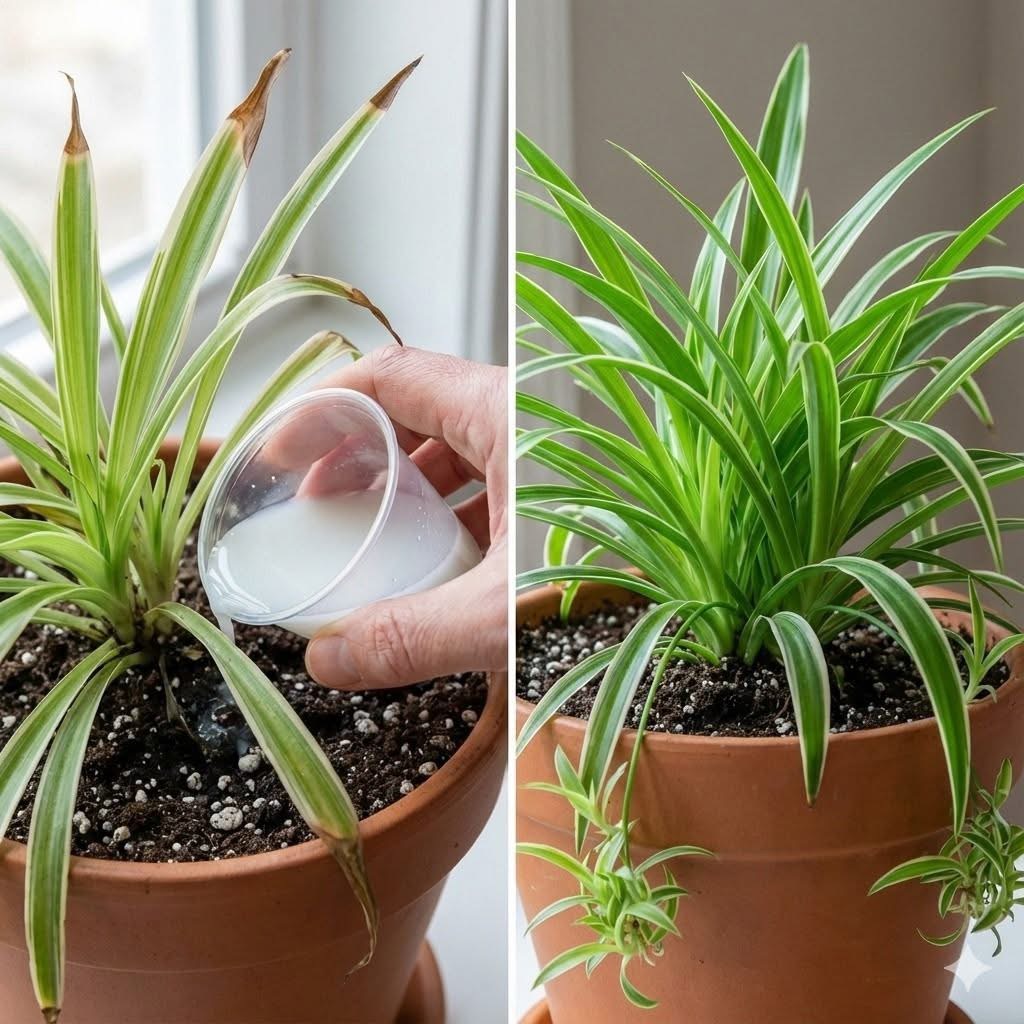
Tips turn brown but the rest of the leaf stays green
Browning slowly spreads
White crust may appear on soil surface
How to Fix It:
✔ Switch to filtered, distilled, or rainwater
✔ Flush the soil once a month with distilled water
✔ Repot with fresh, well-draining indoor potting mix
Using clean water alone can stop the problem within weeks.
2. Overwatering (Root Stress & Root Rot)
Overwatering is one of the biggest indoor plant care mistakes.
Spider plants store water in their thick roots. If the soil stays wet too long, roots begin to suffocate. When roots are stressed, leaf tips turn brown.
Signs of Overwatering:
Yellowing leaves
Mushy soil
Sour smell from pot
Drooping leaves
How to Fix It:
✔ Let the top 1–2 inches of soil dry before watering
✔ Ensure pot has drainage holes
✔ Use a well-draining houseplant soil mix
✔ Avoid letting the pot sit in water
If root rot has started, repot immediately and trim damaged roots.
3. Underwatering (Dry Stress)
On the other hand, if the plant dries out too much, the tips dehydrate first.
Signs:
Crispy brown tips
Soil pulling away from pot edges
Leaves feel thin and dry
Fix:
✔ Water thoroughly when top layer is dry
✔ Don’t let soil stay bone-dry for long
✔ Maintain consistent watering schedule
Consistency is key.
4. Low Humidity (Especially in Winter)
Spider plants prefer moderate humidity. Indoor heating systems dry the air, especially in winter.
Dry air pulls moisture from the leaf tips first.
Signs:
Brown tips during winter months
No yellowing, just dry crisp edges
Fix:
✔ Use a humidifier
✔ Place plant near other plants (grouping increases humidity)
✔ Use a pebble tray with water
✔ Mist occasionally (not excessively)
Humidity levels between 40–60% are ideal.
5. Too Much Direct Sunlight
Spider plants love bright, indirect light. Direct afternoon sun can scorch leaves.
Signs:
Brown tips + pale or bleached leaves
Crispy patches on leaves
Fix:
✔ Move to bright indirect light
✔ Avoid harsh midday sun
✔ East-facing windows are ideal
6. Fertilizer Burn
Too much fertilizer causes salt buildup in soil.
This leads to nutrient toxicity and leaf tip burn.
Signs:
Browning shortly after fertilizing
White salt crust on soil
Fix:
✔ Reduce fertilizing frequency
✔ Use diluted liquid fertilizer
✔ Flush soil every 4–6 weeks
Spider plants do not need heavy feeding.
How to Fix Brown Tips on Spider Plants (Step-by-Step)
Now let’s fix your plant properly.
Step 1: Identify the Cause
Check:
Water source
Soil moisture
Light exposure
Fertilizer schedule
Step 2: Trim the Brown Tips
Use clean scissors.
Cut at an angle following the natural leaf shape. Only remove the brown part — avoid cutting too much green tissue.
This improves appearance instantly.
Step 3: Improve Water Quality
Switch to distilled, filtered, or rainwater.
This is often the fastest solution.
Step 4: Adjust Watering Routine
Water only when needed.
Stick your finger 1–2 inches into soil before watering.
Step 5: Increase Humidity If Needed
Especially in dry climates.
Can Brown Tips Turn Green Again?
No.
Once tissue turns brown, it’s dead.
But new growth can be healthy if you correct the problem.
Healthy new leaves = problem solved.
How to Prevent Brown Tips in the Future
Prevention is easier than fixing.
Here’s a quick checklist:
✔ Use filtered or distilled water
✔ Avoid overwatering
✔ Use well-draining soil
✔ Provide bright indirect light
✔ Flush soil monthly
✔ Avoid heavy fertilizer
Best Soil for Spider Plants
Spider plants prefer:
Well-draining indoor potting mix
Slightly loamy texture
Neutral pH
Avoid compacted soil that holds water too long.
Ideal Growing Conditions for Spider Plants
Temperature: 65–75°F (18–24°C)
Light: Bright indirect sunlight
Humidity: Moderate (40–60%)
Watering: When top 1–2 inches dry
Keep away from cold drafts and heaters.
Are Brown Tips Dangerous to the Plant?
Usually no.
Brown tips are cosmetic, not fatal.
But if ignored, underlying problems like root rot can worsen.
Should You Repot a Spider Plant with Brown Tips?
Repot if:
Roots are overcrowded
Soil smells bad
Water drains poorly
Salt buildup visible
Spider plants like being slightly root-bound, but not severely cramped.
Common Spider Plant Care Mistakes
Using hard tap water
Watering on a fixed schedule
Too much fertilizer
Placing in direct sun
Ignoring drainage
Avoid these and your plant will thrive.
Frequently Asked Questions (FAQ)
Why do spider plant tips turn brown even with good care?
Most likely fluoride sensitivity.
Can I use tap water if I let it sit overnight?
Letting water sit removes chlorine but not fluoride.
Should I cut off brown tips?
Yes, for appearance. It won’t harm the plant.
Do spider plants need fertilizer?
Light feeding during growing season only.
Are brown tips a sign of pests?
Usually no. Check underside of leaves if unsure.
Final Thoughts
Spider plants are incredibly resilient indoor plants. Brown tips are common and usually easy to fix.
In most cases, the real culprit is water quality or inconsistent watering.
Make a few simple adjustments and your spider plant will reward you with:
🌿 Fresh green leaves
🌿 Baby spiderettes
🌿 Healthy, fast growth
With the right care, spider plants can thrive for years.
If you’d like, I can now:
Write a Pinterest description
Create a high-converting Facebook caption
Add affiliate product suggestions for higher RPM
Create a catchy viral headline
Just tell me what you need 🌱✨
-

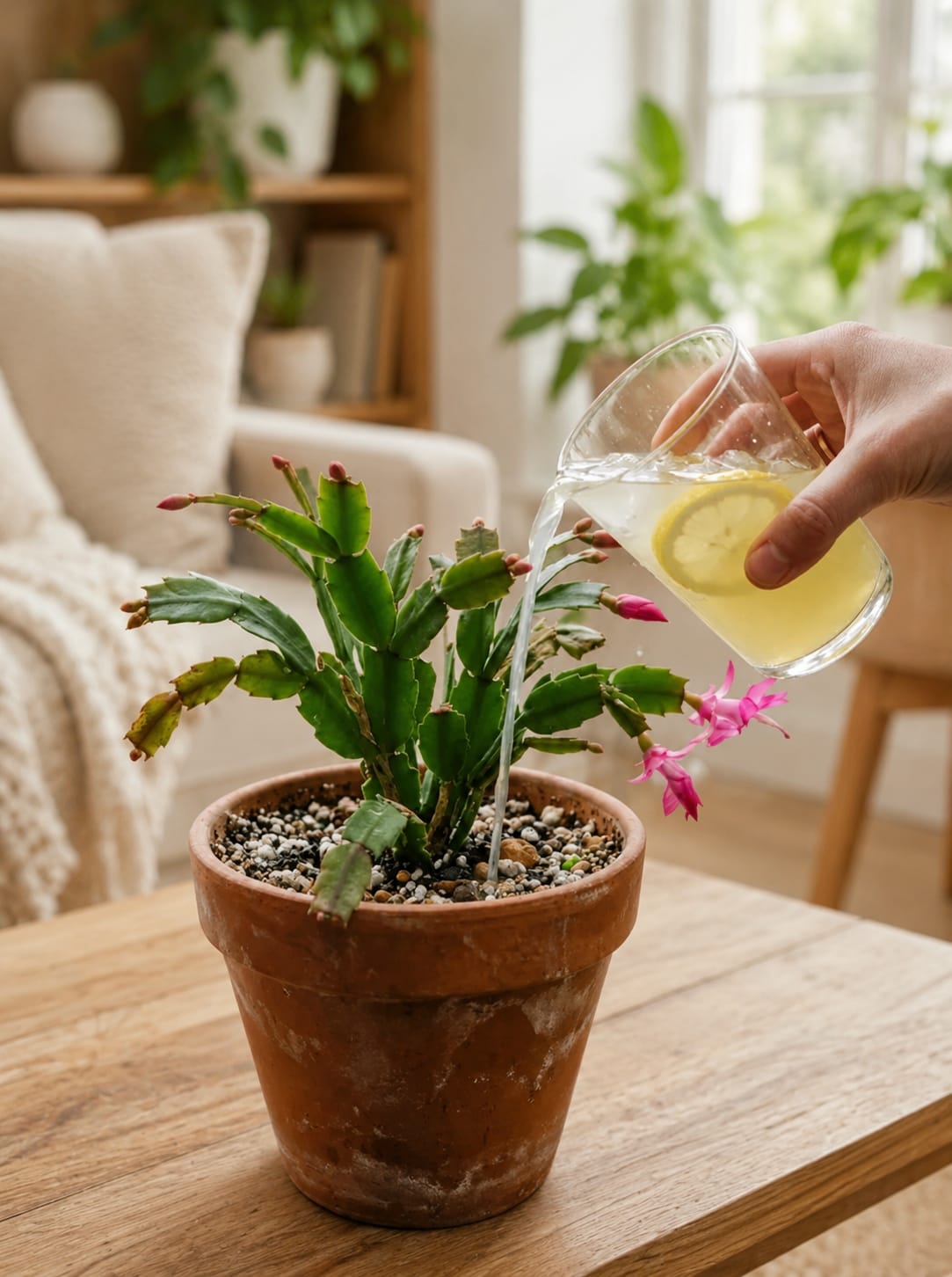
Christmas Cactus Care Guide: How to Use Lemon Water Safely Without Damaging Roots, Buds, or Beautiful Winter Blooms
Christmas cactus is one of the most charming flowering houseplants because it brings color at a time when many other indoor plants are quiet. Its flat green segments, arching shape, and bright flowers make it perfect for windowsills, shelves, hanging baskets, and cozy rooms. When the plant is healthy, the tips can fill with buds…
-

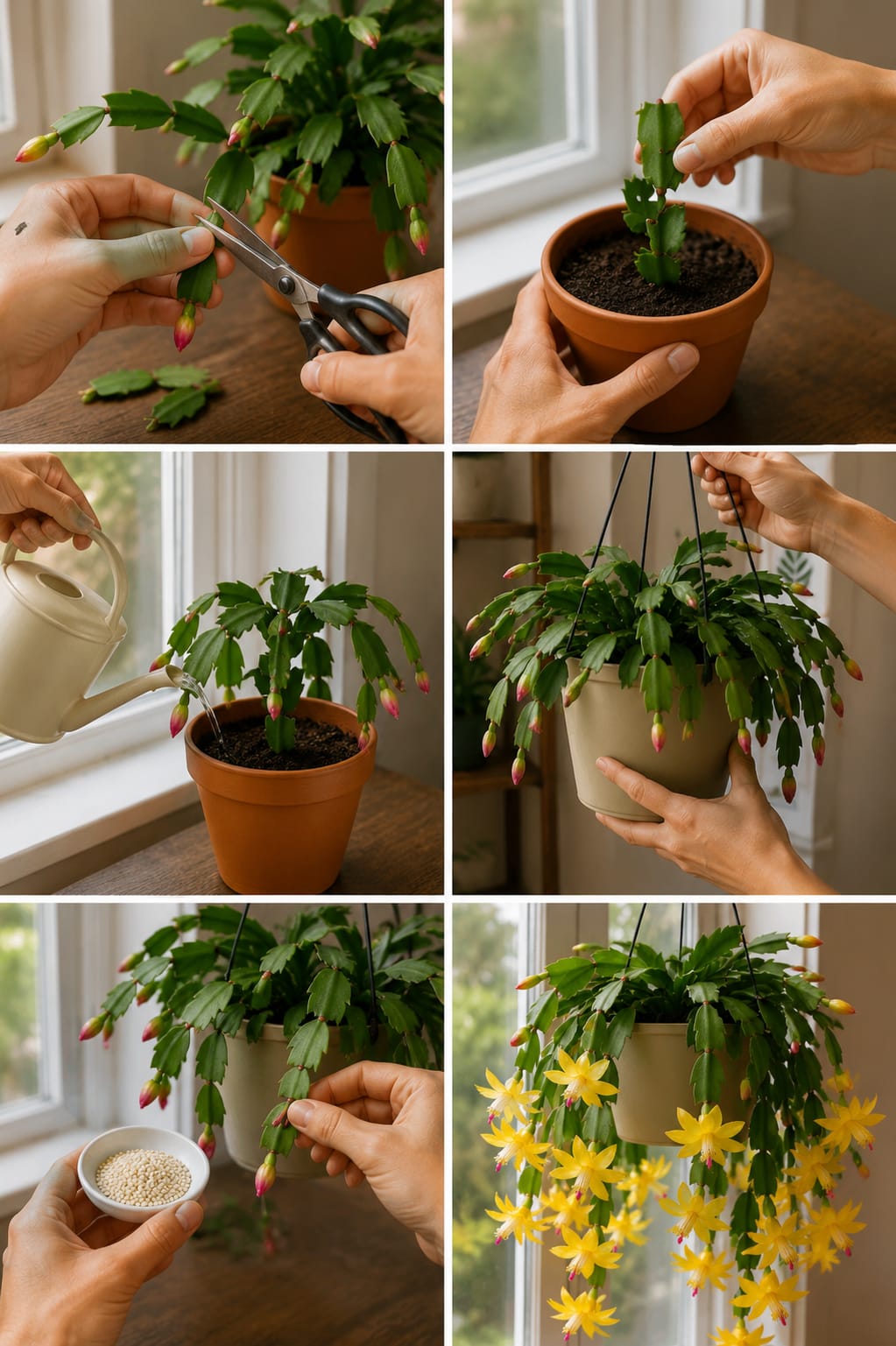
Christmas Cactus Care Guide: How to Grow a Full Hanging Basket With Healthy Segments, Strong Buds, and Bright Flowers
Christmas cactus is one of the most loved flowering houseplants because it can turn a quiet indoor corner into a bright display of color. Its soft green segmented stems hang gracefully over the edge of a pot, and when the plant is happy, the tips fill with buds that open into beautiful flowers. Many people…
-

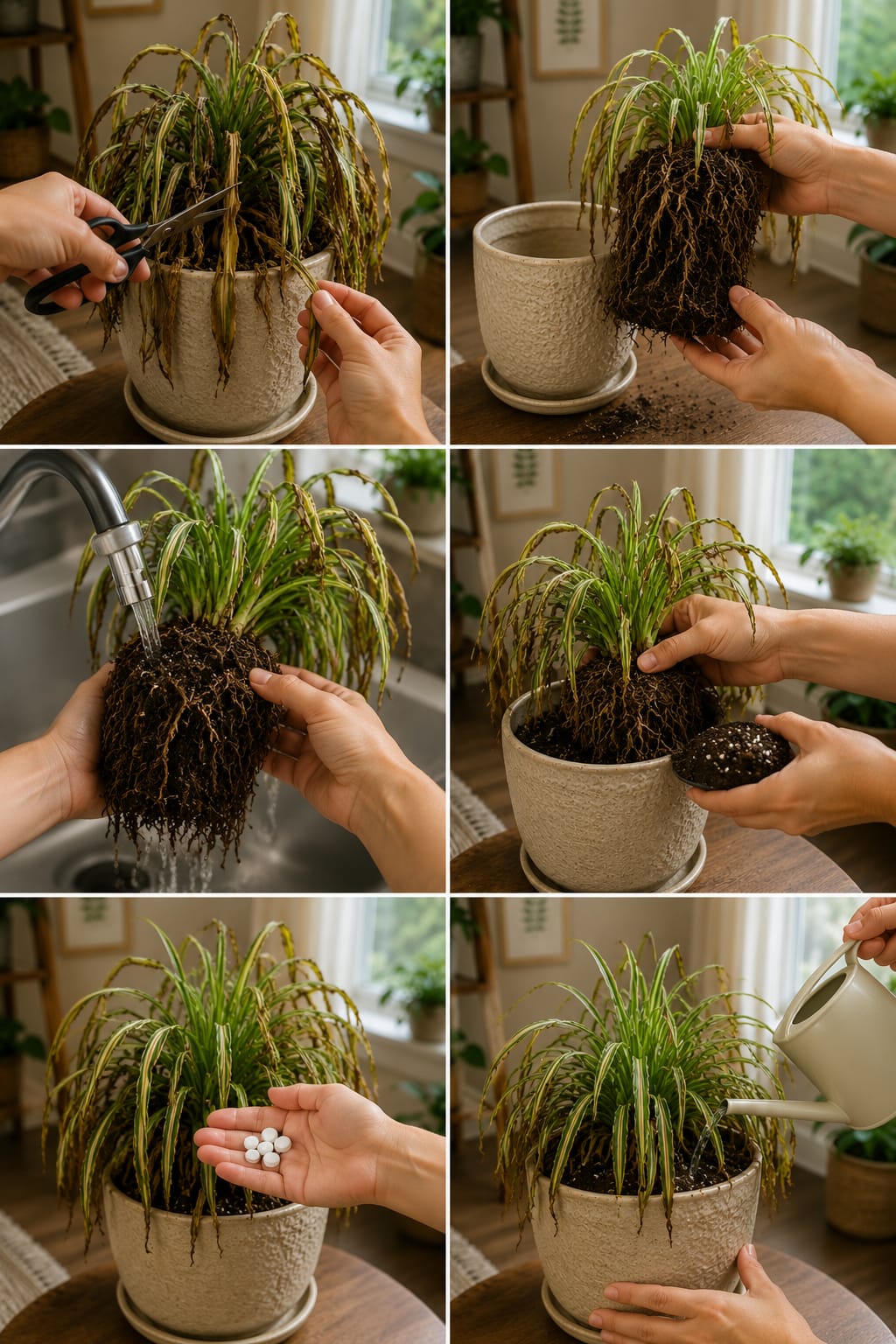
Spider Plant Rescue Guide: How to Revive a Tired Spider Plant With Pruning, Root Care, Fresh Soil, and Safe Watering
Spider plants are usually known as easy, forgiving, and fast-growing houseplants, but even this strong plant can begin to look tired when its roots, soil, water, and light are out of balance. The image shows a struggling spider plant with drooping leaves, brown tips, dry edges, and weak growth being rescued step by step. The…