Discover how ordinary rice water can transform your snake plant. Learn the science behind this kitchen waste remedy, how it repels pests naturally, and whether it can really trigger those elusive blooms.
Your grandmother might have done it. Your neighbor probably swears by it. And now, plant influencers on social media are rediscovering it: using rice water for houseplants. But when it comes to the virtually indestructible snake plant (Dracaena trifasciata), can a handful of rice really make a difference?
The answer, backed by both traditional wisdom and emerging research, is a qualified yes. That cloudy water you usually pour down the drain contains a surprising cocktail of nutrients and compounds that can benefit your snake plant in multiple ways. But like any good thing, it must be used correctly.
Here is the complete guide to using rice water for snake plants—how it fights pests, whether it can trigger blooms, and the simple method that works.
What Makes Rice Water Special?
Rice water isn’t just starchy waste water. When rice is rinsed or boiled, it releases a complex mixture of nutrients into the surrounding water. These compounds are what make rice water valuable for plants .
The nutrient profile of rice water includes:
· Nitrogen (N): Essential for leaf growth and chlorophyll production
· Phosphorus (P): Critical for root development and energy transfer
· Potassium (K): Supports overall plant health, disease resistance, and water regulation
· B vitamins (B1, B3, B6, B9): Help prevent plant cell death and promote healthy growth
· Vitamin E: Acts as an antioxidant, protecting cells from environmental stress
· Trace minerals: Magnesium, calcium, iron, and zinc for structural integrity
· Starches: Feed beneficial soil microorganisms
Research confirms that rice washing water contains measurable NPK values. One study found that white glutinous rice washing water contained 0.15% nitrogen, while red glutinous rice water provided 0.09% phosphorus and 0.14% potassium . These percentages might seem small, but they represent a gentle, slow-release nutrition source perfect for snake plants.
The Pest-Fighting Secret: How Rice Water Protects Your Snake Plant
Snake plants are remarkably pest-resistant, but they aren’t immune. Common pests like fungus gnats, spider mites, and mealybugs can occasionally attack, especially when plants are stressed or overwatered. This is where rice water shows surprising benefits.
How It Works Against Pests
The pest-repellent properties of rice water operate through several mechanisms:
- Starch as a physical barrier. When rice water dries on leaves or soil surface, it leaves behind a thin starch film. This film can trap small insects like aphids and thrips, preventing them from moving freely and feeding . For pests like fungus gnats that breed in moist soil, the starch can create a less hospitable environment for larvae.
- Beneficial microbe stimulation. Rice water feeds beneficial soil bacteria like lactobacilli and mycorrhizae . These microorganisms can outcompete pathogens and may even produce compounds that deter pests. A 2025 study found that rice washing water significantly promoted the growth of beneficial fungi that help suppress plant diseases .
- Nutritional strength. Healthy plants resist pests better than stressed plants. The nutrients in rice water strengthen cell walls and improve overall vigor, making snake plants less attractive to sap-sucking insects.
Real Results Against Specific Pests
Traditional gardeners have documented rice water’s effectiveness against several common pests :
· Aphids: Sprinkling fresh rice water on affected plants three times weekly can reduce aphid populations
· Thrips: Early morning applications help control these chlorophyll-sucking insects
· Fungus gnats: Regular soil drenches disrupt the larval environment
· Spider mites: Foliar sprays can deter these tiny arachnids
One gardener reports that sprinkling fresh rice water on long beans by 11 AM, repeated thrice weekly, effectively destroys aphids . Another notes that diluted fermented rice water applied weekly to curry plants traps psyllids and caterpillars in the sticky fluid.
The Science Behind the Repellent Effect
Research from Indonesian universities suggests that the starch and nutrient content in rice water creates conditions unfavorable for many pests . The nitrogen and potassium strengthen plant tissues, making them harder for piercing insects to penetrate. Meanwhile, the beneficial microbes that thrive on rice water starches may produce natural compounds that deter pests .
For snake plant owners, this means regular rice water applications can serve as both nutrition and preventative pest control—two benefits from one simple ingredient.
Can Rice Water Really Make Snake Plants Bloom?
This is the bigger claim in our title—and it requires a more nuanced answer.
The Truth About Snake Plant Blooms
First, some honesty: snake plants are not grown for their flowers. Unlike orchids or African violets, snake plants bloom infrequently, especially indoors. Their flowers are small, white or greenish, and grow on tall spikes. When they appear, they’re considered a special treat—a sign of a mature, well-cared-for plant .
The conditions that trigger snake plant blooming include:
· Maturity: Plants are typically several years old before blooming
· Stress: Slight root binding can encourage flowering
· Light: Bright indirect light for extended periods
· Season: Blooms often appear in spring after a winter rest period
What Rice Water Contributes
Rice water contains phosphorus, the nutrient most directly linked to flower formation . Phosphorus supports energy transfer within the plant and is essential for bloom development. The potassium in rice water also supports flower production and overall plant health.
By providing these nutrients in a gentle, slow-release form, rice water can contribute to the conditions that make blooming possible . However, it cannot single-handedly force a young, light-starved plant to flower.
The realistic expectation: Regular rice water applications will improve your snake plant’s overall health, which increases the likelihood of blooming over time. But it’s not a magic bullet that will produce flowers overnight.
Supporting Factors for Blooms
If you want your snake plant to bloom, combine rice water with :
· Adequate light: Move plants to brighter locations gradually
· Proper pot size: Slight root restriction can help
· Seasonal rest: Reduce watering in winter
· Patience: Wait for plant maturity (3-5 years typically)
How to Make and Use Rice Water for Snake Plants
Now for the practical part. Here are the safe, effective methods for preparing and applying rice water.
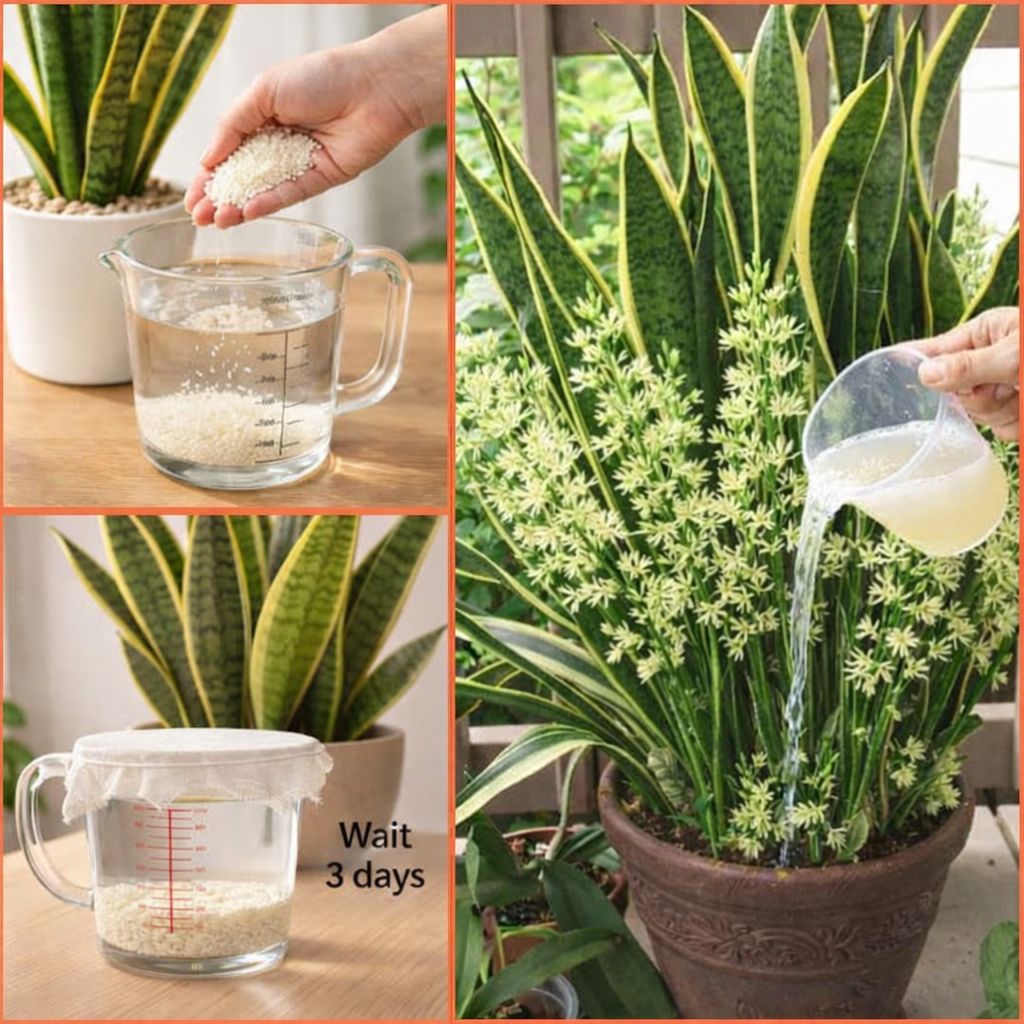
Method 1: The Soaking Method (Safest)
This method produces the gentlest rice water, ideal for regular use .
What you need:
· ½ cup uncooked white rice (avoid flavored or seasoned rice)
· 2 cups water
· A clean jar or container
· Strainer
Instructions:
- Place rice in a bowl and cover with water
- Swirl gently with your hand for 30-60 seconds until water becomes cloudy
- Strain the rice, collecting the cloudy water in your container
- The rice can now be cooked normally
- Use the collected water within 24-48 hours
Method 2: The Boiled Rice Water
This method extracts more nutrients but requires dilution .
Instructions:
- Cook rice using more water than usual
- After cooking, strain off the excess water
- Allow to cool completely
- Dilute with fresh water at a ratio of 1 part rice water to 5 parts water
- Use within 24 hours
Important caution: If you added salt to the cooking water, do not use it on plants—salt harms roots .
Method 3: Fermented Rice Water (Stronger Option)
Fermentation increases nutrient availability but requires care .
Instructions:
- Collect rice water as in Method 1
- Pour into a jar and cover with cloth (not airtight lid)
- Let sit at room temperature for 3-5 days
- The mixture will become slightly sour and bubbly
- Dilute with 10 parts water before using
- Use within one week
Application Methods
For pest control (foliar spray) :
· Pour rice water into a clean spray bottle
· Spray leaves thoroughly, including undersides
· Apply early morning or late evening
· Repeat weekly for pest prevention
· For active infestations, apply 3 times weekly
For nutrition (soil drench) :
· Pour diluted rice water directly onto soil
· Use enough to moisten the root zone
· Apply once monthly during growing season
· Avoid winter applications when plants rest
How Much to Use
For a standard 6-inch pot containing a snake plant, use approximately ½ to 1 cup of diluted rice water per application . Adjust for pot size—larger pots can handle slightly more.
Important Precautions and Mistakes to Avoid
Rice water is gentle, but improper use causes problems. Here’s what to watch for.
The Risks
Starch buildup: Too much rice water leaves starch residues that can :
· Attract ants and spiders
· Create foul odors as it decomposes
· Encourage mold growth on soil surface
Pest attraction: While rice water repels some pests, improperly stored or over-applied rice water can attract fungus gnats .
Fermentation issues: Rice water left too long becomes acidic and can harm plants. Always use fresh or properly fermented and diluted product .
Signs You’re Overdoing It
Stop rice water applications if you notice :
· White mold growing on soil surface
· Sour, rotten smell from pot
· Yellowing leaves (may indicate root stress)
· Fungus gnat population explosion
· Soil staying wet too long
What Type of Rice to Use
Best choices :
· White rice (standard long-grain)
· White glutinous rice (higher nutrient content)
· Brown rice (acceptable but may have more particles)
Avoid :
· Flavored or seasoned rice mixes
· Rice cooked with salt
· Rice with added oils or spices
· Instant rice products with additives
Research suggests that glutinous rice varieties may provide higher nutrient levels than standard white rice . If you have access to glutinous or “sticky” rice, its washing water may be particularly beneficial.
The Complete Rice Water Schedule for Snake Plants
For best results, follow this simple schedule:
Frequency Application Purpose
Once monthly (spring-fall) Soil drench with fresh rice water General nutrition and soil microbe support
Weekly (spring-fall) Foliar spray with diluted rice water Pest prevention and leaf health
3 times weekly (if pests appear) Foliar spray with fresh rice water Active pest treatment
Not at all (winter) Stop all applications Allow plant dormancy
What the Research Really Says
While much of the evidence for rice water’s benefits comes from traditional practice, scientific studies are beginning to confirm its value.
Nutrient content: Studies confirm measurable NPK values in rice washing water, with glutinous rice varieties showing the highest concentrations .
Microbial support: Research demonstrates that rice water promotes beneficial soil fungi that help suppress plant diseases . These same fungi may contribute to pest resistance.
Traditional knowledge: Gardeners across Asia have used rice water for generations, reporting benefits for plant growth and pest resistance . This collective experience, while not “scientific” in the Western sense, represents centuries of observation.
Combining Rice Water with Other Natural Treatments
Rice water works well alongside other kitchen-sink remedies. Consider this complementary schedule:
· Week 1: Rice water soil drench
· Week 2: Banana peel water (potassium boost)
· Week 3: Rice water foliar spray
· Week 4: Plain water only
This rotation provides diverse nutrients while preventing any single element from building up excessively.
The Bottom Line: What Rice Water Can and Cannot Do
What It CAN Do ✅
· Provide gentle, slow-release nutrition
· Support beneficial soil microorganisms
· Help deter common pests like aphids and fungus gnats
· Improve overall plant vigor
· Reduce kitchen waste
· Contribute to conditions that may encourage blooming over time
What It CANNOT Do ❌
· Force immediate blooming in immature plants
· Replace all fertilizer needs
· Cure severe pest infestations alone
· Fix problems caused by poor light or overwatering
· Work if applied incorrectly (undiluted, too often, or fermented poorly)
Conclusion: One Handful, Many Benefits
That single handful of rice you rinse before cooking holds more potential than you might think. The cloudy water, traditionally discarded, contains a gentle blend of nutrients and starches that can support your snake plant’s health, help ward off pests, and contribute to the conditions that make those rare, lovely blooms possible .
The key is using it correctly—fresh or properly fermented, appropriately diluted, and applied on a sensible schedule. Too much enthusiasm leads to starch buildup and potential problems. But used wisely, rice water becomes a free, sustainable addition to your plant care routine.
So next time you cook rice, save that water. Your snake plant might just thank you with stronger growth, better pest resistance, and perhaps—with patience and good care—even a flower spike or two.
Frequently Asked Questions
Q: Can I use rice water on other houseplants?
A: Yes! Rice water benefits many plants, including pothos, monsteras, peace lilies, and ferns. Avoid using on succulents and cacti, which prefer leaner conditions .
Q: How long does rice water keep?
A: Fresh rice water should be used within 24-48 hours if refrigerated. Fermented rice water keeps 5-7 days at room temperature if properly covered .
Q: Will rice water attract bugs to my house?
A: Properly diluted rice water applied to plants should not attract indoor pests. However, spilled rice water or over-wet soil can attract fungus gnats .
Q: My rice water smells bad. Can I still use it?
A: If it smells rotten or sour in an unpleasant way, discard it. Properly fermented rice water has a mild sour smell, not a putrid one .
Q: Is brown rice better than white rice for plant water?
A: Brown rice contains more nutrients overall, but both work well. White rice water is less likely to develop off-odors quickly .
Q: Can rice water replace regular watering?
A: No. Use rice water in place of plain water once monthly during growing season, not for every watering. Plants still need plain water between treatments .
More Ideas You Might Like
-

Why Some Homeowners Are Using Onion Water Around Orchids and What Usually Helps More for Strong Roots, Healthy Leaves, and Long-Lasting Blooms
Orchids are among the most elegant indoor flowering plants for homeowners who want graceful stems, glossy green leaves, long-lasting blooms, and a refined decorative display that fits beautifully in living rooms, bedrooms, apartments, home offices, bright kitchens, windowsills, covered patios, commercial interiors, luxury home staging, and premium indoor plant styling. A healthy orchid can turn…
-

Why Some Homeowners Are Pouring Aloe Water Around Orchids and What Usually Helps More for Strong Roots, Healthy Leaves, and Long-Lasting Blooms
Orchids are among the most elegant indoor flowering plants for homeowners who want graceful blooms, sculptural roots, glossy leaves, and a premium decorative display that fits beautifully in living rooms, bedrooms, apartments, home offices, bright kitchens, balcony gardens, covered patios, commercial interiors, luxury home staging, and refined indoor plant styling. A healthy orchid can make…
-
Why Some Homeowners Are Adding Brown Powder Around Snake Plants and What Usually Helps More for Strong Roots, Fuller Growth, and Healthy Indoor Leaves
Snake plant is one of the most dependable indoor plants for homeowners who want strong upright leaves, bold green patterning, yellow-edged variegation, easy maintenance, and a clean decorative display that fits beautifully in living rooms, bedrooms, apartments, home offices, bright kitchens, entry corners, sunny windowsills, plant shelves, commercial interiors, luxury home staging, and premium indoor…