Anthuriums are some of the most beautiful tropical houseplants you can grow indoors. When they are healthy, they look almost unreal. Their glossy heart-shaped leaves stand tall, their colorful spathes glow in shades of red, pink, white, peach, or purple, and the plant gives a room that lush greenhouse feeling without needing a giant space.
But when an anthurium starts to struggle, it can look heartbreaking. The leaves turn yellow. The edges become brown and crispy. The flowers fade, curl, or dry out. The stems lean. The whole plant begins to look tired, as if it has used up all its energy. Many people see a yellowing anthurium and immediately think it needs more water, more fertilizer, or a bigger pot. But very often, the real problem is hidden under the soil.
That is where the white stone trick comes in.
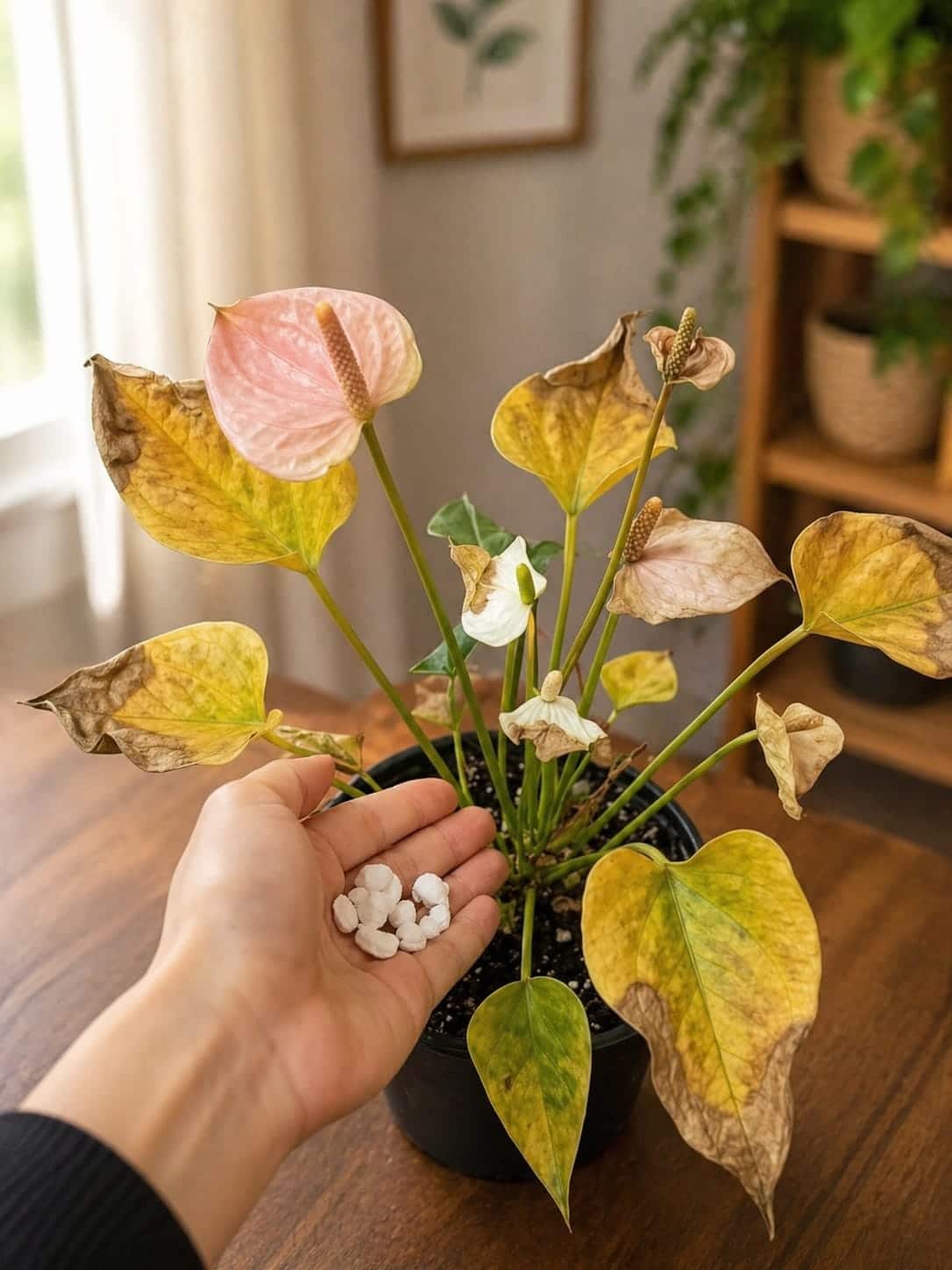
In the image, a hand is holding small white stones near a yellowing anthurium. The plant has pale leaves, brown edges, and fading blooms, which are common signs of root stress, poor drainage, mineral imbalance, or old compacted soil. The little white pieces look simple, but they can represent one of the most useful anthurium care tricks: refreshing the root zone with a light, airy mineral material such as perlite, pumice, or small horticultural limestone chips used carefully.
The safest and most practical version of this trick is using perlite or pumice. These white, lightweight stones are not magic fertilizer. Instead, they improve the structure of the soil. They help create air pockets around the roots, reduce sogginess, and allow water to move through the pot more freely. For anthuriums, this can make a huge difference because these plants need moisture and oxygen at the same time.
If your anthurium has yellow leaves and brown patches, the white stone trick may help when the problem is caused by heavy soil, poor drainage, or roots that are staying too wet. It is not a miracle cure for every issue, but it can be part of a powerful rescue routine. The key is knowing what the white stones are, how to use them, and when the plant needs more than a surface treatment.
In this complete guide, you will learn what the white stone anthurium trick is, why it works, how to apply it safely, how to rescue a yellowing anthurium, and how to keep your plant growing glossy green leaves and fresh blooms again.
What Is the White Stone Anthurium Trick?
The white stone anthurium trick is a simple soil-improvement method where small white mineral pieces are added to the potting mix or top layer of an anthurium plant. These white pieces are usually perlite, pumice, or another airy mineral amendment. Their job is to loosen the soil and help the roots breathe.
Anthuriums are tropical plants, but they do not like dense, swampy soil. In nature, many anthuriums grow in loose organic debris, mossy material, bark, and airy spaces where their roots receive moisture without being buried in compact mud. Indoors, they often struggle because they are placed in ordinary potting soil that holds too much water.
When the soil stays wet for too long, the roots cannot get enough oxygen. The plant may still look like it needs water because the leaves droop or yellow, but the real problem is that the roots are suffocating. If this continues, the roots may rot.
The white stone trick helps by improving the soil structure. Perlite and pumice create tiny air pockets. They keep the mix from packing tightly around the roots. They allow water to drain faster while still leaving some moisture behind for the plant. This is exactly what anthuriums love.
Think of the white stones as breathing space for the roots. They do not feed the plant directly, but they help the roots function better. Healthy roots are what allow the plant to absorb water, nutrients, and energy for new leaves and blooms.
What Are the White Stones?
The white stones in this type of trick are most safely understood as perlite or pumice. Both are common gardening materials used to improve drainage and aeration.
Perlite is very lightweight, bright white, and almost foam-like in appearance. It is made from volcanic glass that has been heated until it expands. Gardeners use it because it keeps potting mixes airy and prevents compaction. It is very common in indoor plant soil mixes.
Pumice is also volcanic, but it is heavier and more stone-like than perlite. It is often white, gray, or pale beige. It improves drainage and aeration while staying in place better than perlite. Many plant collectors prefer pumice because it does not float to the top as easily.
Small limestone chips or calcium stones are sometimes used by gardeners, but they are not always ideal for anthuriums because they can affect soil pH. Anthuriums usually prefer a slightly acidic to neutral growing environment, so limestone should be used cautiously, if at all.
For most home growers, perlite or pumice is the best choice. They are safe, simple, easy to find, and useful for anthurium roots.
Why Yellow Anthurium Leaves Often Point to Root Problems
Yellow leaves are one of the most common anthurium complaints. A yellow leaf can mean many things, but when several leaves turn yellow and brown at the edges, the roots should be checked first.
Anthurium roots need oxygen. If the soil is dense, old, soggy, or compacted, the roots begin to struggle. Once roots are stressed, the leaves show it. They may turn yellow, develop brown patches, droop, curl, or lose their shine.
Many people respond by watering more, but if the roots are already wet and suffocating, more water makes the problem worse. The plant may look thirsty because it cannot absorb water properly, even though the soil is wet.
This is why the white stone trick can be useful. By adding perlite or pumice, you improve the root environment. But if the plant is already severely damaged, simply placing a few stones on top may not be enough. The plant may need a full repot into a fresh, chunky, airy mix.
Yellow leaves are a message. They are telling you to check the care routine, especially the root zone.
Can White Stones Save a Dying Anthurium?
White stones can help save an anthurium if the main issue is poor drainage or compact soil. But they cannot reverse dead leaves or magically repair rotten roots. They are part of the solution, not the entire cure.
If your anthurium has only a few yellow leaves and the soil is slightly heavy, adding perlite or pumice to the top layer and improving watering may help. If the soil is very dense, sour-smelling, or wet for many days, the plant should be repotted.
If the roots are mushy, black, or rotten, the white stones alone will not save the plant. You must remove the plant from the pot, cut away rotten roots, and repot it into fresh airy mix.
So the answer depends on the condition of the plant. For mild stress, the white stone trick can be enough to refresh the pot. For serious decline, it should be used as part of a full rescue routine.
How to Tell If Your Anthurium Needs This Trick
Your anthurium may benefit from the white stone trick if the soil feels dense, heavy, or compacted. If water sits on the surface before sinking in, that is a sign the mix is not airy enough. If the pot stays wet for many days after watering, the roots may not be getting enough oxygen.
Other signs include yellow leaves, brown leaf edges, drooping even when the soil is damp, slow growth, fading blooms, and a sour smell from the pot. Fungus gnats can also be a clue that the soil is staying too wet.
You can test the soil by pushing a finger or wooden skewer into the pot. If the mix feels sticky, muddy, or tightly packed, it may need more aeration. If the skewer comes out wet after several days, the soil is holding too much moisture.
A healthy anthurium mix should feel loose and slightly chunky. It should hold some moisture but never feel like a heavy wet sponge.
When Not to Use the White Stone Trick
Do not use this trick as a cover-up for severe root rot. If the plant smells rotten or the base is soft, you need to inspect the roots. Adding white stones on top of rotten soil will not fix what is happening below.
Do not use decorative white stones that are painted, dyed, polished with chemicals, or taken from unknown sources. Decorative stones may look pretty, but they are not always safe for houseplant soil. Use horticultural perlite or pumice made for plants.
Do not use white gravel to create a thick decorative layer over the soil. A thick stone layer can make it harder to check moisture and may trap dampness underneath. Anthuriums need a breathable surface.
Do not use limestone chips unless you understand your soil pH and plant needs. Too much lime can shift the soil in a direction anthuriums may not like.
Do not assume white stones are fertilizer. If your plant needs nutrients, use proper fertilizer. Perlite and pumice improve structure, not feeding.
The Best White Stone Mix for Anthuriums
The best way to use white stones is to mix them into a chunky anthurium potting blend. Anthuriums do not want regular potting soil alone. They grow better in a mix that holds moisture while still allowing air around the roots.
A simple anthurium rescue mix can include:
- 2 parts orchid bark
- 1 part indoor potting mix or coco coir
- 1 part perlite or pumice
- A small handful of horticultural charcoal, optional
This mix gives the roots moisture, air, and drainage. Orchid bark creates chunky spaces. Potting mix or coco coir holds some moisture. Perlite or pumice keeps everything open and breathable. Charcoal can help keep the mix fresher, though it is optional.
If your plant is badly stressed, repotting into this mix can make a bigger difference than any fertilizer or leaf spray.
How to Use the White Stone Trick as a Surface Refresh
If your anthurium is only mildly stressed and you do not want to repot right away, you can use the white stones as a surface refresh.
- Remove any dead leaves, fallen blooms, or decaying material from the soil surface.
- Use a spoon to gently loosen the top inch of soil.
- Remove a small amount of old compacted top soil if needed.
- Add a small handful of perlite or pumice.
- Mix it gently into the top layer.
- Do not bury the crown of the plant.
- Water only when the plant actually needs water.
This method can improve airflow at the top of the pot and help the surface dry more evenly. It is helpful for minor compaction or mild fungus gnat prevention. But it will not fix deep soggy soil at the bottom of the pot.
If the plant continues to yellow, do a full repot.
How to Use the White Stone Trick During Repotting
For a struggling anthurium, a full repot is often the best option. This is where the white stones become most useful.
- Gently remove the anthurium from its pot.
- Shake away old soil from the roots.
- Inspect the roots carefully.
- Trim any black, mushy, hollow, or rotten roots with clean scissors.
- Prepare a chunky mix with perlite or pumice.
- Place a little mix in the bottom of the pot.
- Set the plant so the crown sits above the soil line.
- Fill around the roots with the airy mix.
- Tap the pot gently, but do not pack the soil tightly.
- Water lightly if the roots are healthy, or wait a few days if many roots were trimmed.
After repotting, keep the plant in bright indirect light. Do not fertilize immediately. Give the roots time to adjust. The plant may look worse for a short period before it improves, especially if many roots were damaged.
Why Perlite Works So Well for Anthuriums
Perlite is useful because it creates air spaces in the soil. It is lightweight and does not hold too much water. When mixed into potting soil, it prevents the soil from becoming dense and suffocating.
Anthurium roots are sensitive to lack of oxygen. Dense soil can stay wet and push air out. Perlite helps prevent this by keeping the mix open. It also helps water drain more quickly after watering.
Another benefit is that perlite is easy to find. Most garden centers sell it, and many houseplant mixes already contain it. If your potting mix looks dark, heavy, and fine-textured, adding perlite can make it much better for anthuriums.
The downside is that perlite can float to the top over time. This is not harmful, but some people dislike the look. If that bothers you, pumice may be a better choice.
Why Pumice Is Even Better for Some Anthuriums
Pumice works like perlite but is heavier and more stable. It adds air pockets while also holding a small amount of moisture inside its porous surface. It does not float as much as perlite, and it can make the potting mix feel more balanced.
For anthuriums in larger pots, pumice is excellent because it improves drainage without making the mix too light. It also lasts a long time and does not break down quickly.
Pumice may be harder to find than perlite, depending on where you live, but many plant shops and online garden suppliers carry it.
Both perlite and pumice can work. The best choice is the one you can use consistently and safely.
Can White Stones Fix Brown Leaves?
White stones cannot turn brown leaves green again. Once a leaf has turned brown or crispy, that tissue is permanently damaged. However, improving the root zone can prevent more leaves from browning.
Brown edges on anthuriums can come from several causes: overwatering, underwatering, fertilizer burn, low humidity, too much direct sun, or root stress. If the brown edges are paired with yellowing and wet soil, root stress is very likely.
After improving the soil, trim off badly damaged leaves if they look unsightly. Use clean scissors and cut near the base of the stem. Do not remove all leaves at once unless they are completely dead, because the plant still needs foliage for energy.
New healthy leaves are the sign of recovery. Old damaged leaves will not repair themselves.
Can White Stones Make Anthuriums Bloom Again?
White stones do not directly trigger blooms, but they can help create the root conditions needed for blooming. Anthuriums bloom best when they have healthy roots, bright indirect light, warmth, humidity, and gentle feeding.
If the roots are suffocating in wet soil, the plant will not have the energy to bloom well. By improving the soil with perlite or pumice, you help the roots recover. Once the roots are healthier, the plant may produce better leaves and eventually more blooms.
However, if your anthurium is not blooming, light is often the biggest issue. These plants need bright indirect light to flower. A plant kept in a dim corner may survive, but it may not bloom.
Use the white stone trick for root health, then improve light for blooms.
Best Light for a Recovering Anthurium
A recovering anthurium needs bright indirect light. Do not place it in harsh direct sun, especially if the leaves are already yellow or weak. Direct sun can burn the leaves and make brown patches worse.
An east-facing window is often ideal. It gives gentle morning light without the harshest afternoon heat. A bright room with filtered light also works well. If the room is dim, a grow light can help.
Good light helps the plant use water properly. In low light, soil stays wet longer and roots are more likely to struggle. Bright indirect light supports recovery by giving the plant energy while allowing the soil to dry at a healthy pace.
If your anthurium has been in a dark corner, move it gradually to brighter light. Sudden changes can stress an already weak plant.
Best Watering Routine After Adding White Stones
After adding perlite or pumice, you still need to water carefully. Better drainage does not mean the plant should be watered constantly. Anthuriums like moisture, but they do not like soggy roots.
Water when the top inch of the mix begins to dry. Because anthurium mix is chunky, it may feel dry on top while still slightly moist deeper down. Use your finger, a wooden skewer, or the weight of the pot to judge moisture.
When watering, pour slowly until water drains from the bottom. Let the pot drain completely. Empty the saucer. Do not let the pot sit in water.
If the plant has very few healthy roots after repotting, water more cautiously. A reduced root system cannot absorb as much moisture, so the mix may stay wet longer.
Why Drainage Holes Are Essential
The white stone trick works best in a pot with drainage holes. Without drainage, water collects at the bottom, even if the top of the soil looks dry. This can rot the roots.
Some people add stones to the bottom of a no-drainage pot and think that solves the problem. It does not. A drainage layer can create a hidden wet zone where roots sit in stagnant water. The safest option is a pot with actual drainage holes.
If you love a decorative pot without holes, use it as a cover pot. Keep the anthurium in a nursery pot with holes and place that inside the decorative pot. Remove it for watering, let it drain, and then put it back.
Drainage holes are more important than any trick.
Can You Put White Stones at the Bottom of the Pot?
It is better to mix perlite or pumice throughout the potting mix than to place a thick layer at the bottom. A bottom layer of stones does not improve drainage as much as people think. It can actually create a perched water zone above the stones, leaving roots wetter.
Instead, mix the white stones into the soil evenly. This improves airflow throughout the root zone. Anthurium roots need oxygen everywhere, not just at the bottom.
A small amount of chunky material at the bottom is not a disaster, but it should not replace a proper airy mix or drainage holes.
Can You Use Decorative White Pebbles?
Decorative white pebbles can look pretty, but they are not the best rescue material. They are usually heavier, less porous, and may not improve the soil structure much unless mixed carefully. Some decorative stones may also be coated or treated.
If you use decorative pebbles, use them only as a light top dressing and make sure they are clean and natural. Do not create a thick layer that blocks airflow or hides soil moisture.
For actual root improvement, use horticultural perlite or pumice. They are made for plant care and work much better in potting mixes.
Continue to Page 2
Continue to page 2 for more details about this article and the key points many readers miss on the first page.