Can You Use Eggshells as White Stones?
Eggshell pieces may look like white stones, but they are not the same as perlite or pumice. Eggshells are mostly calcium carbonate and break down very slowly. They do not create the same aeration benefits.
Large eggshell chunks can sit in the soil for a long time and may look messy. If not cleaned properly, they can smell or attract pests. Finely crushed eggshell powder can be used as a tiny calcium amendment, but it is not a drainage solution.
If your anthurium is yellowing because the soil is too wet, eggshells will not fix it. Use perlite or pumice instead.
Can You Use Chalk or Calcium Tablets?
No, chalk and calcium tablets are not recommended for anthuriums. They may contain binders, additives, or forms of calcium that are not suitable for soil. They can also affect pH unpredictably.
Do not add random white tablets or crushed supplements to plant pots. Human supplements are not designed for houseplant soil.
Use horticultural products made for plants. Perlite, pumice, orchid bark, and proper fertilizer are safer and more predictable.
Can You Use Leca Balls Instead?
Leca balls are expanded clay pellets. They are often beige or reddish, not white, but some people confuse them with mineral stones. Leca can be useful in semi-hydroponic growing or as part of a chunky mix, but it does not feed the plant.
For anthuriums, leca can help with aeration if used correctly, but it is different from perlite and pumice. If you are growing in leca alone, you need a nutrient solution and a different watering method.
For a simple soil rescue, perlite or pumice is easier.
Should You Fertilize After Using the White Stone Trick?
Do not fertilize immediately if the plant is stressed or freshly repotted. Damaged roots need time to recover. Fertilizer can burn weak roots and make yellowing worse.
Wait until the plant shows signs of recovery, such as a new leaf, firmer stems, or stable growth. Then use a weak balanced houseplant fertilizer during active growth.
Anthuriums prefer gentle feeding. Use half strength or weaker every four to six weeks in spring and summer. Reduce feeding in fall and winter unless the plant is growing under strong light.
Remember, perlite and pumice are not fertilizer. They improve structure. Feeding comes later.
How to Trim a Yellowing Anthurium
Yellow leaves will not turn green again. If a leaf is mostly yellow or brown, remove it so the plant can focus on new growth. Use clean scissors and cut the leaf stem near the base.
Do not remove every leaf if some still have green tissue. The plant needs leaves to make energy. Remove the worst leaves first and leave any that are still mostly green.
Old faded anthurium blooms can also be removed. Cut the flower stem near the base. This keeps the plant tidy and helps it direct energy toward roots and new growth.
After trimming, avoid overwatering. A plant with fewer leaves uses water more slowly.
How Long Does Recovery Take?
Anthurium recovery is not instant. After improving the soil, the plant may take several weeks to stabilize. Yellow leaves may continue to decline because they were already damaged. The real sign of success is new healthy growth.
Look for new green leaves, firmer stems, and roots that stay healthy. If the plant stops yellowing and begins producing fresh growth, the rescue is working.
Do not keep changing treatments every few days. Plants need time. After repotting or refreshing the soil, give the anthurium stable light, careful watering, and patience.
A Full Rescue Routine for a Yellow Anthurium
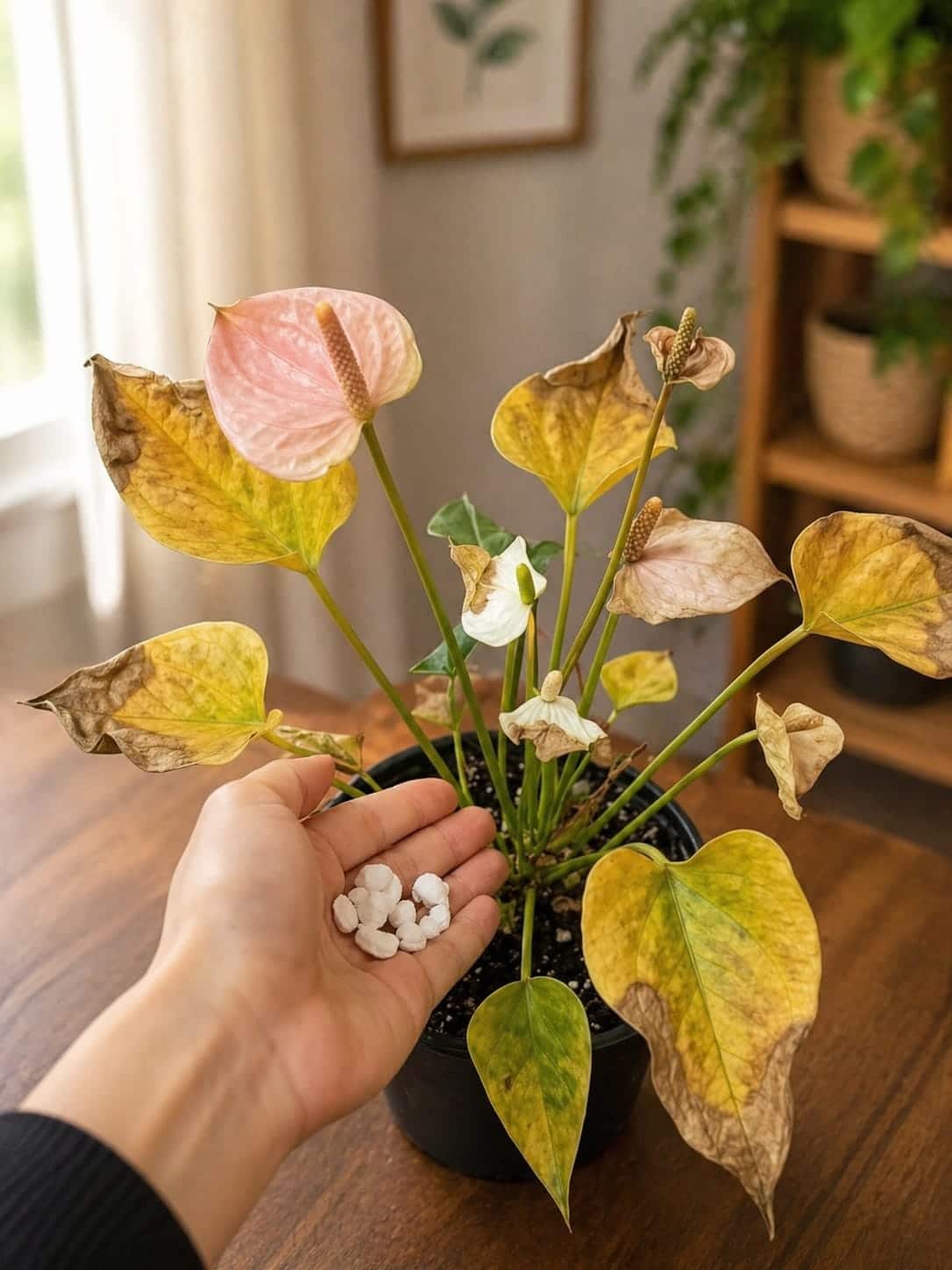
If your anthurium looks like the plant in the image, with yellowing leaves and fading blooms, follow this rescue routine:
- Remove dead leaves and spent blooms.
- Check the soil moisture.
- If the soil is wet and sour, remove the plant from the pot.
- Inspect the roots.
- Trim rotten roots with clean scissors.
- Repot into a chunky mix with perlite or pumice.
- Use a pot with drainage holes.
- Place the plant in bright indirect light.
- Water only when the top inch begins to dry.
- Wait to fertilize until new growth appears.
This routine is much more effective than simply adding fertilizer or watering more. It focuses on the root zone, which is where many anthurium problems begin.
How to Prevent Yellow Leaves in the Future
Prevention starts with the right potting mix. Use a chunky blend with bark, perlite or pumice, and a little potting mix or coco coir. Avoid dense soil that stays wet.
Water properly. Do not let the plant sit in water. Do not water on a strict schedule without checking the soil. Anthuriums like moisture, but they need oxygen too.
Provide bright indirect light. Too little light weakens the plant and slows water use. Too much direct sun burns leaves. The right light keeps growth steady.
Maintain humidity. Dry air can cause brown tips and stress. Group plants, use a humidifier, or place the plant near a pebble tray without letting the pot sit in water.
Feed gently during active growth. Do not overfertilize.
Common Mistakes With the White Stone Trick
Using Decorative Rocks Instead of Perlite or Pumice
Decorative rocks may not improve the soil and can hide moisture problems. Use horticultural materials.
Only Placing Stones on Top
A top dressing may help slightly, but roots need air throughout the mix. For serious problems, repot with stones mixed into the soil.
Using a Pot Without Drainage
No amount of white stones can replace drainage holes. Water must be able to escape.
Watering Too Often After Repotting
Fresh airy mix helps, but overwatering can still cause root stress. Check moisture before watering.
Fertilizing Too Soon
Weak roots need recovery time. Wait for new growth before feeding.
Expecting Yellow Leaves to Turn Green
Damaged leaves will not recover. Look for healthy new growth instead.
Signs the White Stone Trick Is Working
The first sign is that the soil dries more evenly. It should no longer stay soggy for many days. The pot should smell fresh, not sour. The plant should stop declining after a short adjustment period.
Over time, new leaves should appear greener and stronger. Stems should stand more firmly. If conditions are good, the plant may eventually produce fresh blooms.
Do not judge success by old yellow leaves. Those leaves may continue to fade. Judge success by the health of new growth.
Signs You Need to Do More
If the plant continues to yellow, droop, or smell bad after adding white stones, the problem is deeper. You may need to remove the plant from the pot and inspect the roots.
If the roots are rotten, trim them. If the soil is compacted, replace it. If the pot has no drainage, change the pot. If the plant is in very low light, move it.
A few white stones on the surface cannot overcome severe care problems. Use them as part of a full rescue plan.
Frequently Asked Questions
What are the white stones used for anthuriums?
They are usually perlite or pumice. These materials improve drainage and aeration around the roots.
Can white stones fix yellow anthurium leaves?
They can help prevent more yellowing if the problem is poor drainage or compact soil, but already yellow leaves will not turn green again.
Should I put the stones on top or mix them into the soil?
For best results, mix perlite or pumice into the potting mix. A light top refresh can help minor problems, but serious root stress needs a full repot.
Can I use decorative white pebbles?
It is better to use horticultural perlite or pumice. Decorative pebbles may not improve aeration and may hide moisture issues.
Can I use eggshells instead?
Eggshells are not a drainage material. They break down slowly and do not create the same air pockets as perlite or pumice.
Can white stones make anthuriums bloom?
Not directly. They support root health, which can help the plant bloom later. Bright indirect light is still the main bloom factor.
Do anthuriums need drainage holes?
Yes. Drainage holes are essential. White stones do not replace proper drainage.
How much perlite should I add?
A good mix can include about one part perlite or pumice to two parts bark and one part potting mix or coco coir.
Can I fertilize after adding perlite?
Wait until the plant is stable and producing new growth, especially if it was stressed or repotted.
How long does it take for a yellow anthurium to recover?
It can take several weeks to months. Old yellow leaves will not recover, but new healthy leaves show the plant is improving.
Final Thoughts
The white stone anthurium trick is one of the simplest and most useful methods for helping a struggling anthurium, especially when yellow leaves and brown edges point to root stress. The safest white stones are perlite or pumice. They do not feed the plant directly, but they help the roots breathe, improve drainage, and prevent the soil from becoming heavy and compacted.
This trick works best when you use it correctly. Do not rely on decorative stones or random white chunks. Do not simply cover the soil and ignore root rot. Do not keep watering a plant that is already sitting in wet soil. Instead, focus on the full root environment.
If the plant is only mildly stressed, loosen the top layer and mix in a little perlite or pumice. If the plant is badly yellowing, remove it from the pot, inspect the roots, trim any rot, and repot into a fresh chunky mix. Use a pot with drainage holes. Give bright indirect light. Water only when the top inch begins to dry. Wait to fertilize until the plant starts recovering.
The white stones may look small, but they can make a big difference because anthuriums need air around their roots. A plant with healthy roots can grow glossy leaves, stronger stems, and eventually brighter blooms. The trick is not magic, but it supports the most important part of the plant: the root system hidden below the soil.
With patience and the right care, even a tired yellowing anthurium can begin to recover. Remove the old damaged leaves, refresh the soil, protect the roots, and give the plant stable tropical conditions. Over time, new green leaves will tell you the plant is coming back to life.