Discover the simple watering secret that can keep your African violet blooming year‑round. Learn how diluted milk or gentle nutrients encourage continuous flowers, plus expert care tips for thriving plants.
Let me share the simple trick that turned my once‑shy African violet into a nonstop flowering machine.
I’ve always loved African violets (Saintpaulia). Their velvety, rounded leaves and clusters of delicate purple, pink, or white flowers bring a touch of old‑fashioned charm to any windowsill. But for years, I struggled to keep them blooming. They’d arrive from the store covered in blossoms, then after a few weeks… nothing. Healthy leaves, but not a single flower for months on end.
I tried brighter light, consistent watering, even special fertilizers. Then a longtime African violet grower told me about a simple watering trick: a diluted milk solution. I was skeptical—milk on houseplants? But I tried it, and within weeks new buds appeared. Now my African violets bloom multiple times a year, often continuously.
In this guide, I’ll share this gentle, effective method and explain why it works. I’ll also cover the essential care African violets need to reward you with flowers all year long. Whether you’re new to these charming plants or a seasoned collector, you’ll find practical tips to help your violets thrive.
Why African Violets Stop Blooming
African violets are a bit more sensitive than many other houseplants. Even small changes in their environment can affect their blooming cycle. Understanding the common reasons will help you troubleshoot.
Reason What’s Happening
Insufficient light African violets need bright, indirect light to produce flower buds. Too little light = no blooms.
Improper watering Both overwatering and underwatering stress the plant, causing it to drop buds or stop flowering altogether.
Nutrient deficiency Over time, soil loses essential nutrients. Without a gentle boost, the plant lacks energy for flowers.
Low humidity These tropical plants prefer moderate humidity; dry air can inhibit blooming.
Temperature swings Cold drafts or sudden changes can shock the plant and stop flower production.
Old, compacted soil Depleted soil can’t support vigorous blooming.
Even if your plant looks healthy—green, firm leaves—it may not have the resources to produce flowers regularly. That’s where a gentle nutrient boost comes in.
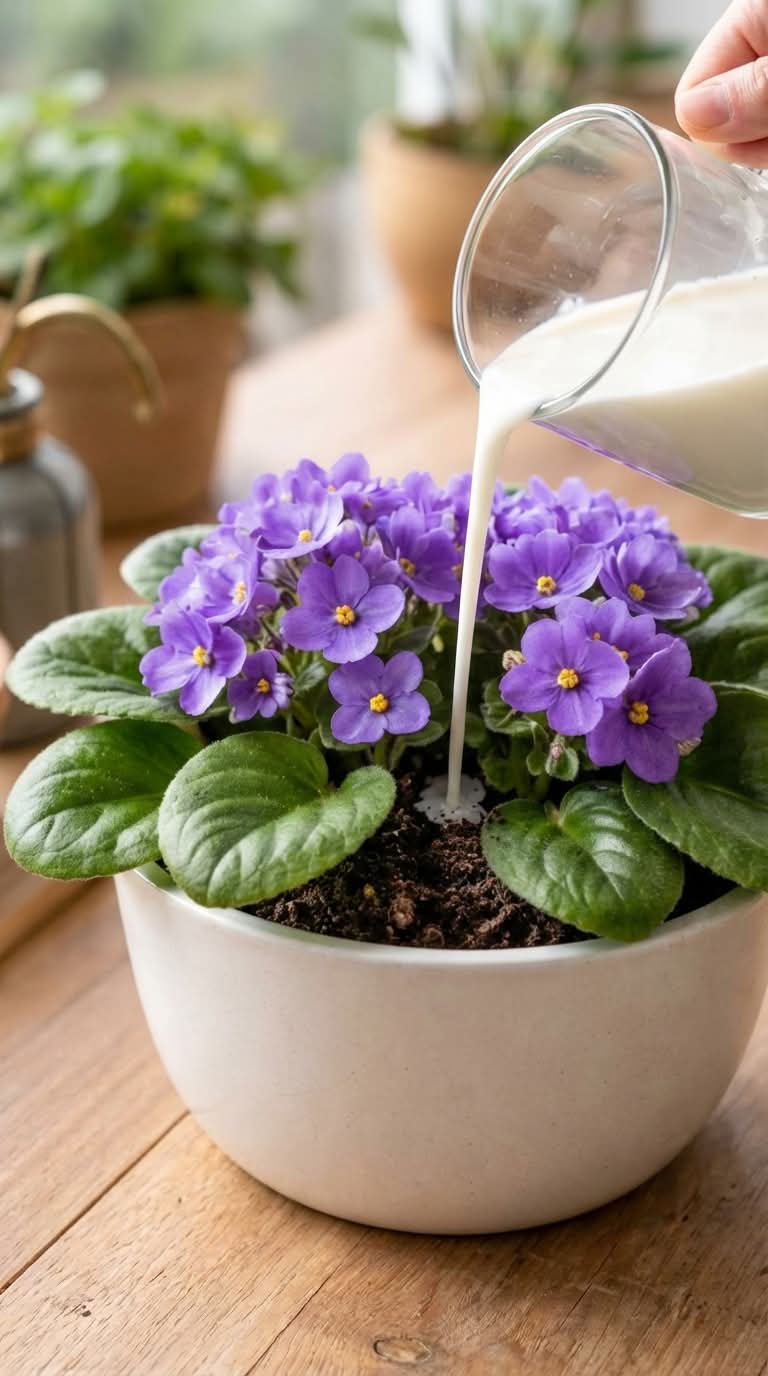
The Simple Watering Secret: Diluted Milk
Many experienced growers use a diluted milk solution as a mild, natural nutrient supplement. It’s not a magic cure, but it can provide a gentle calcium and protein boost that supports root health and flower production.
Why Milk?
Component Benefit for African Violets
Calcium Strengthens cell walls, helping stems support flowers and leaves.
Mild proteins May act as a gentle nitrogen source, promoting green growth.
Trace minerals Adds small amounts of phosphorus and potassium, which encourage blooming.
Important: Milk must be diluted heavily. Undiluted milk can sour, cause unpleasant odors, and encourage harmful bacteria or mold in the soil.
How to Prepare and Apply
- Dilute properly: Mix 1 part milk (preferably low‑fat or skim to avoid excess fats) with 3–4 parts room‑temperature water. Stir well.
- Use sparingly: Apply this mixture once every 2–4 weeks during the growing season (spring through autumn). Do not replace all waterings—alternate with plain water.
- Water the soil only: Avoid getting any liquid on the leaves. African violet leaves are sensitive to moisture; water on them can cause spots or rot. Use a long‑spout watering can or water from the bottom.
- Frequency: For best results, use this method alongside regular care. After 2–3 applications, you may notice new buds forming.
Alternative Natural Boosters
If you prefer not to use milk, other gentle options work just as well:
Option How to Use Key Benefit
Diluted liquid houseplant fertilizer Use a balanced formula (like 20‑20‑20) at half strength every 2–4 weeks. Provides complete nutrition; easy to control.
Compost tea Steep finished compost in water for 24 hours, strain, and dilute 1:10. Adds beneficial microbes and slow‑release nutrients.
Banana peel water Soak banana peels in water for 2 days, strain, and dilute 1:1 with plain water. Rich in potassium, which supports flowering.
Worm castings Sprinkle a thin layer on soil surface and water in. Gentle, slow‑release fertilizer with micronutrients.
Whichever you choose, the key is consistency and moderation. Over‑feeding can harm roots and actually reduce blooming.
Essential Care for Year‑Round Blooms
Even the best watering trick won’t work without the right environment. Here’s what your African violet needs to thrive and flower continuously.
Light: The #1 Factor
African violets need bright, indirect light to produce flower buds. An east‑facing window is ideal. A north window can work, but you may need to supplement with a grow light during darker months.
· Signs of too little light: Leaves become dark green, long petioles (stems), no flowers.
· Signs of too much direct sun: Leaves develop yellow or brown patches (sunburn).
If natural light is limited, consider a full‑spectrum LED grow light placed 8–12 inches above the plant for 10–12 hours daily.
Watering: Consistent but Not Soggy
African violets prefer consistent moisture without being waterlogged. Use room‑temperature water (cold water can shock roots). Water when the top inch of soil feels dry to the touch.
Two watering methods:
· Top watering: Use a narrow‑spout watering can to apply water directly to the soil, avoiding leaves.
· Bottom watering: Place the pot in a shallow dish of water for 15–20 minutes, allowing the soil to absorb moisture from below. This prevents water from touching leaves.
Never let the plant sit in standing water—good drainage is essential.
Soil & Pot
Use a light, well‑draining potting mix specifically formulated for African violets. These mixes usually contain peat, perlite, and vermiculite. Repot once a year in fresh soil, using a pot just slightly larger than the root ball. African violets bloom best when slightly root‑bound.
Humidity
These plants enjoy moderate humidity (around 50–60%). If your home is dry:
· Place a tray of pebbles with water beneath the pot (pot should sit on pebbles, not in water).
· Group plants together to create a microclimate.
· Use a small humidifier nearby.
Temperature
African violets thrive in temperatures between 65–75°F (18–24°C) . Avoid placing them near drafty windows, air conditioners, or heating vents. Sudden temperature drops can cause buds to drop.
Grooming & Maintenance
· Remove faded flowers: Pinch off spent blooms to encourage more buds.
· Clean leaves: Dust can block light. Gently wipe leaves with a soft, dry brush or a damp cloth (never wet leaves for long).
· Rotate the pot: Turn the plant a quarter turn every week for even growth.
What to Expect: A Realistic Timeline
When you start using a gentle nutrient boost and optimize care, here’s what you can typically expect:
Timeframe Changes
2–3 weeks Leaves appear greener; may notice new growth at the center.
4–6 weeks Small buds begin to form between leaves.
6–8 weeks First flowers open; blooms last 2–3 weeks each.
Ongoing With consistent care, new buds form as old flowers fade, leading to continuous blooming.
Every plant is different, and patience is key. Some varieties bloom more freely than others, but with proper care, most will reward you with multiple flowering cycles each year.
Common Mistakes to Avoid
Even a good method can fail if these mistakes are made:
Mistake Why It’s a Problem
Over‑feeding Too many nutrients can cause salt buildup, root burn, and leafy growth with no flowers.
Using cold water Cold water can shock roots and cause leaf spotting.
Wetting leaves Water on leaves can lead to rot and fungal diseases.
Poor drainage Soggy soil is a fast track to root rot.
Insufficient light Without enough light, no amount of feeding will trigger blooms.
Ignoring humidity Dry air stresses the plant and may prevent bud formation.
Frequently Asked Questions (FAQs)
Q: Why does my African violet have leaves but no flowers?
A: This usually points to insufficient light, lack of nutrients, or a combination of both. Move it to a brighter spot and try a gentle fertilizer.
Q: Can I use whole milk?
A: Yes, but low‑fat or skim milk is better because it has less fat, which can sour. Always dilute heavily.
Q: How often should I fertilize?
A: Every 2–4 weeks during the growing season is enough. Use a diluted balanced fertilizer or one of the natural options described above.
Q: How long do African violet blooms last?
A: Individual flowers can last 2–3 weeks. With proper care, new buds will form continuously, giving you months of color.
Q: Is tap water safe for African violets?
A: Yes, but let it sit overnight to allow chlorine to dissipate. Distilled or filtered water is ideal if your tap water is very hard.
Q: Why are my leaves turning yellow?
A: Yellow leaves can indicate overwatering, underwatering, or nutrient deficiency. Check soil moisture and adjust care.
Q: Should I remove the babies (offsets)?
A: You can leave them for a fuller plant or separate them to propagate new violets. Both are fine.
Final Thoughts
African violets are among the most rewarding houseplants when given the right care. They may seem a bit finicky, but with a few simple adjustments—proper light, consistent watering, and a gentle nutrient boost—they can bloom almost continuously, bringing color and joy to your home for years.
The diluted milk trick is just one of many natural methods that work. Whether you use milk, compost tea, banana water, or a balanced fertilizer, the key is moderation and consistency. Pair it with the care tips above, and you’ll likely be amazed at how your violet transforms.
I hope this guide has given you the confidence to try these techniques and enjoy a thriving, blooming African violet. Now it’s your turn! Have you tried a similar method? What’s your secret for keeping violets blooming? Share your experiences in the comments below.
And if you’re looking for more plant care advice, check out our guides on How to Propagate African Violets, Best Soil for African Violets, and Natural Fertilizers for Houseplants.
Happy growing! 🌸✨
Did this method help your African violet bloom? We’d love to see your flowers! Leave a comment below and share your photos. Don’t forget to pin this guide for your plant care routine.
More Ideas You Might Like
-

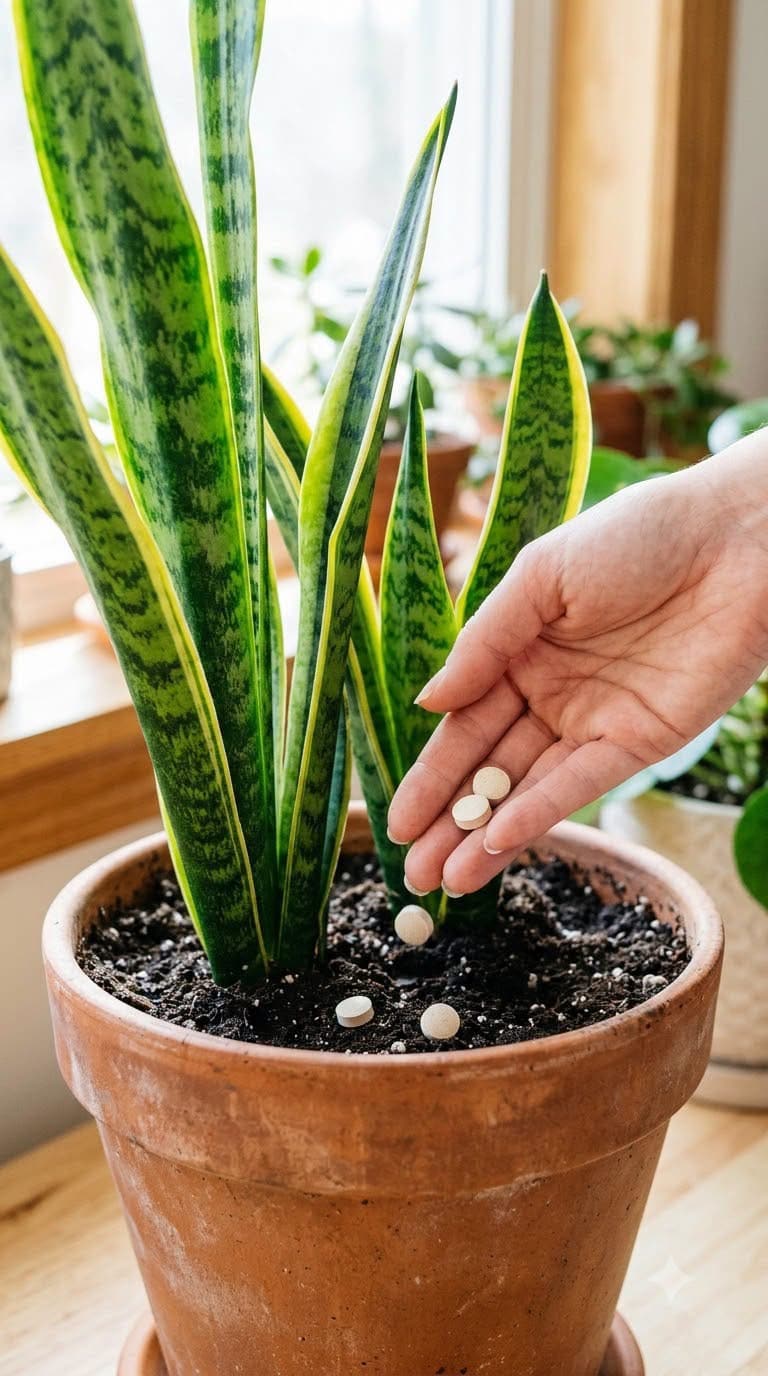
How to Use Slow-Release Fertilizer Tablets for Snake Plants Without Overfeeding
Snake plants are known for being low-maintenance houseplants, but that does not mean they never need nutrients. A small amount of fertilizer during their active growing season can support steady new growth and help leaves keep their deep green color and strong upright form. The image shows small fertilizer tablets being placed on the soil…
-
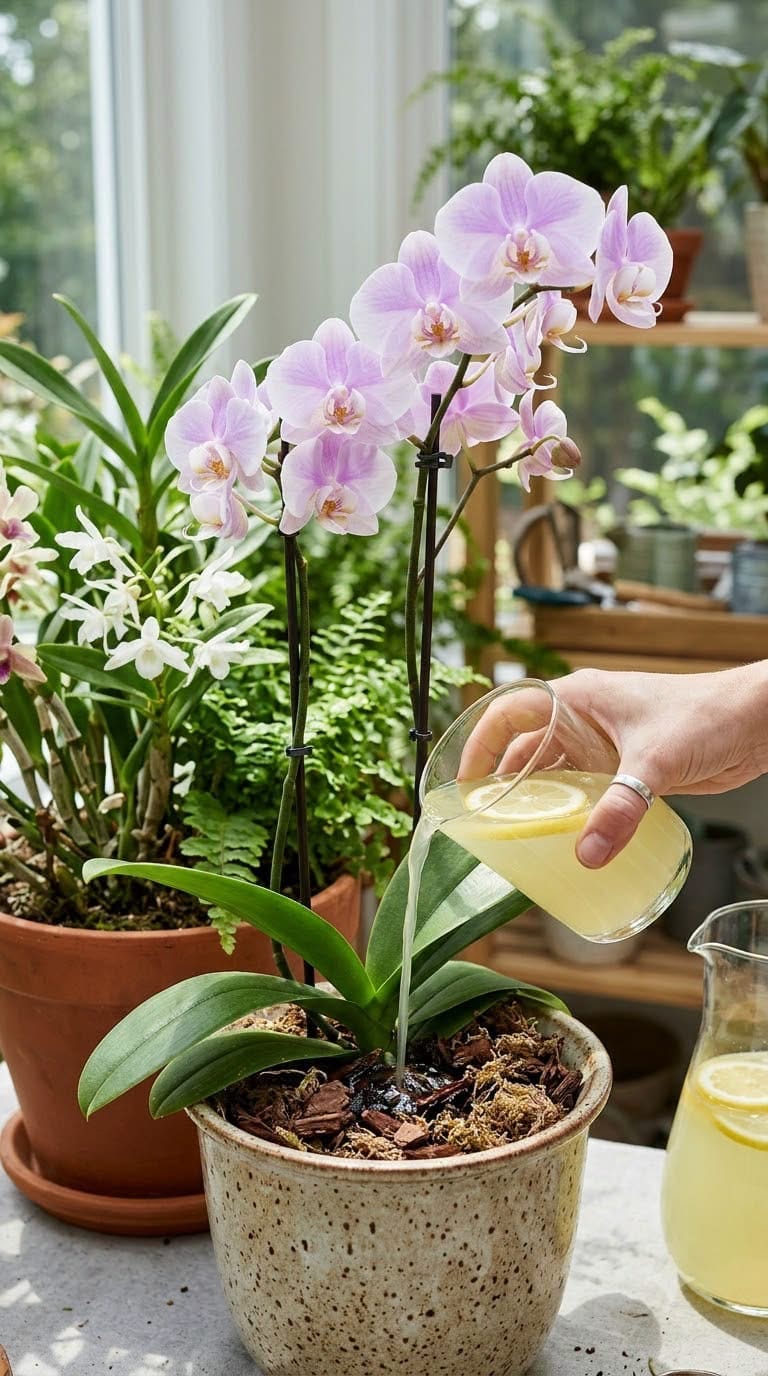
Orchid Care for Healthy Roots, Lasting Blooms, and Beautiful Indoor Displays
Orchids are elegant houseplants that can bring a refined, peaceful look to almost any room. Their long-lasting flowers, glossy leaves, and sculptural stems make them especially beautiful on bright tables, windowsills, kitchen counters, and living-room shelves. A healthy orchid does not need lemon water, sugary drinks, or homemade kitchen mixtures to bloom. Although lemon water…
-

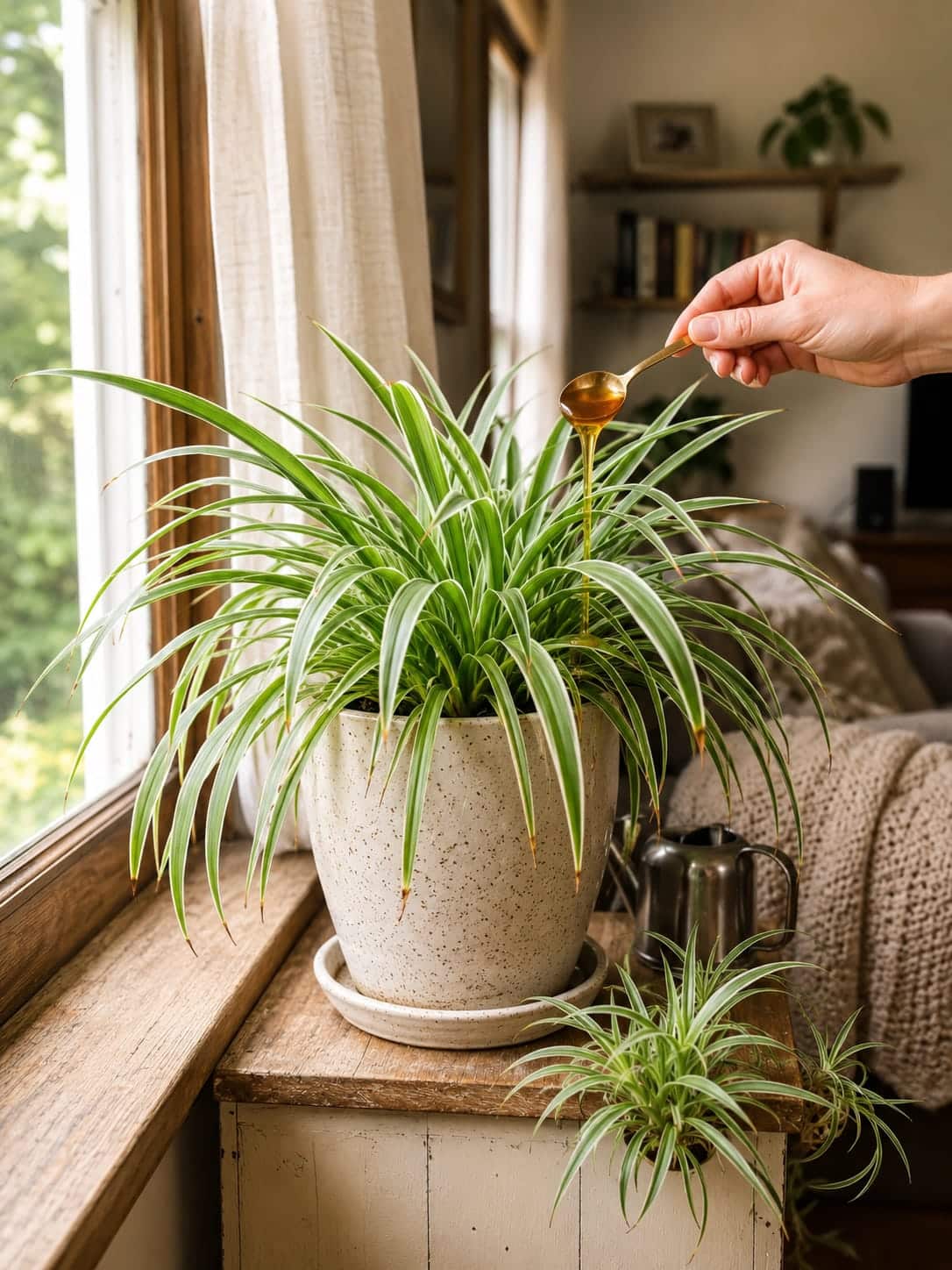
Spider Plant Care: The Safe Way to Grow a Fuller, Healthier Houseplant
Spider plants are loved for their long striped leaves, easy-going nature, and charming baby plants that spill over the sides of the pot. They look beautiful on a bright windowsill, shelf, hanging basket, or small table, and they can quickly make a room feel fresher and more inviting. The image may suggest adding honey to…