Discover the simple rice water trick that helps orchids bloom bigger and longer. Learn how to use this natural method safely, plus essential orchid care tips for stunning flowers.
Let me share the simple method that turned my once‑stubborn orchid into a show‑stopping bloomer.
Orchids are among the most stunning plants you can grow indoors. Their elegant flowers, vibrant colors, and long‑lasting blooms make them a favorite among plant lovers. But if you’ve ever owned an orchid, you probably know that keeping it blooming consistently can be a challenge. You water it, give it bright light, and still… no flowers. Or the blooms that appear fade too quickly.
I’ve been there. My first Phalaenopsis orchid bloomed beautifully for months, then went silent for over a year. I tried everything—different light, special fertilizers, careful watering—until a fellow orchid enthusiast told me about a simple kitchen ingredient: rice water.
I was skeptical. How could rinsing rice help an orchid? But I tried it, and within weeks new roots appeared, followed by a strong flower spike. Now my orchid blooms multiple times a year, and the flowers last longer than ever.
In this guide, I’ll share how to use rice and rice water to nourish your orchid naturally, plus the essential care practices that support abundant, long‑lasting blooms.
Why Orchids Stop Blooming
Before jumping into the solution, it’s important to understand why orchids sometimes stop flowering. Orchids, especially popular varieties like Phalaenopsis, go through natural growth cycles. However, certain conditions can prevent them from blooming again.
Reason What Happens
Lack of nutrients Orchids grown in bark or moss have few natural nutrients; without feeding, they lack energy for blooms.
Insufficient light Too little light prevents flower spike formation.
Improper watering Overwatering causes root rot; underwatering stresses the plant.
Poor root health Unhealthy roots can’t absorb water or nutrients effectively.
Stress from temperature changes Orchids often need a slight temperature drop to initiate blooming.
Even if your orchid looks healthy, it may not have enough energy stored to produce new flowers. That’s where gentle feeding comes in.
The Simple Fertilizing Trick: Rice & Rice Water
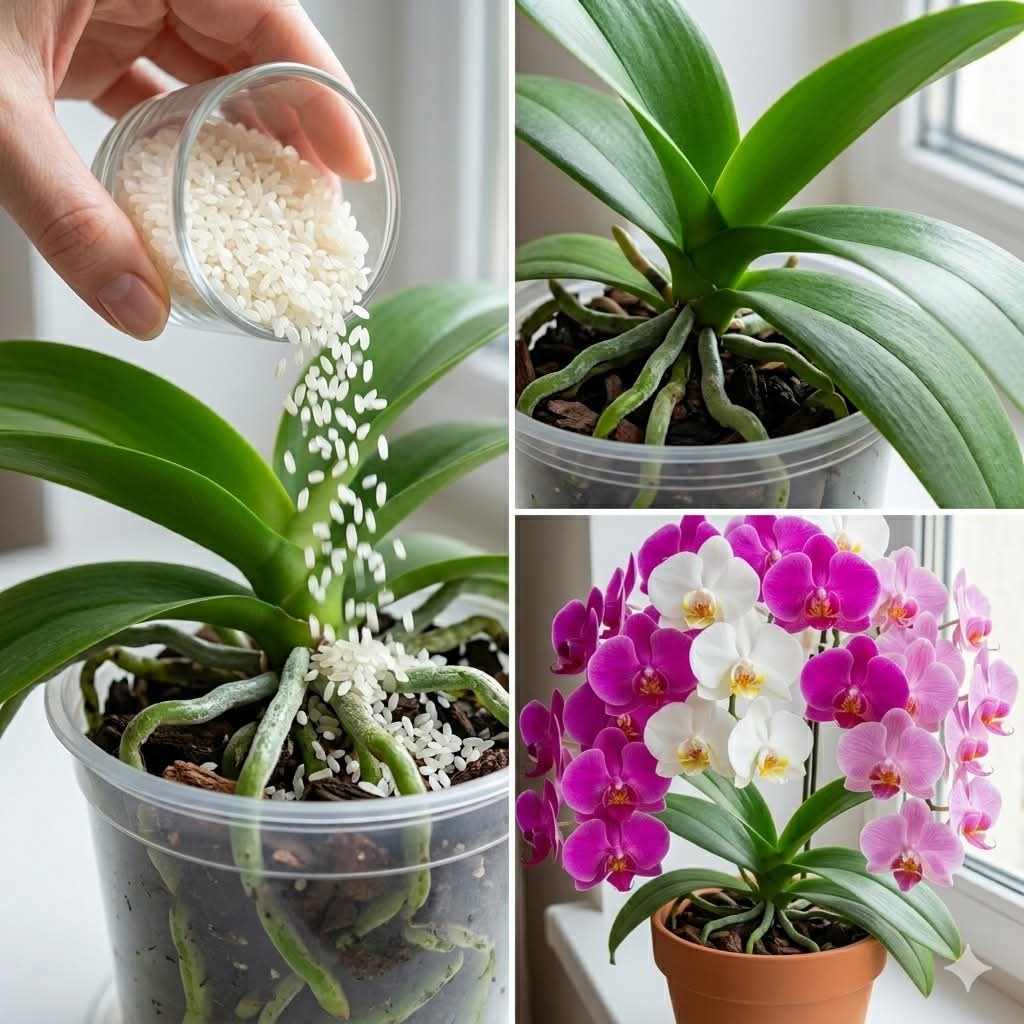
In the image you see, rice is being sprinkled onto an orchid’s roots. This represents a natural method that some plant enthusiasts use to gently enrich the growing medium. Rice, when used properly, can act as a mild, slow‑release nutrient source. It contains small amounts of minerals that may support plant growth over time.
Important: This method should be used carefully and in moderation to avoid issues like mold or poor drainage. The safer, more widely recommended approach is rice water.
Why Rice and Rice Water Can Help
Orchids are typically grown in bark‑based mixes that drain quickly and don’t hold many nutrients. This means they rely heavily on external feeding. A gentle, natural addition can help:
Benefit How It Helps
Provide trace nutrients Rice contains small amounts of nitrogen, phosphorus, and potassium that slowly break down and support plant health.
Support root environment Healthy roots are essential for orchids. A balanced growing medium encourages better nutrient absorption.
Encourage blooming When orchids receive consistent nourishment, they are more likely to produce strong flower spikes.
Improve overall vitality Stronger plants produce better, longer‑lasting blooms.
How to Use This Method Properly
If you want to try this technique, it’s important to follow the correct steps. There are two approaches: using dry rice sparingly, or the safer and more effective method—rice water.
🌾 Method 1: Small Amount of Dry Rice (Use with Caution)
This method can be used occasionally, but it carries a risk of mold or pest attraction if overdone.
Steps:
- Use a very small amount of uncooked rice (about 1 teaspoon for a medium pot).
- Sprinkle lightly on top of the growing medium, away from the crown of the plant.
- Water gently to help it settle.
Important:
· Do not overuse—once every 2–3 months at most.
· Remove any rice that starts to mold.
· Only use this method if your orchid is in a well‑ventilated area with good airflow.
💧 Method 2: Rice Water (Safer & Recommended)
This is a more controlled and widely used approach. Rice water provides diluted nutrients without the risk of solid buildup.
Steps:
- Rinse ½ cup of uncooked rice in a bowl of water, swirling gently.
- Collect the cloudy water (this is the rinse water, not the cooked rice water).
- Let it sit for a few hours to reach room temperature.
- Use it to water your orchid in place of a regular watering, applying it only to the roots and potting medium (not the leaves or crown).
- Repeat once every 2–3 weeks during the growing season (spring through early fall).
Pro tip: You can also use water from cooking rice (unsalted, no additives) after it has cooled. Dilute it with an equal amount of plain water if it’s very starchy.
Essential Care for Orchid Blooming
Fertilizing alone is not enough—your orchid needs the right environment to thrive and bloom.
☀️ Light
Orchids need bright, indirect light. An east‑ or south‑facing window with a sheer curtain is ideal. Too little light prevents blooming; too much direct sun can scorch leaves. If leaves are dark green and floppy, move them closer to light. If they are yellow or reddish, they may be getting too much.
💧 Watering
Water when the potting medium is nearly dry. For orchids in bark, this is usually once a week; for moss, less often. Lift the pot to gauge weight—heavy means wet, light means dry. Water in the morning so leaves dry by evening. Always avoid letting water sit in the crown (where leaves meet), as this can cause rot.
🌡 Temperature
Orchids like a temperature drop to trigger blooming. Aim for daytime temperatures of 70–80°F (21–27°C) and nighttime temperatures 10–15°F cooler (55–65°F / 13–18°C). This shift, often achieved by placing near a window in fall, can stimulate flower spikes.
💨 Air Circulation
Good airflow helps prevent root rot and fungal issues. A gentle fan in the room or simply leaving space between plants is beneficial.
🌱 Potting Medium
Always use a coarse orchid bark mix, not regular potting soil. Repot every 1–2 years when the medium breaks down, trimming away any dead roots.
What Results Can You Expect?
With consistent care and proper feeding, you may notice:
· Stronger, healthier roots – White, firm roots with green tips.
· New leaf growth – A sign that the plant is thriving.
· Formation of flower spikes – Usually in late fall or winter.
· Larger, more vibrant blooms – Flowers that open fully and last longer.
· Longer‑lasting flowers – Orchids that are well‑fed can bloom for 2–3 months or more.
Orchids that are well cared for can bloom for months at a time and rebloom regularly, often twice a year.
Natural Alternatives to Rice Water
If you prefer other gentle methods, consider these:
Alternative How to Use
Diluted orchid fertilizer Use a balanced formula (like 20-20-20) at ¼ strength once a week (weakly, weekly).
Seaweed extract Contains trace minerals and natural growth hormones; use every 2–3 weeks.
Compost tea Dilute to a very pale brown and use occasionally for microbial boost.
Banana peel water Soak peels in water for 2 days, strain, and dilute 1:1. Rich in potassium for blooms.
Each option provides a gentle, natural way to support your orchid without risk of over‑fertilizing.
Common Mistakes to Avoid
Mistake Why It’s a Problem
Over‑feeding Too many nutrients can burn roots and stop blooming. Stick to a “weakly, weekly” approach.
Poor drainage Orchids hate sitting in water. Always use pots with drainage holes.
Using heavy soil Regular potting soil suffocates orchid roots. Use coarse bark mix.
Ignoring light needs Without enough light, no amount of feeding will trigger blooms.
Watering on leaves Water in the crown can cause crown rot, which kills the plant.
Long‑Term Orchid Care Tips
To keep your orchid blooming beautifully year after year:
· Repot every 1–2 years in fresh bark mix, trimming dead roots.
· Trim old flower spikes after blooming. For Phalaenopsis, cut just above a node if the spike is still green; otherwise, cut near the base.
· Clean leaves with a damp cloth to remove dust and improve light absorption.
· Rotate the plant every few weeks for even growth.
· Give a winter rest by reducing watering and stopping fertilizer for a month or two; this can encourage spring blooming.
Consistency and patience are key. Orchids are slow growers, but with steady care, they reward you with spectacular flowers.
Frequently Asked Questions (FAQs)
Q: How often should I fertilize my orchid?
A: A common rule is “weakly, weekly”—use a diluted balanced fertilizer (¼ strength) every week during the growing season. Rice water can be used every 2–3 weeks in place of a regular feeding.
Q: Can rice harm my orchid?
A: Too much dry rice can cause mold or attract pests, so use sparingly. Rice water is safer and more effective.
Q: Why are my orchid roots turning brown?
A: Brown, mushy roots indicate overwatering or root rot. Healthy roots are plump and green or silvery. If roots are brown and hollow, trim them and repot.
Q: How long do orchid blooms last?
A: With proper care, Phalaenopsis blooms can last 2–3 months. Other varieties may bloom for shorter or longer periods.
Q: Can orchids rebloom on the same spike?
A: Yes. After the first flowers fade, you may get a secondary spike from a node if you cut above a node. The best time to cut is after the spike has completely dried.
Q: Is rice water good for all orchids?
A: It’s gentle and works well for many epiphytic orchids (Phalaenopsis, Dendrobium, Cattleya). Always apply to the roots, not the leaves.
Final Thoughts
Orchids may seem delicate, but with the right care, they can become one of the most rewarding plants in your home. Small changes—like improving your feeding routine—can have a big impact on how often and how beautifully they bloom.
Using gentle, natural methods like rice water can support your orchid’s growth when done correctly. Combined with proper light, watering, and care, this approach can help your plant produce more vibrant and long‑lasting flowers.
If your orchid hasn’t bloomed in a while, this might be the simple trick it needs to come back to life. With patience and consistency, you can enjoy stunning orchid blooms again and again—turning your space into a calm, elegant, and colorful environment.
Now it’s your turn! Have you tried rice water on your orchids? What’s your secret for getting them to bloom? Share your experiences in the comments below.
And if you’re looking for more orchid care tips, check out our guides for How to Rebloom Phalaenopsis Orchids, Best Orchid Potting Mix, and Natural Orchid Fertilizers.
Happy growing! 🌸✨
Did you try this rice water trick on your orchid? We’d love to see your blooms! Leave a comment below and share your photos. Don’t forget to pin this guide for your orchid care routine.
More Recipes You Might Like
-

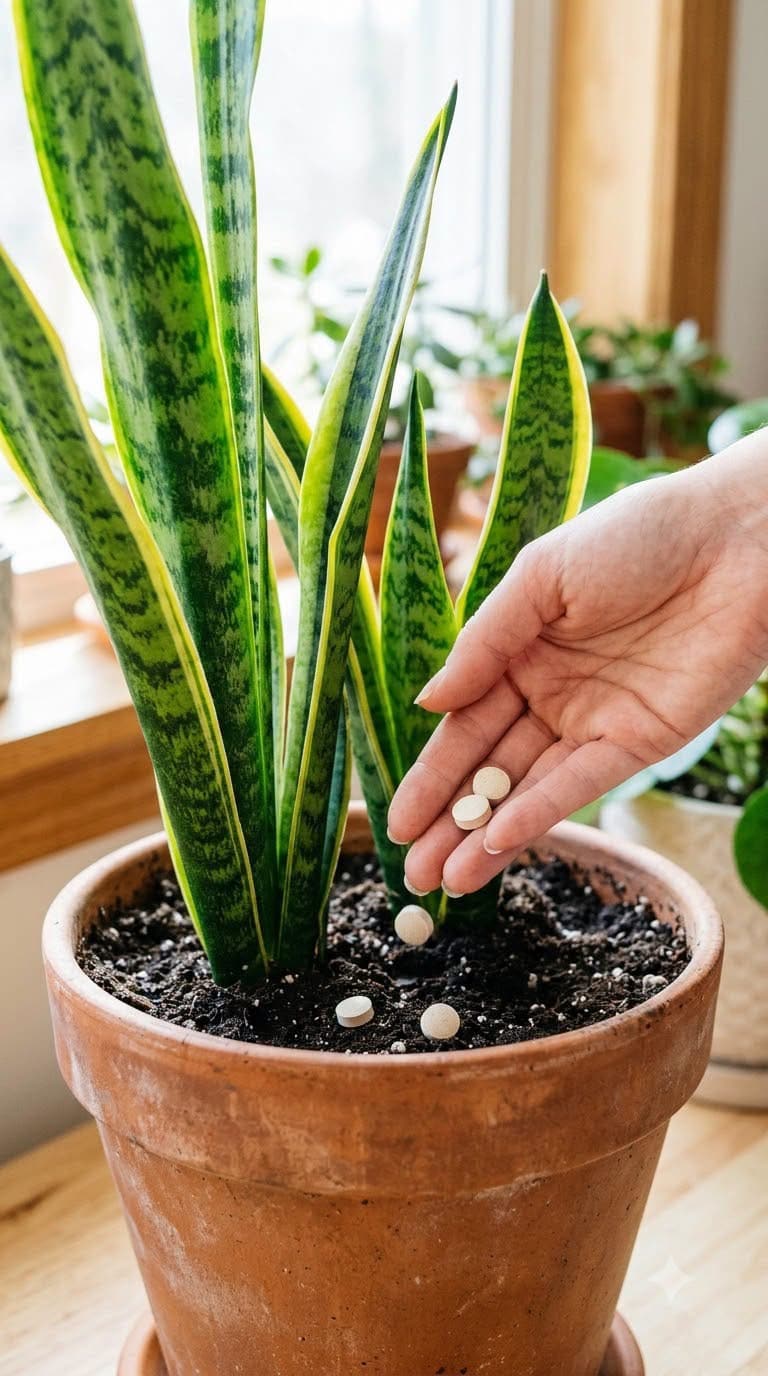
How to Use Slow-Release Fertilizer Tablets for Snake Plants Without Overfeeding
Snake plants are known for being low-maintenance houseplants, but that does not mean they never need nutrients. A small amount of fertilizer during their active growing season can support steady new growth and help leaves keep their deep green color and strong upright form. The image shows small fertilizer tablets being placed on the soil…
-
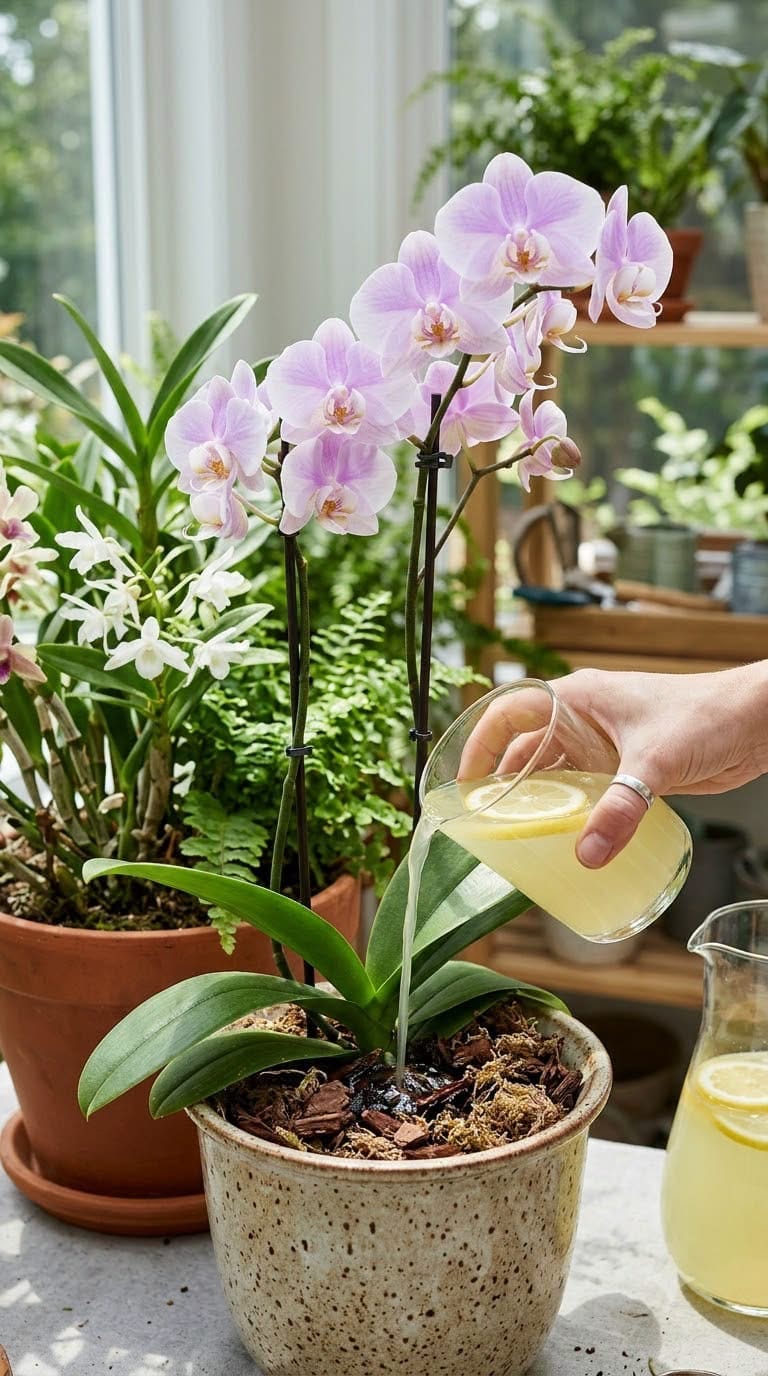
Orchid Care for Healthy Roots, Lasting Blooms, and Beautiful Indoor Displays
Orchids are elegant houseplants that can bring a refined, peaceful look to almost any room. Their long-lasting flowers, glossy leaves, and sculptural stems make them especially beautiful on bright tables, windowsills, kitchen counters, and living-room shelves. A healthy orchid does not need lemon water, sugary drinks, or homemade kitchen mixtures to bloom. Although lemon water…
-

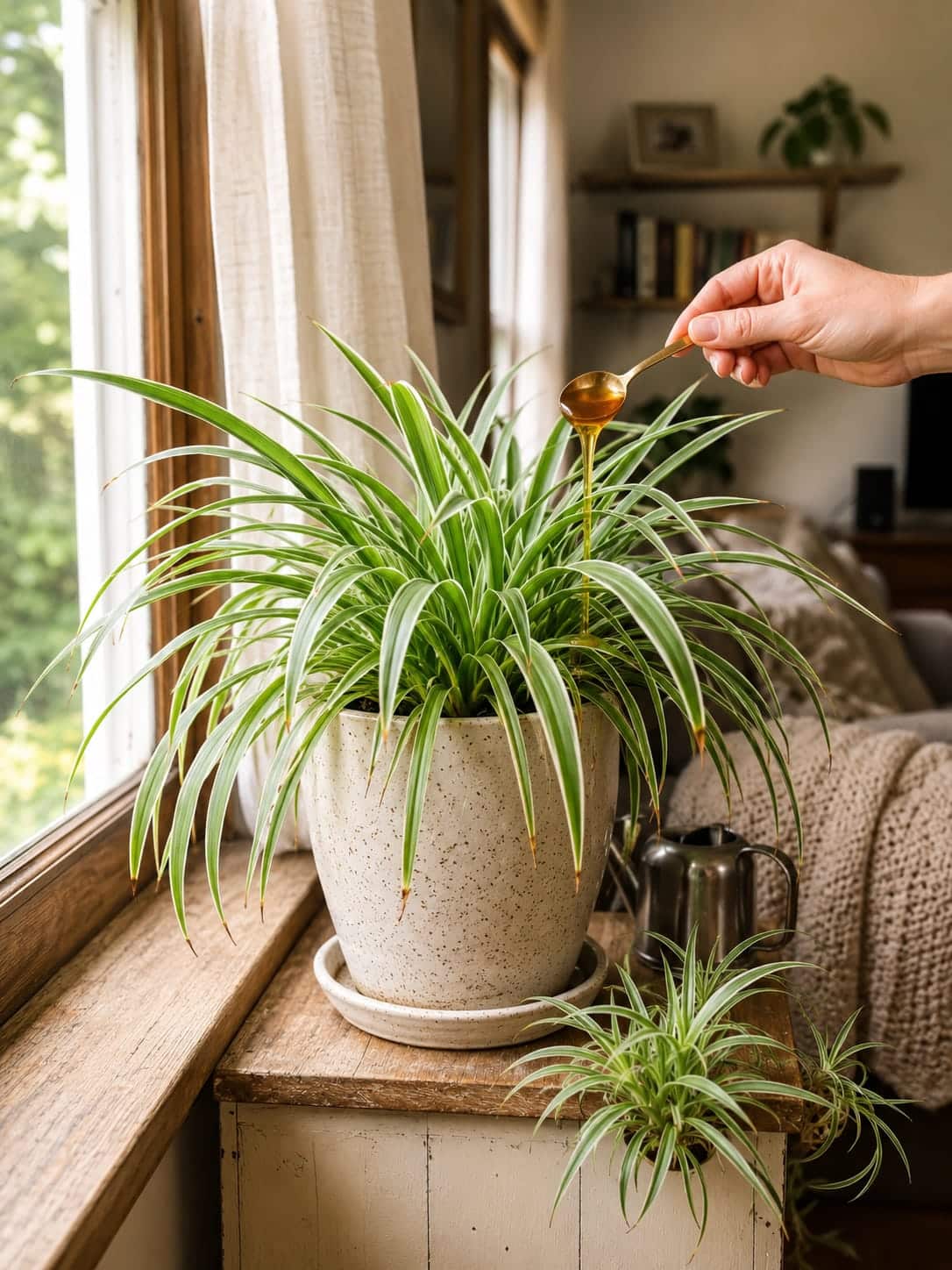
Spider Plant Care: The Safe Way to Grow a Fuller, Healthier Houseplant
Spider plants are loved for their long striped leaves, easy-going nature, and charming baby plants that spill over the sides of the pot. They look beautiful on a bright windowsill, shelf, hanging basket, or small table, and they can quickly make a room feel fresher and more inviting. The image may suggest adding honey to…