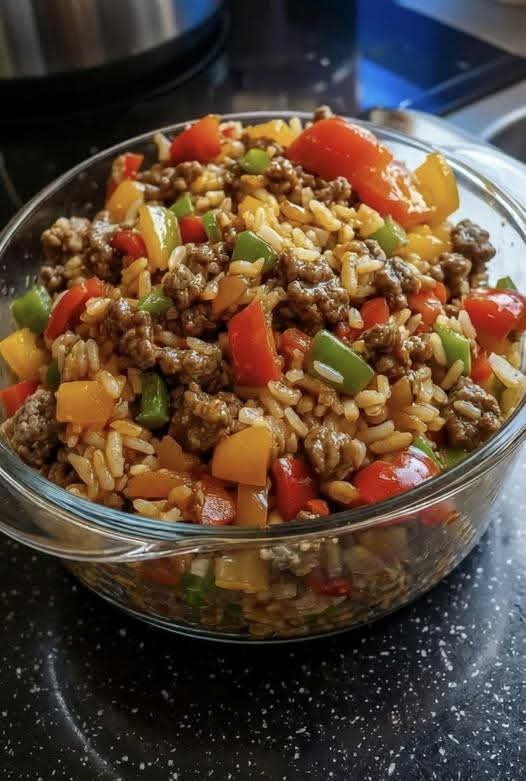
This beef and pepper rice bowl is fast, flavorful, and better than takeout. Tender beef, crisp bell peppers, and a savory garlic ginger sauce over fluffy rice. Ready in 20 minutes.
Let’s be honest: we all love the convenience of takeout, but the cost adds up – and you never really know what’s in that sauce. Sugar, sodium, mystery oils. Wouldn’t it be great if you could have a sizzling, savory beef and pepper rice bowl on your table in less time than it takes for delivery to arrive?
This beef and pepper rice bowl is the answer. It’s a quick stir‑fry of thinly sliced beef and colorful bell peppers, tossed in a rich, garlicky, umami‑packed sauce, then served over a bed of fluffy rice. It’s the kind of meal that tastes like your favorite takeout spot – but made with real ingredients, in your own kitchen, in under 20 minutes.
The beauty of this dish is its flexibility. Use flank steak, sirloin, or even ground beef. Swap in any color bell peppers you have. Add broccoli, snap peas, or onions. Make it spicy or keep it mild. Serve it over rice, noodles, or cauliflower rice. Once you master the basic technique, you’ll never order beef and pepper stir‑fry again.
In this guide, I’ll walk you through every step – from slicing the beef for maximum tenderness to getting that perfect glossy sauce. You’ll get pro tips, delicious variations, storage advice, and answers to all your questions.
Let’s fire up the wok.
Why This Beef and Pepper Rice Bowl Is Better Than Takeout
✔ Ready in 20 minutes ✔ One pan, minimal cleanup
✔ Cheaper than delivery ✔ Customizable heat and veggies
✔ No MSG or hidden sugar ✔ High protein, satisfying
✔ Meal‑prep friendly ✔ Kid‑approved
Once you realize how fast and easy this is, you’ll wonder why you ever ordered in.
Ingredient Breakdown – Why Each One Matters
🥩 Beef (1 lb – flank steak, sirloin, or ribeye)
Role: The protein hero.
Best cuts: Flank steak, skirt steak, sirloin, or ribeye. These cuts are flavorful and tenderize quickly when sliced thinly against the grain.
Why slice against the grain: Muscle fibers run in one direction. Cutting across them shortens the fibers, making each bite more tender. Look at the meat – you’ll see lines. Slice perpendicular to those lines.
Pro tip: Partially freeze the beef for 15–20 minutes before slicing. It firms up, making it easier to cut thin, even strips.
🌶 Bell Peppers (2–3, mixed colors)
Role: Crunch, color, and sweetness.
Best colors: Red, yellow, orange, and green all work. Green peppers are slightly bitter and firmer; red/yellow/orange are sweeter and softer. Use a mix for visual appeal.
Cut: Slice into thin strips or bite‑sized squares – about the same size as your beef strips for even cooking.
🍚 Rice (for serving)
Role: The fluffy, neutral base.
Best: Jasmine or white long‑grain rice. Cook according to package directions. For meal prep, use leftover rice (cold rice stir‑fries better).
Low‑carb option: Cauliflower rice or serve over zucchini noodles.
🧄 Aromatics (Garlic & Ginger)
Role: The flavor foundation.
Garlic: 3–4 cloves, minced.
Ginger: 1 tablespoon, freshly grated. Don’t use dried powder – fresh ginger is essential for that authentic stir‑fry taste.
🥫 Sauce Ingredients
Ingredient Amount Role
Low‑sodium soy sauce ¼ cup Salty umami base
Brown sugar or honey 1 tbsp Sweetness and glaze
Rice vinegar 1 tbsp Tangy brightness
Sesame oil 1 tsp Nutty aroma (add at end)
Cornstarch 1 tsp Thickener (mixed with 2 tbsp water)
Red pepper flakes (optional) ¼ tsp Heat
🌿 Optional Add‑ins
· Onion: ½ medium, sliced thin
· Broccoli: 1 cup florets
· Snap peas: ½ cup
· Carrots: 1, julienned
· Green onions: For garnish
· Sesame seeds: For garnish
The Recipe – Beef and Pepper Rice Bowl
Prep time: 10 minutes
Cook time: 10 minutes
Total time: 20 minutes
Yield: 4 servings
Ingredients
For the Beef & Peppers Amount
Flank steak or sirloin 1 lb
Bell peppers (mixed colors) 2–3
Garlic cloves 3–4
Fresh ginger 1 tbsp grated
Vegetable or avocado oil 2 tbsp
For the Sauce Amount
Low‑sodium soy sauce ¼ cup
Brown sugar or honey 1 tbsp
Rice vinegar 1 tbsp
Cornstarch 1 tsp
Water 2 tbsp
Sesame oil 1 tsp
Red pepper flakes (optional) ¼ tsp
For Serving
Cooked rice 4 cups
Green onions For garnish
Sesame seeds For garnish
Equipment
· Large skillet, wok, or cast iron pan
· Small bowl (for sauce)
· Cutting board and sharp knife
Step‑by‑Step Instructions
Step 1: Prep Everything First (Mise en Place)
Stir‑fry moves fast. Have everything ready before you turn on the heat.
- Slice the beef: Partially freeze for 15 minutes if possible. Slice against the grain into thin strips (about 2 inches long, ¼ inch thick).
- Slice the peppers: Remove seeds and membranes. Cut into thin strips or bite‑sized pieces.
- Mince the garlic and grate the ginger.
- Make the sauce: In a small bowl, whisk together soy sauce, brown sugar (or honey), rice vinegar, cornstarch, water, and red pepper flakes (if using). Set aside.
- Cook the rice (if not already done). Fluff with a fork.
Step 2: Cook the Beef
Heat 1 tablespoon of oil in a large skillet or wok over high heat. When the oil is shimmering (almost smoking), add the beef in a single layer. Do not overcrowd – work in batches if needed.
Let the beef sear undisturbed for 1 minute to develop a brown crust. Then stir‑fry for another 1–2 minutes until just cooked through (no longer pink). Remove the beef from the pan and set aside on a plate.
Step 3: Cook the Peppers (and Aromatics)
Add the remaining 1 tablespoon of oil to the same pan. Add the sliced bell peppers. Stir‑fry over high heat for 2–3 minutes until they are crisp‑tender and slightly charred at the edges.
Push the peppers to one side of the pan. Add the minced garlic and grated ginger to the empty space. Cook for 30 seconds until fragrant – do not burn.
Step 4: Combine and Sauce
Return the cooked beef to the pan. Pour the sauce over everything. Stir quickly to coat all ingredients. The sauce will thicken in about 30–60 seconds as the cornstarch activates.
Step 5: Finish and Serve
Remove from heat. Drizzle with sesame oil and stir once more.
Serve immediately over hot rice. Garnish with sliced green onions and a sprinkle of sesame seeds.
Pro Tips for the Best Beef and Pepper Rice Bowl
- Get Your Pan Screaming Hot
High heat is essential for stir‑fry. It sears the meat instead of steaming it, creating that complex, savory “wok hei” flavor. If your pan isn’t hot enough, the beef will release its juices and boil instead of brown.
- Don’t Overcrowd the Pan
If you add too much beef at once, the temperature drops, and the meat steams. Cook in batches if necessary. It only takes an extra 2 minutes.
- Slice Beef Against the Grain
This is the #1 tip for tender beef. Look at the raw meat – you’ll see lines running in one direction. Slice perpendicular to those lines.
- Prep Everything Before You Start
Once you turn on the heat, there’s no time to chop garlic or mix sauce. Have all ingredients measured, chopped, and ready to go.
- Use Day‑Old Rice for Fried Rice (If Making That Style)
If you want to turn this into a fried rice bowl, use leftover refrigerated rice. Fresh rice is too moist and sticky for frying.
- Adjust Sauce to Your Taste
· More savory: Add 1 tbsp oyster sauce.
· More spicy: Double the red pepper flakes or add a drizzle of sriracha.
· More tangy: Add an extra splash of rice vinegar.
· Thicker sauce: Increase cornstarch to 1½ tsp.
Delicious Variations – Make It Your Own
🥦 Beef & Broccoli Rice Bowl
Add 1 cup of broccoli florets along with the peppers. Increase cooking time by 1 minute. This is a classic takeout favorite.
🌶 Spicy Szechuan Beef Bowl
Add 1 tbsp chili bean paste (doubanjiang) or 1 tsp Szechuan peppercorns (crushed) to the oil before adding the beef. Finish with a drizzle of chili oil.
🧅 Beef & Onion Rice Bowl (Gyudon Style)
Replace peppers with 2 thinly sliced onions. Cook onions until soft and translucent (about 4 minutes). Use the same sauce. Serve over rice with a poached egg on top.
🥕 Beef & Vegetable Medley
Add thinly sliced carrots, snap peas, and baby corn. Increase sauce by 50% to coat all the extra vegetables.
🍯 Honey Garlic Beef Bowl
Replace brown sugar with 2 tbsp honey. Add an extra clove of garlic. The sauce will be stickier and sweeter.
🥥 Coconut Curry Beef Bowl
Add 1 tbsp red curry paste to the oil before cooking the beef. Replace water in the sauce with ¼ cup coconut milk. Serve with jasmine rice and fresh cilantro.
🍜 Beef & Pepper Noodles
Skip the rice. Serve the beef and peppers over lo mein noodles, udon, or ramen. Add an extra ¼ cup of water to the sauce to thin it for tossing with noodles.
What to Serve with Beef and Pepper Rice Bowl
This dish is a complete meal on its own, but you can round it out with:
· Cucumber salad – thinly sliced cucumbers with rice vinegar and sesame seeds
· Edamame – steamed and salted
· Egg roll or spring rolls – store‑bought or homemade
· Miso soup – for a Japanese‑inspired meal
· Pickled ginger or kimchi – for a tangy, spicy contrast
Storage & Make‑Ahead Instructions
Refrigerator
Store leftovers in an airtight container for up to 4 days. The peppers will soften but still taste great.
Freezer
This dish freezes well for up to 2 months. Freeze in portion‑sized containers. Thaw overnight in the refrigerator.
Reheating
· Skillet (best): Reheat over medium‑high heat, adding a splash of water or soy sauce to loosen the sauce.
· Microwave: Cover and heat in 1‑minute intervals, stirring between.
· Do not overheat – the beef can become tough.
Meal Prep Tips
· Cook a double batch of beef and peppers. Store in the fridge. Cook fresh rice each day (or reheat frozen rice).
· Prep ingredients on Sunday: slice beef, chop peppers, mince garlic, and grate ginger. Store separately in the fridge. Assemble and cook in minutes on weeknights.
Nutrition Facts (Per Serving – ¼ of recipe, with rice)
Nutrient Amount
Calories 520
Protein 32g
Fat 16g
Saturated Fat 5g
Carbohydrates 58g
Fiber 4g
Sugar 10g
Sodium 780mg (using low‑sodium soy sauce)
Iron 20% DV
For a lower‑carb version: Serve over cauliflower rice (reduce calories by ~150, carbs by ~40g).
Frequently Asked Questions (FAQs)
Q: Can I use ground beef instead of sliced beef?
Yes. Brown 1 lb of ground beef, drain excess fat, then add peppers and garlic. Proceed with sauce. The texture will be different but still delicious.
Q: What’s the best beef cut for stir‑fry?
Flank steak, skirt steak, sirloin, or ribeye. Avoid tough cuts like chuck or brisket – they need long, slow cooking.
Q: Can I make this without soy sauce?
Use coconut aminos (gluten‑free, lower sodium) or tamari (gluten‑free soy sauce). For a soy‑free version, use liquid aminos or a mix of beef broth + Worcestershire sauce.
Q: How do I get my beef tender like takeout?
Three secrets: (1) slice against the grain, (2) use a hot pan and don’t overcrowd, (3) don’t overcook – beef should be just pink inside when you remove it (it will continue cooking in the sauce).
Q: Can I add a marinade for the beef?
Yes. For extra tenderness, marinate sliced beef in 1 tbsp soy sauce + 1 tsp cornstarch + 1 tsp oil for 10–15 minutes before cooking. This is called “velveting” – it locks in moisture.
Q: Why is my sauce not thickening?
Two possibilities: (1) You didn’t add cornstarch, or (2) the pan wasn’t hot enough. Cornstarch needs high heat to activate. Turn up the heat and stir – it should thicken within 30 seconds.
Q: Can I use frozen bell peppers?
Yes, but thaw and pat them dry first. Frozen peppers release more water, which can thin the sauce. You may need an extra ½ tsp cornstarch.
Q: Is this recipe gluten‑free?
Use tamari instead of regular soy sauce. All other ingredients are naturally gluten‑free.
Troubleshooting – What Went Wrong?
Problem Likely Cause Fix Next Time
Beef is tough and chewy Sliced with the grain, or overcooked Slice against the grain; cook only 2–3 minutes
Sauce is watery Not enough cornstarch or heat too low Use 1 tsp cornstarch; cook on high heat
Peppers are mushy Overcooked Stir‑fry only 2–3 minutes – they should still have crunch
Burnt garlic/ginger Added too early or heat too high Add to empty space in pan for 30 seconds only
Beef steamed instead of seared Pan not hot enough or overcrowded Heat until smoking; cook in batches
Too salty Used regular soy sauce (not low‑sodium) Always use low‑sodium; add water to dilute
Why This Recipe Works – The Science of Stir‑Fry
Stir‑frying is a high‑heat, fast‑cooking method that originated in China. The science behind it is simple:
- High heat causes the Maillard reaction – the browning that creates complex, savory flavors.
- Thin slicing increases surface area, so the meat cooks in seconds.
- Cornstarch in the sauce thickens instantly when heated, creating a glossy coating that clings to every piece of beef and pepper.
- Sesame oil added at the end provides a nutty, aromatic finish that’s lost if cooked too long.
This combination of technique and ingredients is why stir‑fry tastes so much brighter and more flavorful than slow‑cooked stews or braised meats.
Final Thoughts – Your New Weeknight Hero
This beef and pepper rice bowl is the kind of recipe that belongs in every home cook’s rotation. It’s fast enough for a busy Tuesday, flavorful enough for company, and flexible enough to use whatever vegetables you have on hand.
Once you master the basic technique – hot pan, thin slices, quick cooking – you’ll be able to create endless variations. Swap beef for chicken, shrimp, or tofu. Change the vegetables. Adjust the sauce. The possibilities are endless.
So grab a flank steak, some bell peppers, and a hot pan. In 20 minutes, you’ll have a meal that beats takeout – and costs a fraction of the price.
Now it’s your turn! What’s your favorite stir‑fry combination – beef and broccoli, chicken and snap peas, or something else? Drop a comment below – I’d love to hear your twist.
And if you found this guide helpful, share it with a friend who orders takeout too often. Pin it for later, and subscribe to our newsletter for more fast, flavorful, family‑friendly meals.
Stay sizzling, stay savory, and keep cooking. 🍚🥩✨
More Recipes You Might Like
-

How to Use Slow-Release Fertilizer Tablets for Snake Plants Without Overfeeding
Snake plants are known for being low-maintenance houseplants, but that does not mean they never need nutrients. A small amount of fertilizer during their active growing season can support steady new growth and help leaves keep their deep green color and strong upright form. The image shows small fertilizer tablets being placed on the soil…
-
Orchid Care for Healthy Roots, Lasting Blooms, and Beautiful Indoor Displays
Orchids are elegant houseplants that can bring a refined, peaceful look to almost any room. Their long-lasting flowers, glossy leaves, and sculptural stems make them especially beautiful on bright tables, windowsills, kitchen counters, and living-room shelves. A healthy orchid does not need lemon water, sugary drinks, or homemade kitchen mixtures to bloom. Although lemon water…
-

Spider Plant Care: The Safe Way to Grow a Fuller, Healthier Houseplant
Spider plants are loved for their long striped leaves, easy-going nature, and charming baby plants that spill over the sides of the pot. They look beautiful on a bright windowsill, shelf, hanging basket, or small table, and they can quickly make a room feel fresher and more inviting. The image may suggest adding honey to…