Snake plants are already famous for being one of the easiest houseplants to grow. They survive low light, tolerate missed waterings, and still manage to look stylish almost anywhere. But if you really love snake plants, you probably want more than survival.
You want:
· stronger leaves
· richer color
· healthier roots
· and most of all… more pups
Those little baby shoots at the base are what make a snake plant look full, thriving, and impressive. That is why simple “before and after” tricks get so much attention—especially when they show a tired plant turning green and active again.
The good news is that getting more pups is possible.
The better news? It usually does not take anything complicated.
In this guide, you will learn exactly how to encourage your snake plant to produce pups, whether garlic really helps, and the simple care adjustments that make all the difference.
Why Snake Plants Stop Producing Pups
Snake plants produce pups from underground rhizomes. These rhizomes store water and energy, and when the plant feels healthy and stable enough, they send up new shoots.
So if your snake plant is not making pups, the problem is usually not that it needs a miracle product.
It is usually because one or more of these are off:
· the roots are stressed
· the soil is too heavy
· watering is too frequent
· light is too low
· the plant has no energy stored for new growth
· the rhizomes are struggling instead of expanding
That means the real goal is simple:
👉 Make the roots and rhizomes healthier.
Once that happens, pups become much more likely.
The “Simple Trick” People Talk About (Garlic in Soil)
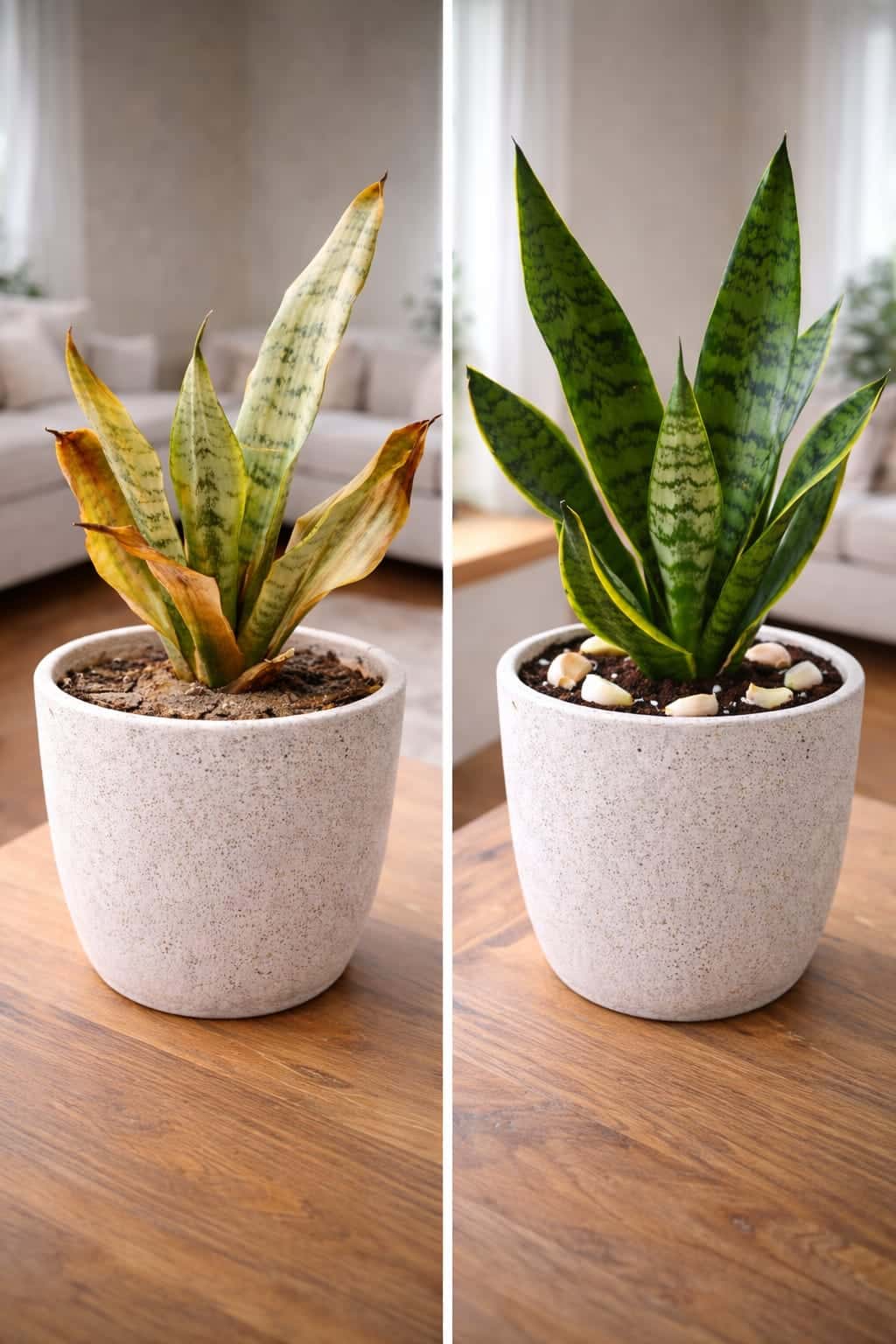
In viral images like the one associated with this topic, you often see a weak snake plant beside a healthier one, with garlic cloves added to the soil in the “after” version. That makes it look like garlic is the whole secret.
But here is the honest truth:
👉 Garlic alone is not what gives you more pups.
👉 Better root health and better care are what actually do it.
Some people use garlic in homemade plant care because they believe it may help support a cleaner soil environment or discourage minor soil issues. Used very lightly, it may be part of a recovery routine.
But if the plant is sitting in bad soil or getting watered too often, garlic will not solve the real problem.
Let us break down what actually works.
What Actually Helps a Snake Plant Make More Pups
Forget the hype. Focus on these proven, science‑backed care habits. Each one directly supports rhizome health and pup production.
- Let the Soil Dry Properly
This is one of the most important rules.
Snake plants hate sitting in wet soil. If the roots stay soggy, the plant becomes stressed, and stressed rhizomes do not multiply well.
A better routine:
· water thoroughly until water runs from the drainage holes
· let all excess water drain away
· wait until the soil is completely dry before watering again
In most indoor conditions, this means watering every 2–4 weeks, depending on light, temperature, and pot size.
Healthy dry‑down cycles help the underground system stay strong and encourage the plant to store energy for new pups.
- Use Fast‑Draining Soil
Heavy, compact soil slows everything down. It traps moisture around the roots, leading to rot instead of growth.
Snake plants do best in:
· cactus or succulent mix (sandy, airy, fast‑draining)
· houseplant mix with extra perlite (add 30–50% perlite to standard potting soil)
· any airy soil that does not stay wet for more than a few days
If the roots have oxygen and the mix drains quickly, the plant is far more likely to grow pups.
- Give It Brighter Light
Snake plants can survive in low light, but they multiply better in bright indirect light.
More usable light means:
· more energy from photosynthesis
· better leaf strength and color
· stronger root systems
· more active pup production
Place your snake plant within 3–5 feet of a south or west window. If your home is dark, consider a full‑spectrum grow light for 10–12 hours daily.
If you want real growth, not just survival, brighter light makes a dramatic difference.
- Keep It Slightly Snug in the Pot
Snake plants often do well when they are a little root‑bound.
If the pot is too large:
· the soil may stay wet too long
· the roots spread horizontally without focusing on new shoots
· growth may feel slower and less dense
A slightly snug pot encourages the plant to fill in and expand from the base. Repot only when roots are visibly crowded or cracking the pot. When you do repot, go up only one pot size (e.g., 6‑inch to 8‑inch).
- Feed Lightly During Active Growth
A snake plant does not need heavy fertilizer, but a gentle feed during spring and summer can help support stronger growth and more pups.
The key:
· use a balanced liquid fertilizer (like 10‑10‑10) diluted to half strength
· feed once every 6–8 weeks during the growing season (April through August)
· do not fertilize in fall and winter
Too much fertilizer can burn roots or stress the soil. Gentle support works much better than aggressive feeding.
Can Garlic Help at All?
Possibly, but only as a very small support step.
If you want to try garlic, the safest idea is not to bury lots of fresh garlic cloves in the pot. That can sometimes cause odor, rot, or unwanted soil issues.
A better approach, if experimenting:
· crush one small garlic clove and soak it in 1 quart of water overnight
· strain out the solids
· dilute that water further (1 part garlic water to 4 parts clean water)
· use sparingly, only in healthy, well‑draining soil
· never apply to a soggy pot or a stressed plant
Garlic contains allicin and other sulfur compounds that some gardeners believe may help suppress minor soil fungi or pests. However, there is no strong scientific evidence that garlic directly triggers pup production.
The real secret to more pups is not garlic. It is root health.
How to Tell Your Snake Plant Is Getting Ready to Pup
A snake plant that is improving often shows small signs before the pups appear.
Look for:
· firmer, more upright leaves
· richer green color (not pale or yellow)
· stronger overall growth
· a fuller, more crowded base
· tiny pointed shoots emerging at soil level (these are the pups!)
These are the signs that the rhizomes underneath are doing better. Once you see that first little green tip break the soil surface, you know your care is working.
Pups typically appear in spring and summer, but a happy plant can produce them at almost any time of year.
Continue to Page 2
Continue to page 2 for more details about this article and the key points many readers miss on the first page.