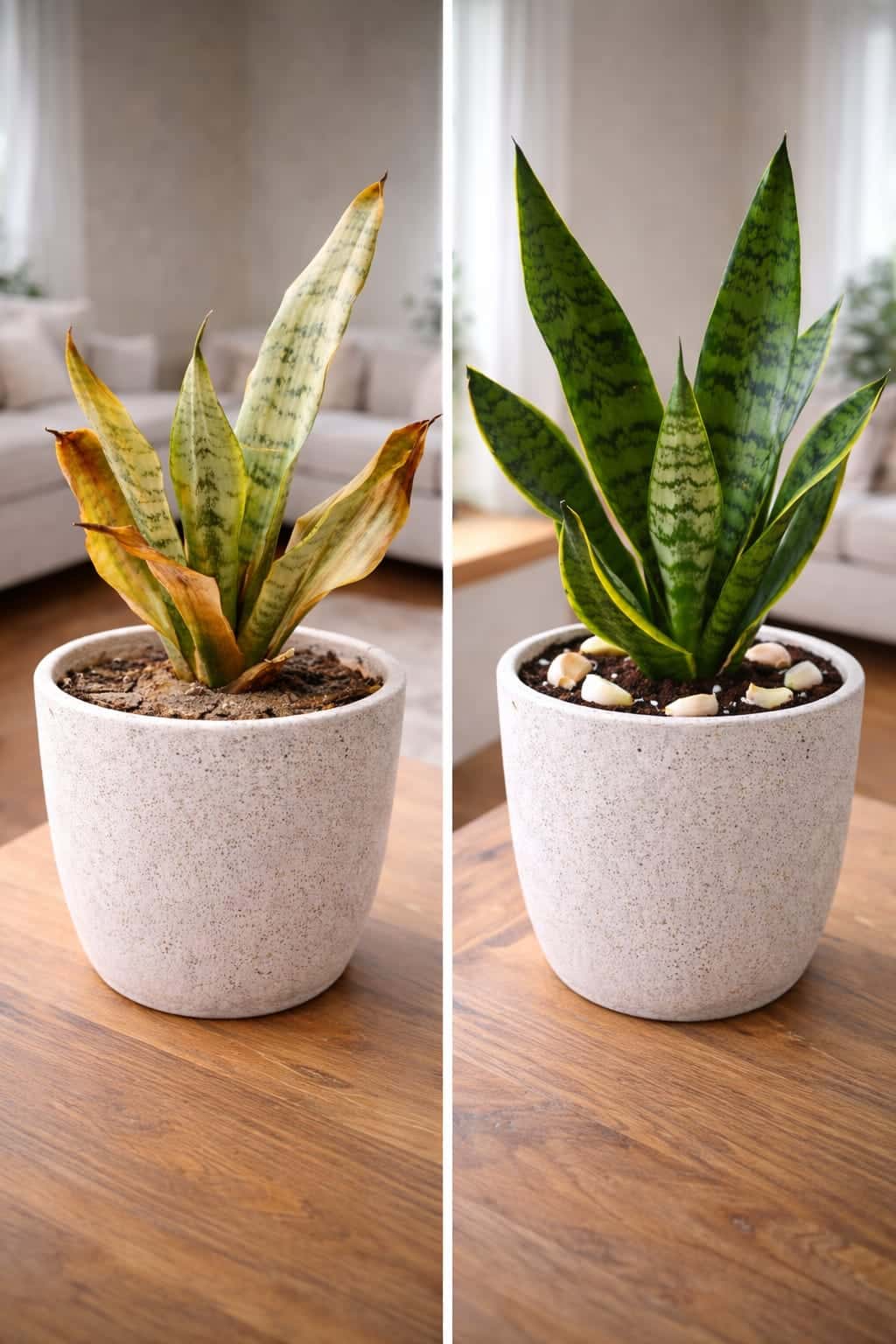
Why the “After” Plant Looks So Much Healthier
A healthier snake plant usually has:
· greener, more vibrant leaves
· less browning or scarring on leaf edges
· better structural integrity (leaves stand up, not flop)
· stronger roots (white or tan, not brown or mushy)
· more active center growth
That change usually comes from:
· less watering stress
· better drainage
· better light exposure
· a more consistent watering rhythm
· a healthier soil environment
That is what makes the difference look dramatic. It is not magic. It is just good care.
Common Mistakes That Stop Pup Growth
If you want more baby snake plants, avoid these common pitfalls.
Overwatering
This is still the number one problem. Soggy soil leads to root rot, and rotten roots cannot produce pups.
Very Low Light
The plant may live, but it will not multiply well. Low light = low energy = few or no pups.
Heavy, Compact Soil
Poor drainage weakens the roots and rhizomes. If water pools on the surface or the soil feels like clay, repot immediately.
Potting into a Huge Container
Too much wet soil around the roots can slow everything down. A pot that is too large also makes it harder for the plant to feel “snug” enough to reproduce.
Overfeeding
A stressed root system does not want strong fertilizer. Too much fertilizer causes salt buildup, leaf burn, and can actually stop pup production.
Expecting Instant Results
Snake plants are steady growers, not overnight transformers. It can take weeks or even months for a pup to appear after you improve care. Be patient.
Ignoring Pests
Spider mites, mealybugs, and fungus gnats can weaken your plant. Check regularly and treat early.
Step‑by‑Step Routine for Maximum Pups
Here is a simple weekly and seasonal checklist.
Weekly (Quick Check)
· Feel the soil. Is it dry? If yes, water. If damp, wait.
· Wipe leaves with a damp cloth to remove dust.
· Check for pests (undersides of leaves, base of plant).
· Rotate the pot slightly for even light exposure.
Monthly
· Inspect the root zone through drainage holes. Look for white, healthy roots.
· Remove any dead or yellowing leaves.
· If you see a pup emerging, do not disturb it. Let it grow.
Seasonally
Spring & Summer (Growing Season)
· Bright indirect light (10–12 hours)
· Water when soil is completely dry (every 2–3 weeks typically)
· Fertilize lightly every 6–8 weeks
· Watch for pup
Fall & Winter (Resting Season)
· Reduce watering to once a month or less
· No fertilizer
· Lower light is okay, but brighter light still helps
· Do not repo
Annually
· Check if the pot is too crowded. If roots are circling densely or cracking the pot, repot in spring into a container just one size larger.
· Refresh the top 1–2 inches of soil if you do not repot.
How to Separate and Repot Snake Plant Pups (Once They Are Big Enough)
Once a pup has grown to at least 4–6 inches tall and has its own small root system, you can separate it to create a new plant.
Step 1 – Unpot the mother plant gently.
Step 2 – Locate the pup’s rhizome connection to the main plant.
Step 3 – Use a clean, sharp knife to cut the pup away, keeping as many of its roots as possible.
Step 4 – Let the cut end callus over for a day or two.
Step 5 – Plant the pup in a small pot (4–5 inches) with fresh cactus soil.
Step 6 – Water lightly once, then wait for the soil to dry before watering again.
Step 7 – Place in bright indirect light and treat like a mature snake plant.
Within a few months, your new pup will be growing strong. And the mother plant often responds to separation by producing even more pups.
Frequently Asked Questions (Snake Plant Pups)
How long does it take for a snake plant to produce pups?
It can take anywhere from a few weeks to several months after improving care. Some healthy plants produce pups annually. Others may take a year or more. Patience is key.
Does garlic really make snake plants grow more pups?
Garlic is not a proven pup booster. At best, a very diluted garlic water may help with minor soil hygiene. The real triggers are proper light, watering, soil, and root health.
Can I propagate a snake plant without waiting for pups?
Yes. You can propagate snake plants from leaf cuttings in water or soil. However, leaf cuttings take much longer to form new plants (6–12 months) and the new plants may not have the same variegation as the parent.
Why does my snake plant have pups but they are not growing?
Pups can stall if the mother plant is stressed, light is too low, or the pot is too small for both to thrive. Check your watering and light. Consider repotting into a slightly larger container.
Should I remove pups or leave them attached?
That depends on your goal. Leave them attached for a fuller, bushier plant. Remove and repot them to create new plants. Both are fine.
How often should I water a snake plant with pups?
Same as a snake plant without pups. Water only when the soil is completely dry. Pups are more sensitive to overwatering than mature leaves.
Can I use Epsom salt for snake plant pups?
Epsom salt provides magnesium. If your plant shows signs of magnesium deficiency (yellowing leaf edges), a very diluted Epsom salt solution (1 teaspoon per gallon of water) once a month may help. It is not a direct pup booster.
Why are my snake plant leaves turning yellow after I added garlic?
Yellow leaves usually indicate overwatering, not garlic. However, if you buried raw garlic cloves, they may be rotting and causing root issues. Remove the garlic and check the soil moisture.
The Best “Simple Trick” in One Sentence
If you want more pups and healthier snake plants, the best simple trick is this:
👉 Keep the roots dry enough, bright enough, and strong enough to multiply.
That is what actually works. Not garlic. Not miracle powders. Just consistent, sensible care.
Final Thoughts
If your snake plant looks weak and you want more pups, do not focus only on the ingredient in the picture. Do not chase viral hacks that promise overnight transformations.
Focus on what the plant really needs:
· fast‑draining soil
· bright indirect light
· dry periods between watering
· a slightly snug pot
· light feeding during active growth
· stable root health
That is what turns a tired snake plant into a stronger one.
And once the roots are happy, the pups start doing exactly what you want—appearing right at the base, making the whole plant look fuller, healthier, and much more alive.
So put down the garlic. Pick up a moisture meter if you need one. Move your plant closer to the window. And give it time.
Your snake plant knows how to grow babies. It just needs the right conditions to show you.
Have you successfully grown snake plant pups? Share your experience in the comments below. And if you found this guide helpful, save it for later or send it to a fellow plant parent who wants a fuller, happier snake plant.