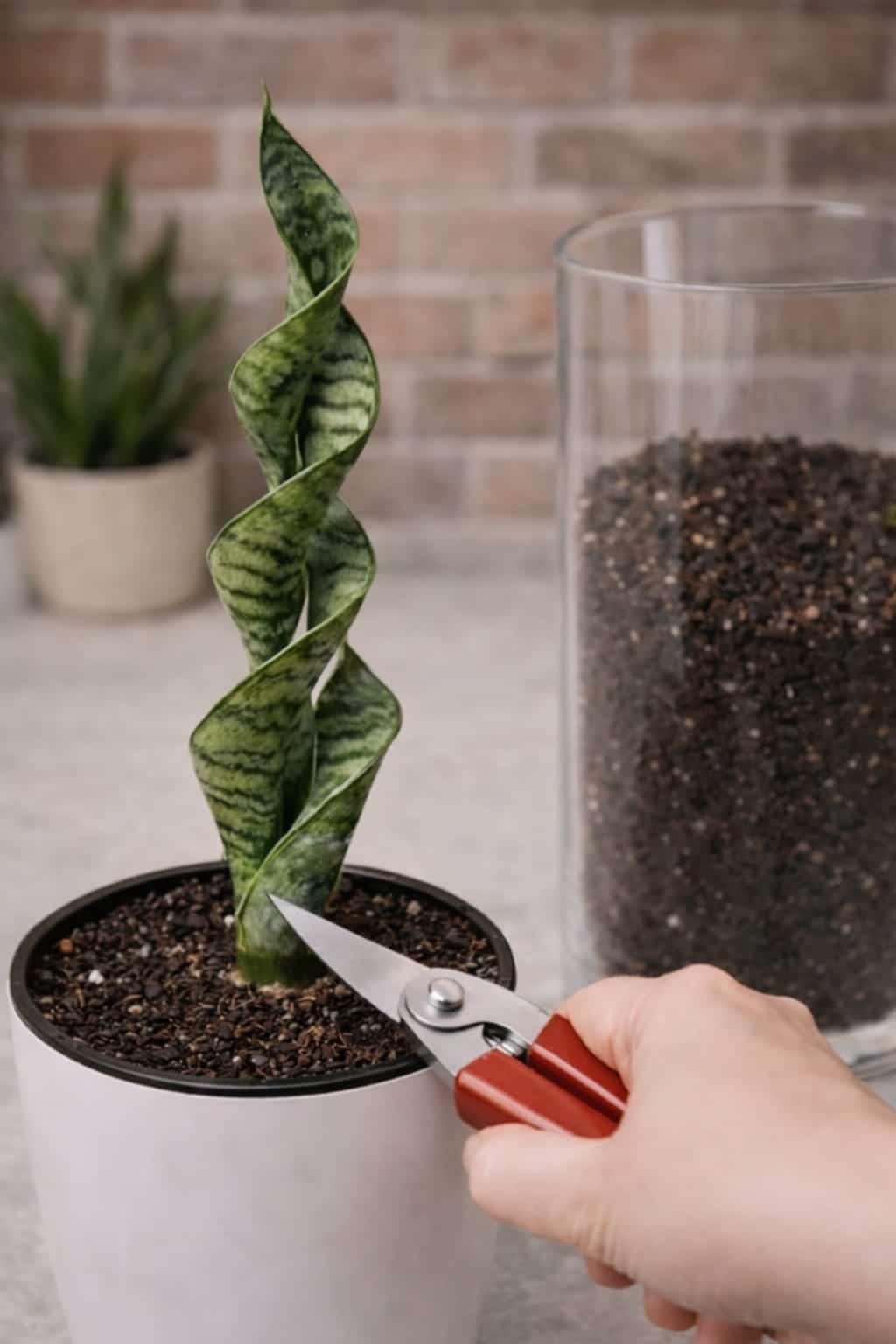
The spiral snake plant is one of the most striking indoor plants you can grow. Its sculptural twist, upright form, and bold pattern make it feel more like a modern design object than a houseplant. Unlike a standard snake plant with straight, upright leaves, the spiral variety draws the eye and becomes an instant focal point in any room.
What many people don’t realize is that this spiral shape is not accidental. It comes from controlled growth, proper light direction, and careful feeding — not genetics alone. With the right techniques, you can train your snake plant to develop that elegant, twisting form that looks so stunning in contemporary interiors.
In this guide, you will learn exactly how to grow a snake plant in a spiral shape, how to feed it without ruining the form, and how to care for it so it remains a beautiful, architectural feature in your home for years.
Why Some Snake Plants Grow in a Spiral Shape
The spiral effect happens when the plant responds to light direction over time. Snake plants are phototropic — they grow toward light. When light consistently comes from one side, new leaves begin to twist gently as they stretch upward. With patience and stability, this creates the iconic spiral form seen in high‑end interiors and design magazines.
This is not a separate species or a rare mutation. It is a training technique that any snake plant can undergo, though some varieties respond better than others. The key is slow, deliberate light management.
This Shape Is Especially Popular In:
· Modern living rooms
· Minimalist apartments
· Contemporary home decor setups
· Interior styling with neutral palettes
· Home office spaces and bedrooms
The spiral snake plant adds movement and softness to otherwise straight lines, making it a favorite among interior designers.
Step 1: Choose the Right Snake Plant Variety
Not every snake plant will spiral beautifully. For the best results, choose:
· Compact or dwarf varieties – These have shorter, thicker leaves that twist more visibly.
· Plants with thick, firm leaves – Floppy or thin leaves do not hold the spiral shape well.
· Young plants with upright growth – Younger plants are more adaptable to directional training.
Recommended Varieties for Spiral Training
· Sansevieria trifasciata ‘Hahnii’ (Bird’s Nest Snake Plant) – Naturally compact, excellent for spirals.
· Sansevieria ‘Golden Hahnii’ – Variegated, slow‑growing, holds shape well.
· Sansevieria cylindrica – Cylindrical leaves can be braided or spiraled with training.
· Sansevieria trifasciata ‘Futura Superba’ – Shorter, wider leaves that respond well to light direction.
Smaller plants adapt more easily to directional training and maintain cleaner lines as they grow. Avoid very large, mature plants — their leaves are already set in their growth pattern.
Step 2: Control Light to Create the Spiral
Light is the most important tool for shaping your snake plant. Unlike pruning or staking, which forces a shape, light training works with the plant’s natural growth instincts.
Placement
· Bright, indirect light – A spot near an east or north window is ideal. A south or west window with a sheer curtain also works.
· Consistent position – Do not move the plant from room to room. The light source must be steady.
· Avoid harsh direct sunlight – Direct sun can scorch leaves and flatten the spiral pattern.
The Rotation Technique
· Every 10–14 days, rotate the pot slightly – About 15–30 degrees each time. Do not do a full 180‑degree turn.
· Gradual adjustment – This encourages the leaves to curve instead of growing straight toward the light.
· Be patient – The spiral develops over many months. You will see subtle twisting after 6–8 weeks, and a clear spiral shape after 6–12 months.
What Not to Do
· Do not rotate daily or weekly. Too much movement confuses the plant.
· Do not place the plant in low light. Weak light produces no spiral at all.
· Do not use artificial light from one side only unless it is very consistent.
The spiral forms because the plant is constantly reaching toward the light source while being gently turned. It is a slow, organic process that rewards patience.
Step 3: Use the Right Soil for Structural Growth
Snake plants need soil that supports root strength and air flow. The wrong soil leads to weak roots, soft leaves, and a loss of the spiral shape.
Best Soil Options
· Cactus or succulent potting mix – Designed for fast drainage and root aeration.
· DIY mix – 2 parts all‑purpose potting soil + 1 part perlite + 1 part coarse sand.
· Added perlite or coarse sand – Improves drainage and prevents compaction.
Why Soil Matters for Shape
Well‑draining soil prevents water buildup and supports slow, controlled growth — essential for maintaining a sculptural shape. When roots are healthy and not waterlogged, the leaves stay firm and upright, which helps the spiral pattern remain crisp and visible.
Repotting Guidelines
· Repot every 2–3 years, or when roots are circling the pot.
· Choose a pot only 1–2 inches larger than the current one.
· Use fresh cactus mix each time.
This type of soil is also commonly used in premium indoor planters and decorative containers, which further enhances the plant’s design appeal.
How to Add Fertilizer Without Ruining the Shape
Overfeeding is the fastest way to lose the spiral form. Too much fertilizer, especially high‑nitrogen formulas, causes rapid, uneven growth. Leaves become longer, softer, and less likely to hold the twist. The spiral flattens out, and you are left with a leggy, misshapen plant.
Best Fertilizer Type
· Balanced liquid houseplant fertilizer (10‑10‑10 or 20‑20‑20)
· Or a diluted succulent fertilizer (lower nitrogen)
· Always apply at half strength – Full strength is too strong for snake plants.
When to Fertilize
· Once every 4–6 weeks during spring and summer – This is the active growing season.
· Do not fertilize in winter – The plant is resting.
· Never fertilize dry soil – Always water lightly first, then apply fertilizer to avoid root stress.
How Much to Use
For a standard 6‑inch pot, use about ¼ cup of diluted fertilizer. For larger pots, scale up slightly. Less is always better than more.
Natural Feeding Option (Gentle and Safe)
If you prefer to avoid synthetic fertilizers, there are gentle natural options that support root health without forcing rapid growth.
Safe Natural Amendments
· Diluted worm casting tea – Steep ½ cup of worm castings in 1 gallon of water for 24 hours, then dilute further (1 part tea to 2 parts water). Use once a month.
· Very diluted rice water – Use the cloudy water from rinsing rice, diluted 1:1 with fresh water. Apply every 3–4 weeks.
· Compost tea (weak) – Use a commercial organic compost tea at half strength.
What to Avoid
· Coffee grounds – Too acidic, can compact the soil.
· Eggshell water – Minimal benefit, can attract pests.
· Banana peel water – Ferments quickly, smells bad.
The goal with natural feeding is stability, not speed. Healthy roots result in:
· Stronger leaf structure
· Cleaner spiral form
· Better long‑term appearance
Continue to Page 2
Continue to page 2 for more details about this article and the key points many readers miss on the first page.