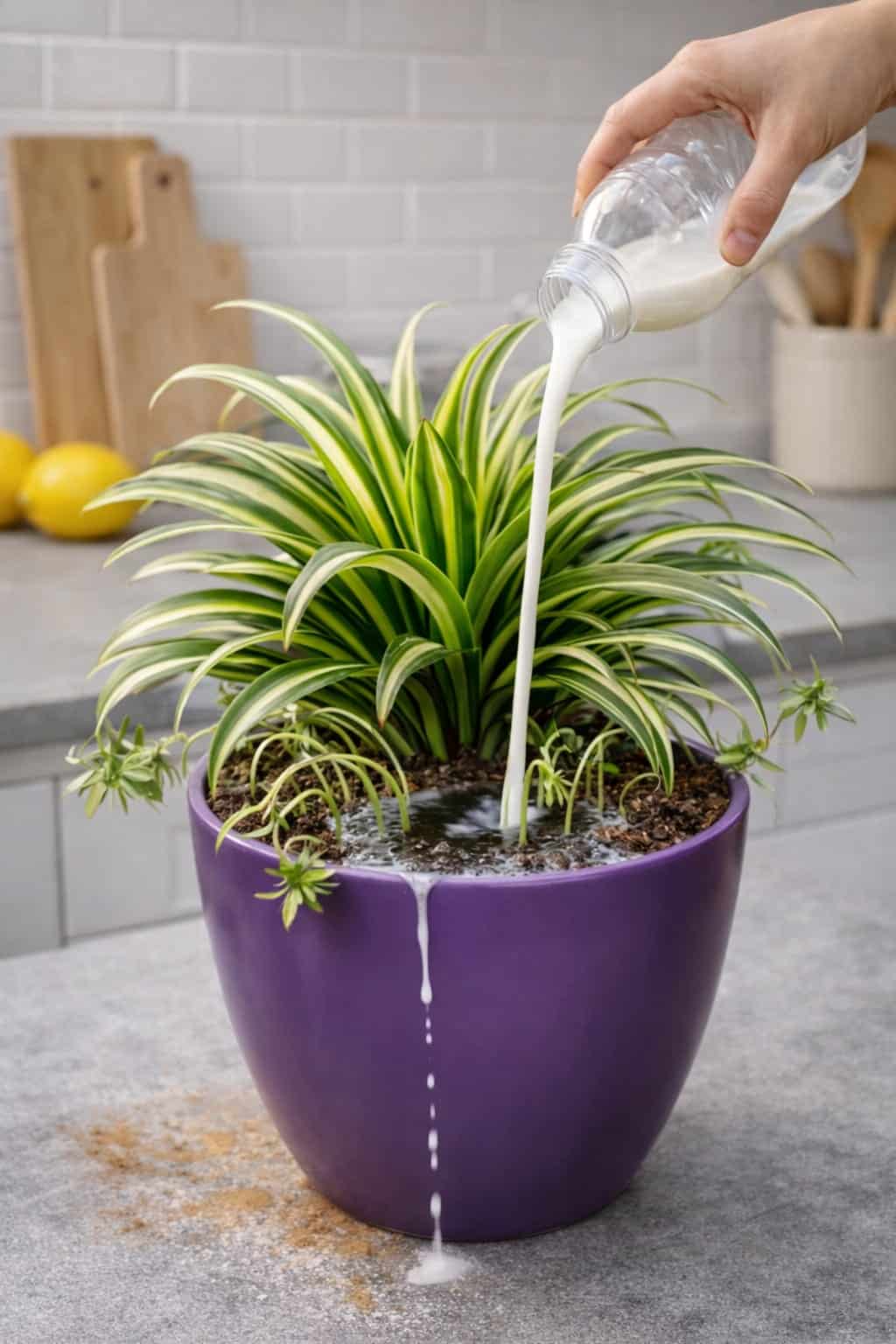
Spider plants are some of the most popular houseplants in America, and it is easy to see why. They are fast‑growing, forgiving, beautiful in hanging baskets, and famous for producing those charming little baby plantlets that make the whole plant look lively and full.
But even though spider plants are considered “easy,” many people still struggle to get that lush, overflowing look.
The leaves may stay alive, but the plant does not grow as fast as expected. The color may look dull. Brown tips may appear. And sometimes the plant never seems to produce as many babies as it should.
That is why simple feeding tricks get so much attention. You may have seen videos showing a white liquid being poured into the pot, with claims that it makes spider plants greener, fuller, and more productive. It looks like a secret method few people know.
But here is the truth: the best spider plant feeding trick is not really about one mystery liquid. It is about feeding the plant gently, at the right time, without stressing the roots.
In this guide, you will learn the feeding method that most American gardeners overlook, why spider plants lose their vigor, how to flush soil to remove harmful buildup, and a simple, proven routine that will have your spider plant producing lush leaves and countless babies.
Why Spider Plants Stop Looking Their Best
Spider plants (Chlorophytum comosum) grow quickly when they are comfortable, but they still need the basics done right. They are not invincible, even if they are marketed that way.
A spider plant usually slows down because of:
· Tired potting soil – After a year or two, soil becomes compacted and loses nutrients.
· Weak feeding over time – Spider plants are light feeders, but they still need occasional nutrition.
· Too much direct hot sun – Harsh afternoon sun scorches leaves and causes brown tips.
· Inconsistent watering – Going from bone dry to soaking wet stresses the roots.
· Salt buildup in the soil – From tap water and fertilizer, this is a hidden killer.
· Low light for too long – The plant survives but does not thrive.
A lot of spider plants stay alive for months in poor conditions, which is why people assume they are “fine.” But surviving is not the same as thriving. If you want fuller leaves and more babies, the plant needs more support than simple survival care.
The Feeding Trick That Actually Works
The most effective spider plant feeding trick is this: feed lightly and consistently during active growth, while also flushing the soil occasionally.
That may not sound dramatic, but it works far better than random hacks. Spider plants respond best to:
· Gentle nutrition (half‑strength fertilizer)
· Bright indirect light (not harsh sun, not deep shade)
· Even watering (let the top inch dry between waterings)
· Soil that is not overloaded with mineral buildup
This is what helps them produce strong leaves and more plantlets. The “trick” is not a secret ingredient — it is a consistent routine.
Why Mystery White Liquids Are Not the Real Secret
In viral videos, the white liquid is often one of these:
· Milk – Can sour, attract pests, and leave residue.
· Rice water – Mildly beneficial but often overused and fermented incorrectly.
· Diluted fertilizer – The only one that actually helps, but it must be used correctly.
· A homemade tonic – Unpredictable and sometimes harmful.
· Just a visual trick for engagement – The liquid does nothing; the plant was already healthy.
Some homemade mixtures may help a little if they are mild and used carefully. But many of them can also create problems, especially indoors. A spider plant does not need heavy kitchen liquids in the pot. It needs healthy roots, balanced moisture, mild feeding, and less salt stress. That is the part most people miss.
The Best Way to Feed a Spider Plant
A spider plant usually does best with a mild balanced houseplant fertilizer during spring and summer. The key is to feed lightly, regularly, and not too strongly.
Recommended Fertilizer
· Balanced formula: 10‑10‑10 or 20‑20‑20
· Dilution: Half strength (or even quarter strength for sensitive plants)
· Frequency: Once a month during active growth (March through August)
· Do not fertilize in fall and winter – the plant rests.
How to Apply
· Water the plant first with plain water to moisten the soil.
· Then apply the diluted fertilizer.
· Never fertilize dry soil – it can burn roots.
Too much fertilizer can actually make the plant worse by causing brown tips, salt buildup, root stress, and leaf damage. That is why a gentle routine works better than a strong one.
The “Secret” Many Gardeners Overlook: Flush the Soil
This is one of the most useful spider plant tricks of all, yet hardly anyone talks about it.
Spider plants are sensitive to mineral and salt buildup, especially in pots. Over time, fertilizer residue and water minerals (fluoride, chlorine, calcium) collect in the soil and around the roots. That buildup often leads to:
· Crispy brown tips (the most common complaint)
· Dull, faded growth
· Less vigorous leaves
· An overall tired‑looking plant
So one of the smartest things you can do is occasionally flush the pot with clean water.
How to Flush a Spider Plant
- Take the plant to a sink or outdoors.
- Pour room‑temperature water slowly through the soil for 1–2 minutes.
- Use about three times the volume of the pot (e.g., for a 6‑inch pot, use about 1 gallon of water).
- Let all excess water drain completely.
- Return the plant to its saucer.
For many spider plants, this simple step helps more than adding another product. It washes away excess salts and gives the roots a fresher environment. Do this every 4–6 weeks, especially if you have hard tap water.
Bright Indirect Light Makes Feeding Work Better
A plant can only use extra nutrition well if it has enough light. Light and fertilizer work together. Without adequate light, fertilizer becomes useless or even harmful.
Spider plants grow best in:
· Bright indirect sunlight (near an east or north window)
· Filtered window light (south or west window with a sheer curtain)
· A bright room without harsh direct afternoon sun
Signs of Light Issues
· Too little light: Leaves become pale, growth slows, no baby plantlets.
· Too much direct sun: Leaves develop brown, scorched patches; color fades.
If your spider plant is sitting in a dim corner, feeding alone will not create a lush transformation. Move it closer to a window, and you will see a difference within weeks.
Continue to Page 2
Continue to page 2 for more details about this article and the key points many readers miss on the first page.