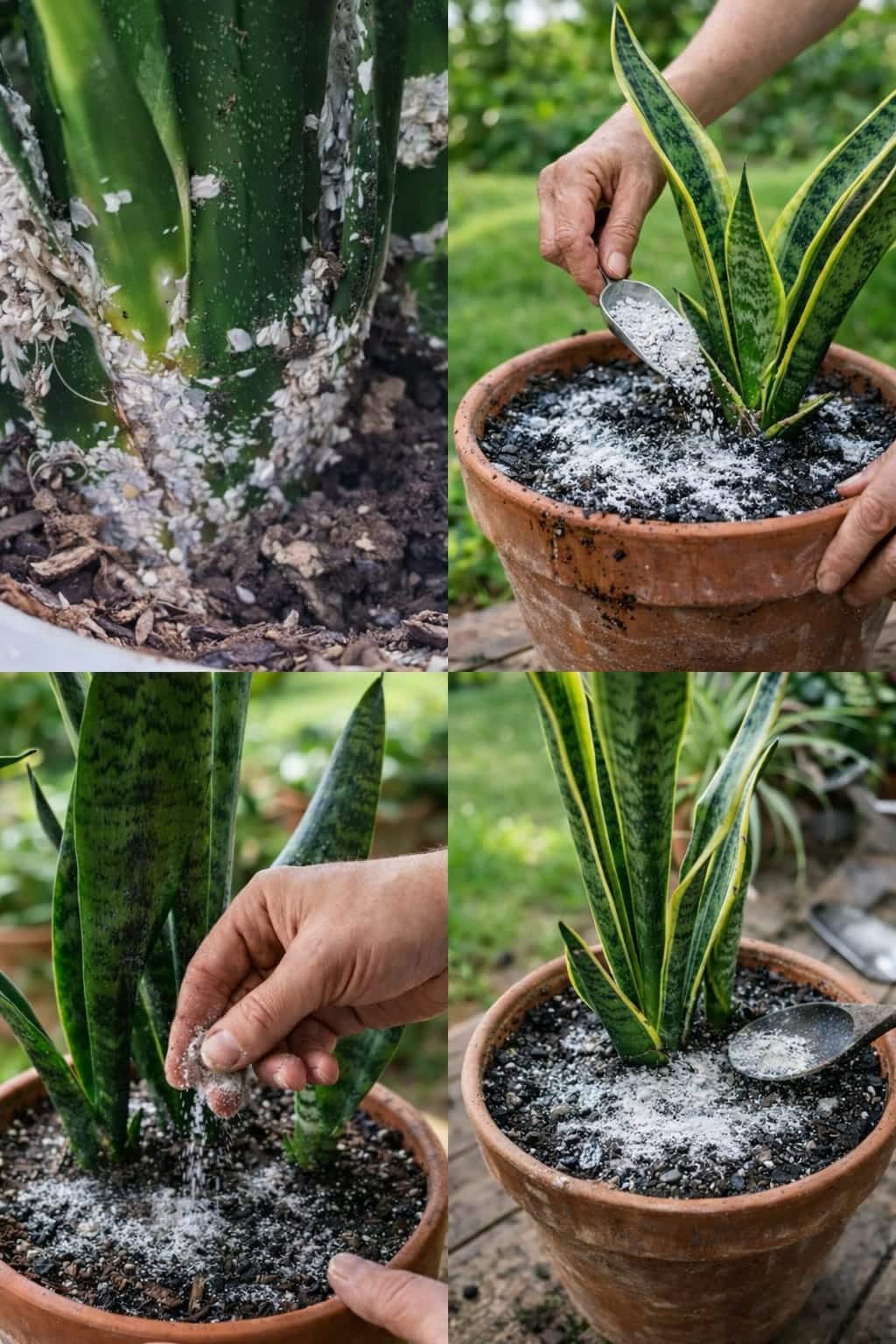
Snake plants are famous for being tough, stylish, and easy to keep alive. They handle dry air, missed waterings, and lower light better than most houseplants. But if you want more than survival — if you want stronger roots, firmer leaves, and better growth — then soil health matters more than many people think.
That is why so many plant lovers are suddenly talking about ash.
A little gray powder sprinkled on the soil sounds simple, natural, and inexpensive. Some people claim it helps snake plants grow stronger, greener, and healthier. But does this “ash hack” really work?
The honest answer is: sometimes a little, but only in the right situation. Wood ash is not a miracle cure, and it can also cause problems if used too heavily or on the wrong soil.
In this guide, you will learn exactly what wood ash does for snake plants, when it helps, when it harms, and — most importantly — the proven care habits that actually create strong roots and healthy leaves.
Why People Use Ash on Plants
Wood ash has been used in gardens for generations. When you burn clean, untreated wood, the resulting ash contains small amounts of minerals that were in the wood, especially:
· Potassium (K) – An essential nutrient that supports overall plant health, water regulation, and disease resistance.
· Calcium (Ca) – Important for cell wall structure and root development.
· Trace elements – Magnesium, phosphorus, and micronutrients in smaller amounts.
That is why gardeners have used it for years in outdoor spaces, particularly around fruit trees, vegetable gardens, and compost piles. In some cases, it can lightly enrich soil and support plant vigor.
For a snake plant, the appeal is obvious: stronger‑looking leaves, a possible nutrient boost, and a natural, low‑cost soil amendment. But indoor pots are very different from garden beds. What works lightly outdoors can become too concentrated in a small container. The lack of rain, natural soil microbes, and large soil volume means that any amendment stays in the pot and can build up quickly.
What Ash May Help With (Realistic Benefits)
Used very sparingly, a small amount of plain, untreated wood ash may help by:
· Adding a mild mineral boost – Especially potassium, which snake plants use for water transport and stem strength.
· Slightly supporting root‑zone nutrition – In very depleted soil, trace minerals can be beneficial.
· Contributing potassium – This nutrient is often lacking in old potting mix and can support overall plant health.
· Helping tired soil feel a little less depleted – After a year or two without repotting, a tiny pinch of ash can add back some minerals.
That can make a healthy snake plant respond with:
· Firmer leaves – Less flopping or wrinkling.
· Better color – Deeper green, more vibrant variegation.
· Steadier growth – New leaves emerge at a consistent pace.
· Stronger roots over time – Potassium supports root development.
But the effect is usually subtle, not dramatic. Do not expect a weak, struggling plant to suddenly transform overnight because of a sprinkle of ash.
What Ash Does NOT Do (Important Reality Check)
This is critical to understand. Ash does not:
· Instantly fix root rot – If the roots are mushy and black, ash will not save them. You need to trim rot and repot.
· Replace good light – No amount of ash will compensate for a dark corner.
· Make a weak snake plant explode with growth overnight – Growth depends on light, water, and soil aeration.
· Compensate for overwatering – Ash will not dry out soggy soil.
· Solve poor drainage – A pot without holes is still a death sentence.
· Work as a universal fertilizer for every plant – Ash is not a complete fertilizer; it lacks nitrogen, for example.
If the plant is already stressed by soggy soil or weak roots, ash alone will not rescue it. The real solution is to fix the underlying conditions first.
The Biggest Risk with Ash (Why You Must Be Careful)
Wood ash is alkaline. Most wood ash has a pH between 9 and 11, which is far above the neutral 7. Snake plants prefer slightly acidic to neutral soil (pH 6.0–7.0). That means using too much ash can change the soil environment more than you want.
In a small indoor pot, excess ash may:
· Raise soil pH too much – High pH can lock out essential nutrients like iron and manganese, causing yellowing leaves (chlorosis).
· Create mineral buildup – A white crust on the soil surface is a sign of excess.
· Stress the roots – Sudden pH changes can damage delicate root hairs.
· Interfere with nutrient uptake – Even if nutrients are present, the plant cannot absorb them at the wrong pH.
· Leave crusty residue on the soil surface – Unsightly and can block water absorption.
So while the “ash hack” sounds harmless, too much can easily backfire. A single heavy application can harm your snake plant more than help it.
The Only Kind of Ash That Makes Sense
If anyone wants to try this, it should only be:
· Plain wood ash from clean, untreated hardwood (oak, maple, hickory, etc.).
· No lighter fluid, chemicals, paint, or additives – Ash from treated wood contains toxins.
· No charcoal briquettes – They often contain binders and accelerants.
· No ash from cardboard, paper, or synthetic materials – Those contain inks and glues.
Ash from charcoal briquettes, painted wood, treated lumber, or anything synthetic is a bad idea for houseplants. It can introduce heavy metals, petroleum residues, and other harmful compounds.
If you do not have a clean source of wood ash (e.g., from a fireplace or campfire using natural wood), skip the hack entirely. It is not worth the risk.
How to Use Ash Safely on a Snake Plant (If You Choose to Experiment)
If you want to experiment carefully, the safest approach is:
Step‑by‑Step:
Make sure the plant is already in fast‑draining soil (cactus/succulent mix). Do not add ash to soggy, compacted soil.
Use only a small pinch – For a 6‑inch pot, about ¼ to ½ teaspoon is plenty. You should barely see it on the surface.
Sprinkle it lightly over the soil surface – Do not pile it up against the stems. Do not mix it deep into the soil.
Water normally afterward only if the soil is due for watering – The water will carry the ash down into the root zone. If the soil is already wet, wait.
Do not repeat often – Once every 3–4 months is the maximum. Less frequent is safer.
What to Watch For After Application:
· Good signs: No change or slightly greener leaves over several weeks.
· Bad signs: White crust on soil, leaf yellowing, leaf tip burn, or slowed growth. If you see these, flush the soil with plain water to remove excess ash.
For snake plants, less is much better than more. When in doubt, skip the ash and focus on light and watering.
Continue to Page 2
Continue to page 2 for more details about this article and the key points many readers miss on the first page.