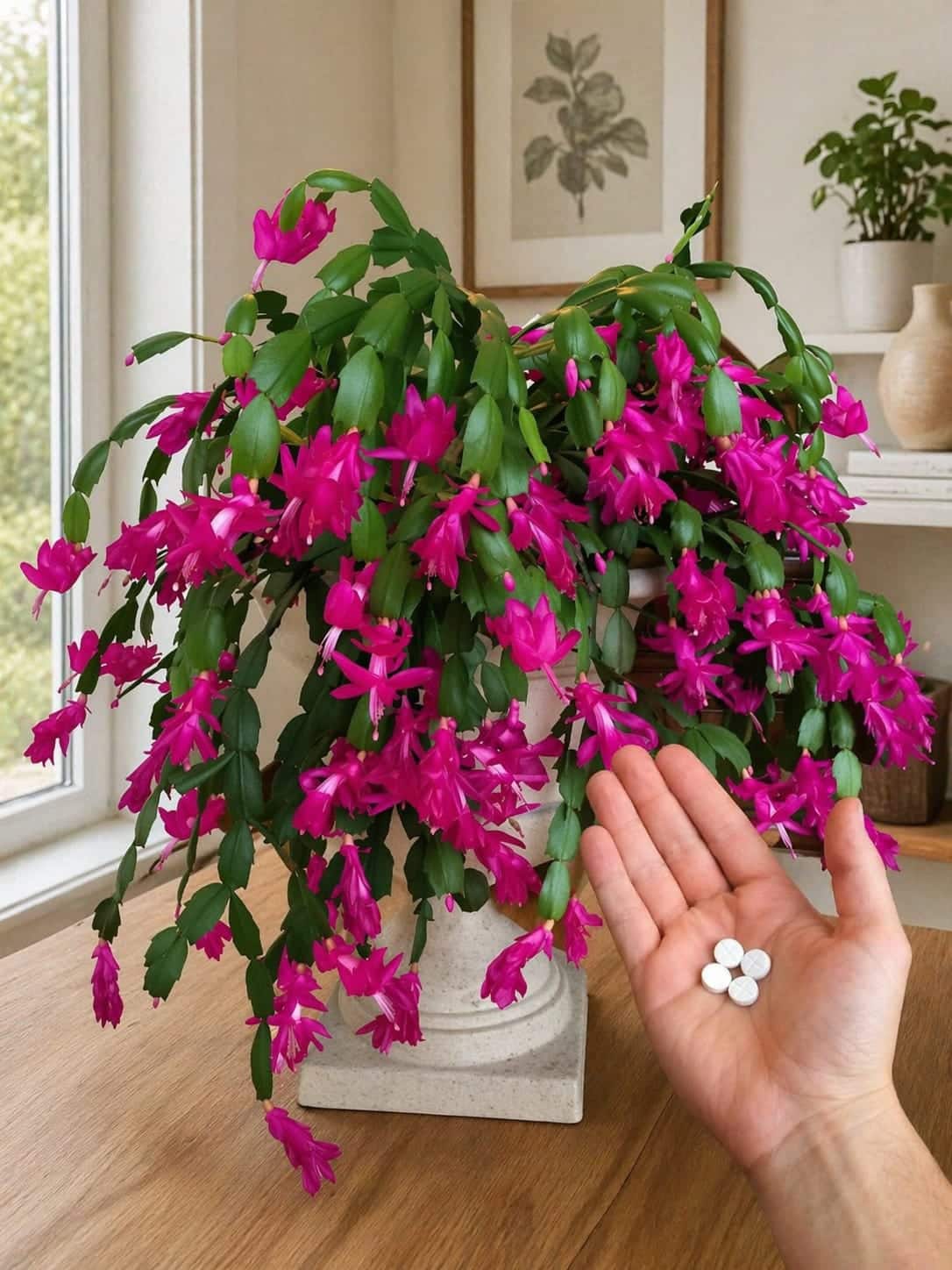
If you love indoor plants, the Christmas cactus is probably one of your favorites. Its bright, colorful flowers can completely transform a room during the holiday season. But sometimes, getting it to bloom abundantly can feel frustrating.
You water it. You give it light. You wait. And then… nothing. Or maybe just a few scattered flowers that fade too quickly.
The good news is that there is a simple trick that many plant lovers are using to boost flowering. And no, it is not a magic potion or an expensive gadget. It is a method that involves placing small tablets in the soil — combined with the right seasonal care.
In this guide, you will learn how to use fertilizer tablets safely, why this method works, the essential conditions for a magnificent Christmas cactus bloom, and a complete year‑round care routine that will have your plant covered in flowers year after year.
Why Christmas Cactus Sometimes Refuses to Bloom
Before we get to the trick, it helps to understand why your Christmas cactus might not be blooming as expected. This plant (Schlumbergera x buckleyi) is not a desert cactus. It is an epiphyte native to the tropical rainforests of Brazil, where it grows on trees in humid, shaded conditions.
Indoors, we often accidentally remove the signals it needs to flower. The most common reasons for poor blooming are:
· Too much light at night – Artificial light disrupts the dark period needed for bud formation.
· Warm nights – Cooler nights (50–65°F / 10–18°C) trigger blooming.
· Overwatering or underwatering – Inconsistent moisture stresses the plant.
· No rest period – The plant needs a seasonal pause to set buds.
· Lack of nutrients – Over time, the soil becomes depleted.
The tablet trick addresses the nutrient piece. But for spectacular blooms, you need the full picture.
The Simple Trick: Using Tablets in the Soil
A growing trend among gardeners is placing small tablets in the soil of a Christmas cactus. These tablets slowly release nutrients into the soil, helping the plant stay healthy and encouraging more blooms.
When used correctly, this method can:
· Support stronger root growth – Healthy roots absorb water and nutrients efficiently.
· Improve nutrient availability – Slow‑release tablets provide a steady supply of food.
· Encourage more vibrant and frequent flowering – Balanced nutrition is key to bud production.
However, not all tablets are the same. You must use the right kind.
What Kind of Tablets Should You Use?
In viral videos, you may see people dropping white pills into pots. Those could be:
· Slow‑release fertilizer tablets (designed for houseplants) – Safe and effective.
· Calcium or vitamin tablets – Not recommended; not formulated for plants.
· Aspirin or medication – Potentially harmful.
For the best results, use slow‑release fertilizer tablets specifically made for flowering houseplants or succulents. Look for a balanced formula (like 10‑10‑10 or 14‑14‑14) or one with higher phosphorus (the middle number) to support blooms.
How to Use This Method (Step‑by‑Step)
If you want to try this technique, follow these steps:
Step 1 – Choose the Right Tablets
Buy a package of slow‑release fertilizer tablets for indoor plants. Read the label to ensure it is safe for cacti and succulents. Avoid anything with high nitrogen (first number), which promotes leaf growth over flowers.
Step 2 – Prepare the Plant
Water your Christmas cactus lightly the day before. This helps the soil accept the tablets without shocking the roots.
Step 3 – Place Them Properly
Insert 2–4 tablets into the soil, a few centimeters away from the base of the plant. Space them evenly around the pot. Do not push them directly against the stem or main roots.
Step 4 – Water as Usual
As you water your plant, the tablets will gradually dissolve and feed the roots. Do not add extra water beyond your normal routine.
Step 5 – Do Not Overdo It
Too many tablets can burn the roots and damage the plant. Follow the label directions. For a 6‑inch pot, 2–3 tablets every 3–4 months is plenty. Overfeeding leads to weak, leggy growth and may inhibit blooming.
Important Safety Note
Never use human medications, vitamins, or unknown pills. Only use products labeled for plants. When in doubt, skip the tablets and use a liquid fertilizer at half strength.
What If You Don’t Want to Use Tablets? (Liquid Fertilizer Alternative)
If you prefer not to use tablets, a balanced liquid fertilizer works just as well. Use a water‑soluble fertilizer (like 20‑20‑20) diluted to half strength. Apply every 2–4 weeks during the active growing season (spring and summer). Stop fertilizing in early fall to allow the plant to rest and set buds.
Liquid fertilizer gives you more control but requires more frequent application. Tablets are a “set it and forget it” option for busy gardeners.
Extra Tips for More Blooms (The Complete Care Routine)
To maximize results, combine the tablet trick with proper care. These are the proven factors that turn a healthy Christmas cactus into a blooming machine.
- Keep Your Cactus in Bright, Indirect Light
During the growing season (spring through summer), place your Christmas cactus in bright indirect light. An east window or a south/west window with a sheer curtain is ideal. Good light builds energy for future blooms.
- Maintain a Cool Environment, Especially at Night
Starting in late September, give your plant cooler nights. Daytime temperatures can be 65–75°F (18–24°C), but nighttime temperatures should drop to 50–65°F (10–18°C). This cool period is one of the strongest bloom triggers.
- Reduce Watering Slightly Before the Blooming Season
In early fall, start reducing watering. Let the soil dry out a bit more than usual. Do not let the plant wilt, but do not keep it constantly moist. This mild drought stress encourages bud formation.
- Provide Long, Uninterrupted Darkness
For 6–8 weeks in early fall, give your Christmas cactus 12–14 hours of complete darkness every night. Even a few minutes of light from a lamp or TV can reset the plant’s internal clock. Cover the plant with a box or move it to a dark closet.
- Avoid Moving the Plant Once Buds Start Forming
Once you see tiny pink or red buds at the tips of the segments, do not move the plant. Do not rotate it. Do not expose it to drafts or heat vents. Sudden changes cause bud drop.
- Keep the Soil Lightly Moist During Budding
After buds appear, return to normal watering. Keep the soil lightly moist but not soggy. Dry soil can cause buds to shrivel; wet soil can cause root rot.
Continue to Page 2
Continue to page 2 for more details about this article and the key points many readers miss on the first page.