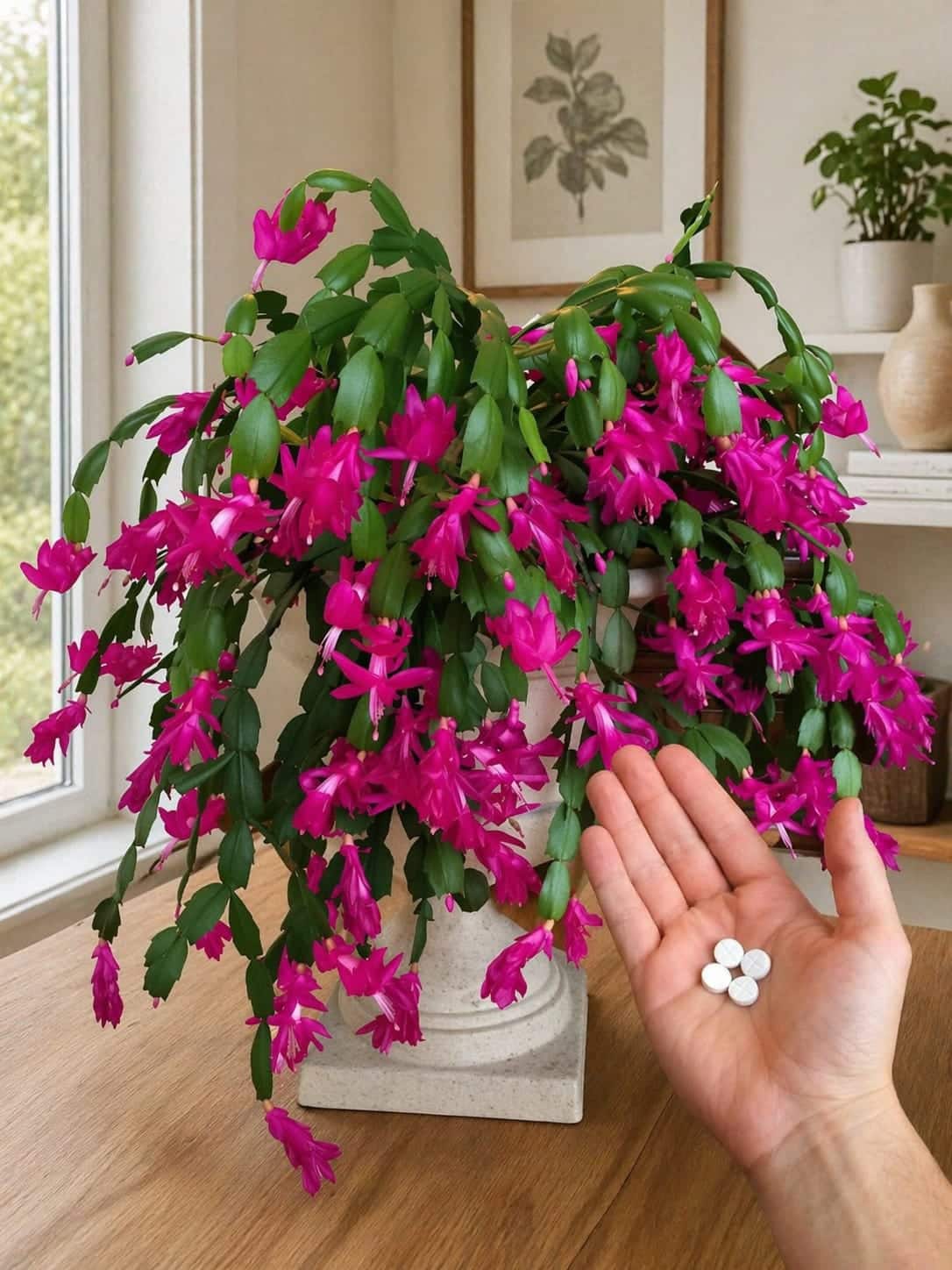
A Complete Year‑Round Care Calendar
Here is a simple month‑by‑month guide to keep your Christmas cactus blooming beautifully every year.
Spring (March – May)
· Light: Bright indirect light.
· Water: When top inch of soil is dry.
· Fertilizer: Begin feeding with half‑strength balanced fertilizer every 2–4 weeks (or use slow‑release tablets once).
· Other: Prune back leggy segments. Repot if needed (every 2–3 years).
Summer (June – August)
· Light: Bright indirect light. You can move outdoors to a shaded patio.
· Water: Water more frequently (1–2 times per week) but still let soil dry slightly between waterings.
· Fertilizer: Continue feeding every 2–4 weeks (or tablets should still be active).
· Other: Pinch back tips for fullness.
Early Fall (September – October) – Bloom Prep
· Light: Bright indirect light during the day.
· Darkness: 12–14 hours of complete darkness each night.
· Temperature: Cool nights (50–65°F / 10–18°C).
· Water: Reduce slightly. Let soil dry a bit more.
· Fertilizer: Stop feeding completely (tablets should have been used earlier).
· Do not repot or move the plant.
Late Fall (November – December) – Budding & Blooming
· Light: Bright indirect light (no darkness treatment once buds are visible).
· Water: Keep soil lightly moist. Do not let it dry completely or stay soggy.
· Fertilizer: None.
· Temperature: Stable, avoid drafts and heat vents.
· Do not move the plant. Do not rotate.
Winter (January – February) – Rest Period
· Light: Still bright light, but days are shorter — consider a grow light.
· Water: Reduce watering (once every 2–3 weeks).
· Fertilizer: None.
· Other: Remove spent flowers. Let the plant rest for 6–8 weeks.
Late Winter (February – March)
· Gradually increase watering and resume fertilizer as new growth appears.
· Prepare for the next growth cycle.
Signs Your Christmas Cactus Is Getting Ready to Bloom
Watch for these natural signs that your care routine is working:
· Tiny buds forming at segment tips – Small pink, red, or green bumps.
· Firmer, healthier segments – The plant feels plump and strong.
· Fuller branching – More segments, more potential bloom points.
· Improved color – Rich green, no yellowing.
Once you see buds, the most important thing is stability. Do not change anything.
Common Mistakes That Reduce Blooming (Even with Tablets)
Even with fertilizer tablets, these mistakes can stop blooms:
· Too much artificial light at night – Even a few hours of lamp light resets the plant.
· Not enough dark hours – Less than 12 hours of darkness prevents bud set.
· Warm nights for too long – Night temperatures above 65°F (18°C) inhibit blooming.
· Overwatering – Soggy soil stresses the plant and can cause bud drop.
· Moving the plant once buds begin – Even turning the pot can cause buds to fall.
· Overfeeding – Too much nitrogen (from the wrong fertilizer) promotes leaves, not flowers.
Frequently Asked Questions (Christmas Cactus Blooms)
Can I use aspirin to make my Christmas cactus bloom?
There is no reliable evidence that aspirin triggers blooming. It may boost plant immunity, but it is not a bloom inducer. Stick to proper light and temperature.
How long does it take for a Christmas cactus to bloom after starting the darkness treatment?
You should see tiny buds within 4–6 weeks of consistent 12–14 hour dark nights and cool temperatures. Full blooms appear 2–4 weeks later.
Why are my Christmas cactus buds falling off?
Bud drop is usually caused by:
· Moving the plant
· Temperature fluctuations (drafts or heat vents)
· Overwatering or underwatering
· Too much light at night
· Low humidity
Can I use Epsom salt to help my Christmas cactus bloom?
Epsom salt provides magnesium. If your plant shows signs of magnesium deficiency (yellowing between leaf veins), a diluted solution (1 teaspoon per gallon) once a month during growth may help overall health. It is not a direct bloom trigger.
What is the best fertilizer for Christmas cactus?
A balanced, water‑soluble fertilizer (20‑20‑20) diluted to half strength, applied every 2–4 weeks during spring and summer. For the tablet method, use slow‑release tablets formulated for flowering houseplants. Do not fertilize in fall and winter.
Can I force my Christmas cactus to bloom in time for Christmas?
Yes, by starting the darkness/cool night treatment in late September. This will trigger bud set for blooms around late November to December. For Thanksgiving blooms, start earlier in September.
Is it safe to put human vitamins in the soil?
No. Human vitamins are not formulated for plants and can contain binders, sugars, and dosages that harm roots. Use only plant‑specific products.
How often should I use fertilizer tablets?
Follow the package directions. Most slow‑release tablets are applied once every 3–4 months. For a Christmas cactus, one application in early spring is often enough for the entire year. Do not apply during the fall rest period.
The Bottom Line: Tablets Help, But Care Matters Most
The simple trick of using tablets in the soil can give your Christmas cactus a valuable nutrient boost. Slow‑release fertilizer tablets provide steady, balanced nutrition that supports root health and flower production. When used correctly, they are a safe and effective tool.
But tablets alone will not make your Christmas cactus bloom. The real secret is the seasonal routine: bright indirect light, cool nights, long dark periods, careful watering, and stability. Combine the tablet trick with these proven care steps, and you will have a Christmas cactus that blooms more abundantly — year after year.
So choose the right tablets. Place them properly. Then give your plant the environment it needs. When those tiny buds finally appear, you will know you earned them.
Have you tried tablets on your Christmas cactus? Share your experience in the comments below. And if you found this guide helpful, save it for later or send it to a friend who wants a stunning holiday bloom display.
This article is for informational purposes only. Always use plant‑specific products as directed. When in doubt, focus on light, temperature, and water before any supplement.