Snake plants are one of the most popular indoor plants for a reason. They look bold, modern, and clean. Their upright sword-shaped leaves add structure to a room, their green patterns look decorative even without flowers, and they tolerate the kind of care mistakes that would quickly damage many other houseplants. A snake plant can sit in a bedroom, office, hallway, living room, or sunny kitchen and still look calm and stylish.
But even though snake plants are famous for being easy, they are not completely care-free. Over time, the leaves may collect dust, the soil may become stale, growth may slow, and the plant may stop producing fresh new shoots. Some snake plants stay alive for years but barely grow. Others develop brown tips, dull leaves, or weak-looking new growth. This is when many plant lovers start looking for a simple trick that makes the plant feel refreshed again.
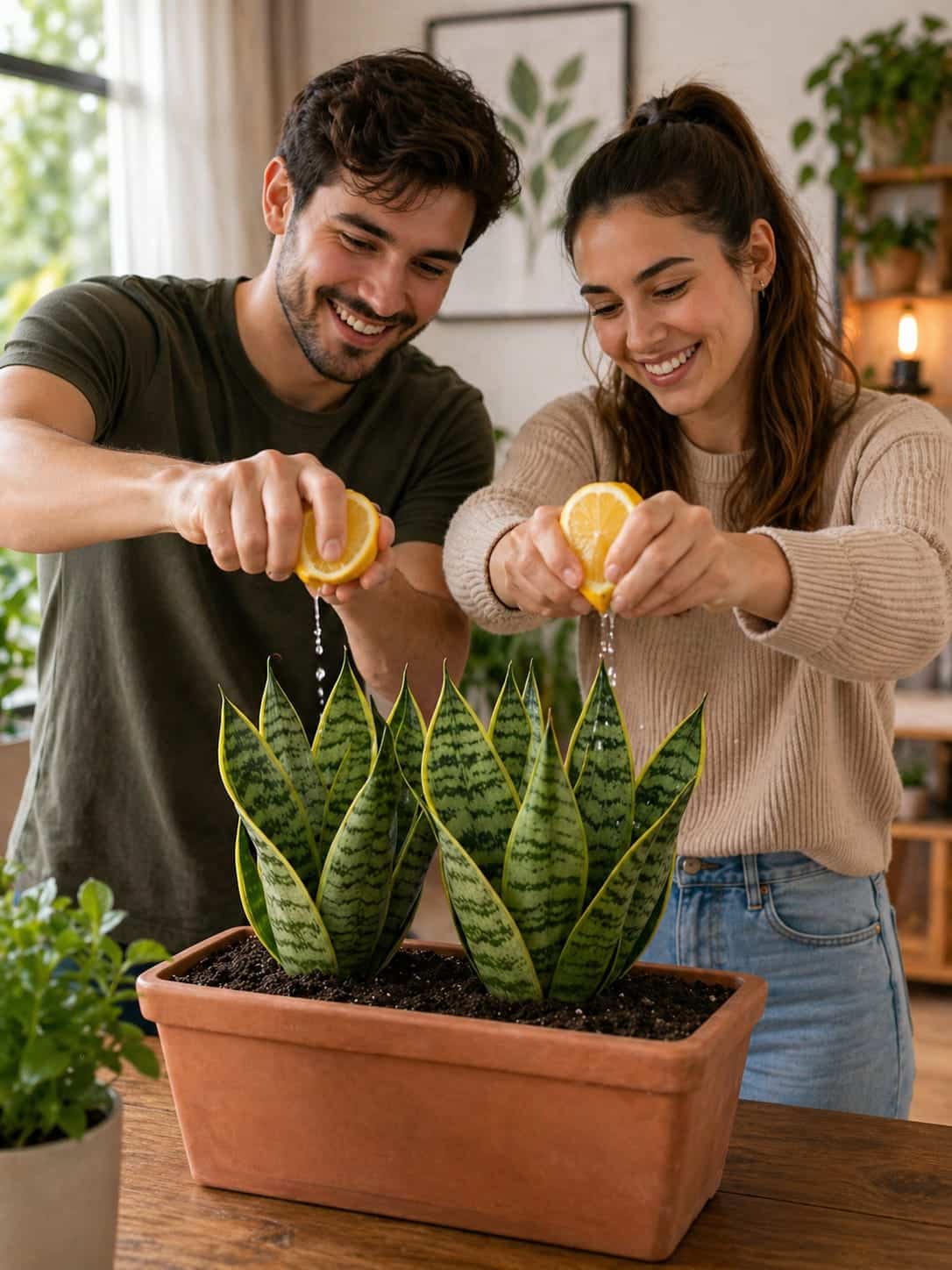
One eye-catching method is the lemon squeeze snake plant trick. In the image, two people are squeezing fresh lemon juice near a rectangular planter filled with healthy snake plants. The scene looks cheerful, natural, and easy. The lemons give the whole trick a bright kitchen-garden feeling, as if one simple citrus ingredient can wake up the plant and make the leaves stronger.
So what exactly is this lemon trick?
The safest version is not pouring strong lemon juice directly into the soil. Snake plants do not need acidic lemon juice around their roots. Straight lemon juice can be too harsh, too acidic, and too sticky for potting mix. The better version is a very diluted lemon rinse used carefully for cleaning the pot rim, freshening the planter area, or wiping mineral marks away from the outside of terracotta and ceramic containers. A second safe version is using lemon peel-infused water very weakly as a surface freshener, not as a regular fertilizer.
The real idea behind the trick is freshness. Lemon is naturally associated with clean surfaces, bright scent, and a fresh indoor feeling. When used wisely, it can become part of a snake plant care routine by helping clean leaf dust, refresh the area around the pot, and encourage the owner to check the soil, light, and watering habits. But it must be gentle. Snake plants are succulents, and their roots prefer dry, airy soil, not sour liquid, fruit juice, or constant homemade tonics.
In this complete guide, you will learn what the lemon squeeze snake plant trick is, how to use lemon safely around snake plants, what not to do, how to clean leaves, how to freshen a planter, how to encourage more growth, and how to keep your snake plant strong, upright, and beautiful indoors.
What Is the Lemon Squeeze Snake Plant Trick?
The lemon squeeze snake plant trick is a simple houseplant routine inspired by the idea of using lemon as a natural freshener. In many plant photos and videos, lemon juice is squeezed near the plant to suggest a quick homemade boost. The image is attractive because lemons look clean, bright, and natural. It makes the trick feel easy and refreshing.
But the safest way to understand this trick is not as a root fertilizer. Lemon juice should not be treated like plant food for snake plants. Instead, lemon can be used carefully in three safer ways: as a diluted cleaning solution for the outside of pots, as a very weak leaf-cleaning helper when heavily diluted and wiped off properly, or as a short lemon peel water freshener used away from the root zone.
Snake plants do not need lemon juice to grow. They need bright indirect light, a pot with drainage holes, fast-draining soil, and careful watering. If those basics are wrong, lemon will not fix the plant. If those basics are right, a gentle lemon routine can make the plant area feel cleaner and more polished.
The trick works best when it is treated as a cleaning and refreshing method, not a miracle fertilizer. Think of lemon as part of plant presentation and hygiene, not as the main source of growth.
Why Lemon Looks Like a Powerful Plant Trick
Lemon has a strong visual appeal. It is bright yellow, fresh-smelling, and easy to find in almost every kitchen. When people see lemon being squeezed over plants, they instantly imagine freshness, shine, and natural energy. That is why lemon tricks are so popular online.
For indoor plant content, lemon also creates an emotional effect. It makes plant care look simple and joyful. Instead of complicated products, the trick uses something familiar from the kitchen. The image feels like a weekend plant-care ritual: two people smiling, squeezing lemons, and caring for their snake plant together.
But plant roots are not the same as kitchen counters. What freshens a surface can be too strong for soil. Lemon juice is acidic and contains natural sugars and organic compounds. If poured into a pot too often or too strongly, it can disturb the soil, attract pests, or stress the roots.
This is why the best version of the lemon trick is careful and diluted. It keeps the fresh idea without risking the plant’s underground health.
Can Lemon Juice Help a Snake Plant Grow?
Lemon juice is not a complete plant fertilizer. It does not provide the balanced nutrients snake plants need. It does not make roots grow instantly. It does not force new pups to appear. It does not turn a weak plant into a strong one overnight.
Snake plants grow from underground rhizomes. Those rhizomes produce roots, leaves, and new pups when the plant has enough energy and the right conditions. The biggest growth factors are light, soil drainage, proper watering, and time.
A snake plant kept in a dark corner may survive, but it may barely grow. A snake plant in bright indirect light will usually grow faster and produce more pups. A plant in soggy soil may rot. A plant in gritty soil with drainage will stay healthier.
Lemon juice cannot replace those basics. At most, lemon can help with cleaning and freshness when diluted. The actual growth boost comes from better care habits.
The Biggest Warning: Do Not Pour Straight Lemon Juice Into the Soil
This is the most important rule. Straight lemon juice should not be poured into snake plant soil. It is too acidic and too concentrated. Snake plants are succulent-like plants with roots and rhizomes that prefer a stable, dry, breathable environment. Strong lemon juice can irritate roots, disturb soil balance, and create sticky organic residue.
If lemon juice sits in the soil, it can also attract fungus gnats or create sour smells, especially if the pot stays damp. Indoor pots do not break down kitchen liquids the way outdoor compost piles do. A small container has limited airflow and limited microbial balance.
If you already poured lemon juice into the soil once, do not panic. If it was only a few drops and the pot drains well, the plant may be fine. Flush the soil lightly with plain water the next time it is due for watering, and let it drain completely. Then avoid repeating the mistake.
If a lot of lemon juice was added and the soil smells sour, repotting into fresh gritty mix may be safer.
The Safe Lemon Leaf Wipe Method
One safer way to use lemon around snake plants is as a very diluted leaf-cleaning helper. Snake plant leaves collect dust, and dusty leaves look dull. Dust can also reduce the amount of light the plant receives. Cleaning the leaves helps them look glossy and fresh.
However, lemon must be heavily diluted. Strong lemon juice can leave residue or damage leaf surfaces. The goal is not to soak the leaves in citrus. The goal is to use a faint lemon water wipe and then follow with plain water if needed.
Safe Lemon Leaf Wipe Recipe
- 1 cup clean water
- 2 to 3 drops fresh lemon juice
- A soft cloth
- A second cloth dampened with plain water
How to Use It
- Mix 2 to 3 drops of lemon juice into 1 cup of water.
- Dip a soft cloth into the mixture and wring it out well.
- Gently wipe each snake plant leaf from base to tip.
- Do not let liquid run into the center of the plant.
- Use a second cloth with plain water to wipe again if any residue remains.
- Dry the leaves gently with a clean cloth.
This should be used rarely, not weekly. Plain water is usually enough for regular dusting. Lemon water is only for an occasional refresh when leaves look dull or dusty.
Why Clean Leaves Matter
Snake plant leaves are the plant’s solar panels. They absorb light and use it to make energy. When dust covers the leaves, the plant still survives, but it may not use light as efficiently. The leaves also lose their natural shine and pattern.
Cleaning the leaves makes the plant look instantly better. The green becomes richer, the yellow edges look brighter, and the whole plant looks more intentional in the room. This is often why people think a plant trick worked immediately. The plant was not magically transformed; it was cleaned.
Clean leaves also help you inspect the plant. While wiping, you may notice pests, brown tips, soft spots, or new growth. This makes leaf cleaning one of the most useful care habits for indoor plants.
For snake plants, a damp cloth with plain water is usually perfect. A tiny hint of diluted lemon can add freshness, but it should never leave the leaves sticky or wet for long.
The Lemon Pot-Cleaning Trick
Lemon is especially useful for cleaning the outside of pots. Terracotta, ceramic, and plastic pots can collect mineral stains, water marks, and dusty residue. A diluted lemon wipe can help freshen the pot exterior and make the display look cleaner.
This is much safer than pouring lemon into the soil. You get the bright cleaning benefit without exposing the roots to strong acidity.
Pot Cleaning Recipe
- 1 tablespoon lemon juice
- 1 cup water
- Soft cloth or sponge
- Clean damp cloth for rinsing
How to Clean the Pot
- Mix lemon juice and water.
- Dip a cloth into the mixture.
- Wipe the outside of the pot only.
- Avoid letting the liquid run into the soil.
- Wipe again with plain water.
- Dry the pot before placing it back on furniture.
This works well for light mineral marks and general freshness. For heavy mineral buildup on empty terracotta pots, a stronger cleaning method can be used after removing the plant, but never pour strong lemon solution into a planted pot.
The Lemon Peel Freshener Method
Another gentle version of the trick uses lemon peel instead of lemon juice. Lemon peel has a fresh scent, and when briefly soaked in water, it creates a mild citrus water. This can be used as a room and pot-area freshener, not as a frequent soil drench.
Lemon Peel Freshener Recipe
- Peel from half a lemon
- 2 cups clean water
- A jar
- A strainer
Instructions
- Place lemon peel in a jar.
- Add 2 cups water.
- Let it sit for 1 to 2 hours only.
- Strain out all peel pieces.
- Use the water to wipe the pot exterior or nearby plant shelf.
Do not leave lemon peels sitting on the soil. They can mold and attract pests. Do not use strong citrus water as a regular watering method. This is a freshening trick, not fertilizer.
Can Lemon Keep Pests Away From Snake Plants?
Lemon scent may make a plant area smell fresher, but it is not a reliable pest control method for snake plants. Fungus gnats, mealybugs, spider mites, and scale insects require proper treatment. Lemon juice alone will not solve an infestation.
Fungus gnats usually appear because soil is staying too wet. The solution is to let the soil dry more, improve drainage, remove decaying material, and use sticky traps if needed. Lemon juice in the soil can actually make things worse if it adds organic residue.
Mealybugs and scale should be removed manually and treated with appropriate plant-safe methods, such as insecticidal soap or rubbing alcohol applied carefully with a cotton swab. Spider mites need leaf cleaning and humidity management.
Use lemon for freshness, not as your main pest control plan.
Can Lemon Remove Hard Water Marks From Leaves?
Diluted lemon water can help loosen light mineral spots on leaves, but it must be used carefully. Snake plant leaves are tough, but strong acids can still damage surfaces if left on too long.
For light hard water marks, use the very weak lemon leaf wipe recipe: 2 to 3 drops of lemon juice in 1 cup of water. Wipe gently, then wipe again with plain water. Dry the leaves afterward.
Do not scrub aggressively. Do not use straight lemon juice. Do not let lemon water sit in the leaf bases. The goal is a quick wipe, not a soak.
If marks remain, it is better to accept a few spots than to damage the leaf. Snake plants naturally look beautiful even with minor imperfections.
Can Lemon Make Snake Plant Leaves Shinier?
Lemon can help leaves appear shinier only by removing dust and light residue. It does not create true plant health from the outside. The natural shine of a snake plant comes from clean, healthy leaves and good growing conditions.
Never use lemon juice as a leaf polish. Never rub the leaves with lemon halves. Never mix lemon with oil for a homemade shine spray. Oils can clog leaf surfaces, attract dust, and create a sticky look.
For shine, wipe with plain water. Use a very weak lemon wipe only occasionally. Then dry the leaves. The result should be clean and natural, not glossy with residue.
Can Lemon Help With Soil Smell?
If snake plant soil smells bad, lemon is not the solution. Bad soil smell usually means the soil is staying too wet, organic matter is rotting, or roots are decaying. Adding lemon juice may cover the smell briefly, but it does not fix the cause. It may even make the soil more sour.
If the pot smells rotten, remove the plant and inspect the roots and rhizomes. Healthy snake plant rhizomes are firm. Rotten rhizomes are soft, dark, and often smelly. Trim away damaged parts with clean tools and repot into fresh dry gritty soil.
If the smell is only from the pot surface, remove the top layer of soil and replace it with fresh mix. Let the plant dry properly before watering again.
Lemon freshens surfaces. It does not rescue rotten soil.
The Real Growth Secret: Bright Indirect Light
If you want your snake plant to grow stronger, light matters more than lemon. Snake plants tolerate low light, but tolerance is not the same as thriving. In low light, they may stay alive for a long time but grow very slowly. In bright indirect light, they usually produce stronger leaves and more pups.
Place your snake plant near a bright window. Morning sun is often fine. Bright filtered light is excellent. If the plant has been in a dark corner, move it gradually so it can adjust.
Too much harsh direct sun can scorch leaves, especially if the plant is suddenly moved from shade to sun. But most snake plants appreciate more light than people think.
Before trying any homemade trick, improve the light. Many “miracle” results happen simply because the plant was moved to a better spot.
The Real Root Secret: Fast-Draining Soil
Snake plants need soil that dries well. Regular dense potting soil can hold too much water, especially in a deep or wide container. Snake plant roots and rhizomes are prone to rot when kept wet.
A good snake plant mix can include:
- 2 parts cactus or succulent mix
- 1 part perlite or pumice
- 1 part coarse sand, fine bark, or lava rock
This creates a gritty mix with air pockets. Water can pass through, and the roots can breathe. This is far more important than adding lemon juice or any kitchen liquid.
If your snake plant is in heavy soil, repotting into a gritty mix can transform its health over time. The plant may produce firmer leaves and new pups once the roots are comfortable.
The Best Pot for Snake Plants
Snake plants need drainage holes. This is non-negotiable for long-term health. A pot without drainage can trap water at the bottom even if the top looks dry. This hidden wet zone can rot roots and rhizomes.
Terracotta pots are excellent because they breathe and dry faster. Ceramic and plastic pots can also work if they have drainage and the soil is gritty. Rectangular planters, like the one in the image, can look beautiful with several snake plant clusters, but they must drain well.
Choose a pot that is not too large. Snake plants like being slightly snug. A huge pot holds extra soil, and extra soil holds extra moisture.
If using a decorative pot without holes, keep the snake plant in a nursery pot with holes inside it. Remove it for watering, let it drain fully, and place it back.
How to Water Snake Plants Correctly
Watering is the biggest care factor for snake plants. They prefer to dry out between waterings. They are much more likely to suffer from too much water than too little.
Water deeply only when the soil is dry. If the pot drains, water until excess runs out. Then empty the saucer. Do not water again until the soil dries deeply.
In bright warm conditions, watering may be needed every two to three weeks. In low light or winter, it may be needed only once a month or less. Always check the soil instead of following a strict schedule.
If using any diluted lemon wipe or freshener, keep it separate from watering. Do not add lemon juice to every watering can. Plain water is best most of the time.
Can Lemon Encourage Snake Plant Pups?
No, lemon does not directly encourage pups. Snake plant pups come from underground rhizomes. The plant produces them when it has enough energy, healthy roots, and suitable growing conditions.
To encourage pups, focus on these factors:
- Bright indirect light
- Fast-draining soil
- A pot with drainage holes
- Careful watering
- A slightly snug pot
- Light feeding during active growth
A plant in good conditions may produce pups naturally. A plant in low light or wet soil may not. Lemon does not change that.
If you want more pups, do not squeeze lemon into the soil. Move the plant to better light and make sure the root zone is healthy.
Can Lemon Replace Fertilizer?
No. Lemon juice is not fertilizer. It does not provide a balanced nutrient profile. Snake plants do not need heavy fertilizer, but they can benefit from light feeding during spring and summer.
Use a cactus or succulent fertilizer diluted to half strength or weaker. Feed once or twice during the growing season. Do not fertilize heavily. Too much fertilizer can cause brown tips or salt buildup.
If the plant is in fresh potting mix, it may not need fertilizer right away. If the plant is stressed, rotting, or recently repotted, wait before feeding.
Lemon is for cleaning and freshness. Fertilizer is for nutrition.
Continue to Page 2
Continue to page 2 for more details about this article and the key points many readers miss on the first page.