Anthuriums are some of the most eye-catching indoor plants you can grow. Their glossy heart-shaped leaves look elegant even when the plant is not blooming, and their bright spathes can last for weeks when the plant is happy. Most people recognize red anthuriums first, but white anthuriums have a calm, refined beauty that feels fresh, clean, and modern.
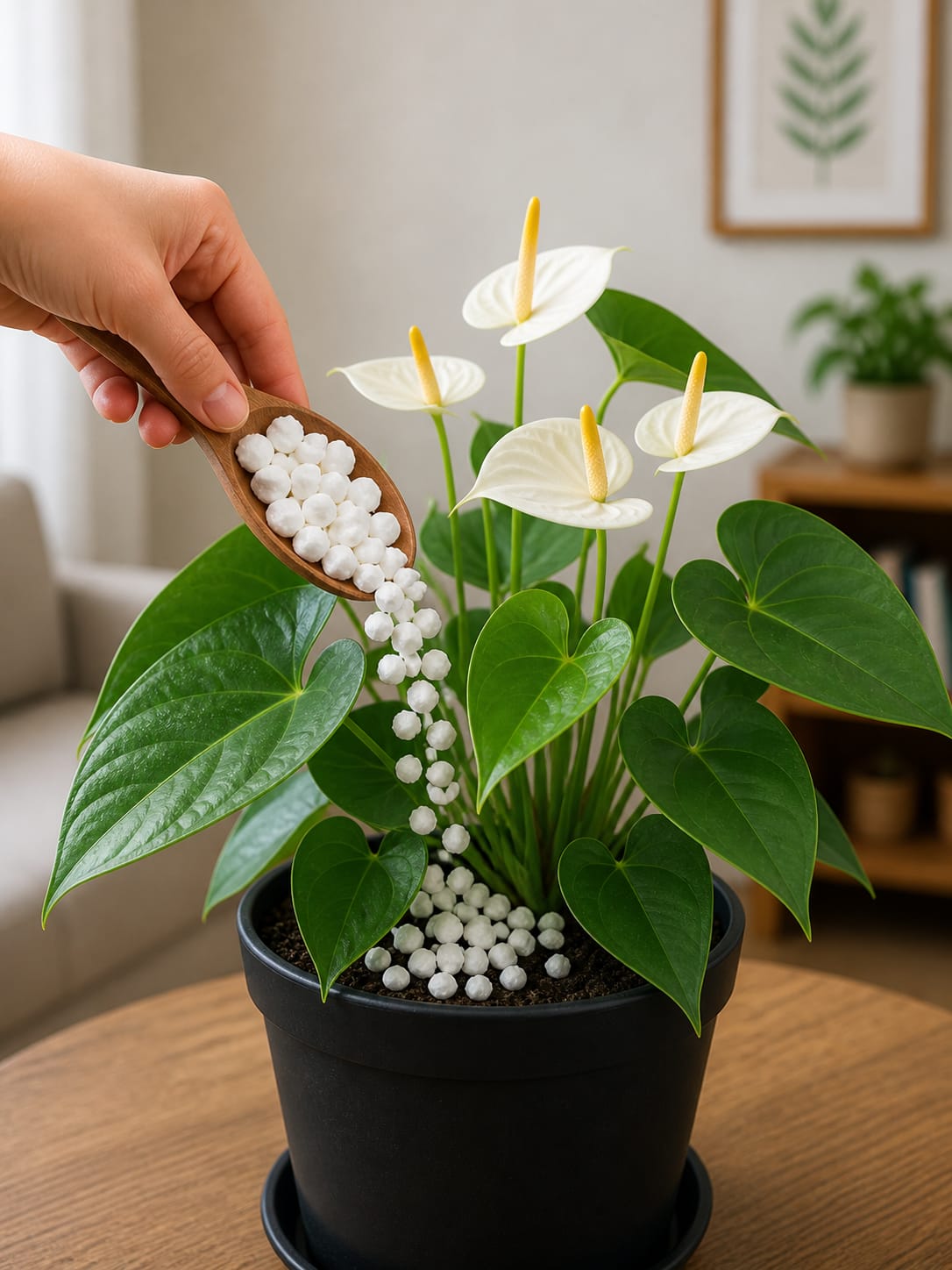
The image shows a healthy anthurium in a black pot. The plant has deep green heart-shaped leaves and several white blooms with yellow spadices. A hand is using a wooden spoon to pour small white round pellets onto the soil surface. The pellets look like a slow-release fertilizer, clay-based nutrient balls, perlite-style mineral pellets, or decorative soil granules.
This kind of image often suggests a simple plant-care trick: add white pellets to the soil, and your anthurium may reward you with stronger leaves, better roots, and more flowers. It looks neat, controlled, and much cleaner than messy homemade liquids or powders.
But anthuriums are sensitive plants. They do not like heavy soil, constant wetness, strong fertilizer, or random additives. The white pellet trick can be helpful if the pellets are the right kind and used sparingly. It can also cause problems if too many pellets are added or if the product is not meant for indoor plants.
The safest interpretation of this trick is slow-release houseplant fertilizer pellets used in a small amount, or inert aeration pellets used to improve the top layer of the soil. The pellets should not be mystery chemicals, laundry beads, salt, sugar, mothballs, or any household product not labeled for plants.
In this article, you will learn what the white pellet anthurium trick is, what the pellets might be, how to use them safely, what to avoid, and how to keep anthuriums blooming indoors without damaging their delicate roots.
What Is the White Pellet Anthurium Trick?
The white pellet anthurium trick is a plant-care method where small white pellets are added to the top of an anthurium pot. Depending on what the pellets are, they may serve different purposes.
If they are slow-release fertilizer pellets, they slowly provide nutrients when the plant is watered. If they are inert mineral pellets, such as perlite or lightweight expanded clay, they may help keep the soil surface airy. If they are decorative stones, they may simply cover the soil.
The most useful version is a small amount of slow-release fertilizer designed for houseplants or flowering tropical plants. This can support growth and blooming when used correctly. However, anthuriums are not heavy feeders, so more is not better.
The trick should be gentle. A few correctly measured pellets can help. A spoonful dumped onto the soil without checking the label can harm the plant.
What Are the White Pellets?
The white pellets in the image could represent several things. The most likely safe options are:
- Slow-release fertilizer pellets
- Perlite granules
- Lightweight clay pebbles
- Mineral soil conditioner
- Decorative top-dressing stones
For anthurium care, the most practical option is slow-release fertilizer. These pellets are usually coated granules that release nutrients gradually over weeks or months. They are often used for houseplants because they are easy to apply and less messy than liquid feeding.
However, you must use a product that is labeled for plants. Never use random white pellets from around the home. Many household pellets can be toxic to plants, pets, and people.
What the Pellets Should Never Be
Because the pellets look plain and harmless, it is important to be clear about what not to use. Do not put any of the following in an anthurium pot:
- Mothballs
- Laundry scent beads
- Dishwasher detergent pellets
- Water softener salt
- Rock salt
- Sugar pearls
- Styrofoam beads
- Medication tablets
- Unknown garden chemicals
- Pellets meant for pest poison
Only use products clearly labeled for plants. Anthurium roots are delicate, and the wrong additive can burn, poison, or suffocate them.
Can White Pellets Make Anthuriums Bloom?
White fertilizer pellets can support blooming, but they cannot force flowers by themselves. Anthuriums bloom best when they receive bright indirect light, warm temperatures, good humidity, airy soil, and light regular feeding.
If an anthurium is in a dark corner, fertilizer pellets will not solve the problem. If the roots are sitting in dense wet soil, pellets can make stress worse. If the plant is already weak, overfeeding may damage the roots instead of helping blooms.
Fertilizer supports a healthy plant. It does not replace proper growing conditions.
The Real Bloom Formula for Anthuriums
Anthuriums need several conditions working together before they bloom reliably indoors:
- Bright indirect light
- Warm indoor temperatures
- Airy, chunky potting mix
- Even moisture without soggy soil
- Moderate to high humidity
- Light feeding during active growth
- A pot with drainage holes
- Healthy roots with good airflow
The white pellet trick only addresses feeding. If the rest of the care routine is wrong, the plant may still refuse to bloom.
How to Use Slow-Release Pellets Safely
If the white pellets are slow-release fertilizer, always follow the product label first. Every fertilizer has a different strength. For anthuriums, it is safer to use less than the maximum amount.
A gentle routine looks like this:
- Check that the product is labeled for houseplants.
- Read the dosage on the package.
- Use half the recommended amount for a potted anthurium.
- Sprinkle pellets evenly on the soil surface.
- Keep pellets away from the plant crown and stems.
- Water normally when the top layer of mix begins to dry.
- Do not add more pellets until the product’s release period has passed.
Do not dump a thick layer of fertilizer pellets onto the pot. Anthuriums prefer gentle, steady feeding.
Where to Place the Pellets
Place fertilizer pellets around the outer soil surface rather than directly against the stems. Anthuriums grow from a central crown, and that crown should stay clean and airy.
If pellets sit tightly around the base of the plant, they can concentrate fertilizer in one area when watered. This may irritate tender roots or stems. A light, even distribution is better.
You can gently scratch the pellets into the top half inch of potting mix if the product label recommends it, but do not dig deeply or damage roots.
How Often Should You Add Fertilizer Pellets?
This depends on the product. Some slow-release fertilizers last two months, while others last three to six months. Do not keep adding pellets just because you do not see instant flowers.
For anthuriums, once at the beginning of the growing season may be enough. If the product lasts three months, you might apply again lightly in mid-season. Avoid heavy fertilizing in winter when the plant is growing more slowly.
Overfeeding can lead to brown leaf tips, root burn, salt buildup, and fewer healthy blooms.
Why Less Fertilizer Is Better
Anthuriums are not as hungry as vegetables or outdoor flowering annuals. They are tropical epiphyte-like plants that prefer steady, mild nutrition. Strong fertilizer can damage their roots.
If your anthurium is healthy but not blooming, the answer is usually more light, not more fertilizer. Too much fertilizer may create lush leaves but weak roots, or it may burn the plant and cause decline.
Use fertilizer as a support, not a shortcut.
Can Perlite Pellets Help Anthuriums?
If the white pellets are perlite, they are not fertilizer. Perlite is a lightweight volcanic material commonly added to potting mixes to improve aeration and drainage.
Perlite can help anthuriums when mixed into the soil, but sprinkling it on top has limited benefit. It may keep the surface a little lighter and drier, but the real value comes from having perlite throughout the root zone.
If your anthurium is in dense soil, adding a few pellets on top will not fix the problem. Repotting into a chunky mix is better.
Best Soil Mix for Anthuriums
Anthuriums need a loose, airy, moisture-retentive mix. Their roots like oxygen. Heavy potting soil can stay wet too long and suffocate them.
A good anthurium mix can include:
- Orchid bark
- Perlite or pumice
- Coco chips or coco coir
- A small amount of quality potting mix
- Charcoal, optional
- Worm castings, optional and used lightly
A simple mix could be equal parts orchid bark, perlite, and indoor potting mix. This gives the roots both moisture and airflow.
If your anthurium is planted in dense garden soil, fertilizer pellets will not solve the deeper issue. The roots need air first.
Why Drainage Matters More Than Pellets
The black pot in the image appears to have a saucer underneath. That is fine as long as the pot has drainage holes and the saucer is emptied after watering.
Anthuriums do not like sitting in standing water. Their roots can rot if the bottom of the pot stays wet. If fertilizer pellets are present, trapped water can also concentrate fertilizer salts around the roots.
After watering, always empty the saucer. Never allow the pot to sit in runoff for long periods.
How to Water Anthuriums Correctly
Anthuriums like evenly moist soil, but not soggy soil. The top inch of the mix can dry slightly before watering again. The exact timing depends on light, pot size, humidity, and soil mix.
Water thoroughly until excess runs from the drainage holes. Then let the pot drain completely. Do not water again until the top layer begins to dry.
If the leaves droop and the soil is dry, the plant may need water. If the leaves yellow and the soil is wet, the plant may be overwatered.
Proper watering does more for anthurium health than any pellet trick.
Can White Pellets Burn Anthurium Roots?
Yes, fertilizer pellets can burn roots if used too heavily or if the plant is already stressed. Slow-release fertilizer is gentler than many liquid fertilizers, but it still contains nutrients and salts.
Root burn can show up as:
- Brown leaf tips
- Yellowing leaves
- Wilting despite moist soil
- Burned root tips
- White crust on the soil
- Sudden decline after feeding
If you suspect fertilizer burn, remove visible pellets if possible and flush the pot with plain water. Let the pot drain completely. Avoid feeding again until the plant recovers.
Continue to Page 2
Continue to page 2 for more details about this article and the key points many readers miss on the first page.