Should You Use Pellets on a Sick Anthurium?
Do not fertilize a sick anthurium until you know what is wrong. If the plant has yellow leaves, root rot, pests, or wilting in wet soil, fertilizer can make the stress worse.
Fertilizer is for actively growing plants with functioning roots. A struggling plant often needs better light, fresh soil, root inspection, pest treatment, or corrected watering before it needs food.
If your anthurium is weak, fix the basics first. Add fertilizer only after new healthy growth appears.
Can Pellets Help Yellow Leaves?
Not usually. Yellow anthurium leaves can happen for many reasons, including overwatering, underwatering, low light, aging leaves, cold stress, root rot, or nutrient problems.
If only one older leaf turns yellow slowly, that may be normal. If many leaves yellow at once, check the roots and soil moisture.
Fertilizer pellets help only if the yellowing is truly caused by nutrient deficiency. In many indoor cases, yellow leaves are more often caused by watering or root problems.
Can Pellets Make Leaves Glossier?
Healthy nutrition can support better foliage, but fertilizer pellets do not instantly make leaves shiny. Glossy leaves come from proper hydration, good light, clean leaf surfaces, and healthy roots.
To keep anthurium leaves glossy, wipe them gently with a damp cloth. Do not use oils, milk, mayonnaise, or commercial leaf shine too often. These can clog leaf surfaces or attract dust.
A clean leaf is often the simplest shine trick.
Can Pellets Increase White Blooms?
They may help if the plant is otherwise healthy and slightly underfed. But bloom production depends heavily on light. Anthuriums need bright indirect light to flower well indoors.
If your anthurium has healthy leaves but no flowers, move it closer to a bright window with filtered light. Avoid harsh direct midday sun, which can scorch leaves.
Once light is improved, gentle feeding can support blooms. Fertilizer alone rarely solves poor flowering.
Best Light for Anthuriums
Anthuriums prefer bright indirect light. A spot near an east-facing window is often excellent. A south or west-facing window can work if filtered by a sheer curtain. A north-facing window may work if it is bright, but flowering may be reduced.
Too little light causes fewer blooms and slower growth. Too much direct sun can burn leaves and fade flowers.
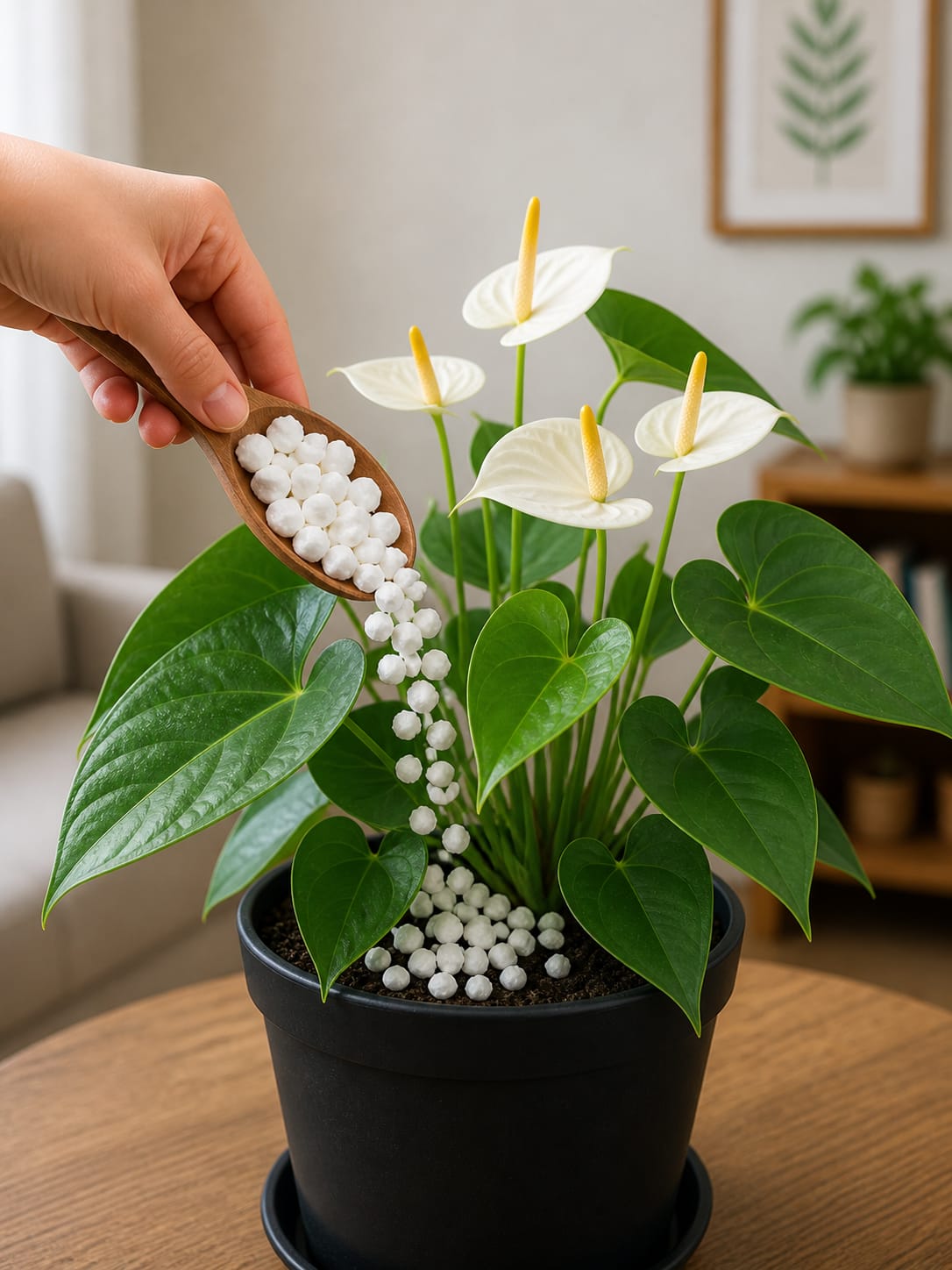
The plant in the image appears to be in a bright indoor room, which is ideal for keeping blooms strong.
Humidity and Anthurium Health
Anthuriums appreciate moderate to high humidity. Dry indoor air can cause crispy edges, slower growth, or stressed leaves.
You can support humidity by grouping plants together, using a pebble tray, or running a humidifier nearby. Avoid misting heavily if water sits on leaves for too long, especially in low airflow.
Humidity helps the plant look lush, but the roots still need drainage and air.
What About Decorative White Stones?
If the white pellets are decorative stones, they may make the pot look neat, but they will not feed the plant. Decorative top-dressing can also trap moisture if applied too thickly.
A thin decorative layer may be fine, but do not cover the soil so heavily that you cannot check moisture. Anthurium care depends on knowing when the soil is drying.
If decorative stones cause the soil to stay wet or hide fungus gnats, remove them.
Should You Mix Pellets Into the Soil?
For slow-release fertilizer, follow the label. Some products can be sprinkled on top, while others are mixed slightly into the surface. Do not dig deeply around an anthurium because roots can be near the top.
For perlite or clay pellets, mixing them into the potting medium is more useful than placing them on top. If the plant needs better aeration, repot into a proper chunky mix rather than trying to fix the surface only.
Can You Combine Pellets With Liquid Fertilizer?
Be careful. If you use slow-release fertilizer pellets, avoid using strong liquid fertilizer at the same time. Combining both can overfeed the plant.
If you want to use liquid fertilizer, skip the pellets or use a very reduced amount. A simple feeding plan is safer than stacking multiple products.
Anthuriums prefer light, consistent nutrition.
How to Flush Soil After Using Fertilizer Pellets
Over time, fertilizer salts can build up in the potting mix. Flushing with plain water helps reduce buildup.
To flush, water the plant thoroughly with plain room-temperature water until it runs freely from the drainage holes. Let the pot drain completely and empty the saucer.
Do this occasionally during the growing season, especially if you notice white crust, brown tips, or heavy feeding residue. Do not flush constantly if the plant is already too wet.
When to Repot an Anthurium
Repotting may help more than fertilizer if the plant is root-bound, sitting in old compacted soil, or drying too fast. Anthuriums usually benefit from fresh airy mix every couple of years.
Signs it may be time to repot include:
- Roots circling tightly around the pot
- Soil staying wet too long
- Soil drying too fast because roots filled the pot
- Few blooms despite good light and feeding
- Compacted or sour-smelling mix
- Roots growing heavily from drainage holes
Repot into a container only slightly larger than the old one. Too large a pot can hold excess moisture and cause root problems.
Are White Pellets Safe Around Pets?
Fertilizer pellets should be kept away from pets and children. Even plant fertilizers can be unsafe if eaten. Decorative pellets can also be choking hazards.
Anthuriums themselves are also not pet-friendly if chewed because they contain irritating calcium oxalate crystals. Keep the plant in a place where pets cannot nibble leaves or dig in the pot.
Signs the White Pellet Trick Is Working
If used correctly, the plant should continue producing firm green leaves, healthy roots, and occasional new blooms during the growing season. The soil should smell fresh, and the plant should not show burn symptoms.
Results will be gradual. You may notice stronger growth over several weeks, not overnight. Anthuriums grow steadily when conditions are right.
Signs You Used Too Much
Too much fertilizer can stress the plant. Watch for:
- Brown leaf tips
- Yellowing leaves
- Wilting after watering
- White crust on soil
- Stunted new growth
- Root burn
- Sudden decline after adding pellets
If these signs appear, remove extra pellets and flush the pot with plain water. Avoid feeding until the plant stabilizes.
A Safe White Pellet Routine for Anthuriums
Here is the safest way to use the trick:
- Use only pellets labeled for plants.
- Choose a houseplant or flowering plant fertilizer.
- Apply at half the recommended strength.
- Sprinkle lightly on the outer soil surface.
- Keep pellets away from stems and the plant crown.
- Water normally when the top inch begins to dry.
- Let the pot drain completely.
- Do not combine with strong liquid fertilizer.
- Flush with plain water occasionally.
- Stop if burn, yellowing, or salt buildup appears.
This keeps the trick controlled and safe for sensitive anthurium roots.
Common Mistakes With the White Pellet Anthurium Trick
Using Mystery Pellets
Never use unknown white pellets. Only use products clearly labeled for plants.
Adding Too Many
A spoonful may be too much depending on the product. Follow the label and use less for indoor plants.
Using Pellets on a Sick Plant
Fertilizer does not fix root rot, pests, or overwatering. Diagnose first.
Ignoring Light
Anthuriums need bright indirect light to bloom. Fertilizer cannot replace light.
Covering the Soil Too Thickly
A thick top-dressing can trap moisture and hide problems.
Letting the Pot Sit in Water
Drainage is essential, especially when fertilizer is present.
Combining Too Many Fertilizers
Slow-release pellets plus liquid fertilizer can overfeed the plant.
Frequently Asked Questions
What are the white balls being added to the anthurium?
They most likely represent slow-release fertilizer pellets, perlite, clay granules, or decorative top-dressing. For plant care, only use pellets labeled safe for plants.
Can white fertilizer pellets help anthuriums bloom?
They can support blooming if the plant is healthy and getting bright indirect light. They cannot force blooms by themselves.
How much slow-release fertilizer should I use?
Follow the label, but for anthuriums indoors, using half the recommended amount is usually safer.
Can I use perlite as white pellets?
Perlite helps most when mixed into the potting medium. A surface sprinkle has limited benefit.
Can pellets burn anthurium roots?
Yes, if they are fertilizer pellets and too many are used. Overfeeding can cause brown tips and root stress.
Should I add pellets to a newly bought anthurium?
Not immediately. Many nursery plants already contain fertilizer. Let the plant adjust first.
Should I use pellets in winter?
Use little or none in winter if the plant is not actively growing. Feeding is best during spring and summer.
Can pellets fix yellow leaves?
Only if yellowing is caused by nutrient deficiency. Most yellow leaves are caused by watering, light, root, or age issues.
Do anthuriums need fertilizer?
Yes, but lightly. They benefit from gentle feeding during active growth.
What is the best way to get more anthurium flowers?
Give bright indirect light, airy soil, correct watering, humidity, and light fertilizer during active growth.
Final Thoughts
The white pellet anthurium trick looks clean, simple, and promising. A spoonful of neat white pellets falling onto the soil beneath glossy leaves and elegant white blooms makes it seem like an easy secret for stronger growth.
The trick can be useful if the pellets are a proper slow-release fertilizer and they are used carefully. Anthuriums benefit from gentle nutrition during active growth, especially when they are also receiving bright indirect light and growing in an airy potting mix.
But the trick can also go wrong. Too many fertilizer pellets can burn roots. Decorative pellets can trap moisture. Mystery household pellets can be dangerous. And no pellet can fix poor drainage, dense soil, low light, or root rot.
The safest approach is simple: use only plant-safe pellets, apply less than the label suggests, keep them away from the crown, water correctly, and let the pot drain fully. Do not combine them with strong liquid fertilizer, and stop if you see brown tips, yellowing, or salt buildup.
For long-lasting anthurium beauty, focus on the real foundation: bright indirect light, chunky soil, even moisture, drainage, humidity, and mild feeding. The white pellet trick can be a helpful extra, but the plant’s daily environment is what truly keeps those glossy heart-shaped leaves and graceful white blooms coming back.