Orchids have a way of making indoor plant care feel special. Their smooth green leaves, elegant flower spikes, thick aerial roots, and sculptural shape give them a refined beauty that few houseplants can match. Even when an orchid is not blooming, a healthy plant with firm leaves and active roots can look graceful and full of life.
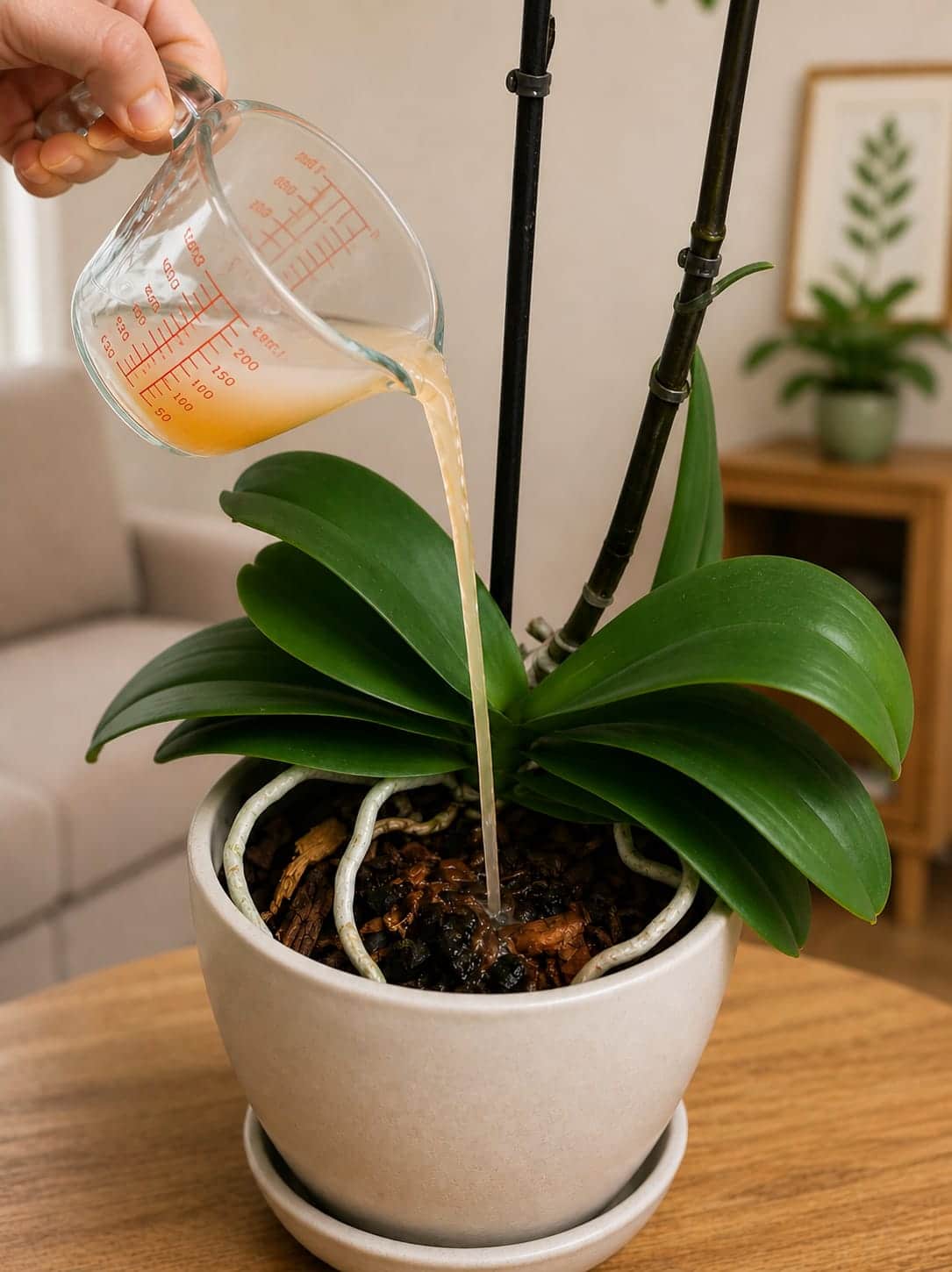
The image shows a Phalaenopsis orchid in a white ceramic pot. The plant has broad, glossy green leaves, exposed silvery roots, bark chips around the base, and tall flower spikes supported by black stakes. A hand is pouring a pale cloudy liquid from a measuring cup into the orchid’s bark mix. The liquid looks like rice water, the starchy water left after rinsing or soaking rice.
This method is often called the rice water orchid trick, the cloudy orchid rinse, the starchy root tonic, or the homemade orchid bloom booster. It has become popular because it looks simple, natural, and gentle. Rice water is easy to make, it has a soft milky color, and many plant lovers believe it can help orchids grow stronger roots and healthier leaves.
But orchids are not ordinary houseplants. Most common indoor orchids, especially Phalaenopsis orchids, grow naturally with airy roots rather than buried in dense soil. Their roots need oxygen, quick drainage, and careful moisture. That means rice water must be used very cautiously. A thick, starchy, or fermented liquid can make bark sour, attract fungus gnats, encourage mold, and block airflow around the roots.
The safest version of the rice water orchid trick is a very diluted, fresh rice rinse used only occasionally. It should never replace proper orchid fertilizer, correct watering, bright indirect light, good drainage, or fresh bark. Used carefully, rice water can be a gentle plant-care ritual. Used too often or too strongly, it can harm the orchid’s root environment.
What Is the Rice Water Orchid Trick?
The rice water orchid trick is a homemade care method where water used to rinse or soak uncooked rice is diluted and poured through an orchid’s bark mix. The idea is that rice water contains tiny amounts of starches, minerals, and organic compounds that may lightly support microbial activity and root-zone health.
In the image, the liquid is pale and cloudy, which strongly suggests rice water. It is being poured carefully into the bark mix, not directly onto the leaves or flowers. This is important because orchids should not have liquid sitting in their crown, where the leaves meet. Water trapped there can cause crown rot.
The trick should be treated as an occasional rinse, not a fertilizer replacement. Rice water is not a complete orchid food. It does not provide balanced nutrition in the same way an orchid fertilizer does. Its role, if used at all, should be mild and occasional.
What Kind of Orchid Is Shown?
The plant appears to be a Phalaenopsis orchid, commonly called a moth orchid. This is one of the most popular indoor orchids because it adapts well to home conditions and can bloom for many weeks.
Phalaenopsis orchids have thick, rounded leaves and chunky roots that often grow above the potting mix. These roots may look silvery when dry and green when wet. They should not be treated like ordinary soil roots. They need air as much as moisture.
The image shows bark chips in the pot, which is a good sign. Phalaenopsis orchids are usually grown in orchid bark, not regular potting soil. Bark allows water to move through quickly while keeping pockets of air around the roots.
Why People Use Rice Water on Orchids
Rice water is popular because it feels gentle and natural. It is a kitchen byproduct, so using it on plants feels thrifty and sustainable. Many gardeners use rice water on houseplants as a mild homemade tonic.
For orchids, people often claim rice water can support:
- Stronger root growth
- Firmer leaves
- Better recovery after stress
- More active growth
- Improved blooming potential
- A gentle natural feeding routine
Some of these claims may be exaggerated. Rice water is not magic. It cannot force an orchid to bloom, repair rotten roots, or replace proper care. But a very weak rice rinse may be harmless for a healthy orchid when used rarely and drained fully.
Can Rice Water Make Orchids Bloom?
Rice water cannot directly force an orchid to bloom. Orchid blooming depends on plant maturity, root health, light, temperature, seasonal rhythm, and proper feeding. A cloudy homemade rinse alone will not create flower spikes if the orchid is weak, too dark, or suffering from root problems.
However, rice water may support the overall care routine if used correctly. A healthy root system helps the plant store energy. Good roots lead to stronger leaves, and stronger leaves help the orchid prepare for future flowering.
The real bloom triggers for Phalaenopsis orchids are bright indirect light, healthy roots, steady watering, gentle fertilizer, and often a slight nighttime temperature drop for several weeks. Rice water can only be a small optional addition.
The Safest Rice Water Recipe for Orchids
The safest rice water for orchids is made from the first rinse of plain uncooked rice, then diluted. It should be fresh, mild, and used right away.
Ingredients
- 1 tablespoon plain uncooked rice
- 1 cup clean water for rinsing
- 2 to 3 cups extra clean water for dilution
- A clean bowl or measuring cup
- A fine strainer
Instructions
- Place 1 tablespoon of plain uncooked rice in a bowl.
- Add 1 cup of clean water.
- Swirl the rice for 20 to 30 seconds.
- Strain out the rice completely.
- Dilute the cloudy rinse with 2 to 3 cups of fresh water.
- Use the diluted liquid immediately.
The final liquid should look only slightly cloudy. If it looks thick, milky, or creamy, it is too strong for an orchid. Add more water.
Do Not Use Cooked Rice Water
Cooked rice water is usually too starchy for orchids. The water left after boiling rice can be thick and loaded with starch. If poured into orchid bark, it can feed mold, bacteria, and fungus gnats. It can also make the bark sticky and sour.
Use only a weak rinse from uncooked rice. Do not use salted rice water. Do not use water from seasoned rice. Do not use rice water that contains oil, butter, spices, broth, or food residue.
Orchid bark should stay airy and fresh. Thick kitchen liquids do not belong in it.
Fresh Rice Water vs. Fermented Rice Water
Some plant hacks recommend fermented rice water. For orchids, fermented rice water is risky. Fermentation can create strong odors, acidity changes, microbial buildup, and unpredictable effects in a small indoor pot.
Fresh diluted rice rinse is safer than fermented rice water. If rice water smells sour, yeasty, rotten, or unpleasant, do not use it on an orchid.
Indoor orchid pots are small, and the bark mix can sour quickly when organic liquids are added too often. Keep the method fresh and light.
How to Apply Rice Water Safely
The best way to apply diluted rice water is to use it like a normal watering, but only when the orchid actually needs moisture.
- Check the orchid roots and bark first.
- Use rice water only if the bark is nearly dry.
- Pour slowly through the bark mix.
- Avoid the crown and leaf bases.
- Let the liquid run through the pot.
- Allow the pot to drain completely.
- Empty the saucer after watering.
- Do not let the orchid sit in cloudy water.
If the orchid is in a decorative pot with no drainage, remove the inner pot before watering. Water it in the sink, let it drain, then return it to the decorative pot.
How Often Should You Use Rice Water on Orchids?
Use rice water rarely. Once every six to eight weeks during active growth is enough. Some orchids may not need it at all.
Do not use rice water every week. Do not use it every time you water. Too much starch or organic residue can build up in the bark and create mold or pest problems.
Most orchid waterings should be plain water. During active growth, occasional diluted orchid fertilizer is more reliable than rice water.
When Is the Best Time to Use Rice Water?
The best time to use diluted rice water is when the orchid is actively growing new roots or leaves. This usually happens after flowering or during warmer, brighter months.
You can also use it lightly when the plant is stable and healthy, but avoid using it on a stressed orchid with root rot, sour bark, pests, or mushy roots.
Do not use rice water on an orchid that is already sitting in wet bark. Orchids need drying time. Adding more liquid to damp bark can suffocate roots.
How to Know If Your Orchid Needs Water
Before using any liquid, check whether the orchid needs watering. Phalaenopsis orchids usually give clear signs.
Dry roots often look silvery or pale. Wet roots often look green. Dry bark feels light and may pull away slightly from the pot. Wet bark feels heavier and darker.
If the roots are still green and the bark feels damp, wait. If the roots are silvery and the bark is nearly dry, it may be time to water.
Rice water should follow the orchid’s watering needs, not a fixed calendar.
Why Drainage Is Essential
Drainage is non-negotiable for orchids. The pot must allow water to escape. If diluted rice water stays trapped in the pot or saucer, it can quickly become stale.
Orchid roots need air circulation. A pot full of standing liquid can suffocate roots and cause rot. This is especially important when using organic rinses like rice water because they can spoil faster than plain water.
After applying rice water, let the orchid drain completely. Never leave the pot sitting in a saucer full of cloudy liquid.
Why Rice Water Should Not Touch the Crown
The orchid crown is the central point where the leaves meet. If water collects there, it can cause crown rot, one of the most serious orchid problems.
When using rice water, pour carefully into the bark, not over the leaves. If any liquid gets into the crown, blot it out with a paper towel or cotton swab.
Keeping the crown dry is more important than any homemade plant trick.
Can Rice Water Cause Mold?
Yes, rice water can cause mold if it is too strong, used too often, or allowed to sit in damp bark. Starch can feed unwanted growth. Orchid bark that smells sour or develops fuzzy mold is a sign that the pot environment is off balance.
To reduce mold risk, use only weak fresh rice water, apply it rarely, and make sure the pot drains completely. Good airflow around the plant also helps.
If mold appears, stop using rice water and flush the bark with plain water at the next watering. If the bark remains sour or moldy, repot the orchid.
Can Rice Water Attract Fungus Gnats?
Yes, especially if the bark stays damp or the rice water is too concentrated. Fungus gnats are attracted to moist organic material. A starchy bark mix can become more appealing to them.
If you already have fungus gnats, do not use rice water. Let the bark dry more thoroughly between waterings, remove decaying material, and consider repotting if the bark is old.
Rice water should only be used on clean, healthy, well-draining orchid bark.
Continue to Page 2
Continue to page 2 for more details about this article and the key points many readers miss on the first page.