Snake plants are famous for surviving neglect. They can sit in dry rooms, tolerate missed waterings, handle low light better than many houseplants, and still look upright and decorative for months. That toughness is exactly why many people assume a struggling snake plant can be fixed with one simple watering.
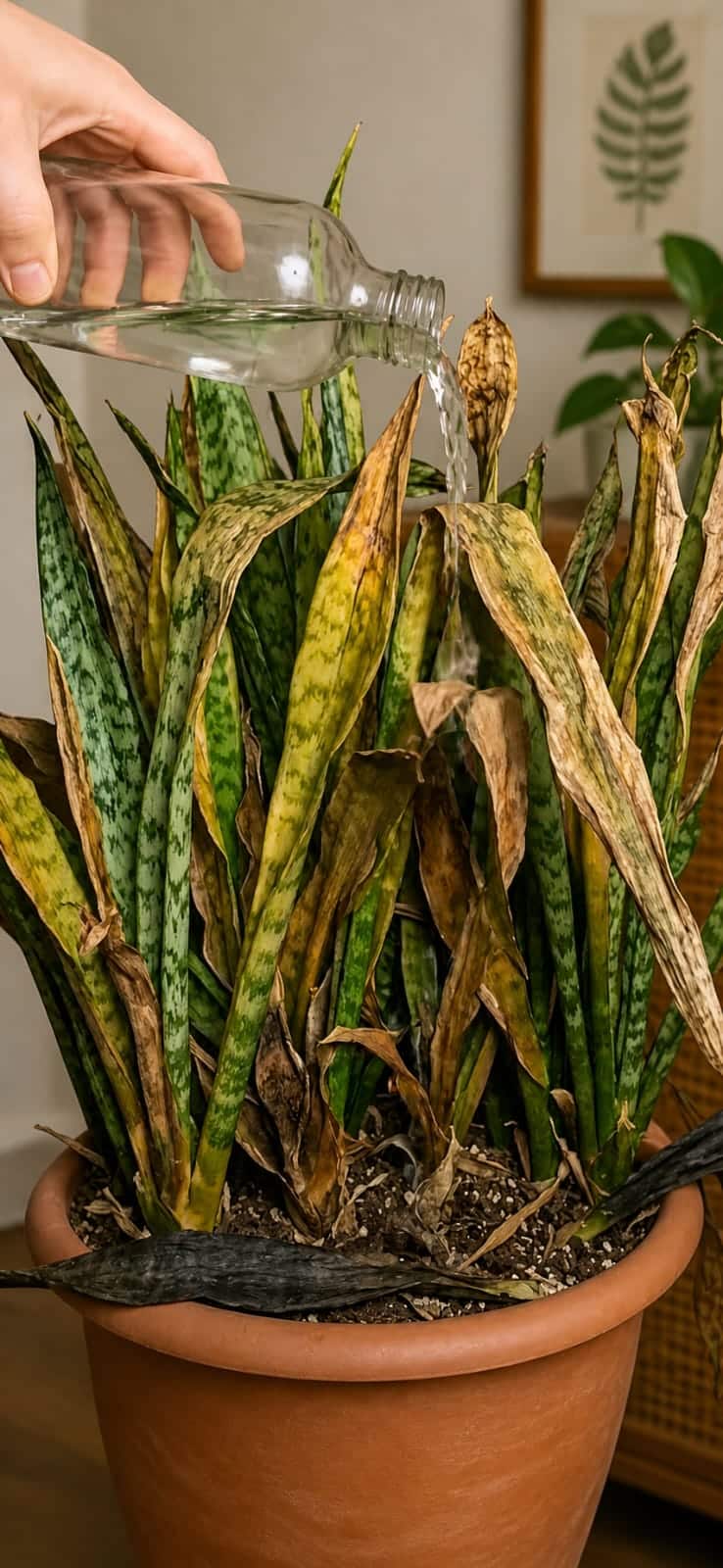
The image shows a large snake plant in a terracotta pot with many damaged leaves. Some leaves are still green and patterned, but many are yellowing, curled, crispy, brown, blackened, or completely dried out. A hand is pouring plain water from a clear bottle directly into the plant. At first glance, it looks like a rescue moment: the plant is thirsty, water is being added, and the problem should be solved.
But this is one of the most important lessons in snake plant care: not every dry-looking snake plant is simply thirsty.
A snake plant with crispy leaves may be underwatered, but it may also be suffering from root rot, old damaged leaves, compacted soil, mineral buildup, sun scorch, cold damage, pest stress, or a long history of inconsistent watering. Pouring water onto the plant without checking the soil and roots can help in some cases, but it can also make the problem worse if the roots are already damaged.
This method is often called the plain water snake plant rescue trick, the dry snake plant revival method, or the emergency rehydration soak. The safest version is not to dump water blindly into the pot. The safer version is to diagnose the plant first, remove dead material, check the root system, refresh the soil if needed, and then water correctly.
In this article, you will learn what is really happening to a snake plant that looks like the one in the image, when plain water can help, when it can hurt, how to tell underwatering from root rot, how to rescue a badly stressed snake plant, and how to rebuild a simple care routine so the plant can grow healthy new leaves again.
What the Image Shows
The plant in the image appears to be a snake plant, also known as Sansevieria or Dracaena trifasciata. It is planted in a large terracotta pot and has a mix of healthy, stressed, and dead leaves.
Some leaves still show the classic green snake plant pattern. Others have turned yellow, tan, brown, or black. Several leaves are curled, wrinkled, crispy, or collapsed. There are also dead leaves lying across the soil surface. The soil looks dry, loose, and tired, with old leaf debris around the base.
A hand is pouring water into the center of the plant. This makes the scene look like a quick revival trick, but the visible damage suggests the plant needs a deeper reset. Plain water may be part of the rescue, but it is not the only step.
The Biggest Mistake: Assuming Crispy Means Thirsty
When a plant looks dry and crispy, the natural reaction is to water it. Sometimes that is correct. If a snake plant has been left dry for too long, the leaves may wrinkle, fold inward, and become thin or papery at the edges. In that case, a careful deep watering can help the remaining healthy roots rehydrate the plant.
However, snake plants can also look dry when the roots are rotten. This seems confusing, but it happens often. If roots have rotted from overwatering, they can no longer absorb water. The leaves may become dehydrated even though the soil has been wet. A plant with rotten roots can look thirsty because it is unable to drink.
That is why pouring more water onto a struggling snake plant can be risky. If the roots are healthy and dry, water helps. If the roots are rotten, water worsens the problem.
Before using the plain water rescue trick, you must check what is happening below the soil.
When Plain Water Can Help
Plain water can help a snake plant when the plant is truly dehydrated and the root system is still alive. This usually happens when the soil has been dry for a long time, the leaves are wrinkled but not mushy, and the base of the plant is firm.
Signs that plain water may help include:
- The soil is bone dry all the way down.
- The pot feels very light.
- Leaves are wrinkled or folding inward.
- Leaf bases are firm, not soft.
- There is no sour smell from the soil.
- Roots are pale, firm, or dry but not mushy.
- The plant has not been watered for many weeks.
In this situation, watering deeply and letting the pot drain can help the plant recover. Damaged leaves may not become perfect again, but healthier leaves may firm up over time.
When Plain Water Can Hurt
Plain water can hurt when the snake plant is already suffering from root rot, compacted wet soil, or damaged rhizomes. If the plant’s underground storage structures are soft and rotting, more water feeds the problem.
Signs that plain water may hurt include:
- The soil is damp or wet below the surface.
- The pot smells sour, rotten, or musty.
- Leaves are yellow and soft at the base.
- Some leaves pull out easily.
- The plant wobbles in the pot.
- The rhizomes are mushy or black.
- The soil stays wet for many days after watering.
If any of these signs are present, do not keep pouring water into the pot. The plant needs root inspection and possibly repotting.
Why the Leaves Look So Damaged
The plant in the image shows several types of leaf damage at once. That usually means the problem has been going on for a while. A single missed watering rarely creates this much mixed damage.
Possible causes include:
- Long-term underwatering
- Overwatering followed by root rot
- Old compacted soil
- Too much direct sun
- Cold draft or temperature shock
- Poor drainage
- Salt or mineral buildup
- Old leaves naturally dying
- Pest damage
- Repeated inconsistent care
The blackened leaf near the rim is especially concerning. Black, collapsed leaves can be a sign of rot, cold damage, or severe tissue death. Yellow and brown crispy leaves may be old damage, but if the bases are soft, root rot may be involved.
Step One: Stop and Inspect Before Watering More
If your snake plant looks like this, do not keep adding water immediately. First, inspect the plant.
Touch the soil. Is it dry, damp, or wet? Push your finger several inches down if possible. The surface may be dry while the lower soil is still damp.
Lift the pot. A very light pot usually means dry soil. A heavy pot may mean hidden moisture.
Smell the soil. Fresh dry soil should smell earthy or neutral. Sour, swampy, or rotten smells are warning signs.
Touch the leaf bases. Firm bases are good. Soft, mushy, or slimy bases mean trouble.
Gently tug one badly dead leaf. If it slips out easily with a rotten base, the plant may have root or rhizome rot.
This inspection tells you whether the plant needs water or surgery.
Step Two: Remove Dead Leaves
Dead leaves should be removed before any serious rescue attempt. They do not recover, and they can trap moisture around the base of the plant. They also hide pests and make it harder to inspect the rhizomes.
Use clean scissors or pruning shears. Cut dead leaves close to the soil line if they are dry and firmly attached. If a leaf is soft and rotten, gently remove it and check the base.
Remove dry leaves lying on the soil surface. The image shows dead material across the top of the pot. This should be cleared away so air can move around the plant base.
Do not remove every imperfect leaf at once if the plant is already weak. Keep any firm green leaves, even if they have minor damage. They still help the plant photosynthesize.
Step Three: Check the Roots
For a snake plant this damaged, root inspection is usually worth it. Carefully slide the plant out of the pot. If the pot is large, work slowly and avoid snapping healthy rhizomes.
Healthy snake plant roots and rhizomes are firm. Rhizomes may be pale, tan, orange, or yellowish depending on the plant and soil. Healthy roots may be white, cream, tan, or light brown.
Rotten roots are mushy, black, slimy, hollow, or foul-smelling. Rotten rhizomes may feel soft like overripe fruit. Any mushy sections should be removed with clean tools.
If most roots are gone but some rhizomes are still firm, the plant can often be saved. Snake plants are resilient when healthy rhizome sections remain.
Step Four: Decide Whether to Repot
If the soil is old, compacted, sour, or slow-draining, repot the plant. A damaged snake plant should not go back into bad soil.
Repotting is especially important if:
- The soil smells sour.
- The soil stays wet too long.
- Roots are rotten.
- The pot has no drainage.
- The soil is compacted around the roots.
- There is old dead material mixed into the base.
If the roots are healthy and the soil is simply dry, you may not need a full repot. A deep watering may be enough. But for a plant as stressed as the one shown, refreshing the soil is often the safer long-term move.
Best Soil for a Recovering Snake Plant
A recovering snake plant needs fast-draining soil. Dense potting soil holds too much moisture around damaged roots.
A good rescue mix can include:
- 2 parts cactus or succulent mix
- 1 part perlite or pumice
- 1 part coarse sand, lava rock, fine bark, or small gravel
The goal is air and drainage. Snake plant roots need moisture, but they also need oxygen. A gritty mix helps prevent future rot and gives recovering roots a cleaner environment.
Do not use heavy garden soil. Do not use compost-heavy soil for a weak snake plant. Do not pack the mix tightly around the roots.
Why the Pot Matters
The plant in the image is in a terracotta pot. Terracotta is usually good for snake plants because it allows moisture to evaporate through the pot walls. This helps the soil dry faster.
However, pot size matters too. If the pot is much larger than the root system, the extra soil can stay wet too long after watering. A recovering snake plant should be in a pot only slightly larger than the healthy root mass.
The pot must have drainage holes. If it does not, repot immediately. A snake plant in a pot without drainage is always at higher risk of rot.
The Correct Plain Water Rescue Method
If the roots are healthy and the plant is truly dry, use the plain water rescue method carefully.
- Remove dead leaves and debris.
- Confirm that the soil is dry and the leaf bases are firm.
- Water slowly around the soil surface.
- Avoid pouring water into the tight leaf centers.
- Continue until water drains from the bottom.
- Let the pot drain completely.
- Empty the saucer.
- Place the plant in bright indirect light.
- Do not water again until the soil dries deeply.
Do not give a little splash every day. That keeps the top damp and can encourage problems. Water deeply, then wait.
The Root Rot Rescue Method
If the roots or rhizomes are rotten, the plant needs a different rescue method.
- Remove the plant from the pot.
- Shake away old wet soil.
- Cut away all mushy, black, or rotten roots and rhizomes.
- Remove dead leaves at the base.
- Let healthy cut sections dry for several hours.
- Repot in fresh dry gritty mix.
- Use a pot with drainage holes.
- Wait several days before watering lightly.
- Keep in bright indirect light.
- Water sparingly until new growth appears.
This method may feel harsh, but it gives the remaining healthy plant tissue a chance to survive. Pouring more water onto rot usually does the opposite.
Should You Soak a Dry Snake Plant?
Sometimes a very dry snake plant in a terracotta pot becomes hydrophobic, meaning the soil repels water. Water may run down the sides and drain out without soaking the root ball. In that case, a controlled soak can help.
Place the pot in a shallow tray of water for 20 to 30 minutes. Let the soil absorb moisture from the bottom. Then remove the pot and let it drain fully.
Only do this if the roots are healthy and the plant is truly dry. Never soak a plant that may have rot.
Why Pouring Water Into the Leaf Crown Is Risky
Snake plants grow in tight clusters. Water poured directly into the center can sit between leaf bases. If it remains there too long, especially indoors, it can cause rot.
In the image, water appears to be poured over the leaves and into the plant. For safer care, aim for the soil, not the foliage. Water around the edges of the clump and let moisture reach the roots through the soil.
If water gets trapped in the leaf bases, blot it with a paper towel or tilt the plant gently to drain it.
Will the Brown and Crispy Leaves Turn Green Again?
No. Crispy, brown, black, or fully yellow snake plant leaves will not turn green again. Once the tissue is dead or badly damaged, it cannot heal back to its original appearance.
The goal of rescue is not to repair old leaves. The goal is to save the healthy rhizomes and encourage new leaves to grow.
After rescue, the plant may look sparse for a while. That is normal. Keep the firm green leaves, remove the dead ones, and allow the plant to rebuild.
How Long Recovery Takes
Snake plants recover slowly. Even after you fix the care routine, new growth may take weeks or months. These plants are not fast responders.
If the roots are healthy and the plant was simply dehydrated, some leaves may firm up within a few days after watering. Severely wrinkled or crispy leaves may not improve much.
If the plant had root damage, recovery can take much longer. The plant must grow new roots before it can grow strong leaves. Be patient and avoid overwatering during this stage.
Where to Place a Recovering Snake Plant
A recovering snake plant needs bright indirect light. Avoid harsh direct sun while the plant is stressed, because damaged leaves can scorch more easily.
A bright east-facing window is excellent. A few feet from a south or west window can also work if the light is filtered. Low light slows recovery because the plant cannot produce energy quickly.
Do not place a recovering plant in a cold draft, near a heater, or in a dark corner.
Should You Fertilize During Rescue?
Do not fertilize immediately. A stressed snake plant with damaged roots should not be fed right away. Fertilizer can burn weak roots and add stress.
Wait until the plant shows signs of recovery, such as firm new growth or healthy pups. Then use a diluted cactus or houseplant fertilizer during the growing season.
Plain water and healthy soil are enough during the first recovery stage.
Can Homemade Tonics Help This Plant?
For a badly stressed snake plant, homemade tonics are usually not the first solution. Rice water, banana water, coffee, milk, honey, sugar water, or compost tea can all create problems if the roots are weak or soil is already unhealthy.
The plant in the image needs diagnosis, cleanup, and possibly repotting. Adding homemade liquids without fixing the root zone can make the soil sour or wet.
Use plain water first, and only when the plant truly needs it. Save fertilizers and tonics for later, after recovery begins.
Continue to Page 2
Continue to page 2 for more details about this article and the key points many readers miss on the first page.