Snake plants are some of the easiest houseplants to love. They stand upright like living sculptures, they tolerate missed waterings, and they can survive in homes where fussier plants quickly give up. Their bold green leaves, striped patterns, and golden edges make them look clean, modern, and almost architectural. Even a small snake plant on a table can make a room feel fresher and more intentional.
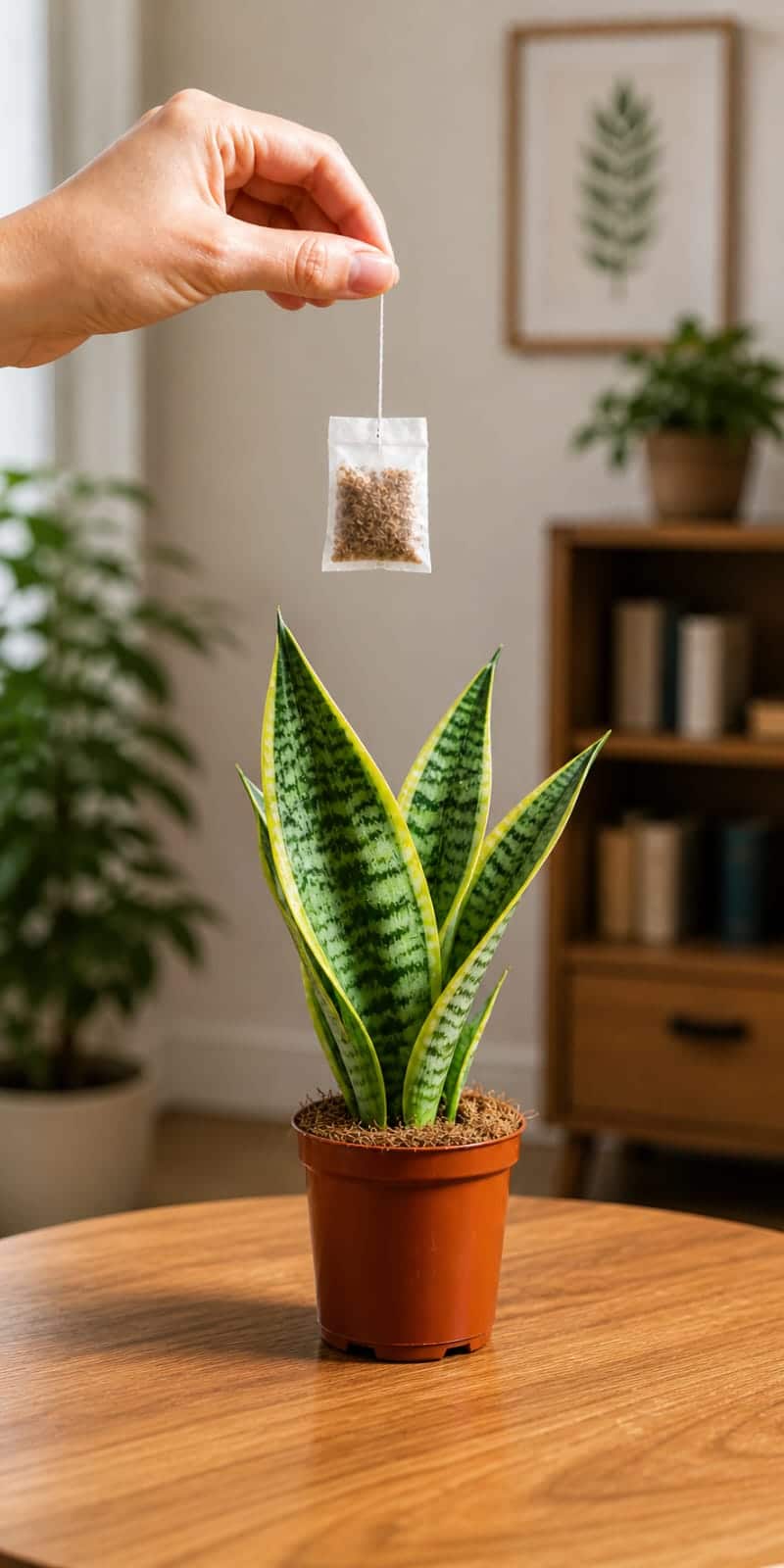
The image shows a small snake plant in a nursery pot, sitting on a wooden table in a bright indoor room. Above the plant, a hand is holding a tiny tea bag filled with dry brown plant material. The scene suggests a simple trick: use a tea bag near the snake plant to refresh the soil, support growth, and possibly keep the plant looking greener and healthier.
This method is often called the tea bag snake plant trick, the used tea leaf soil booster, the mini compost sachet method, or the natural tea bag plant hack. It looks simple, neat, and clever. Instead of pouring messy liquids into the pot, the tea bag appears to offer a controlled way to add a gentle organic boost.
But as with many houseplant hacks, the safest version is not as dramatic as the image may suggest. Snake plants do not need rich, damp, compost-heavy soil. They are drought-tolerant plants that prefer fast drainage and dry-down time between waterings. A tea bag can be useful only if it is used carefully, sparingly, and in the right way.
The best version of this trick uses plain, used, dried tea leaves in a breathable sachet or sprinkled very lightly on the soil surface. It should never involve sweetened tea, flavored tea, milk tea, wet tea bags left to rot, or thick layers of damp organic material. Used incorrectly, tea bags can attract fungus gnats, grow mold, keep the soil too wet, and create problems for snake plant roots.
Used correctly, the tea bag trick can be a mild soil-refresh ritual. It may add a small amount of organic matter, help reuse kitchen waste, and remind you to inspect your plant more often. But it is not a miracle fertilizer, and it will not replace light, drainage, proper watering, or a good potting mix.
What Is the Tea Bag Snake Plant Trick?
The tea bag snake plant trick is a simple houseplant method where used tea leaves are dried and added lightly to the potting surface or steeped briefly in water to make a weak plant rinse. In the image, the tea is contained in a tiny sachet, which makes the trick look tidy and controlled.
The idea is that tea leaves contain small amounts of organic material and trace nutrients. When used in moderation, they may contribute gently to the soil environment. The key word is moderation. Snake plants are not heavy feeders, and they do not want wet organic material sitting around their bases.
This trick should be treated as an occasional soil amendment, not a regular fertilizer schedule. A snake plant needs very little feeding compared with many leafy tropical plants. Too much organic matter can make the potting mix hold moisture for too long, which increases the risk of root rot.
What Kind of Tea Bag Should You Use?
If you want to try this trick, use only plain tea. Black tea, green tea, or simple herbal tea can be used, but the tea must be free from sugar, milk, artificial sweeteners, oils, spices, and strong flavorings.
Avoid tea bags that contain:
- Sugar
- Milk powder
- Artificial sweeteners
- Creamer
- Strong fruit flavoring
- Essential oils
- Spices such as cinnamon or clove
- Chocolate flavoring
- Salt or additives
Plain used tea leaves are the safest choice. The tea bag should be fully cooled, then dried before being used around a snake plant.
Why the Tea Bag Should Be Dry
One of the biggest mistakes with this trick is placing a wet used tea bag directly on the soil and leaving it there. That may seem harmless, but it can create a damp organic pocket on top of the pot. Indoors, damp tea leaves can grow mold, attract fungus gnats, and make the soil surface stay wet longer than it should.
Snake plants dislike constantly damp conditions. Their roots and rhizomes are built to store water, and they are vulnerable to rot when the pot stays too wet.
Drying the tea leaves first reduces the risk. Spread the used tea bag on a plate and let it dry completely. Once it is dry, you can open the bag and use only a very small amount of the tea leaves, or you can create a small breathable sachet that can be removed later.
The Safest Way to Use Tea Leaves on a Snake Plant
The safest method is to use dried tea leaves lightly on the surface of the soil, far away from the leaf bases. You do not need much.
- Use a plain tea bag after making tea.
- Let the bag cool completely.
- Dry it fully for a day or two.
- Open the tea bag.
- Take only a small pinch of dried tea leaves.
- Sprinkle it thinly on the outer soil surface.
- Keep it away from the center crown of the plant.
- Do not create a thick layer.
- Water normally only when the soil is dry.
This method gives the plant a tiny organic addition without smothering the soil. If you see mold, gnats, or a sour smell, remove the tea leaves immediately and return to plain care.
The Removable Tea Sachet Method
The image shows a small tea sachet being held above the plant. A removable sachet can be cleaner than loose tea leaves because you can take it out before it breaks down too much.
To do this safely, place a small amount of dried used tea leaves in a breathable paper tea bag or thin cloth sachet. Set it on the outer edge of the soil, not against the plant stems. Leave it there for only a few days, then remove it.
This is more of a gentle soil-refresh ritual than a true feeding method. Do not bury the sachet deep in the pot. Buried organic material can decompose in a low-air environment and cause odor or moisture problems.
If the pot is very small, skip the sachet method. A small pot has limited airflow and little room for extra organic material.
Can You Water Snake Plants With Tea?
You can use a very weak unsweetened tea rinse occasionally, but it is not necessary. If you do try it, the tea must be plain, cooled, diluted, and unsweetened.
Make the tea extremely weak. It should look like lightly tinted water, not strong brewed tea. Use it only when the snake plant actually needs watering, and let the pot drain completely afterward.
Never water a snake plant with hot tea, sweet tea, milk tea, lemon tea, or flavored bottled tea. These can damage the roots, attract pests, or create residue in the pot.
How Often Should You Use the Tea Bag Trick?
Use it rarely. Once every two to three months is more than enough. Snake plants do not need constant feeding or frequent soil amendments.
If your snake plant is already growing well, you may not need this trick at all. The best care routine for snake plants is usually simple: bright indirect light, dry-down time, fast-draining soil, and a pot with drainage holes.
Too many tricks can cause more problems than neglect.
Can Tea Bags Make a Snake Plant Grow Faster?
Tea bags will not dramatically speed up snake plant growth. Snake plants are naturally slow to moderate growers indoors. Their growth depends mostly on light, temperature, root health, pot size, and watering habits.
A small amount of dried tea leaves may add trace organic material, but it is not a complete fertilizer. If your snake plant is growing slowly because it is in low light, a tea bag will not solve the problem. If the plant is slow because the roots are damaged, tea leaves will not fix that either.
The trick may support the soil very gently, but it should not be promoted as a miracle growth booster.
The Real Secret to Strong Snake Plant Growth
The real secret is not tea. It is balance. Snake plants grow best when they are given enough light and allowed to dry between waterings.
For stronger growth, focus on these basics:
- Bright indirect light
- A pot with drainage holes
- Fast-draining cactus or succulent soil
- Watering only when the soil is dry
- Occasional light fertilizer during active growth
- Warm indoor temperatures
- No standing water in the saucer
- Clean leaves that can absorb light
Once these basics are right, small extras like the tea bag trick are optional.
Best Light for Snake Plants
Snake plants tolerate low light, but they do not grow their best in low light. A snake plant placed in a dark corner may survive for a long time, but it will grow slowly and may become weaker over time.
For fuller, stronger growth, place your snake plant in bright indirect light. A spot near an east-facing window is often excellent. A few feet away from a south or west window can also work if the sun is filtered.
Variegated snake plants, like the one in the image, often keep their yellow edges and strong patterns better when they receive good light. In very low light, new growth may be weaker or less colorful.
Best Soil for Snake Plants
Snake plants need a potting mix that drains quickly. Regular indoor potting soil can be too heavy if used alone, especially in plastic pots or low-light rooms.
A better mix includes:
- 2 parts cactus or succulent mix
- 1 part perlite or pumice
- 1 part coarse sand, fine bark, lava rock, or small gravel
This kind of mix gives roots air and prevents the pot from staying wet too long. If you add tea leaves to heavy soil, you can make moisture problems worse. The tea bag trick is safest only in a pot that already drains well.
Why Drainage Is More Important Than Tea
The nursery pot in the image appears to have drainage holes at the bottom. That is essential. Snake plants should never be kept in containers where water cannot escape.
If water collects at the bottom of the pot, the roots and rhizomes can rot. A tea bag, fertilizer, or homemade tonic cannot help a plant sitting in trapped water.
If you use a decorative pot with no holes, keep the snake plant in a plastic nursery pot inside it. Remove the nursery pot when watering, let it drain fully, then return it to the decorative container.
Continue to Page 2
Continue to page 2 for more details about this article and the key points many readers miss on the first page.