How to Water Snake Plants Correctly
Watering is where many snake plant problems begin. These plants prefer deep but infrequent watering. That means you water thoroughly, then wait until the soil dries before watering again.
Do not give tiny sips every few days. Do not water just because the surface looks dry. Check deeper into the soil. In many indoor homes, snake plants need water only every few weeks.
During spring and summer, a snake plant may need water every two to four weeks depending on light, pot size, and soil. During winter, it may need water only once a month or less.
Always check the soil first.
Can Tea Leaves Cause Mold?
Yes, tea leaves can cause mold if they are left wet or used too heavily. Mold is more likely in low light, cool rooms, humid conditions, and pots with poor airflow.
If you notice white fuzz, sour smell, or a damp patch where tea leaves were placed, remove them. Scrape off the top layer of affected soil if needed. Let the pot dry properly before watering again.
To prevent mold, use only a tiny amount of fully dried tea leaves and keep them away from the plant crown.
Can Tea Bags Attract Fungus Gnats?
Yes. Fungus gnats love damp organic material. A wet tea bag sitting on houseplant soil can become a perfect gnat invitation.
If you already have fungus gnats, do not use tea bags. Focus on drying the top layer of soil, improving drainage, removing organic debris, and using sticky traps if needed.
Tea leaves should never be added to a pot that already has pest issues.
Can Tea Make the Soil Too Acidic?
Tea can be mildly acidic, depending on the type and strength. A tiny amount used rarely is unlikely to cause a major problem. But frequent strong tea watering may gradually affect the soil environment.
Snake plants are adaptable, but they do not need acidic treatments. If you want to feed your plant, a diluted balanced houseplant or cactus fertilizer is more predictable than repeated tea applications.
Use tea as an occasional novelty, not a main care method.
Can You Use Herbal Tea Bags?
Some herbal teas are simple and mild, but many contain oils, spices, fruit acids, flavorings, or strong plant compounds. These are not ideal for houseplant soil.
If you use herbal tea, choose the plainest possible type. Avoid mint blends with strong oils, spiced teas, citrus teas, berry teas, and anything with added flavoring.
Plain black or green tea leaves are usually easier to control.
Can You Use Tea Bags as Fertilizer?
Tea bags are not a complete fertilizer. They may contain small amounts of organic matter, but they do not provide balanced nutrition for long-term plant growth.
If your snake plant needs feeding, use a diluted cactus fertilizer or balanced houseplant fertilizer during the active growing season. Feed lightly. Snake plants are not heavy feeders.
The tea bag trick should be considered a tiny soil amendment, not a fertilizer replacement.
When Not to Use the Tea Bag Trick
Do not use this trick if your snake plant is struggling with wet soil, yellow leaves, mushy bases, fungus gnats, mold, or root rot. In those cases, adding organic material can make the problem worse.
Also avoid it if your plant is in a very small pot, a pot with no drainage, or dense soil that stays wet for a long time.
Do not use tea leaves during winter if the plant is barely growing and the soil dries slowly.
Signs the Trick Is Being Used Safely
The tea bag trick is being used safely if the soil stays fresh, the plant remains firm, no mold appears, and no gnats show up. The tea leaves should not form a thick mat or stay wet for days.
Your snake plant should continue to look upright and healthy. New leaves may appear slowly during the growing season, but do not expect dramatic overnight growth.
Subtle and clean is the goal.
Signs You Should Stop Immediately
Stop using tea leaves if you notice:
- White mold on the soil
- Fungus gnats flying around the pot
- Sour smell
- Sticky or slimy soil surface
- Yellowing leaves after use
- Soil that stays damp too long
- Soft leaf bases
Remove the tea material and let the soil dry. If the plant shows signs of rot, inspect the roots and repot into fresh gritty soil.
A Better Way to Use Tea in Plant Care
Instead of putting a tea bag directly on the soil, the cleaner method is to compost used tea leaves outside or add them to a larger compost bin. Once fully composted, that material can become part of a more stable soil amendment.
Fresh tea leaves in a houseplant pot are more likely to cause surface issues than fully composted organic matter. If you compost, make sure the tea bag itself is compostable. Some tea bags contain synthetic fibers and do not break down well.
For indoor snake plants, less is usually better.
Should You Bury the Tea Bag?
No. Do not bury a tea bag in a snake plant pot. Buried tea material can stay wet, break down unevenly, and create a hidden sour pocket in the soil.
If you use the sachet method, keep it on the surface and remove it after a few days. If you use loose dried tea leaves, sprinkle only a tiny amount thinly on the surface.
Never pack organic material around the rhizomes or leaf bases.
What About Tea Bags for Pest Control?
Some people claim tea bags repel pests, but this is not reliable for snake plants. Wet tea bags may actually attract fungus gnats rather than repel them.
If you want pest prevention, keep the soil dry between waterings, remove dead debris, inspect leaves regularly, and avoid overwatering. Those habits are far more effective than tea bags.
How to Clean the Soil Surface
Before using any trick, clean the soil surface. Remove old leaf pieces, dust, dead roots, and any decorative material that is trapping moisture. A clean surface helps air reach the base of the plant.
If the top layer of soil is crusty or compacted, gently loosen it with a chopstick or small tool. Be careful not to damage roots or rhizomes.
Then decide whether a tiny amount of dried tea leaves is even necessary. Many times, cleaning the pot and correcting watering will help more than adding anything.
How to Keep the Leaves Healthy
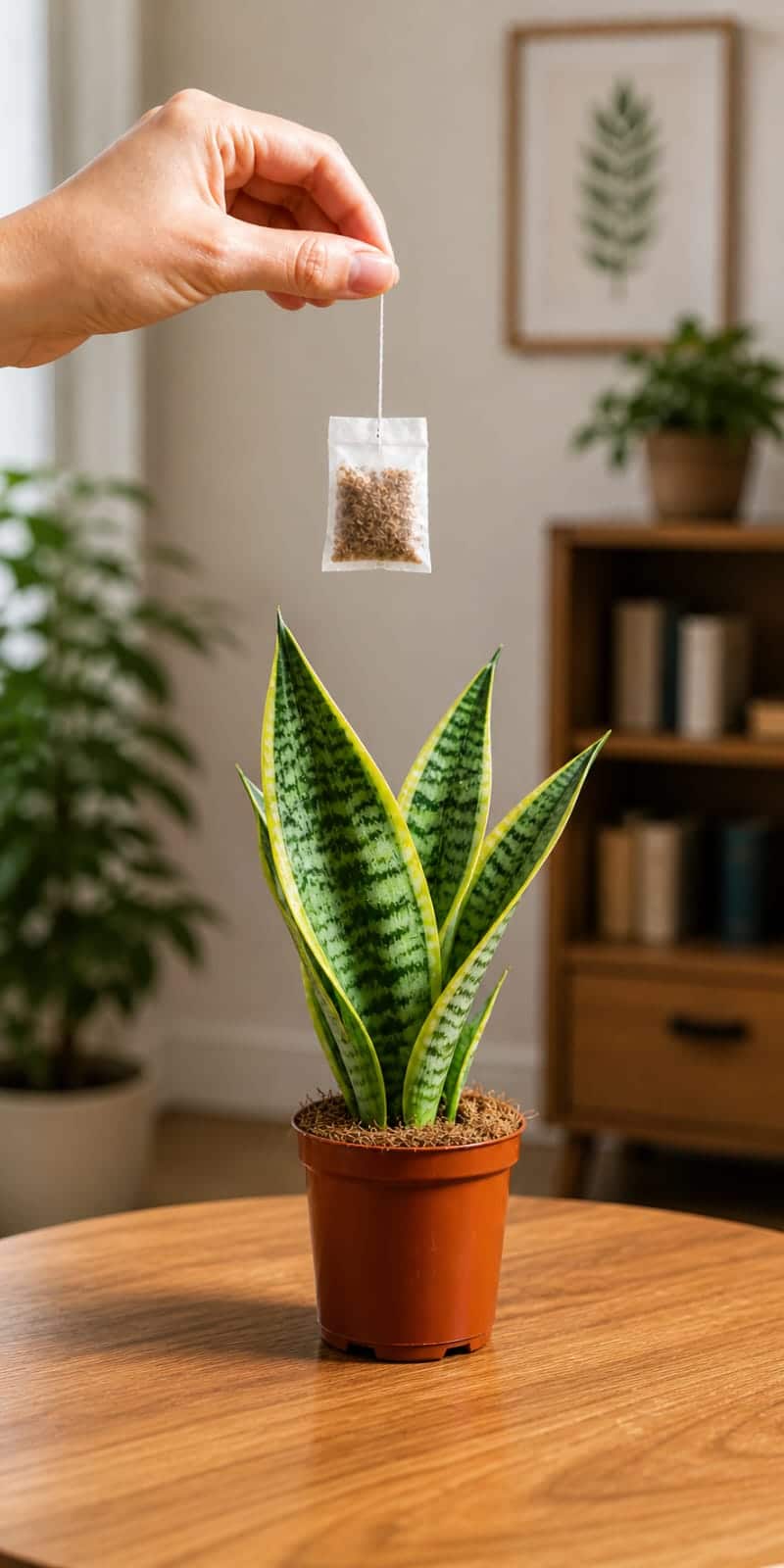
The snake plant in the image has clean, upright leaves with strong green patterning and yellow edges. To keep leaves looking this way, wipe them occasionally with a soft damp cloth. Dusty leaves absorb less light and look dull.
Do not use leaf shine, oil, milk, mayonnaise, or sweet liquids on snake plant leaves. These can leave residue and attract dust.
Clean water on a cloth is enough.
Can the Tea Bag Trick Help New Pups?
Snake plants produce new shoots, often called pups, from underground rhizomes. Healthy roots and good light are the real drivers of pup production.
A tea bag will not force pups to appear. If the plant is mature, slightly snug in its pot, and receiving bright indirect light, pups are more likely. Light feeding during spring or summer can also support growth.
If you want more pups, focus on root health rather than kitchen tricks.
Can This Trick Help a Newly Bought Snake Plant?
A newly bought snake plant does not need tea right away. It needs time to adjust. Check the soil, make sure the pot drains, place it in good light, and wait before adding anything.
Many nursery plants already have fertilizer in the potting mix. Adding extra organic material too soon can be unnecessary.
Let the plant settle for a few weeks first.
Can This Trick Help a Root-Bound Snake Plant?
If your snake plant is root-bound but healthy, a tea bag will not solve crowding. Snake plants can tolerate being somewhat snug, but if the pot is packed with rhizomes, water cannot move through properly, or the pot is cracking, it may be time to repot or divide.
Repotting into fresh gritty soil will help more than adding tea leaves.
Can This Trick Save a Yellowing Snake Plant?
No. If a snake plant is yellowing, first find the cause. Yellowing often comes from overwatering, poor drainage, cold damage, root rot, or old leaves. Tea leaves can worsen moisture problems if the plant is already stressed.
For yellow leaves, inspect the soil and roots. Remove damaged leaves if needed. Repot if the soil is wet or sour. Do not add tea until the plant is stable.
A Safe Tea Bag Snake Plant Routine
If you want to try the trick, use this careful routine:
- Choose a plain used tea bag.
- Let it cool completely.
- Dry it fully for at least 24 hours.
- Open the bag and use only a small pinch of tea leaves.
- Sprinkle lightly on the outer soil surface.
- Keep tea away from the plant crown.
- Do not water unless the soil is dry.
- Watch for mold or gnats.
- Remove any residue if problems appear.
- Repeat no more than once every two to three months.
This routine keeps the trick small, safe, and controlled.
Better Alternatives to the Tea Bag Trick
If your real goal is a stronger snake plant, these steps are more reliable:
- Move the plant to brighter indirect light.
- Use a gritty cactus-style potting mix.
- Choose a pot with drainage holes.
- Water deeply only when dry.
- Feed lightly with diluted fertilizer during spring and summer.
- Clean leaves regularly.
- Remove dead leaves from the pot.
- Repot when the soil becomes old or compacted.
These basics will produce better results than tea leaves alone.
Common Mistakes With the Tea Bag Snake Plant Trick
Putting a Wet Tea Bag on the Soil
This can cause mold and gnats. Always dry tea leaves first.
Using Sweetened Tea
Sugar attracts pests and does not belong in snake plant soil.
Using Milk Tea
Milk can sour, smell bad, and create residue.
Using Too Much Tea
A thick layer of tea leaves holds moisture. Use only a tiny amount.
Burying the Tea Bag
Buried tea can rot inside the pot. Keep it on the surface or skip it.
Using It on a Sick Plant
A stressed, yellowing, or rotting snake plant needs diagnosis, not tea.
Ignoring Drainage
No trick works if the pot does not drain properly.
Frequently Asked Questions
Can I put a tea bag in my snake plant pot?
You can, but it is safer to use a tiny amount of dried tea leaves rather than leaving a wet tea bag in the pot. Do not bury it.
Are tea leaves good for snake plants?
In small amounts, dried plain tea leaves may add mild organic material. Too much can cause mold, gnats, and excess moisture.
Can I water my snake plant with tea?
Only with very weak, cooled, unsweetened tea, and only occasionally. Plain water is better most of the time.
Can tea bags make snake plants grow faster?
Not dramatically. Growth depends more on light, roots, watering, and soil.
Can tea bags cause fungus gnats?
Yes, especially if the tea bag is wet or left on damp soil.
Should I use black tea or green tea?
Plain black or green tea is best if you try the method. Avoid flavored or sweetened tea.
How often should I use tea leaves?
No more than once every two to three months, and only in very small amounts.
Can I use tea bags in winter?
It is better to skip them in winter because the soil dries more slowly and the plant grows less.
What should I do if mold appears?
Remove the tea leaves, scrape off the moldy surface soil if needed, improve airflow, and let the soil dry.
What is better than tea for snake plants?
Bright indirect light, gritty soil, drainage holes, careful watering, and occasional diluted fertilizer are better.
Final Thoughts
The tea bag snake plant trick looks charming and clever. A tiny sachet held above a neat snake plant suggests an easy natural boost, something simple from the kitchen that might help the plant grow stronger. It is exactly the kind of trick plant lovers enjoy trying.
But snake plants are not hungry, moisture-loving plants. They are tough, drought-tolerant plants that prefer dry-down time, airy soil, and simple care. A tea bag can be useful only when used lightly and carefully.
The safest method is to use a tiny pinch of fully dried, plain used tea leaves on the outer soil surface. Keep it away from the leaf crown, do not bury it, and do not use wet tea bags. Avoid sweetened tea, milk tea, flavored tea, and anything with oils or additives.
Use the trick rarely, no more than once every few months. Watch for mold, fungus gnats, sour smells, or soil that stays damp. If any of those appear, remove the tea material and return to plain care.
The real path to a healthier snake plant is still simple: bright indirect light, a pot with drainage, gritty soil, deep but infrequent watering, clean leaves, and patience. Tea leaves may be a small extra, but they are not the secret by themselves.
Use the tea bag trick as a gentle ritual if you enjoy it, but let the basics do the real work. With the right care, your snake plant can stay upright, patterned, and beautiful for years.