How to Tell Underwatering from Overwatering
This is the most important difference to understand.
Underwatered Snake Plant
- Soil is completely dry.
- Pot feels light.
- Leaves wrinkle or fold inward.
- Leaf bases stay firm.
- Roots are dry but not mushy.
- No rotten smell is present.
Overwatered or Rotten Snake Plant
- Soil is damp or wet below the surface.
- Pot feels heavy.
- Leaves yellow from the base.
- Leaf bases become soft or mushy.
- Roots are black, slimy, or hollow.
- Soil may smell sour or rotten.
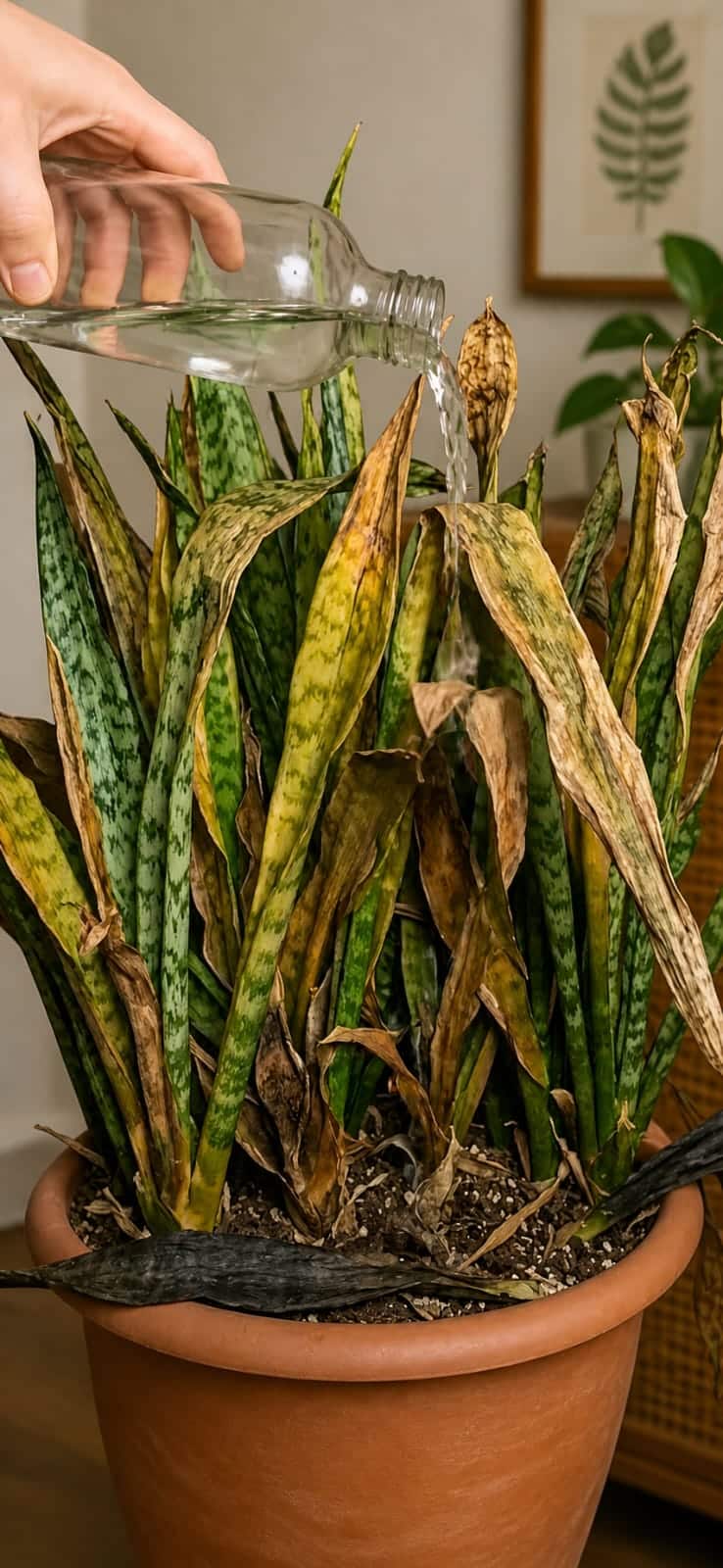
The plant in the image could have a combination of old underwatering damage and possible root stress. That is why inspection matters.
What If Only Some Leaves Are Damaged?
If some leaves are green and firm while others are dead, the plant may still be very salvageable. Snake plants often lose older or damaged leaves while healthy rhizomes remain alive.
Remove the dead leaves, keep the firm green ones, and improve the care routine. New growth may eventually fill the pot again.
Do not cut all leaves back unless they are dead or rotten. Firm green leaves are still valuable.
What If the Whole Plant Is Crispy?
If every leaf is crispy, brown, hollow, or collapsed, inspect the rhizomes. Sometimes the leaves are gone, but the underground rhizomes still have life. Firm rhizome sections can be replanted.
If the rhizomes are also dry, shriveled, hollow, or mushy, the plant may be beyond saving.
Snake plant rescue depends on the rhizomes. Leaves are important, but the rhizomes are the survival structures.
How to Propagate Healthy Leaf Sections
If some leaves are damaged at the top but still firm near the base, you may be able to propagate cuttings. Cut a healthy firm section of leaf, let it callus for a day or two, then place it in water or a gritty soil mix.
However, variegated snake plant leaf cuttings may not always produce pups with the same yellow edges. Division of rhizomes is better for preserving variegation.
If the plant has healthy pups or rhizome sections, divide those instead of relying only on leaf cuttings.
How to Prevent This Damage in the Future
Once the plant is rescued, prevention is simple.
- Use a pot with drainage holes.
- Use gritty, fast-draining soil.
- Water deeply but infrequently.
- Let the soil dry between waterings.
- Keep the plant in bright indirect light.
- Avoid cold drafts.
- Do not leave dead leaves on the soil.
- Do not use heavy homemade liquids.
- Check roots if the plant declines.
Snake plants thrive when care is simple and consistent.
A Simple Watering Schedule
There is no perfect universal schedule, but most indoor snake plants need water far less often than people think.
In warm bright months, water every two to four weeks, depending on pot size, soil, and light. In winter or low light, water every four to six weeks or less.
Always check the soil before watering. A schedule is only a guide. The plant’s conditions matter more.
Why Terracotta Can Help
Terracotta pots dry faster than plastic pots because clay is porous. This can be helpful for snake plants, especially for plant owners who tend to overwater.
However, terracotta can also dry out faster in hot, sunny rooms. If a snake plant is forgotten for months in terracotta, it can become severely dehydrated.
The pot is helpful, but the watering routine still matters.
Should You Cut Off Brown Tips?
You can trim brown tips for appearance, but it will not heal the leaf. Use clean scissors and follow the natural shape of the leaf. Leave a tiny brown edge rather than cutting into healthy green tissue, because cutting into green tissue can create a fresh wound that dries brown again.
If a leaf is mostly dead, remove the whole leaf at the base.
Can a Snake Plant Recover From Black Leaves?
Black leaves are often a sign of severe damage. They may come from rot, cold exposure, sunburn, or tissue collapse. A black leaf usually will not recover.
Remove black dead leaves and inspect the base. If the base is mushy, check the rhizome. If the rhizome is firm, the plant may still recover. If the rhizome is rotten, cut away the damaged section.
Why Old Soil Causes Problems
Over time, potting soil breaks down. It can become compacted, dusty, or water-repellent. It may hold moisture unevenly. Some areas may stay wet while others remain dry.
A snake plant in old soil may suffer even if you think you are watering correctly. Water may not reach the roots evenly, or it may linger around damaged areas.
Refreshing the soil every few years helps prevent long-term decline.
Should You Remove the Whole Plant From the Pot?
If the plant is only mildly thirsty, no. But if it looks as damaged as the one in the image, yes, root inspection is a smart step.
Large snake plants can hide serious problems below the surface. Looking at the roots removes the guesswork.
After inspection, you will know whether to water, repot, divide, or discard rotten sections.
A Complete Rescue Routine for the Plant in the Image
Here is the safest rescue routine for a snake plant that looks like this:
- Stop watering until you inspect the soil.
- Remove all fully dead leaves and debris.
- Check whether the soil is dry or wet below the surface.
- Slide the plant out of the pot.
- Inspect roots and rhizomes.
- Cut away rotten or mushy sections.
- Keep firm green leaves and healthy rhizomes.
- Repot in fresh gritty snake plant mix.
- Use a pot with drainage holes.
- Wait a few days before watering if roots were cut.
- Water deeply only when the soil is dry.
- Place in bright indirect light.
- Avoid fertilizer until new growth appears.
This gives the plant the best chance to recover without accidentally worsening rot.
Common Mistakes With the Plain Water Rescue Trick
Watering Without Checking the Soil
The soil may be wet below the surface. Always check first.
Pouring Water Into the Leaf Centers
Water trapped between leaves can cause rot. Aim for the soil.
Leaving Dead Leaves in the Pot
Dead leaves trap moisture and hide problems. Remove them.
Using Too Much Water Too Often
One deep watering is better than frequent small splashes.
Ignoring Root Rot
A thirsty-looking plant can have rotten roots. Inspect if damage is severe.
Fertilizing Too Soon
Weak roots do not need fertilizer right away. Wait for recovery.
Keeping the Plant in Old Soil
Bad soil can keep causing problems. Refresh it if needed.
Frequently Asked Questions
Can I save a snake plant with crispy leaves?
Yes, if some roots or rhizomes are still healthy. Crispy leaves will not recover, but the plant can grow new leaves from healthy rhizomes.
Should I water a crispy snake plant immediately?
Check the soil and roots first. If the soil is bone dry and roots are firm, water. If the soil is damp or roots are rotten, do not add more water.
Why does my snake plant look dry even though I watered it?
The roots may be damaged and unable to absorb water, or the soil may be repelling water and not soaking evenly.
Should I remove brown snake plant leaves?
Yes, remove fully dead, crispy, black, or mushy leaves. Keep firm green leaves if possible.
Can yellow snake plant leaves turn green again?
No. Yellow leaves usually do not return to green. Focus on saving healthy growth.
How often should I water a recovering snake plant?
Only when the soil dries deeply. Recovery is slower and safer with careful watering.
Should I fertilize a damaged snake plant?
No, not right away. Wait until the plant shows new growth.
What soil should I use?
Use a gritty cactus or succulent mix with added perlite, pumice, bark, or coarse sand.
Can I use rice water or banana water to revive it?
Not at first. Use plain water and fix the roots and soil. Homemade tonics can worsen problems if the plant is stressed.
How long does recovery take?
It may take weeks or months. Snake plants grow slowly, especially after root damage.
Final Thoughts
The plain water snake plant rescue trick looks simple: a dry, damaged plant receives water, and the hope is that it will bounce back. Sometimes that really is what a snake plant needs. If the soil is bone dry and the roots are still firm, a deep watering can help rehydrate the plant.
But a badly damaged snake plant needs more than guesswork. Crispy, yellow, black, and collapsed leaves can come from several causes. A plant can look thirsty because it is dry, or it can look thirsty because its roots have rotted and can no longer drink.
Before pouring more water, check the soil, smell the pot, remove dead leaves, and inspect the roots if damage is severe. If the roots are healthy, water deeply and let the pot drain. If the roots are rotten, cut away the damage and repot in fresh gritty soil.
Do not expect dead leaves to turn green again. The goal is to save the living parts and encourage new growth. With healthy rhizomes, bright indirect light, fast-draining soil, and careful watering, a snake plant can recover from a surprising amount of damage.
The real rescue is not just the water. It is knowing when water is needed, when it is dangerous, and how to rebuild the plant from the roots up. Keep the routine simple, let the soil dry between waterings, and give the plant time. Snake plants are tough, but even tough plants recover best when their roots are treated with patience and care.