Can Rice Water Replace Orchid Fertilizer?
No. Rice water is not a complete fertilizer. It may contain tiny amounts of nutrients and starch, but orchids need a balanced supply of nitrogen, phosphorus, potassium, and trace elements for healthy long-term growth.
Use a proper orchid fertilizer during active growth if your plant needs feeding. Dilute it according to the label, or use it at a weaker strength if you fertilize regularly.
Rice water can be an occasional extra, but it should not become the main nutrition source.
Best Fertilizer Routine for Orchids
A simple orchid fertilizer routine is usually more effective than homemade tricks. During active growth, use a balanced orchid fertilizer diluted to half or quarter strength. Water with plain water between fertilizer applications to prevent buildup.
Do not fertilize heavily when the orchid is stressed, newly repotted, or dealing with damaged roots. Weak roots can be burned by too much fertilizer.
For many indoor orchids, light feeding is better than strong feeding.
What the Orchid in the Image Really Needs
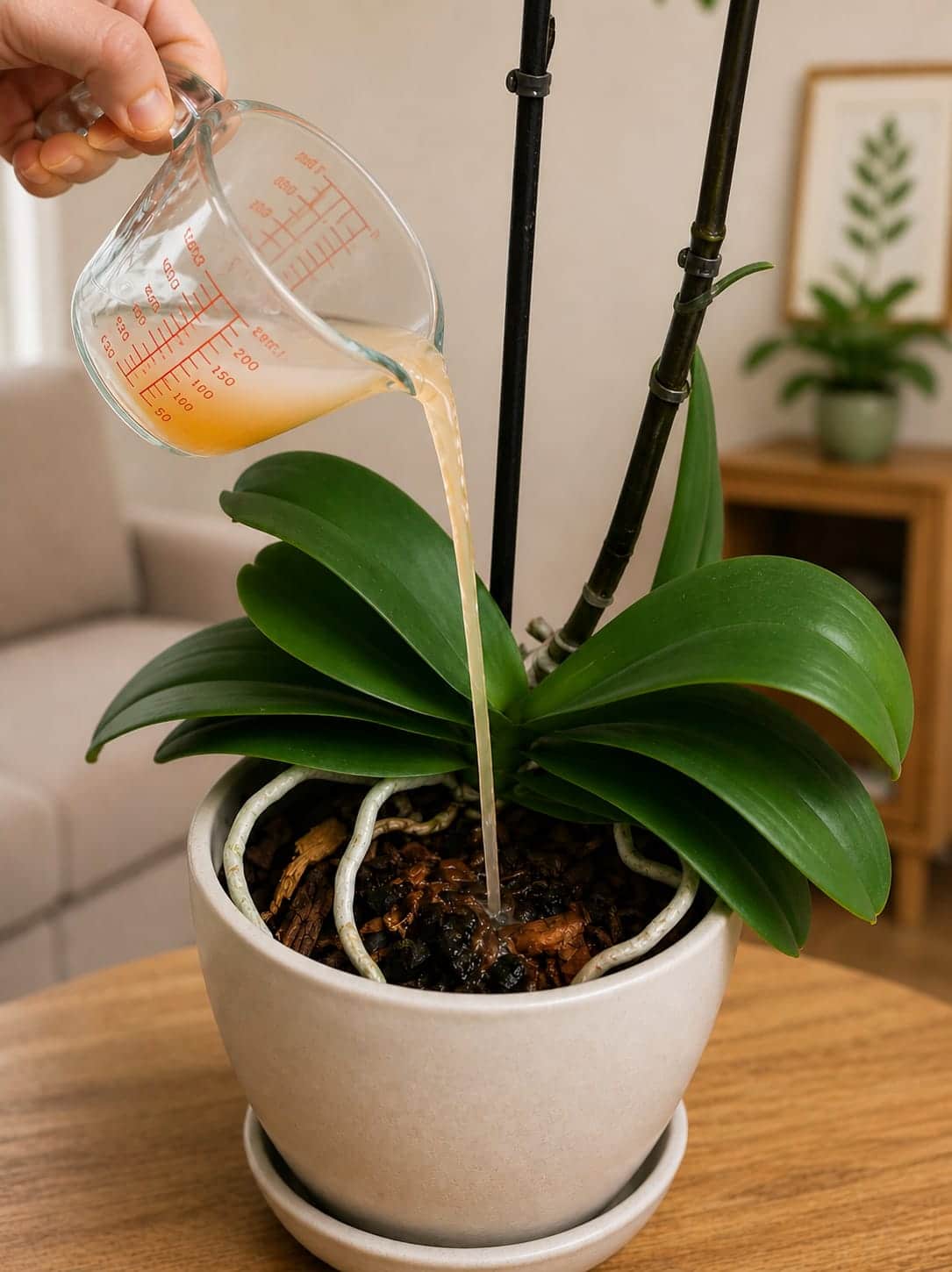
The orchid in the image appears healthy. It has firm green leaves and visible aerial roots. It is planted in bark, which is suitable for Phalaenopsis orchids. The flower spikes are supported with stakes, which helps keep them upright.
This plant does not need a dramatic rescue. It needs steady care:
- Bright indirect light
- Fresh orchid bark
- Water only when the bark is nearly dry
- Complete drainage after watering
- Good airflow
- Gentle fertilizer during active growth
- No water sitting in the crown
Rice water can be used occasionally, but the orchid already looks like it is growing under decent conditions.
What Healthy Orchid Roots Look Like
Healthy orchid roots are firm. They may be green when wet and silvery-white when dry. Aerial roots may grow over the edge of the pot, and that is normal. They should not be cut off unless they are dead.
Dead roots are hollow, mushy, black, brown, or papery. If roots are rotting, rice water will not fix them. The orchid should be removed from the pot, cleaned, trimmed, and repotted in fresh bark.
Root health is the foundation of orchid care.
Should You Pour Rice Water Over Aerial Roots?
You can let a little diluted rice water touch aerial roots during normal watering, but do not soak them in starchy liquid. Aerial roots need air and should dry after watering.
If rice water leaves a cloudy film on roots, it is too strong. Use a weaker mixture or flush with plain water.
Healthy aerial roots are valuable. Treat them gently.
Can Rice Water Help Wrinkled Orchid Leaves?
Wrinkled orchid leaves usually mean the plant is not getting enough water into its tissues. The cause may be underwatering or root damage. Rice water is not the first solution.
If the bark is too dry and roots are healthy, plain water is usually enough. If the roots are rotten, the orchid cannot absorb water properly, and rice water will not help. The roots must be inspected and repaired first.
Wrinkled leaves may improve slightly if the plant rehydrates, but badly damaged leaves may never become perfectly smooth again.
Can Rice Water Help Yellow Orchid Leaves?
Rice water cannot turn yellow orchid leaves green again. Yellowing can come from natural aging, overwatering, too much light, root rot, nutrient issues, or stress.
If one lower leaf slowly yellows while the rest of the plant is healthy, it may be normal aging. If several leaves yellow at once, inspect the roots and growing conditions.
Do not add rice water to a struggling orchid until you understand the cause of the yellowing.
Can Rice Water Help an Orchid After Repotting?
It is better to avoid rice water immediately after repotting. Freshly disturbed roots need a clean, stable environment. Plain water is safer during the adjustment period.
After the orchid has settled and begins growing new roots, you can consider a very weak rice rinse if desired. But even then, it is optional.
Fresh bark and proper watering are more important after repotting.
How to Flush Orchid Bark After Rice Water
If you use rice water occasionally, flush the bark with plain water during the next watering. This helps prevent residue buildup.
To flush, pour room-temperature plain water through the bark until it runs freely from the drainage holes. Let the pot drain completely. Do not flush if the bark is still wet; wait until the orchid needs watering.
Flushing keeps the root zone cleaner.
Signs Rice Water Is Being Used Safely
Rice water is being used safely if the orchid roots remain firm, the bark smells fresh, and the pot drains quickly. No mold, gnats, sour smell, or sticky residue should appear.
The leaves should stay firm and glossy. New roots may continue to grow during the active season. The plant should look stable, not stressed.
Safe rice water use should be subtle. It should not dramatically change the pot environment.
Signs You Should Stop Using Rice Water
Stop using rice water immediately if you notice:
- Fungus gnats
- Mold on bark
- Sour or fermented smell
- Sticky residue
- Bark staying wet too long
- Mushy roots
- Yellowing after use
- Cloudy buildup around the pot
If any of these appear, return to plain water and inspect the bark. If the bark is old or sour, repot the orchid.
Common Mistakes With the Rice Water Orchid Trick
Using Rice Water Too Strong
Thick cloudy rice water can leave starch in the bark. Always dilute heavily.
Using Cooked Rice Water
Cooked rice water is too starchy and may contain salt or food residue. Use only a weak rinse from uncooked rice.
Letting Rice Water Ferment
Fermented rice water is risky for indoor orchids. Use fresh rice water only.
Using It Too Often
Once every six to eight weeks is enough. Frequent use can cause buildup.
Pouring Into the Crown
Keep the crown dry. Pour into the bark only.
Using It on Rotten Roots
Rice water cannot repair root rot. Rotten roots must be removed.
Skipping Drainage
Never let an orchid sit in rice water. Drain completely.
A Safe Rice Water Orchid Routine
Here is the safest way to use the trick:
- Use only plain uncooked rice.
- Make a quick rice rinse, not cooked rice water.
- Dilute until the liquid is only faintly cloudy.
- Use it fresh, not fermented.
- Apply only when the bark is nearly dry.
- Pour through the bark, avoiding the crown.
- Let the pot drain completely.
- Flush with plain water at the next watering.
- Repeat no more than once every six to eight weeks.
- Stop if mold, gnats, odor, or root problems appear.
This keeps the method gentle enough for a sensitive orchid root system.
Better Alternatives to Rice Water
If your goal is stronger orchid growth, these steps are more reliable than rice water:
- Use fresh orchid bark when the old mix breaks down.
- Place the plant in bright indirect light.
- Water only when the bark is nearly dry.
- Let the pot drain completely.
- Use a balanced orchid fertilizer during active growth.
- Keep water out of the crown.
- Maintain good airflow.
- Check roots regularly.
These basics will do far more for orchid health than any homemade rinse.
Frequently Asked Questions
What is the cloudy liquid being poured on the orchid?
It looks like diluted rice water, made from rinsing uncooked rice. The safe version should be very weak and fresh.
Can rice water help orchids grow?
It may act as a mild occasional rinse, but it is not a complete fertilizer. Orchid growth depends more on light, roots, bark quality, and correct watering.
Can rice water make orchids bloom?
No, not directly. Blooms depend on maturity, healthy roots, bright indirect light, temperature cues, and proper feeding.
How often should I use rice water on orchids?
No more than once every six to eight weeks, and only when the orchid is actively growing and the bark is nearly dry.
Should I use cooked rice water?
No. Cooked rice water is usually too starchy and may contain salt or food residue. Use only a weak rinse from uncooked rice.
Can I use fermented rice water?
It is safer not to use fermented rice water on indoor orchids. Fresh diluted rice rinse is better.
Can rice water cause mold?
Yes, if it is too strong, used too often, or left in damp bark. Stop using it if mold appears.
Can rice water attract fungus gnats?
Yes. Starchy moisture can attract gnats if the bark stays damp. Use rarely and drain fully.
Can rice water replace orchid fertilizer?
No. Use a balanced orchid fertilizer for real feeding. Rice water is only an optional occasional rinse.
Should rice water touch orchid leaves?
No. Pour it through the bark and keep it out of the crown and leaf bases.
Final Thoughts
The rice water orchid trick looks gentle and promising. A pale cloudy liquid flowing into chunky orchid bark makes it seem like the plant is receiving a natural homemade boost. It is easy to understand why this method attracts attention, especially for plant owners who want simple kitchen-based care routines.
But orchids need special caution. Their roots require air, drainage, and a clean potting environment. Thick, starchy, fermented, or frequent rice water can create mold, gnats, sour bark, and root stress.
The safest version is fresh, weak rice rinse made from uncooked rice and heavily diluted with clean water. Use it only occasionally, only when the bark is nearly dry, and only in a pot that drains well. Keep it away from the crown, let the pot drain fully, and flush with plain water at the next watering.
Rice water is not a miracle bloom booster. It cannot replace bright indirect light, healthy roots, fresh bark, proper watering, and balanced orchid fertilizer. Those basics are what truly keep orchids strong.
Use the rice water trick as a rare, gentle ritual if you enjoy it, but let simple orchid care do the real work. With clean roots, airy bark, careful watering, and steady light, your orchid can grow firm leaves, active roots, and eventually the beautiful flower spikes that make these plants so rewarding.