ZZ plants are famous for being almost impossible to kill. Their glossy leaves, upright stems, and thick underground rhizomes make them one of the easiest houseplants for beginners. They tolerate low light, missed waterings, dry indoor air, and ordinary home conditions better than many tropical plants.
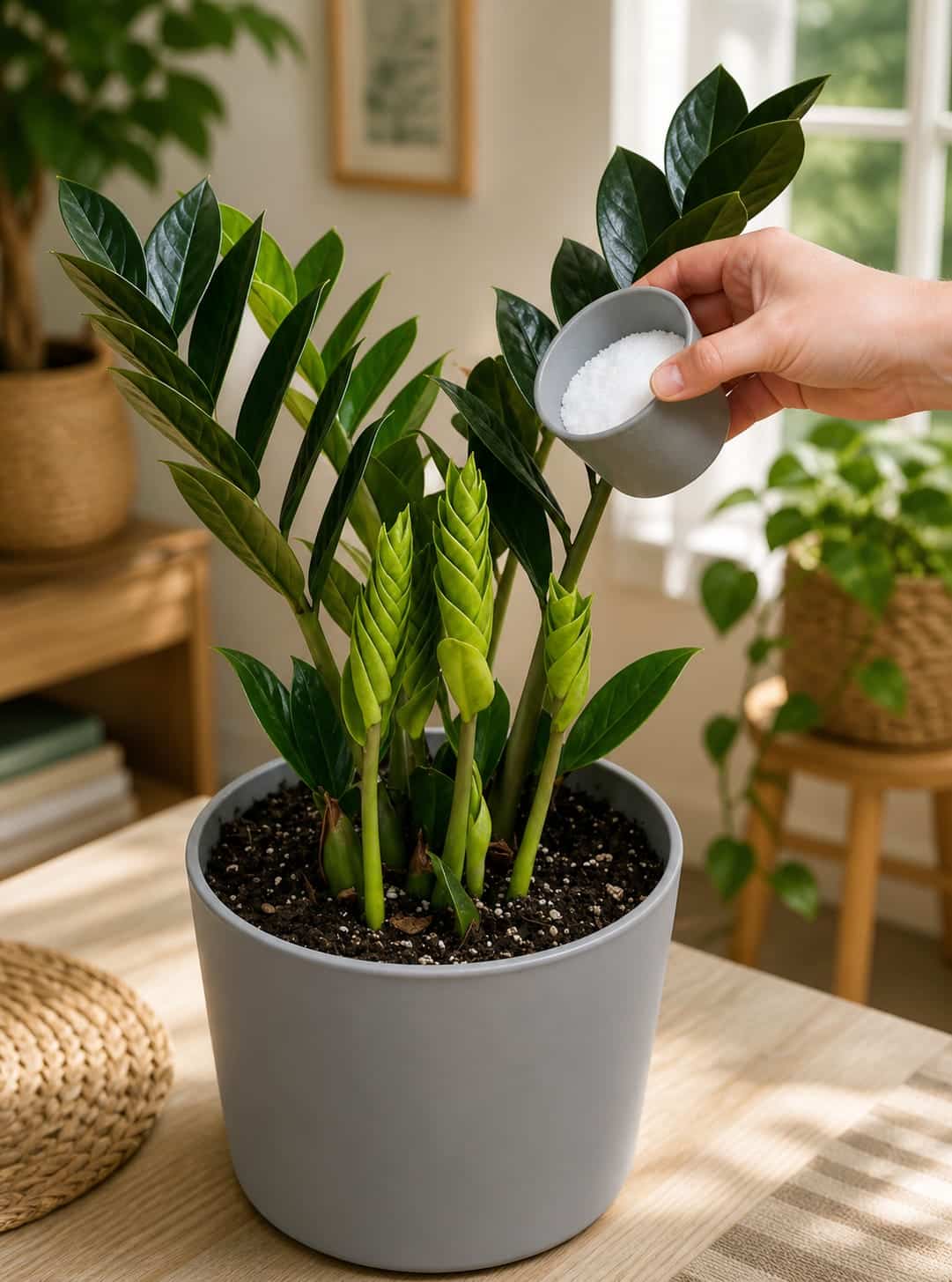
The image shows a healthy ZZ plant in a gray pot. The plant has shiny dark green leaves, fresh light green shoots, and several strong upright stems. A hand is holding a small gray cup filled with white crystals or granules above the soil. The visual suggests a simple plant trick: add white crystals to the pot, and the ZZ plant may grow faster, push new shoots, and stay glossy.
But ZZ plants are slow-growing, drought-tolerant plants with thick water-storing rhizomes. They do not like heavy feeding, soggy soil, or random additives. A white crystal product may be safe if it is a labeled slow-release fertilizer, perlite, horticultural grit, or another plant-safe amendment. But if the crystals are salt, sugar, baking soda, Epsom salt used incorrectly, water-retaining crystals, or an unknown household product, they can harm the plant.
The most important rule is simple: never add unknown white crystals to a ZZ plant pot. ZZ plants rarely need dramatic tricks. They grow best with bright indirect light, a well-draining mix, careful watering, and very light fertilizer during active growth.
What Is the White Crystal ZZ Plant Trick?
The white crystal ZZ plant trick is a houseplant-care method where white granules or crystals are added to the soil surface. It is usually presented as a way to encourage new shoots, boost root strength, improve leaf shine, or wake up a slow-growing ZZ plant.
In the image, the ZZ plant looks healthy and actively growing. The light green upright shoots are new growth, which means the plant is already responding well to its conditions. Adding something extra may not be necessary.
This is where many plant owners make a mistake. When a plant looks healthy, they try to push it harder with extra products. But ZZ plants do not need heavy feeding. Too much fertilizer or the wrong amendment can damage roots, burn rhizomes, or cause yellowing leaves.
What Could the White Crystals Be?
White crystals in a plant-care image could represent several different substances. Some are safe when used correctly. Others are risky or completely unsuitable.
Possible plant-safe options include:
- Slow-release houseplant fertilizer granules
- Controlled-release plant food pellets
- Perlite
- Pumice or mineral grit
- Horticultural charcoal pieces
- Mycorrhizal granules used during repotting
- Dolomitic lime, only if soil conditions require it
- Gypsum, only for a specific soil purpose
Risky or unsafe options include:
- Table salt
- Sugar
- Baking soda
- Epsom salt sprinkled dry
- Water-retaining crystals used carelessly
- Ice-melt crystals
- Cleaning powder
- Laundry detergent
- Bleach powder
- Unknown pest-control granules
- Any unidentified white crystals
If the product is not clearly labeled for houseplants, do not use it. ZZ plants are tough, but they are not immune to chemical stress.
Are White Crystals Good for ZZ Plants?
White crystals are not automatically good for ZZ plants. The benefit depends entirely on what the crystals are.
A small amount of slow-release fertilizer can support growth during spring and summer. Perlite or pumice can improve drainage when mixed into the soil. Mycorrhizal products may help during repotting if used correctly. But random crystals can create salt buildup, root burn, mold, water imbalance, or toxic conditions.
ZZ plants are naturally slow growers. Adding more fertilizer or crystals will not turn them into fast-growing vines. Their growth comes in bursts, often as new shoots from the rhizomes.
Why ZZ Plants Need Caution With Additives
ZZ plants have thick underground rhizomes that store water and nutrients. These rhizomes help the plant survive drought, but they can rot if the soil stays wet. They can also be damaged by concentrated fertilizer or chemical buildup.
Because ZZ plants store resources, they do not need frequent feeding. A little support can help during active growth, but heavy treatments are unnecessary.
The wrong crystals can sit in the soil and dissolve slowly, creating a concentrated zone around the roots. This can burn tender roots and cause yellow leaves, brown tips, or stem decline.
Is Table Salt Good for ZZ Plants?
No. Table salt should never be added to a ZZ plant. Salt damages roots, pulls water away from plant tissues, and can build up in potting soil. Even a small amount can cause stress over time.
If the white crystals are salt, keep them away from the plant. Salt is not fertilizer. It does not make leaves shiny, and it does not encourage new shoots.
Signs of salt damage may include brown leaf tips, yellowing, wilting, crusty soil, and slow decline.
Is Epsom Salt Good for ZZ Plants?
Epsom salt contains magnesium sulfate. Magnesium is a plant nutrient, but that does not mean every houseplant needs extra Epsom salt. Most ZZ plants grown in fresh potting mix and occasionally fertilized do not need it.
If Epsom salt is used, it should be dissolved very weakly in water and used rarely, not sprinkled dry into the pot. Dry crystals can create concentrated spots that may stress roots.
For ZZ plants, a balanced houseplant fertilizer is usually safer than guessing with Epsom salt.
Is Baking Soda Good for ZZ Plants?
No. Baking soda is not a plant fertilizer. It contains sodium and can disrupt soil conditions. Sprinkling baking soda into a ZZ plant pot can create stress rather than growth.
Baking soda is often promoted as a plant hack, but it should not be used as a growth booster for ZZ plants.
Is Sugar Good for ZZ Plants?
No. Sugar does not feed ZZ plants in a helpful way. Plants create their own sugars through photosynthesis. Adding sugar to the soil can encourage microbes, attract pests, and create sticky or sour conditions.
A ZZ plant that is not growing needs better light, proper watering, or time—not sugar crystals.
Are Water-Retaining Crystals Safe for ZZ Plants?
Water-retaining crystals are not ideal for ZZ plants. These products absorb and hold water, which may sound useful, but ZZ plants prefer drying between waterings. Holding extra moisture around the roots and rhizomes can increase the risk of rot.
Water-retaining crystals are better suited to certain outdoor containers or thirsty plants, not drought-tolerant rhizome plants like ZZs.
If your ZZ plant soil dries too quickly, adjust the potting mix or watering routine rather than adding water crystals.
Can Slow-Release Fertilizer Help ZZ Plants?
Yes, slow-release fertilizer can help if used lightly and correctly. ZZ plants are light feeders, so use less than you would for a fast-growing foliage plant.
If using slow-release granules, follow the label and consider using a reduced amount. Apply during spring or summer when the plant is actively growing. Do not overapply, and do not keep adding more every time you see new shoots.
Too much slow-release fertilizer can cause salt buildup and root burn.
Can Perlite or Pumice Help ZZ Plants?
Yes. Perlite and pumice can help ZZ plants by improving drainage and airflow in the soil. However, they are best mixed into the potting medium during repotting rather than simply sprinkled on top.
ZZ plants do well in a chunky, airy mix. A good mix helps water pass through quickly while still holding enough moisture for the roots.
If your ZZ plant is in dense soil, repotting with perlite or pumice is more useful than adding crystals to the surface.
Can Mycorrhizal Granules Help?
Mycorrhizal products may help some plants establish roots, but they are most useful when they contact the roots during repotting. Sprinkling them on top of the soil may not do much.
If you use mycorrhizal granules, follow the label. They are not a quick-growth trick and should not be overused.
Why the ZZ Plant in the Image Looks Healthy
The plant in the image has dark glossy mature leaves and several pale green new shoots. This is exactly what healthy ZZ growth looks like. New ZZ shoots often emerge lighter green and then darken as they mature.
This plant does not appear to need emergency treatment. It may benefit from normal seasonal feeding, but it does not need heavy crystal application.
When a ZZ plant is already producing new growth, the best thing you can do is keep care consistent.
Can White Crystals Make ZZ Plants Grow Faster?
No crystal can force a ZZ plant to grow quickly. ZZ plants naturally grow slowly, and their growth depends on light, root health, season, temperature, and watering. Fertilizer can support growth, but only when the plant already has enough light and healthy roots.
Overfeeding a ZZ plant will not make it grow faster. It may cause yellow leaves or root damage.
Think of fertilizer as support, not a growth command.
What Actually Encourages New ZZ Plant Shoots?
ZZ plants produce new shoots when their rhizomes have enough stored energy and the growing conditions are favorable. The best way to encourage new shoots is to provide steady, bright conditions without overwatering.
To encourage ZZ plant growth:
- Give bright indirect light.
- Use a well-draining potting mix.
- Water only when the soil is mostly or fully dry.
- Use a pot with drainage holes.
- Keep the plant warm.
- Feed lightly in spring and summer.
- Avoid disturbing the roots too often.
- Do not overpot.
A ZZ plant in low light may survive for a long time, but it will grow slowly. Better light is often the real “growth trick.”
Best Light for ZZ Plants
ZZ plants tolerate low light, but tolerance is not the same as preference. For best growth, place your ZZ plant in bright indirect light. Near an east-facing window or several feet from a bright south or west window can work well.
Direct harsh sun can scorch leaves, especially if the plant is suddenly moved from low light to strong sun. If you want to increase light, do it gradually.
In brighter indirect light, ZZ plants usually produce more new shoots and stronger stems.
How to Water ZZ Plants Correctly
Watering is the most important part of ZZ plant care. ZZ plants store water in their rhizomes, so they do not need frequent watering.
Water only when the soil has dried significantly. Many ZZ plants prefer the soil to dry almost completely before the next watering. When you water, water thoroughly until excess drains from the bottom. Then empty the saucer.
Do not give small daily sips. Do not keep the soil constantly damp. Constant moisture is the fastest way to rot a ZZ plant.
Why Drainage Matters
The gray pot in the image looks decorative, but the most important question is whether it has drainage holes. ZZ plants need drainage. If excess water cannot escape, the rhizomes may rot.
If your decorative pot has no drainage hole, keep the ZZ plant in a plastic nursery pot inside it. Remove the nursery pot for watering, let it drain fully, and then place it back into the decorative container.
No crystal or fertilizer can make up for poor drainage.
Best Soil for ZZ Plants
ZZ plants prefer a loose, well-draining potting mix. Regular potting soil can work if you improve it with drainage materials.
A simple ZZ plant mix can include:
- 2 parts indoor potting mix
- 1 part perlite or pumice
- 1 part cactus mix, orchid bark, or coco chips
The mix should not stay wet for too long. If the soil feels heavy, muddy, or compacted, the plant may eventually struggle.
Should You Add Crystals to the Soil Surface?
For most ZZ plants, no. Surface crystals are often unnecessary. If the crystals are fertilizer, they may dissolve unevenly. If they are salt, sugar, baking soda, or water-retaining crystals, they can create problems. If they are perlite or pumice, they will not improve drainage much unless mixed into the soil.
Instead of sprinkling crystals on top, focus on using the right potting mix from the start.
How to Fertilize ZZ Plants Safely
ZZ plants need very little fertilizer. During spring and summer, use a balanced liquid houseplant fertilizer diluted to half strength or weaker. Feed once every one to two months during active growth.
Do not fertilize during winter if the plant is not growing. Do not fertilize a stressed, overwatered, or newly repotted ZZ plant immediately.
Too little fertilizer is rarely a serious problem for ZZ plants. Too much fertilizer can be much worse.
Continue to Page 2
Continue to page 2 for more details about this article and the key points many readers miss on the first page.