Snake plants are famous for being tough, but even the strongest snake plant can reach a point where it starts to look exhausted. The tall leaves lose their firmness, the yellow edges turn brown, the tips curl, and the whole plant begins to look dry, tired, and forgotten. When this happens, many people think the plant is finished. But if the base is still firm and there is still green inside the leaves, there may still be a chance to rescue it.
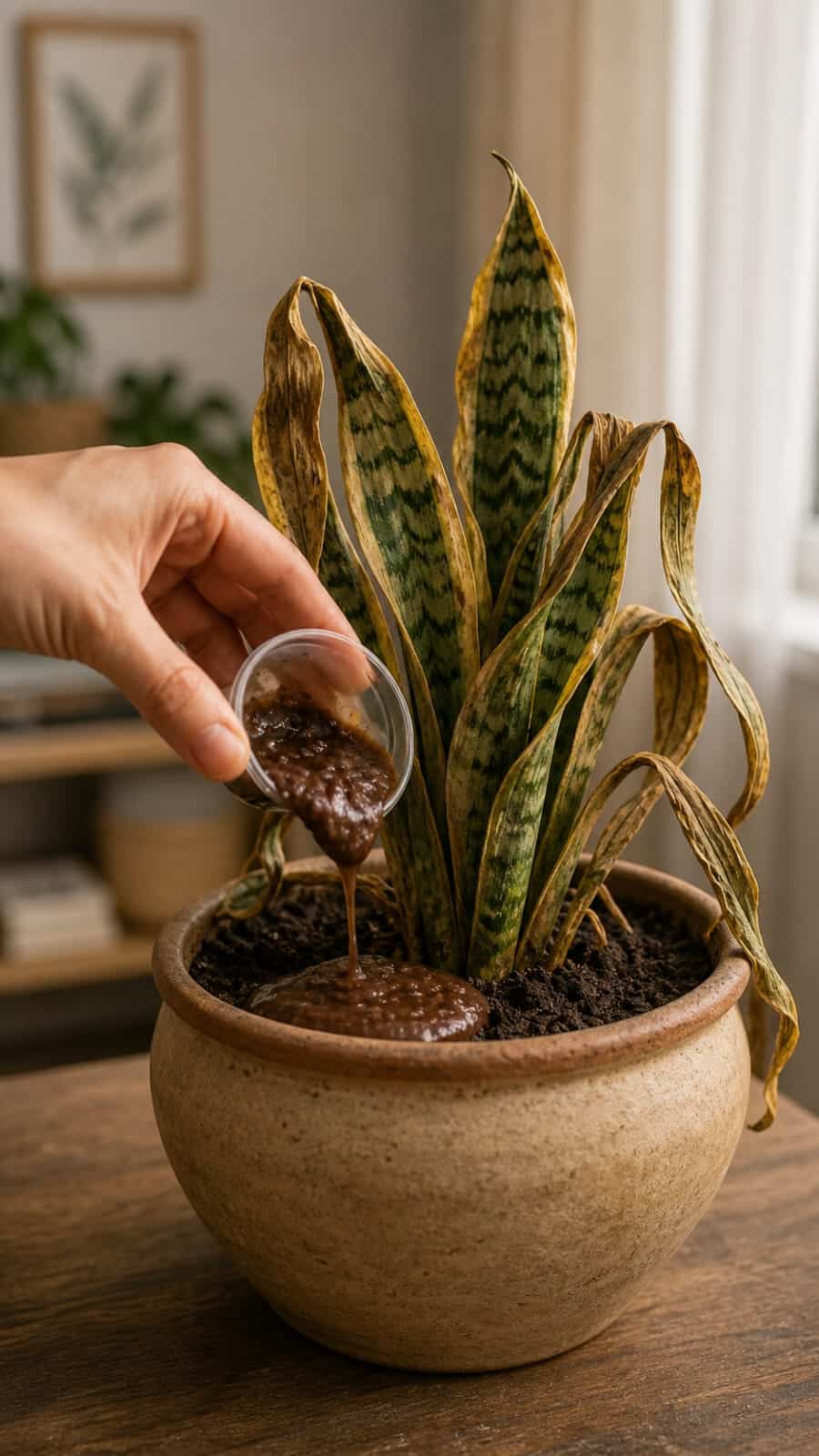
The image shows a stressed snake plant in a rounded ceramic pot. Some leaves are still green in the middle, but many edges are yellow, brown, curled, and dry. A hand is pouring a thick brown mixture onto the soil near the base of the plant. This creates a powerful rescue-style plant trick: a rich brown root tonic for a snake plant that looks weak and tired.
For this image, the safest and most useful version of the brown mixture is a worm casting slurry. Worm castings are a gentle natural soil amendment made from earthworm compost. When mixed with water into a thin slurry, they can refresh tired soil, add mild nutrients, and support the living microbes around the roots. Used correctly, this trick can help a struggling snake plant recover slowly without the harsh shock of strong fertilizer.
But there is one important rule: snake plants hate soggy soil. The mixture should never be thick like mud, never poured heavily, and never used on wet soil. The real rescue is a combination of dry roots, good drainage, bright indirect light, and a very light worm casting tonic.
What Plant Is in the Image?
The plant in the image is a snake plant, also called Sansevieria or Dracaena trifasciata. It has tall sword-shaped leaves with green patterned centers and yellow margins. This type is often sold as “mother-in-law’s tongue” and is one of the most popular indoor plants in the world.
A healthy snake plant should have firm upright leaves. The leaves should feel thick, strong, and slightly rigid. When the leaves become floppy, yellow, wrinkled, dry, or brown, the plant is sending a warning.
The snake plant in the image looks stressed but not completely dead. Some leaves still show green color, which means the plant may still have living tissue. That makes it a good candidate for a careful rescue routine.
What Is the Brown Mixture Being Poured?
The best plant-friendly version of the brown mixture is a worm casting slurry. Worm castings are dark, crumbly, nutrient-rich compost created by worms. They are gentle compared with synthetic fertilizers and can improve soil life without burning roots when used properly.
To make a slurry, worm castings are mixed with water until they become a pourable liquid. The final mixture should be thin, not thick. It should look like weak brown tea with a little natural sediment, not like heavy chocolate pudding.
The image shows a very thick pour for dramatic effect, but in real care, a thin diluted version is safer for snake plants.
Why Worm Castings Are Useful for Snake Plants
Worm castings can help refresh old potting soil. They contain mild nutrients and beneficial organic matter. Unlike strong fertilizer, they are less likely to burn a plant when used in small amounts.
For a tired snake plant, worm castings can support recovery by improving the soil environment around the roots. They can help tired soil feel more alive again, especially if the plant has been sitting in the same pot for a long time.
But worm castings are not magic. They will not reverse dead leaf tissue. They will not cure root rot if the roots are already mushy. They work best when the plant still has firm roots and the soil drains well.
Important Warning: Do Not Pour Thick Mud on a Snake Plant
Snake plants are succulent-like plants. Their leaves store water, and their roots do not like being smothered. A thick muddy mixture can block airflow, hold too much moisture, and make root problems worse.
This is why the real version of this trick must be diluted. A thin worm casting tonic is helpful. A heavy sludge is risky.
If your mixture sits on top of the soil like paste, it is too thick. Add more water and strain it if needed.
Why Snake Plants Turn Yellow and Brown
Snake plants usually turn yellow and brown for one of these reasons:
- Too much water
- Poor drainage
- Old compacted soil
- Cold damage
- Low light for too long
- Root rot
- Severe underwatering
- Fertilizer burn
- Natural aging of old leaves
Before using any trick, check the soil. If the soil is wet and the leaves are yellow, overwatering or root rot may be the problem. If the soil is bone dry and the leaves are wrinkled, the plant may be dehydrated.
The same plant can look “dry” above the soil while the roots are actually rotting below. That is why checking the root zone matters.
Step 1: Check If the Snake Plant Is Still Alive
Before making the worm casting slurry, press gently near the base of the plant. The leaves should feel firm at the bottom. If the base is soft, mushy, or smells bad, the plant may have rot.
Look for signs of life:
- Firm leaf bases
- Green tissue in the center of the leaves
- No rotten smell
- Roots that are pale, tan, orange, or firm
- A solid rhizome under the soil
If everything is mushy, the plant may not be saveable. But if the base is firm, the rescue can begin.
Step 2: Remove Dead and Crispy Leaves
Brown, dry, crispy leaves will not turn green again. Use clean scissors to remove fully dead leaves at the base. If only the tips are dry, you can trim the tips neatly, following the natural shape of the leaf.
Do not remove every damaged leaf if it still has green tissue. Green parts can still help the plant produce energy. Remove only leaves that are fully dead, mushy, or badly damaged.
This makes the plant look cleaner and helps you see what is still healthy.
Step 3: Check the Roots if the Plant Looks Badly Stressed
If the snake plant looks as stressed as the one in the image, it is worth checking the roots. Gently slide the plant out of the pot. Healthy roots should be firm. Rotten roots are black, mushy, wet, and sometimes smelly.
If you find rot, cut it away with clean scissors. Keep only firm roots and firm rhizome pieces. Let the plant sit out for a few hours so the cut areas can dry slightly before repotting.
Do not pour any tonic onto rotten roots without cleaning them first. Rot must be removed, not fed.
Step 4: Improve the Soil Before Adding the Tonic
A worm casting slurry works best when the soil is already well-draining. If the potting mix is dense, heavy, or muddy, the tonic may make things worse.
Snake plants prefer a gritty mix. A good rescue mix can include:
- Two parts cactus or succulent soil
- One part perlite
- One part pumice or coarse sand
- A small amount of orchid bark for airflow
This mix lets water move through quickly and allows roots to breathe. If the plant is in heavy old soil, repot it before using the slurry.
Step 5: Make the Worm Casting Slurry
This is the safe version of the brown mixture shown in the image.
Ingredients
- One tablespoon worm castings
- One cup room-temperature water
- A small jar or cup
- A spoon
- Optional: a fine strainer
Method
- Add one tablespoon of worm castings to one cup of water.
- Stir well until the water turns light brown.
- Let it sit for 10 to 20 minutes.
- Stir again.
- Strain if the mixture is too thick.
- Use only the thin liquid portion around the soil.
The mixture should pour easily. If it falls out in clumps, it is too thick for a snake plant.
Step 6: Apply Only to Dry or Slightly Dry Soil
Never pour the worm casting slurry onto already wet soil. Snake plants need dry-down time. If the soil is wet, wait until it dries.
The best time to use the slurry is when the soil is dry or almost dry, and the plant is ready for a light watering. Pour a small amount around the outer root zone, not directly into the crown of the plant.
Keep the mixture away from the center where leaves meet the soil. Moisture trapped there can encourage rot.
Step 7: Use a Small Amount
For a medium snake plant pot, use only a few tablespoons of diluted slurry. Do not flood the pot. Do not cover the soil in a thick brown layer.
If the pot has good drainage, a small amount can move through the soil and lightly feed the root zone. If the pot has no drainage, be extremely careful and use much less.
Snake plants are slow growers. They do not need heavy feeding.
Step 8: Let the Pot Drain Completely
After applying the slurry, let the pot drain. If water collects in the saucer, empty it. Never let a snake plant sit in brown liquid, plain water, or any kind of tonic.
Standing water is one of the fastest ways to destroy a snake plant. The roots need oxygen as much as they need moisture.
The rescue tonic should pass through lightly, not stay trapped.
Step 9: Move the Plant to Bright Indirect Light
A struggling snake plant needs light to recover. Place it near a bright window where it gets indirect light. Gentle morning sun can be helpful, but harsh afternoon sun may burn damaged leaves.
Low light slows recovery and keeps the soil wet longer. Bright indirect light helps the plant use water properly and supports new growth.
Do not hide a recovering snake plant in a dark corner.
Step 10: Wait Before Watering Again
After using the worm casting slurry, wait until the soil dries well before watering again. This may take one week, two weeks, or longer depending on the pot, soil, temperature, and light.
Do not follow a strict calendar. Follow the soil. Snake plants should be watered only when the mix is dry.
The biggest mistake is trying to rescue the plant with constant attention. Snake plants recover best when the roots are allowed to breathe.
How Often Should You Use Worm Casting Slurry?
Use this slurry only once every six to eight weeks during active growth. If the plant is very stressed, use it once and then wait. Do not repeat it every few days.
During winter or low-light months, skip it or use it even less often. Snake plants grow slowly in cooler or darker conditions and do not need much feeding.
More tonic is not better. Gentle care is better.
Can Worm Casting Slurry Save a Dying Snake Plant?
It can help if the plant still has firm roots and the soil needs a mild refresh. It cannot save a plant that is completely rotten, fully dried out, or dead from the base.
If the roots are mushy, the first rescue step is removing rot and repotting into dry, airy soil. The slurry can come later, after the plant stabilizes.
Think of worm casting slurry as support, not emergency surgery.
What If the Snake Plant Has Root Rot?
If root rot is present, remove the plant from the pot. Cut away all mushy roots and rotten rhizome sections. Keep only firm tissue. Let the remaining plant dry for a day or two, then repot into dry succulent mix.
Wait several days before watering. Do not use worm casting slurry immediately after severe root rot. The plant needs dryness and air first.
Once it begins to stabilize, a very diluted slurry can be used later.
What If the Leaves Are Crispy From Underwatering?
If the soil is bone dry and the leaves are wrinkled or curled, the plant may be dehydrated. In that case, water lightly and slowly. If the soil has become hydrophobic and water runs off, bottom water the pot for 15 to 20 minutes, then drain completely.
After the plant rehydrates, you can use a diluted worm casting tonic at a later watering.
Do not pour thick slurry onto bone-dry compacted soil. It may sit on top instead of reaching the roots.
Can You Use Compost Tea Instead?
Yes, a very weak compost tea can be used, but it must be mild and well diluted. Strong compost tea or smelly fermented liquid can overwhelm indoor pots and attract pests.
Worm casting slurry is simpler and gentler. It gives the brown tonic effect without needing a long brewing process.
For indoor snake plants, simple is safer.
Continue to Page 2
Continue to page 2 for more details about this article and the key points many readers miss on the first page.