Snake plants are famous for being tough, elegant, and almost impossible to kill. Their upright sword-shaped leaves, bold green patterns, and low-maintenance care routine make them one of the most popular indoor plants for homes, apartments, offices, bedrooms, living rooms, and sunny windowsills. They are often recommended for beginners because they can handle dry soil, missed watering, and normal indoor conditions better than many tropical houseplants.
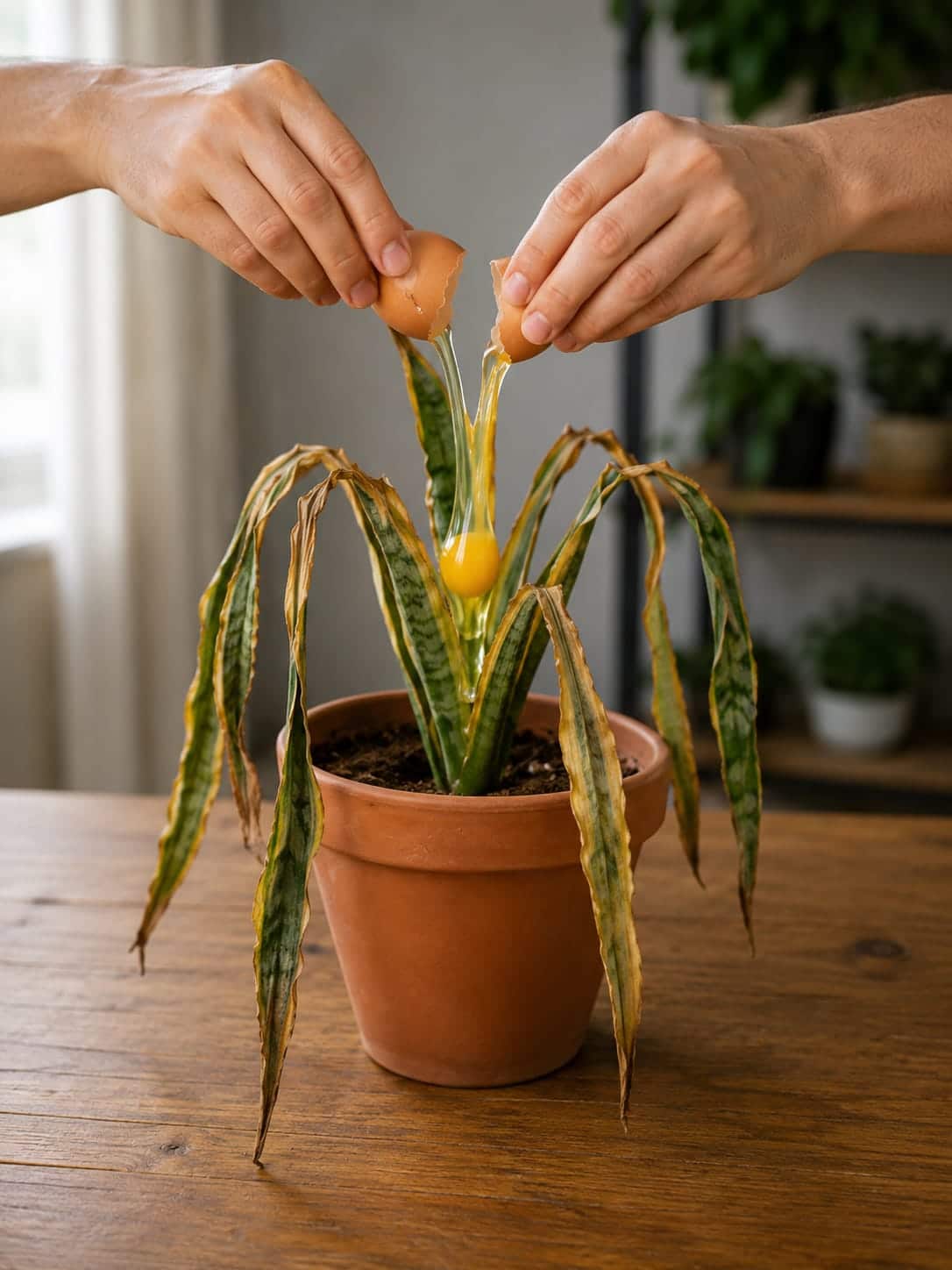
But even a strong snake plant can start to fail when something goes wrong. In the image, the snake plant looks severely stressed. The leaves are drooping, wrinkled, yellowing, and crispy along the edges. A person is cracking a raw egg directly into the center of the plant, as if the egg is a rescue fertilizer.
This is a common viral plant trick, but it needs a serious correction: you should not crack a raw egg directly into a snake plant pot.
Raw egg may look like a natural fertilizer because it contains protein, minerals, and calcium in the shell. But inside an indoor pot, raw egg can rot, smell terrible, attract fungus gnats, invite flies, feed harmful microbes, and damage already weak roots. For a struggling snake plant, this can make the problem worse.
The safer version of this idea is not raw egg. The safer version is eggshell tea or finely powdered clean eggshell, used in tiny amounts and only when the plant is stable. Eggshells can provide slow-release calcium, but they are not an emergency cure for root rot, dehydration, or overwatering.
This guide explains what is really happening in the image, why raw egg is risky, how to make a safer eggshell calcium tonic, and how to rescue a dying snake plant the right way.
What Plant Is in the Image?
The plant appears to be a snake plant, also known as Sansevieria or Dracaena trifasciata. Snake plants are succulent-like houseplants with thick upright leaves that store water. They are designed to survive dry conditions, which is why they do not like constantly wet soil.
A healthy snake plant usually has:
- Firm upright leaves
- Clear green patterning
- Strong leaf bases
- Drying soil between waterings
- No sour smell from the pot
- No mushy crown
- Slow but steady new growth
The plant in the image is not in good condition. The leaves are collapsing downward and the edges are brown. This usually points to serious root-zone stress, not a simple lack of food.
What Is Happening in the Image?
The image shows raw egg being cracked directly into the crown area of a weak snake plant. This is often presented online as a homemade fertilizer trick, but it is not a safe method for indoor plant care.
The idea behind the trick is that eggs contain nutrients and eggshells contain calcium. While that is technically true, raw egg does not become useful plant food immediately. It has to decompose first. In an indoor pot, that decomposition can create odor, mold, pest problems, and root stress.
A snake plant with drooping leaves does not need raw egg. It needs diagnosis. The main problem may be overwatering, root rot, compacted soil, poor drainage, cold damage, underwatering, or a potting mix that has stayed wet too long.
Why You Should Not Crack Raw Egg Into a Snake Plant Pot
Raw egg is not a quick plant fertilizer. It is a fresh animal product. In warm, moist soil, it can break down in unpleasant and harmful ways.
Raw egg in a houseplant pot can cause:
- Rotten smell
- Fungus gnats
- Fruit flies
- Mold growth
- Sticky soil surface
- Possible bacterial growth
- Sour potting mix
- Root stress
- Worse root rot
- Attraction of pets or pests
This is especially risky for snake plants because they prefer dry, airy soil. A raw egg creates wet organic material exactly where the plant needs air and drainage.
The Biggest Problem: The Egg Is Being Added to the Crown
The crown is the central area where snake plant leaves emerge from the soil. This area must stay clean and dry. If raw egg, thick liquid, or wet organic material collects around the leaf bases, it can encourage rot.
Snake plant crown rot can happen when moisture sits between the leaves or around the base for too long. Once the crown becomes mushy, the plant can collapse quickly.
For this reason, never pour homemade liquids, raw egg, milk, rice water, or fertilizer directly into the center of a snake plant. If you apply anything, it should go lightly around the outer soil edge, away from the crown.
Can Eggshells Help Snake Plants?
Eggshells can help only in a limited way. Clean eggshells contain calcium carbonate, which breaks down slowly in soil. Calcium supports plant cell structure, but snake plants do not need large amounts of it, and eggshells do not fix urgent problems.
Eggshells may be useful when:
- The plant is healthy but growing in old soil
- You want a gentle calcium supplement
- The potting mix is well-draining
- The plant is actively growing
- You use clean, dry, finely crushed shells
Eggshells are not useful when:
- The roots are rotten
- The soil is wet
- The leaves are mushy
- The plant is collapsing
- The pot has no drainage
- The plant is in winter dormancy
- The soil already has mineral buildup
The Safer Version: Eggshell Tea for Snake Plants
If you want to use the egg trick safely, skip the raw egg and use eggshell tea instead. Eggshell tea is a mild calcium water made from clean eggshells. It is much safer than raw egg because it does not add sticky protein or yolk to the soil.
Ingredients
- 2 clean eggshells
- 1 liter water
- Small pot or heat-safe jar
- Strainer
How to Make It
- Rinse the eggshells thoroughly to remove all egg residue.
- Let the shells dry completely.
- Crush the shells into small pieces.
- Boil 1 liter of water.
- Add the crushed eggshells.
- Let the mixture steep overnight.
- Strain out every shell piece.
- Use the liquid only when fully cooled.
This creates a very mild mineral water. It will not smell like raw egg and is much safer for indoor containers.
How to Apply Eggshell Tea Safely
Snake plants should receive eggshell tea only when the soil is dry and the plant is not rotting.
Application Steps
- Check that the soil is dry.
- Make sure the pot has drainage holes.
- Pour a small amount around the outer soil edge.
- Keep the liquid away from the crown and leaf bases.
- Let the pot drain fully.
- Empty the saucer after watering.
- Do not water again until the soil dries completely.
For a weak snake plant, use only a small amount. Do not soak the pot with eggshell tea.
How Often Should You Use Eggshell Tea?
Use it rarely. Snake plants are slow growers and light feeders.
A safe schedule:
- Spring: once if the plant is actively growing
- Summer: once if needed
- Fall: avoid
- Winter: do not use
For most snake plants, once every 2 to 3 months during active growth is enough. Healthy snake plants may not need it at all.
Can You Use Eggshell Powder Instead?
Yes, but it must be clean, dry, and finely ground. Large shell pieces break down very slowly and may attract pests if egg residue remains on them.
How to Make Eggshell Powder
- Rinse eggshells well.
- Remove any remaining egg membrane if possible.
- Let the shells dry completely.
- Bake them at low heat for a few minutes if desired.
- Grind them into a fine powder.
- Store in a dry container.
How to Use It
- Use only a tiny pinch for a small pot.
- Use no more than ⅛ teaspoon for a medium pot.
- Sprinkle around the outer soil edge.
- Keep away from the crown.
- Water lightly only if the soil is dry.
Do not bury large chunks of shell or raw egg inside the pot.
Why the Plant in the Image Looks Stressed
The snake plant in the image has drooping, yellowing, and brown-edged leaves. That kind of damage often comes from root stress. Since snake plants store water in their leaves, drooping usually means the roots are not functioning properly.
Common causes include:
- Overwatering
- Root rot
- Poor drainage
- Heavy compact soil
- Cold damage
- Long-term underwatering
- Too much fertilizer
- Low light combined with wet soil
- Pot with no drainage holes
Before adding any homemade tonic, you should check the roots.
Step One: Stop Adding Treatments
When a snake plant is collapsing, the first instinct is to add something: egg, sugar water, rice water, coffee, milk, fertilizer, or tablets. But adding more ingredients to stressed soil can make things worse.
The first step is to stop and diagnose. A dying snake plant usually needs less moisture, better drainage, and root inspection before it needs feeding.
Step Two: Check the Soil Moisture
Touch the soil several inches deep if possible.
If the Soil Is Wet
Do not water. Do not add egg. Do not add eggshell tea. Wet soil plus drooping leaves may mean root rot.
If the Soil Is Bone Dry
The plant may be dehydrated. Water gently with plain water first. Do not use raw egg or thick homemade fertilizer.
If the Soil Smells Sour
Root rot or decomposing material may already be present. Remove the plant from the pot and inspect the roots.
Step Three: Inspect the Roots
Root inspection is the most important step for a drooping snake plant.
Healthy Snake Plant Roots
- Firm
- White, tan, orange, or light brown
- Not slimy
- Fresh or earthy smell
- Attached firmly to rhizomes
Rotten Snake Plant Roots
- Black
- Mushy
- Wet and slimy
- Bad smell
- Fall apart when touched
- Soft rhizomes
If the roots are rotten, the plant needs repotting, not egg fertilizer.
How to Rescue a Snake Plant With Root Rot
If the plant has root rot, follow this rescue method.
- Remove the plant from the pot.
- Shake off wet old soil.
- Cut away mushy roots with clean scissors.
- Remove soft rotten rhizome sections.
- Keep only firm healthy parts.
- Let cut areas dry for a few hours.
- Repot in fresh dry succulent soil.
- Use a pot with drainage holes.
- Wait several days before watering lightly.
Do not use eggshell tea immediately after root rot rescue. Let the plant stabilize first.
How to Rescue a Dehydrated Snake Plant
If the soil is extremely dry and the roots are still firm, the plant may be dehydrated. In that case, the safest rescue is plain water.
- Trim fully dead leaves if needed.
- Water the soil slowly with room-temperature water.
- Let excess water drain completely.
- Empty the saucer.
- Place the plant in bright indirect light.
- Wait for the leaves to regain firmness.
- Do not fertilize immediately.
After recovery begins, you may use a very mild eggshell tea later, but it is not the first step.
Best Soil Mix for Snake Plant Recovery
Snake plants need soil that dries fast. Heavy soil is one of the biggest reasons they decline indoors.
Good Recovery Mix
- 1 part cactus or succulent soil
- 1 part perlite or pumice
- 1 part coarse sand, lava rock, or orchid bark
This kind of mix gives roots oxygen and prevents soggy conditions. Healthy drainage is much more important than any egg-based trick.
Best Pot for Snake Plants
A terracotta pot with drainage holes is often ideal for snake plants because it allows moisture to evaporate faster. Plastic and glazed ceramic pots can work too, but you must be more careful with watering.
The pot should:
- Have drainage holes
- Be only slightly larger than the root ball
- Not hold standing water
- Use a saucer that can be emptied
- Allow the soil to dry between waterings
A pot without drainage is dangerous for snake plants.
Best Light for Snake Plant Recovery
Snake plants can survive in low light, but a weak plant recovers better in bright indirect light. Low light slows water use, which means the soil stays wet longer and root rot becomes more likely.
Best recovery light:
- Bright indirect window light
- Gentle morning sun
- Filtered afternoon light
- Grow light support in dark rooms
Avoid harsh direct sun on damaged leaves. Damaged tissue burns more easily.
Correct Watering After Recovery
Snake plants should not be watered on a strict weekly schedule. The soil should decide.
Water only when:
- The soil is completely dry or almost dry
- The pot feels light
- The leaves are firm, not mushy
- The plant is in active growth or warm conditions
In winter, snake plants may need water only once every several weeks. Overwatering is far more dangerous than underwatering.
Continue to Page 2
Continue to page 2 for more details about this article and the key points many readers miss on the first page.