A Christmas cactus can be one of the most rewarding flowering houseplants to grow. When it is happy, its long arching stems become covered with beautiful buds that open into bright, elegant flowers during the cooler months. A healthy Christmas cactus can live for many years, often becoming fuller and more dramatic with every season.
But sometimes a Christmas cactus does not bloom as expected. It may grow plenty of green segments but produce only a few buds. It may drop buds before they open. It may look pale, tired, or slow-growing. When this happens, many plant lovers look for a simple natural ingredient that can support stronger growth and better flowering.
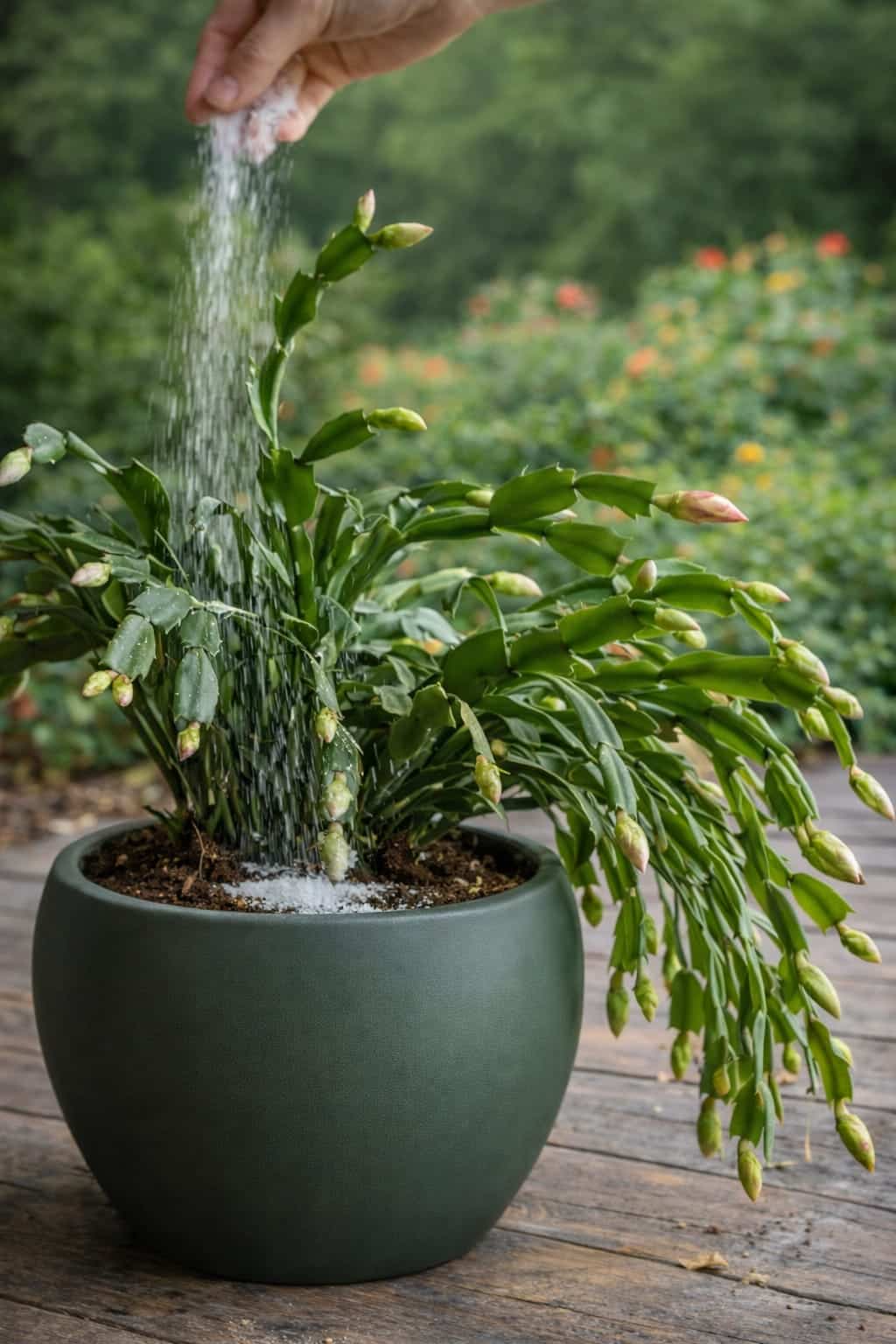
The image shows a Christmas cactus full of developing buds while a white crystalline powder is being sprinkled around the soil surface. This powder is often presented as Epsom salt, a common household ingredient used by some gardeners as a magnesium supplement. Epsom salt can be useful for plants in certain situations, but it must be used correctly. It should not be poured heavily around the plant or treated like a miracle bloom powder.
Epsom salt is magnesium sulfate. It provides magnesium and sulfur, two nutrients plants use in small amounts. Magnesium helps support chlorophyll, the green pigment that allows leaves and stems to use light. Since a Christmas cactus has green segmented stems instead of traditional leaves, healthy green tissue is important for energy production. A plant with stronger green growth is better able to support buds and flowers.
However, Epsom salt is not a complete fertilizer. It does not provide nitrogen, phosphorus, or potassium in the balanced amounts a Christmas cactus needs. It cannot replace proper light, correct watering, the right potting mix, cool nights, or the dark rest period that helps trigger blooming. Used too often, it can create mineral buildup and stress the roots.
The safest way to use Epsom salt for Christmas cactus is to dissolve a very small amount in water and apply it occasionally during active growth. Sprinkling dry crystals directly onto the soil is less ideal because it can create concentrated spots around the roots. A diluted solution is gentler, more even, and much safer for a potted plant.
This guide explains how to use Epsom salt safely for Christmas cactus, when it may help, when to avoid it, and what care steps truly encourage strong segments, healthy roots, and a beautiful blooming season.
Understanding Christmas Cactus Growth
Christmas cactus is different from desert cactus. Although it is called a cactus, it is not a plant that wants hot dry desert conditions all the time. It naturally comes from humid forest environments, where it grows in organic debris and airy pockets around tree branches or rocks. Because of this, it likes more moisture than a desert cactus, but it still needs excellent drainage and airflow around the roots.
A Christmas cactus grows in flat green segments. These segments store water and perform photosynthesis. When the plant is healthy, new segments appear from the tips of older ones, creating a fuller cascading shape. Later, when conditions are right, buds form at the ends of the segments.
Flowering usually depends on a combination of shorter days, longer nights, cooler temperatures, and plant maturity. Nutrition matters too, but it is only one part of the picture. A plant that is overwatered, kept too warm at night, or exposed to bright artificial light late into the evening may fail to bloom even if it receives supplements.
This is why Epsom salt should be seen as a support ingredient, not the main secret. The real bloom trigger comes from the plant’s environment and seasonal rhythm.
What Epsom Salt Does for Christmas Cactus
Epsom salt contains magnesium and sulfur. Magnesium is important for green growth because it helps the plant produce and use chlorophyll. A Christmas cactus with healthy green segments can create more energy, and that energy helps support root growth, new segments, and buds.
If a Christmas cactus is slightly low in magnesium, a mild Epsom salt solution may help improve future growth. The plant may appear greener over time, especially if it was pale despite receiving proper light and care.
But Epsom salt does not directly create flowers. It does not contain the full nutrition needed for blooming. Christmas cactus also needs phosphorus, potassium, and other nutrients, along with the right seasonal conditions.
Think of Epsom salt as a small mineral supplement. It may support plant health when used correctly, but it should not replace a balanced fertilizer or proper care.
Can Epsom Salt Make Christmas Cactus Bloom?
Epsom salt cannot force a Christmas cactus to bloom by itself. A Christmas cactus blooms when several conditions come together. It needs healthy roots, mature stems, bright indirect light, cooler nights, reduced watering before bloom time, and long uninterrupted darkness during the bud-setting period.
Epsom salt may support blooming indirectly if magnesium is lacking and the plant is not producing enough healthy green growth. A stronger plant can carry more buds. But if the plant is not blooming because it receives too much light at night, Epsom salt will not solve the problem. If it is not blooming because the room is too warm, Epsom salt will not solve that either.
The best way to encourage blooming is to follow the plant’s natural cycle. During the growing season, provide bright indirect light, proper watering, and light feeding. In the weeks before bloom time, provide cooler nights and long dark periods.
Use Epsom salt only as one small part of this care routine, not as the main bloom trigger.
🌸 Bloom secret: Long, uninterrupted nights and slightly cooler temperatures are far more important for Christmas cactus flowering than any supplement.
Why Sprinkling Dry Epsom Salt Can Be Risky
The image shows white crystals being sprinkled onto the soil. While this looks simple and dramatic, it is not the safest method for potted Christmas cactus. Dry crystals can collect in one area. When the plant is watered, that area may become much more concentrated than the rest of the pot.
Christmas cactus roots are fairly fine and sensitive. They do not like sudden salt concentration around them. Too much mineral buildup can cause root stress, brown edges, poor water absorption, or slowed growth.
In a garden bed, minerals spread through a larger soil volume. In a small indoor pot, they remain concentrated. This is why potted plants need gentler treatments than outdoor soil.
The safer method is to dissolve Epsom salt in water first. This spreads the magnesium more evenly and lowers the risk of root burn or mineral pockets.
The Safest Epsom Salt Ratio for Christmas Cactus
A gentle ratio is half a teaspoon of Epsom salt dissolved in one gallon of water. For a large, healthy mature plant, some gardeners use up to one teaspoon per gallon, but it is better to start weaker. Christmas cactus does not need a strong dose.
Stir until the crystals dissolve completely. Use room-temperature water, not cold water. Apply only enough solution to water the plant normally, and let the pot drain fully.
Do not pour the entire gallon into one plant. Use only what the pot needs. The rest can be discarded or used sparingly on other suitable plants.
For smaller Christmas cactus plants, use an even weaker mixture. A quarter teaspoon per gallon is enough for a cautious first application.
How Often Should You Use Epsom Salt?
Epsom salt should be used rarely. Once every six to eight weeks during active growth is enough if you choose to use it. Some growers use it monthly during spring and summer, but for indoor potted plants, a gentler schedule is safer.
Do not use Epsom salt every week. Do not use it every time you water. Do not sprinkle it repeatedly on the soil surface.
Stop using Epsom salt during the main bud-setting and blooming period unless you already know your plant responds well to it. During bud formation, stability matters. Too many changes can cause bud drop.
Many Christmas cactus plants do not need Epsom salt at all. If your plant is already green, healthy, and blooming well, keep the routine simple.
When Epsom Salt May Be Useful
Epsom salt may be useful when a Christmas cactus looks pale despite receiving good care. If the plant has bright indirect light, proper watering, and healthy roots but still lacks rich green color, a small magnesium supplement may help future growth.
It may also be useful during the active growing season, after blooming has finished and the plant begins producing new segments. This is when the plant is rebuilding strength and preparing for future flowers.
Container plants can lose minerals over time as water drains through the pot. If your Christmas cactus has been in the same mix for a while, a mild supplement may support growth, though fresh potting mix and balanced fertilizer may be more important.
Epsom salt is best used on a stable, healthy plant, not on a plant that is rotting, collapsing, or severely stressed.
When You Should Avoid Epsom Salt
- Do not use if the soil is already wet. Christmas cactus roots need oxygen. Adding more liquid to wet soil can increase the risk of root rot.
- Do not use if the plant is dropping segments, wilting in wet soil, or showing signs of root damage. A stressed root system cannot use supplements properly.
- Do not use if you have recently overfertilized. Epsom salt is still a salt, and adding more minerals to a pot with buildup can make brown tips and root stress worse.
- Do not use it in a pot without drainage holes. Any mineral supplement needs a way to drain through the soil. Without drainage, salts can accumulate around the roots.
- Do not use it as a cure for bud drop. Bud drop is usually caused by sudden changes in temperature, watering, light, or location, not simply magnesium shortage.
Step-by-Step Epsom Salt Routine for Christmas Cactus
Step 1: Check the Soil
Before using Epsom salt water, check the potting mix. It should be slightly dry on top before watering. If it is still wet, wait. Christmas cactus likes moisture, but it does not like soggy roots.
Step 2: Prepare a Weak Solution
Mix half a teaspoon of Epsom salt into one gallon of room-temperature water. Stir until fully dissolved. For small or sensitive plants, use a quarter teaspoon instead.
Step 3: Apply to the Soil Only
Pour the solution gently onto the soil, not over the stems or buds. Avoid splashing the plant heavily. The goal is to reach the root zone evenly.
Step 4: Let the Pot Drain
If the pot has drainage holes, let excess liquid drain completely. Empty any saucer afterward. Christmas cactus should not sit in standing water.
Step 5: Wait and Observe
Do not repeat quickly. Watch the plant over the next few weeks. Improvement, if any, will appear in new growth, not old damaged segments.
The Real Secret to Christmas Cactus Buds
If your main goal is more flowers, the most important factor is the bud-setting period. Christmas cactus usually forms buds when it experiences shorter days, longer nights, and cooler temperatures.
For several weeks before the expected bloom period, give the plant about 12 to 14 hours of darkness each night. This darkness should be uninterrupted. Even bright room lights at night can confuse the plant and delay bud formation.
Cooler nights also help. Temperatures around 55°F to 65°F can encourage bud setting. The plant should not freeze, but it should not be kept too warm at night during this period.
Water slightly less during bud preparation, but do not let the plant shrivel severely. Once buds appear, keep care consistent. Sudden changes can cause buds to drop.
Why Christmas Cactus Drops Buds
Bud drop is one of the most frustrating problems with Christmas cactus. A plant may form many buds, then suddenly drop them before they open. This usually happens because of stress or sudden change.
Common causes include moving the plant after buds form, temperature swings, drafts, overwatering, underwatering, low humidity, or sudden changes in light. Even turning the plant sharply or moving it from one room to another can sometimes trigger bud drop.
Too much fertilizer or mineral buildup may also stress the plant. This is another reason to be careful with Epsom salt during the bud stage.
Once buds form, keep the plant stable. Do not experiment with strong treatments. Consistency is the best bloom support.
Best Light for Christmas Cactus
Christmas cactus grows best in bright indirect light. It does not want harsh direct sun all day, especially through a hot window. Strong sun can cause segments to turn red, purple, or scorched.
A bright east-facing window is often excellent. A north-facing window can work if it is bright. A south or west window may need a sheer curtain to soften the light.
During active growth, bright indirect light helps the plant produce strong green segments. During bud setting, shorter day length and long darkness are important.
If your Christmas cactus is pale and weak, it may need more light. If it is reddish and scorched, it may need less direct sun.
Continue to Page 2
Continue to page 2 for more details about this article and the key points many readers miss on the first page.