Snake plants are known for being tough, elegant, and easy to grow. Their upright leaves, bold green patterns, and architectural shape make them one of the most popular indoor plants for homes and offices. They can tolerate missed waterings, lower light, and dry indoor air better than many common houseplants.
But even a strong snake plant can become stressed. Leaf tips may turn brown. The edges may dry. The leaves may soften near the base. Old flower stalks may fade. The soil may look tired, compacted, or damp for too long. When this happens, many plant owners search for a simple kitchen ingredient that might help the plant recover.
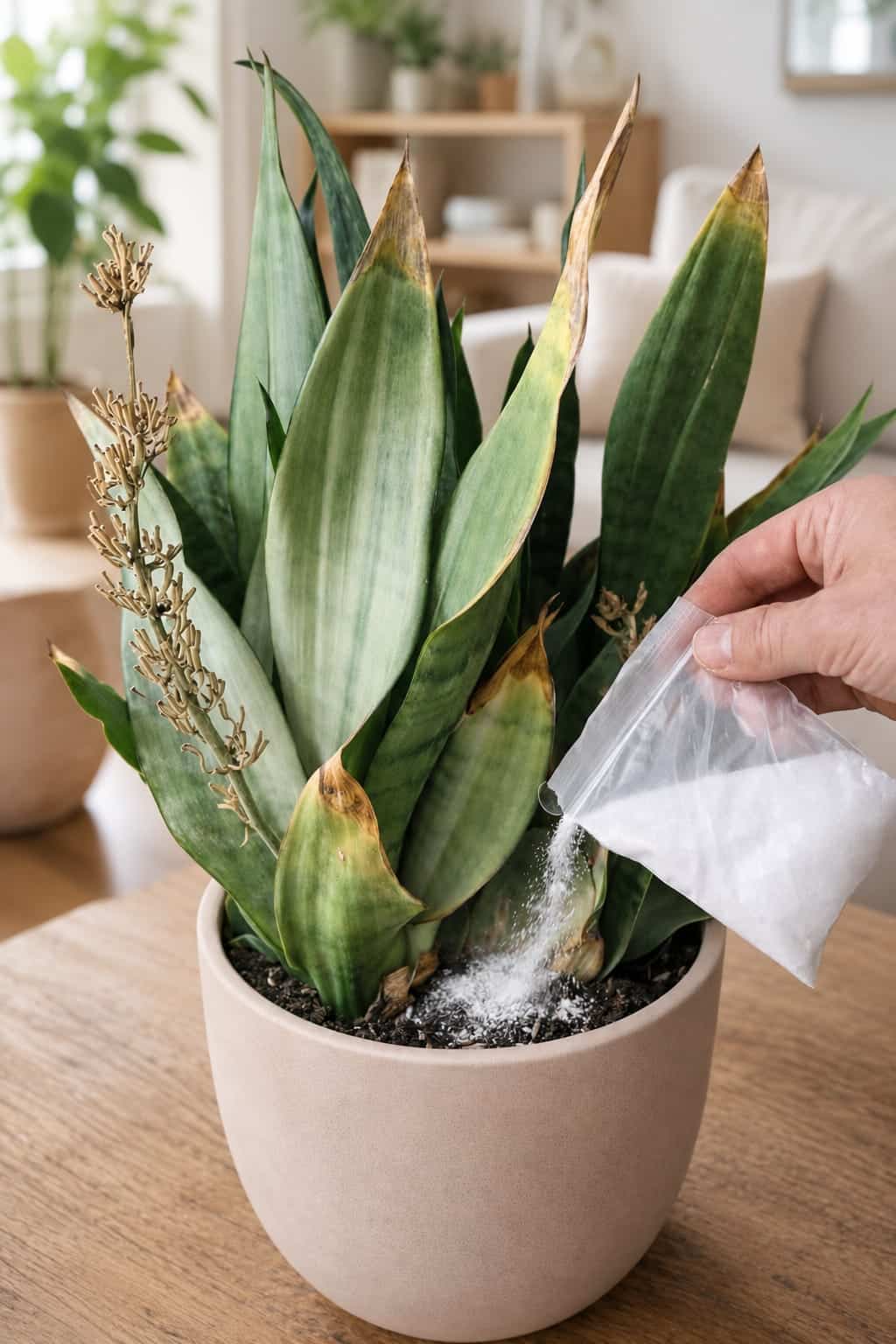
The image shows a snake plant with browning tips and dry patches while a white powder is being sprinkled near the base. This white powder is often presented online as baking soda, a common household ingredient sometimes used in plant care. Baking soda is popular because people associate it with cleaning, odor control, and fungal problems. But with snake plants, it must be used very carefully.
Baking soda is not fertilizer. It is not a root booster. It will not make a snake plant grow faster. It will not repair brown tips. It will not fix root rot. It will not bring dead leaves back to life. In fact, if too much baking soda is added directly to the soil, it may harm the plant by creating salt buildup, changing the soil environment, and stressing sensitive roots.
Used correctly, baking soda may have limited use around plants, mostly as a very diluted surface treatment in certain situations. But for snake plants, the safest approach is to avoid sprinkling dry baking soda heavily into the pot. A stressed snake plant usually needs better watering, drainage, light, and soil—not a thick layer of powder.
This guide explains what baking soda can and cannot do for snake plants, when it may be risky, what to do if you already added too much, and how to truly help a struggling snake plant recover.
What Baking Soda Is
Baking soda is sodium bicarbonate. It is a white alkaline powder commonly used in cooking, cleaning, and odor control. In gardening discussions, baking soda is sometimes mentioned as part of homemade sprays for certain surface fungal issues. But that does not mean it is automatically safe to sprinkle into every plant pot.
The word “sodium” is important. Too much sodium in soil can be harmful to plants. Potted plants are especially vulnerable because the soil volume is small and minerals can build up quickly. Outdoor soil has more space, rain, drainage, and microbial activity to buffer changes. A houseplant pot does not.
Snake plants are not heavy-feeding plants. They have thick leaves and underground rhizomes that store water. Their roots prefer a dry, airy environment. Adding too much baking soda to the soil can disturb that environment instead of improving it.
For this reason, baking soda should never be treated like plant food. It is not a natural fertilizer and should not be used as a regular soil additive.
Can Baking Soda Help a Snake Plant?
Baking soda may help only in very limited situations, and even then it should be used with caution. For example, a very diluted baking soda solution is sometimes used by gardeners on certain plant leaves for mild fungal-looking problems. But snake plants have thick leaves, and most snake plant problems are not caused by surface fungus.
The most common snake plant problems are overwatering, poor drainage, dense soil, low light, cold stress, or physical damage. Baking soda does not solve these issues.
If a snake plant has brown tips, baking soda will not turn them green again. If the leaves are yellowing from the base, baking soda will not repair rotten rhizomes. If the soil smells sour, baking soda may hide the odor briefly, but it will not remove the underlying decay.
So the honest answer is this: baking soda is not usually necessary for snake plants. If used incorrectly, it can do more harm than good. The better rescue method is to diagnose the real problem and correct the care routine.
⚠️ Important: Baking soda is not a substitute for good drainage, proper watering, or fresh soil. Never use it as a regular soil additive.
Why Sprinkling Baking Soda Directly on Soil Can Be Risky
The image shows dry white powder being poured near the base of the plant. This is the part that needs caution. Dry baking soda can create concentrated spots in the soil. When the plant is watered, the powder dissolves and moves into the root zone.
Because the dose is not evenly mixed or diluted, some roots may receive a strong alkaline and salty solution. Snake plant roots are not designed for that. They prefer a balanced, fast-draining medium.
Too much baking soda can also increase mineral buildup. This may cause brown leaf tips, poor root function, and slower growth. If used repeatedly, it may make the soil less suitable for healthy roots.
Another problem is that baking soda can hide symptoms. If the pot smells bad because roots are rotting, sprinkling baking soda may reduce the smell temporarily, but the rot continues below the surface. The plant still declines.
For potted snake plants, heavy dry sprinkling is not recommended.
What the Snake Plant in the Image Seems to Need
The plant in the image has several leaves with brown, dry tips and damaged edges. There are also old dried flower stalks visible. This does not automatically mean the plant is dying, but it does suggest stress or aging.
Brown tips on snake plants can come from inconsistent watering, mineral buildup, too much fertilizer, low humidity, physical damage, cold drafts, or old leaf tissue. Dry tips do not need baking soda. They need better care conditions and, if desired, cosmetic trimming.
If the brown areas are dry and crispy, they will not turn green again. You can trim them with clean scissors, following the natural shape of the leaf. If the brown areas are soft, wet, or spreading from the base, that is more serious and may indicate rot.
The first step should be checking the soil and roots. If the soil is dry and the plant is firm, the problem may be minor. If the soil is wet and the leaves are soft near the base, the plant may need urgent root inspection.
Why Snake Plants Get Brown Tips
Brown tips are common on snake plants. They do not always mean the plant is dying. Sometimes they are simply the result of age, dry air, or minor stress.
One common cause is inconsistent watering. If the plant stays dry for too long and then receives heavy watering, the leaves may show stress. Another cause is mineral buildup from hard tap water or repeated fertilizer use. Over time, salts accumulate in the soil and can affect leaf tips.
Cold drafts can also damage tips. A snake plant placed near a cold window or door in winter may develop dry brown areas. Strong direct sun can scorch leaves if the plant is not used to it. Physical damage also causes browning, especially if the leaf tip was bent or bruised.
Baking soda does not reverse these problems. The correct response is to improve conditions and prevent new damage.
Why Snake Plants Yellow or Rot
Yellowing is more concerning than dry brown tips, especially if it begins near the base of the leaf. A snake plant leaf that turns yellow, soft, and mushy near the soil line often points to overwatering or root rot.
Snake plants store water in thick leaves and rhizomes. They do not need constantly moist soil. If the potting mix stays wet for too long, the roots and rhizomes can rot. Once this happens, the plant cannot absorb water properly, and leaves begin to collapse.
If your snake plant is yellowing and the soil is wet, do not add baking soda. Do not add fertilizer. Do not add more water. Remove the plant from the pot and inspect the roots and rhizomes.
Healthy rhizomes are firm. Rotten rhizomes are soft, dark, mushy, or foul-smelling. Rotten parts must be cut away. Baking soda cannot restore them.
Continue to Page 2
Continue to page 2 for more details about this article and the key points many readers miss on the first page.