Snake plants are some of the easiest and most reliable houseplants you can grow indoors. Their tall, upright leaves, bold green patterns, and golden edges make them look clean, modern, and elegant in almost any room. They are also famous for being forgiving. A snake plant can handle missed waterings, average indoor air, and lower light better than many other houseplants.
But even a strong plant like a snake plant can run into problems. The soil may stay wet too long. The base of a leaf may soften. A cut leaf may rot before it roots. Fungus may appear on the surface of the soil. Brown patches may show up after damage. When this happens, many plant owners look for a simple natural ingredient that can help protect the plant without using harsh products.
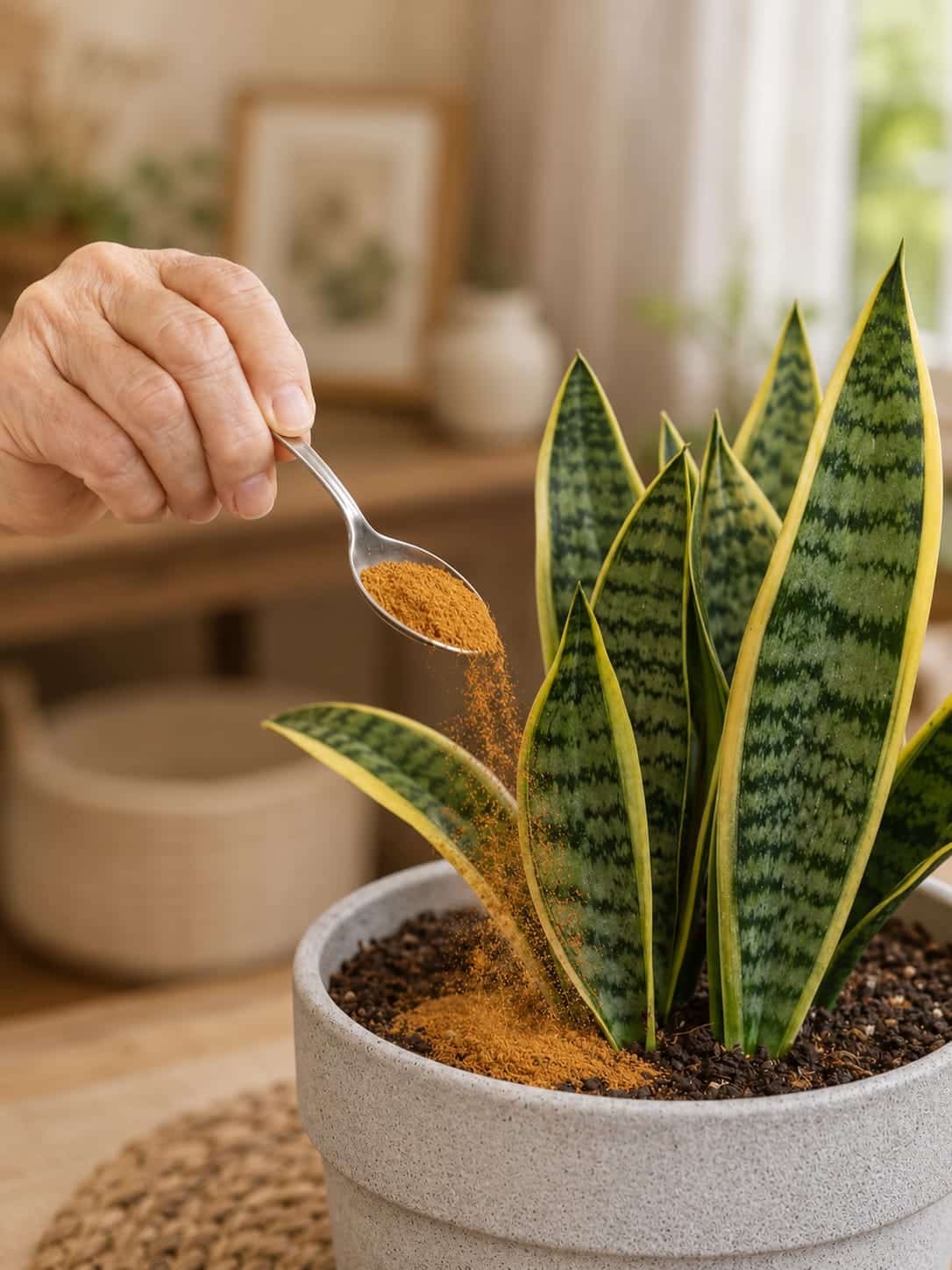
The image shows a snake plant while a brown powder is being sprinkled around the base. This powder looks like cinnamon, a common kitchen ingredient often used in plant care. Cinnamon is popular because many gardeners use it as a dry powder on plant cuts, damaged tissue, or soil surfaces where moisture and fungus may become a problem.
However, cinnamon must be used carefully. It is not fertilizer. It will not make a snake plant grow overnight. It will not fix root rot that has already spread through the roots. It will not replace proper watering, good drainage, or fast-draining soil. Used too heavily, cinnamon can dry tissue and may create unnecessary buildup on the soil surface.
Used correctly, cinnamon can be a helpful small tool in snake plant care. It is best used as a light dusting on fresh cuts, damaged areas, or small surface problem spots. It should never be poured heavily into the pot or treated like plant food.
This guide explains how to use cinnamon safely for snake plants, when it may help, when to avoid it, and what care steps truly keep snake plants upright, firm, green, and healthy for years.
Why Cinnamon Is Used in Plant Care
Cinnamon is often used by plant owners as a dry protective powder. When a plant is cut, divided, propagated, or damaged, the exposed tissue can become vulnerable to moisture-related problems. A tiny amount of cinnamon on the cut surface can help keep that area dry while it heals.
This is especially useful with succulent-like plants, including snake plants. Snake plants store water in their thick leaves and underground rhizomes. When their tissue is cut or damaged, it should be allowed to dry and callus before being placed in moist soil. Cinnamon can support that drying process when used lightly.
Cinnamon is also sometimes sprinkled lightly on small moldy spots on the soil surface. But this should be done only after correcting the real cause of the mold. Mold usually appears because the soil is too wet, airflow is poor, or the potting mix contains too much decaying organic matter.
The most important thing to understand is that cinnamon is not a cure-all. It is a support ingredient, not a replacement for proper care.
Can Cinnamon Help a Snake Plant Grow Faster?
Cinnamon does not directly make a snake plant grow faster. It does not contain balanced nutrients, and it does not act like fertilizer. Snake plant growth depends mainly on light, root health, soil quality, watering, temperature, and time.
If a snake plant is healthy, cinnamon is usually not needed. If it is slow-growing, the reason is usually low light, cool temperatures, compacted soil, a pot that is too large, or natural seasonal slowdown. Cinnamon will not solve those problems.
However, cinnamon may help indirectly in certain situations. For example, if you divide a snake plant and dust the cut rhizome lightly with cinnamon, the cut may dry more safely before repotting. If the plant avoids rot after division, it has a better chance of settling and producing new growth later.
So cinnamon can support recovery after damage or propagation, but it does not act as a growth booster by itself. The real growth booster is a healthy root system in the right environment.
Can Cinnamon Prevent Root Rot?
Cinnamon cannot prevent root rot if the plant is sitting in wet soil. Root rot happens when roots and rhizomes stay too moist for too long and cannot breathe. Snake plants are especially prone to rot when they are watered too often, planted in dense soil, or kept in pots without drainage holes.
A little cinnamon on a cut surface may help keep that cut dry. But sprinkling cinnamon on top of soggy soil will not fix wet roots below the surface. If the soil is staying wet, the plant needs better drainage, less water, and possibly fresh soil.
If root rot is already present, the correct solution is to remove the plant from the pot, cut away rotten tissue, let healthy sections dry, and repot into fresh fast-draining soil. Cinnamon can be used lightly on the cut areas after trimming, but it cannot save rotten roots that are already dead.
Think of cinnamon as a bandage for small wounds, not as a cure for a flooded pot.
🌿 Key reminder: Cinnamon is not a substitute for good drainage and proper watering. Always fix the root environment first.
Why Snake Plants Are Sensitive to Overwatering
Snake plants are succulent-like plants. Their thick leaves and underground rhizomes store water. This allows them to survive dry periods, but it also means they do not need constantly moist soil.
When the potting mix stays wet for too long, the roots lose oxygen. The rhizomes can soften. Leaves may begin turning yellow from the base, collapsing, or becoming mushy. At this stage, the plant is not thirsty. It is drowning.
Many snake plant problems begin with too much water. People often try to solve yellow leaves with fertilizer, cinnamon, milk water, aspirin water, or other tricks, but if the roots are rotting, none of those will help until the moisture problem is corrected.
A snake plant should be watered only when the soil is dry. Good care starts with restraint. Cinnamon is only useful after the root environment is made safe.
When Cinnamon May Be Useful for Snake Plants
- After cutting a damaged snake plant leaf: A tiny dusting on the cut edge helps dry the wound.
- After dividing a snake plant: Lightly dust cut rhizome areas to reduce rot risk.
- When propagating leaf cuttings: A very light touch on the callused end may help keep it dry before planting.
- On tiny areas of surface mold – but only after improving airflow and reducing watering. If mold returns, fix the soil moisture.
When You Should Avoid Cinnamon
- Do not use cinnamon as fertilizer – it does not feed the plant.
- Do not pour a thick layer all over the soil – it can create buildup and hide moisture problems.
- Do not use cinnamon to cover rotten tissue without cutting the rot away first.
- Do not sprinkle cinnamon into wet, soggy soil expecting to fix root rot.
- Do not apply cinnamon heavily to healthy new roots or new shoots – they can be sensitive.
How to Use Cinnamon on a Snake Plant Cut
If you cut a snake plant leaf or remove damaged tissue, first use clean scissors or a clean knife. Dirty tools can spread bacteria or fungi. Wipe the blade with rubbing alcohol before cutting.
After cutting, allow the wound to dry. Snake plant tissue contains moisture, so fresh cuts should not be placed immediately into wet soil. Give the cut surface time to callus. Depending on the size of the cut, this may take a day or several days.
To use cinnamon, dip a clean fingertip or cotton swab into a small amount of powder. Touch only the cut surface with a light dusting. Do not coat the entire leaf. Do not bury the cut under a mound of cinnamon.
After dusting, let the cut continue drying in a warm, bright, indirect-light location. Once it has callused, it can be planted or returned to normal care depending on the situation.
How to Use Cinnamon After Dividing a Snake Plant
Snake plants grow from underground rhizomes. When the plant becomes crowded, you can divide it into smaller sections. Each division should have healthy leaves, roots, and a firm rhizome.
Sometimes rhizomes break or must be cut during division. If this happens, cinnamon can be used lightly on the cut surface. First, remove any rotten or soft tissue with a clean tool. Healthy rhizome tissue should feel firm, not mushy.
Dust the fresh cut lightly with cinnamon. Then allow the division to rest for a short time so the cut can dry before repotting. This is especially important if the rhizome was thick or moist.
Repot the division into dry, fast-draining soil. Do not water immediately if the cuts are fresh. Waiting a few days before watering can reduce the risk of rot.
How to Use Cinnamon for Snake Plant Propagation
Snake plants can be propagated from leaf cuttings. To do this, cut a healthy leaf into sections and keep track of which end was the bottom. The bottom end must go into the soil for proper rooting.
After cutting, let the sections dry and callus. This is one of the most important steps. If a fresh cutting is placed into wet soil too soon, it may rot before roots develop.
A tiny dusting of cinnamon on the cut end may help keep the wound dry. Use very little. The cutting should not be covered in powder.
Once callused, place the cutting into a well-draining mix. Keep the soil only lightly moist, not wet. Rooting can take weeks or months. Snake plant propagation is slow, so patience is important.
Can Cinnamon Kill Fungus Gnats?
Cinnamon is not a reliable fungus gnat cure. Fungus gnats usually appear when soil stays too moist and contains decaying organic matter. Snake plants should not be kept wet enough to support fungus gnats.
If fungus gnats appear, the first solution is to let the soil dry more thoroughly between waterings. Remove any decaying leaves from the soil surface. Improve airflow and make sure the pot drains well.
Sticky traps can help catch adult gnats. In more serious cases, a targeted treatment may be needed. But cinnamon alone will not solve the gnat life cycle if the soil remains wet.
If you sprinkle cinnamon on the surface but continue overwatering, gnats will likely return. Moisture control is the real solution.
Can Cinnamon Remove Mold From Soil?
A light dusting of cinnamon may help dry a small surface mold spot, but it does not fix the reason mold appeared. Mold usually grows when the soil surface stays damp, airflow is low, or organic material is breaking down.
For a snake plant, mold is a warning sign that the pot may be too moist. First, remove the moldy top layer of soil if possible. Then reduce watering and allow the soil to dry more completely.
If the soil smells sour or stays wet for many days, repotting is better than sprinkling cinnamon. Use a fast-draining succulent mix and a pot with drainage holes.
Cinnamon can help with a small surface issue, but it should not be used to hide poor soil conditions.
Continue to Page 2
Continue to page 2 for more details about this article and the key points many readers miss on the first page.