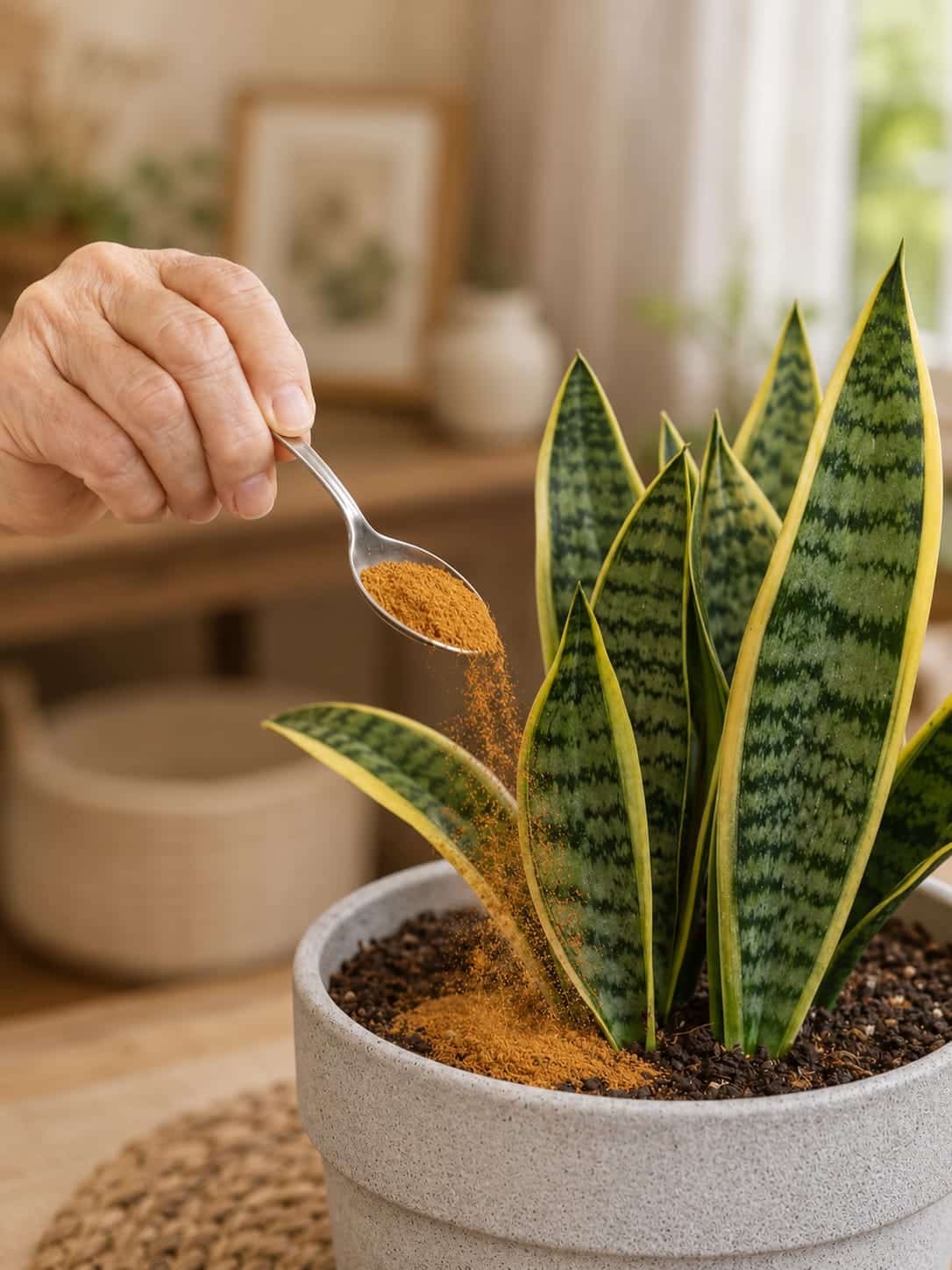
The Best Soil for Snake Plants
Snake plants need fast-draining soil. A cactus or succulent mix is often a good base. You can improve it with perlite, pumice, coarse sand, lava rock, or small bark chips.
The soil should dry between waterings. It should not stay dense, muddy, or wet for long periods. Dense soil is one of the biggest causes of snake plant rot.
If the potting mix feels heavy after watering or stays wet for more than several days, it may need more drainage material. Repotting into a better mix can prevent many problems before they begin.
No amount of cinnamon can compensate for soil that stays too wet. The root environment must be right first.
Choosing the Right Pot
A snake plant pot should always have drainage holes. This is essential. Without drainage, water collects at the bottom of the pot, even if the top looks dry. Hidden water around the roots can cause rhizome rot.
Terracotta pots are often helpful because they allow moisture to evaporate through the sides. Ceramic and plastic pots can work too, but watering must be more careful because they hold moisture longer.
The pot should not be too large. A pot that is much bigger than the root system holds extra soil, and extra soil holds extra moisture. This increases the risk of rot.
A snug pot with drainage is usually better than a huge decorative pot with no airflow.
How to Water Snake Plants Correctly
Water snake plants only when the soil is dry. This may be every two weeks, every three weeks, or even less often depending on light, temperature, pot size, and soil mix.
Before watering, check deep into the soil. The surface may feel dry while the lower soil is still damp. Use your finger, a wooden stick, or a moisture meter if needed.
When you water, water thoroughly and allow excess to drain completely. Then leave the plant alone until the soil dries again. Do not give small daily sips. Frequent shallow watering can keep the top layer damp and encourage pests.
In winter, water less often. Snake plants grow more slowly in lower light and cooler temperatures, so they use less moisture.
Light for Strong Snake Plant Growth
Snake plants tolerate low light, but they grow better in bright indirect light. If you want stronger leaves, better color, and more new shoots, give the plant more brightness.
A spot near a window with filtered light is ideal. Morning sun can be helpful. Harsh direct afternoon sun may scorch leaves if the plant is not used to it, so increase light gradually.
Low light slows growth and keeps soil wet longer. This combination can increase the risk of overwatering. A snake plant in low light should be watered much less often.
Light is one of the real keys to growth. Cinnamon does not replace light.
Can Cinnamon Help Brown Leaf Tips?
Cinnamon will not fix brown tips. Brown tips can come from underwatering, inconsistent watering, mineral buildup, too much fertilizer, cold drafts, low humidity, or physical damage.
Once a leaf tip turns brown, it will not turn green again. You can trim it with clean scissors, following the natural shape of the leaf.
If brown tips keep appearing, check your watering habits, water quality, fertilizer use, and light conditions. If the soil has mineral buildup, flush the pot with plain water if it drains well.
Cinnamon should not be applied to brown tips unless you have freshly cut the tissue and want to dust the cut edge very lightly.
Can Cinnamon Help Yellow Snake Plant Leaves?
Yellow leaves are usually not solved by cinnamon. A yellowing snake plant leaf may be aging, but if yellowing starts at the base or spreads quickly, overwatering or root rot may be the cause.
If a leaf is yellow and soft at the base, remove the plant from the pot and inspect the rhizomes. Healthy rhizomes are firm. Rotten rhizomes are soft, dark, mushy, or foul-smelling.
Cut away rotten parts with sterile tools. Dust cut surfaces lightly with cinnamon if desired, then let them dry. Repot only healthy firm sections into dry fast-draining soil.
Cinnamon is useful only after the damaged tissue is removed. It does not turn yellow leaves green again.
Can Cinnamon Be Used as Fertilizer?
No. Cinnamon is not fertilizer. It does not provide balanced nutrients for snake plant growth. It does not contain the nitrogen, phosphorus, potassium, calcium, magnesium, and trace elements the plant may need.
Snake plants are light feeders, but they may benefit from a diluted cactus or succulent fertilizer during the growing season. Feed sparingly, usually once or twice during spring and summer.
Do not fertilize during winter if the plant is not actively growing. Do not fertilize a sick or rotting plant.
Use cinnamon for cuts or small surface problems, not as food.
How to Feed Snake Plants Properly
Snake plants do not need heavy feeding. Too much fertilizer can cause weak growth, brown tips, and salt buildup. A diluted cactus or succulent fertilizer is usually enough during active growth.
Apply fertilizer only when the soil is already due for watering. Do not fertilize dry roots with a strong solution. Always follow label instructions, and when in doubt, use a weaker dose.
If the plant is in fresh potting mix, it may not need fertilizer right away. Many potting mixes contain some nutrients already.
A simple feeding routine is safer than frequent homemade experiments.
⚠️ Important: Cinnamon is not a substitute for proper watering, drainage, or root care. Always diagnose the real problem before using any treatment.
What to Do If Your Snake Plant Has Rot
If your snake plant has rot, act quickly. Remove the plant from the pot and shake away the soil. Inspect the roots and rhizomes carefully.
Cut away all soft, mushy, dark, or foul-smelling tissue with a clean knife or scissors. Keep only firm healthy sections. If a leaf is rotting from the base, remove it completely.
Dust the cut surfaces very lightly with cinnamon if you want to help dry them. Then allow the pieces to callus in a dry, shaded, bright location for a day or more depending on the size of the cuts.
Repot into fresh dry succulent mix. Do not water immediately. Wait a few days, then water lightly only when the plant needs it. After rot, careful dryness is more important than extra treatments.
What to Do If You Used Too Much Cinnamon
If you sprinkled a heavy amount of cinnamon onto the soil, remove the excess. Use a spoon to gently lift away the powder from the surface. Do not mix large amounts deeper into the soil.
If the soil is dry and the plant is healthy, simply return to normal care. If the cinnamon has formed a thick crust or the soil smells strange, consider removing the top layer of soil and replacing it with fresh mix.
If the plant is already stressed, inspect the roots. The problem may not be the cinnamon but the condition that caused you to use it in the first place.
After removing excess cinnamon, avoid more treatments and focus on proper watering and drainage.
How to Encourage New Snake Plant Shoots
New snake plant shoots, often called pups, grow from underground rhizomes. To encourage pups, focus on healthy roots and good light.
Give the plant bright indirect light. Use fast-draining soil. Keep the pot snug but not severely overcrowded. Water only when the soil is dry. Feed lightly during the growing season if needed.
Do not overwater in an attempt to force growth. Wet soil can rot the rhizomes that produce pups.
Cinnamon does not create pups. It may help protect cut rhizomes during division, but new growth comes from a strong, healthy root system.
Should You Remove Decorative Moss?
Some snake plant arrangements include decorative moss on top of the soil. Moss can look attractive, but it can also hide moisture and keep the top layer damp.
If you struggle with overwatering, fungus gnats, or mold, remove the moss. Let the soil surface breathe and dry more easily.
If you keep moss, lift it regularly to check the soil below. Do not water just because the moss looks dry. The root zone may still be moist.
For snake plants, a dry visible soil surface is often safer than a thick decorative cover.
Seasonal Snake Plant Care
Snake plants grow more actively during warmer, brighter months. Spring and summer are the best times for repotting, dividing, propagating, and light feeding.
During fall and winter, growth slows. Water less often and avoid unnecessary treatments. Soil stays wet longer in cooler months, so overwatering becomes more dangerous.
If you divide or cut a snake plant in winter, be extra careful. Healing may be slower in low light and cool temperatures.
Cinnamon use should also be minimal in winter. The main goal is keeping the plant dry enough and stable.
A Simple Snake Plant Care Routine
Place the snake plant in bright indirect light if possible. Use a fast-draining succulent mix and a pot with drainage holes. Water only when the soil is dry.
Clean the leaves occasionally with a damp cloth. Rotate the pot every few weeks so the plant grows evenly. Feed lightly during spring or summer if the plant is actively growing.
Use cinnamon only when needed: on fresh cuts, after trimming rot, after division, or as a tiny surface dusting for minor mold spots. Do not use it as a regular soil topping.
This simple routine will keep the plant healthier than constant experiments.
Common Mistakes to Avoid
- Using cinnamon as fertilizer – it does not feed the plant.
- Sprinkling too much cinnamon over the soil – a light dusting on cuts is enough.
- Using cinnamon instead of fixing overwatering – wet soil must be corrected.
- Covering rotten tissue without removing it – rot must be cut away.
- Watering too soon after cutting or dividing – fresh wounds need time to dry.
- Planting snake plants in dense soil – they need fast drainage.
- Keeping the plant in a pot without drainage holes – drainage is essential.
Frequently Asked Questions
Is cinnamon good for snake plants?
Cinnamon can be useful as a light dusting on fresh cuts, damaged tissue, or small surface mold spots. It is not fertilizer and should not be used heavily.
Can I sprinkle cinnamon on snake plant soil?
You can use a tiny amount on small surface problem spots, but avoid covering the soil with a thick layer. Too much cinnamon can create buildup and hide moisture problems.
Can cinnamon stop snake plant root rot?
No. Cinnamon cannot stop root rot if the plant remains in wet soil. Rotten tissue must be removed, and the plant must be repotted into dry, fast-draining soil.
Can cinnamon help snake plant cuttings root?
It may help keep cut ends dry while they callus, but it does not directly create roots. Proper drying, fast-draining soil, and patience are more important.
How much cinnamon should I use?
Use only a tiny dusting on cut surfaces. A cotton swab or fingertip is enough. Do not pour spoonfuls into the pot.
Can cinnamon kill fungus gnats?
Not reliably. Fungus gnats are usually caused by wet soil. Let the soil dry, improve drainage, and use sticky traps if needed.
Can cinnamon damage snake plants?
Yes, if used too heavily or applied to healthy roots and new growth. Use it sparingly and only where needed.
Should I water after applying cinnamon?
If cinnamon is on a fresh cut, let the cut dry before watering. If cinnamon is on the soil surface, do not water immediately unless the plant truly needs water.
🌿 Remember: Cinnamon is a gentle natural support for cuts and small surface issues, not a replacement for proper snake plant care. Healthy roots, fast-draining soil, bright indirect light, and careful watering are the real secrets to a long‑lasting, thriving snake plant.