Tomato plants are some of the most rewarding plants to grow at home. Whether they are in a garden bed, raised planter, balcony container, or a simple pot on a sunny patio, tomatoes bring a special kind of excitement. First come the soft green leaves, then the tiny yellow flowers, and finally the small green fruits that slowly turn red, orange, yellow, or purple depending on the variety.
But tomatoes are also hungry, fast-growing plants. They need strong roots, steady moisture, sunlight, and balanced nutrition to produce flowers and fruit successfully. When a tomato plant is weak, pale, slow-growing, or not flowering well, many gardeners start looking for a simple natural boost.
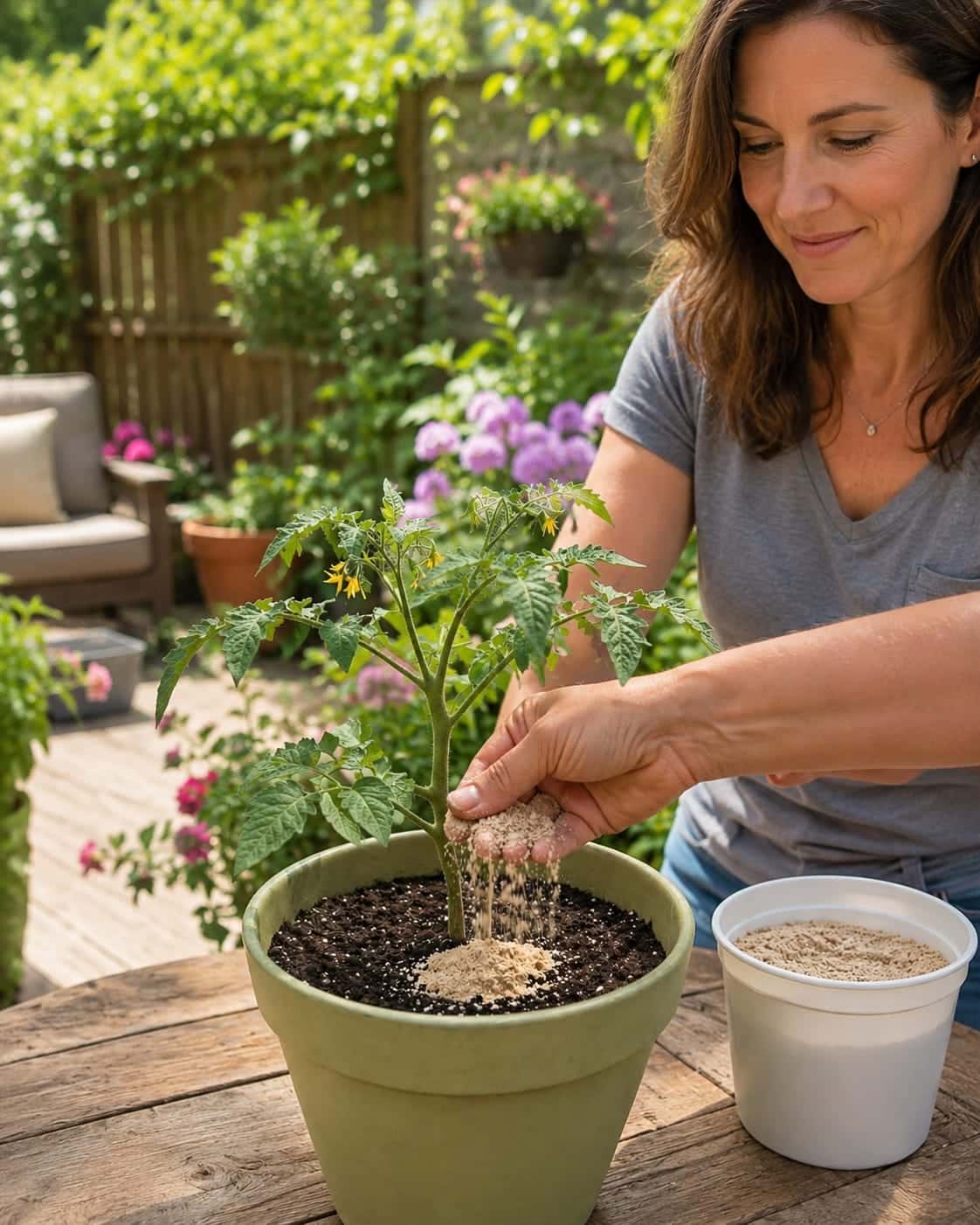
The image shows a young tomato plant in a pot with small yellow flowers already forming. A beige powder is being sprinkled around the base of the plant. This kind of natural garden image is often linked to yeast powder, a popular homemade plant-care ingredient used by many gardeners as a gentle soil booster. Yeast is commonly associated with active microorganisms, root support, and improved plant vigor when used correctly.
However, yeast should be used carefully. It is not a complete fertilizer. It does not replace compost, balanced tomato fertilizer, sunlight, watering, or healthy soil. It will not magically turn a weak tomato plant into a heavy producer overnight. Used too often or too heavily, it can disturb the soil balance, encourage unwanted microbial activity, or create nutrient imbalance.
When used in a mild, diluted way, yeast can be part of a natural tomato-care routine. It may support soil life, help stimulate root activity, and give the plant a gentle boost during active growth. But the real secret to tomato success is a complete routine: full sun, deep watering, rich soil, correct feeding, pruning, airflow, and consistent care.
This guide explains how to use yeast safely for tomato plants, when it may help, when to avoid it, and what care steps truly encourage stronger growth, more flowers, and better fruit production.
Why Tomatoes Need Extra Support
Tomatoes are heavy-feeding plants. Compared with many ornamental houseplants, they grow quickly and produce a lot of biomass in a short time. They must build stems, leaves, roots, flowers, and fruit, all within one growing season.
This means a tomato plant needs more than plain soil and occasional watering. It needs nutrients, especially nitrogen during early growth and phosphorus and potassium as flowering and fruiting begin. It also needs calcium, magnesium, and trace minerals to avoid common problems like weak growth, yellowing leaves, and blossom-end rot.
A potted tomato plant needs even more attention because container soil has limited nutrients. Every watering can wash some minerals out of the pot. Roots cannot spread into surrounding garden soil to search for more nutrients. Everything the plant needs must come from the potting mix and what you provide.
This is why natural boosters like yeast are popular. Gardeners want to give tomatoes extra energy and support. But it is important to understand what yeast can and cannot do.
What Yeast Does in a Tomato Garden
Yeast is a living microorganism when active. Baker’s yeast is commonly used in bread-making because it ferments sugars and produces carbon dioxide. In garden routines, yeast is often used in diluted mixtures to support microbial activity in the soil.
The idea is that yeast may help stimulate beneficial soil life and encourage a more active root environment. A healthy soil ecosystem can support better nutrient cycling, root growth, and plant strength.
Yeast also contains small amounts of nutrients and B vitamins, but it should not be treated as a complete plant food. The amount of nutrition in a mild yeast solution is not enough to replace a proper tomato fertilizer or compost-rich soil.
Think of yeast as a soil-support ingredient, not a full fertilizer. It may help create a more active growing environment, but the plant still needs real nutrients from compost, organic fertilizer, or balanced tomato feed.
Can Yeast Make Tomato Plants Flower More?
Yeast cannot directly force tomato plants to flower. Tomato flowers appear when the plant is mature enough and receives proper light, warmth, nutrients, and water. If a tomato plant is kept in shade, overwatered, underfed, or stressed, yeast alone will not fix flowering.
However, yeast may support flowering indirectly if it improves root activity and soil vitality. A tomato plant with stronger roots and better access to nutrients is more likely to grow vigorously and support flowers.
The plant in the image already has yellow flowers, which is a good sign. This means it is entering the flowering stage. At this point, the plant needs steady moisture, enough sunlight, and nutrition that supports flowers and fruit. A mild yeast treatment may be used occasionally, but it should not replace potassium-rich tomato feeding.
If your goal is more flowers, focus first on sunlight. Tomatoes usually need at least six to eight hours of direct sun per day. Without enough sun, flowering and fruiting will be weak no matter what you sprinkle on the soil.
Can Yeast Make Tomatoes Bigger?
Yeast will not directly enlarge tomato fruits. Fruit size depends on the tomato variety, pollination, sunlight, root health, water consistency, and nutrition. A cherry tomato variety will not become a giant beefsteak tomato because of yeast.
But healthy soil and strong roots can help the plant reach its natural fruiting potential. If a tomato plant is under stress, fruit size may be smaller. If the plant has good care, it can produce better-quality fruit.
Yeast may be one small part of a natural care routine that supports the plant’s root zone. Still, bigger tomatoes require balanced feeding, especially enough potassium during fruit development. Too much nitrogen can create lots of leaves but fewer fruits.
For fruiting tomatoes, do not rely on yeast alone. Use compost, a tomato fertilizer, or an organic fruiting plant feed as the foundation.
🍅 Key reminder: Yeast is a soil supplement, not a complete fertilizer. Tomatoes still need full sun, consistent water, and balanced nutrition for best results.
Why Sprinkling Dry Yeast Directly Can Be Risky
The image shows powder being sprinkled directly onto the soil. While this looks simple, it is not always the best method. Dry yeast applied heavily in one spot can become concentrated when watered. It may ferment if combined with sugars or organic matter, and it may affect the soil surface unevenly.
In a garden bed, small amounts may disperse more easily. In a pot, the root zone is limited, so concentrated ingredients can have stronger effects. Too much yeast in a small container may encourage odor, mold, or microbial imbalance, especially if the soil stays wet.
A safer method is to dissolve a small amount of yeast in water and apply it as a diluted solution. This spreads the yeast more evenly and reduces the risk of concentrated pockets around the roots.
For potted tomatoes, always use mild solutions. More is not better.
The Safest Yeast Water Recipe for Tomato Plants
A gentle yeast water recipe is simple. Mix one teaspoon of dry baker’s yeast into one liter of lukewarm water. Stir well and let it sit for about one hour. Then dilute this mixture with more water before applying it to tomato plants.
For a safer final application, mix one part yeast solution with three to five parts plain water. The final liquid should be weak. It should not smell strongly fermented.
Some gardening recipes add sugar to activate yeast, but for potted plants, sugar should be used carefully or skipped. Sugar can attract ants, fungus gnats, and unwanted microbial growth. If you are growing tomatoes indoors or in containers, it is safer to avoid sugar.
Use the mixture fresh. Do not store yeast water for days. If it smells sour, alcoholic, or rotten, discard it.
How to Apply Yeast Water to Tomato Plants
Apply yeast water only to the soil, not to the leaves or flowers. Pour it gently around the base of the plant, keeping it away from the stem as much as possible. The soil should already be slightly moist, not bone dry and not soggy.
If the potting mix is completely dry, water lightly with plain water first. Extremely dry soil may repel liquid and cause uneven absorption. If the soil is already wet, wait. Tomatoes need oxygen around their roots, and adding more liquid to wet soil can create root stress.
Use a small amount. Do not flood the pot with yeast water. After applying, continue normal watering only when the soil begins to dry appropriately.
If your tomato is in a container, make sure the pot has drainage holes. Excess liquid must be able to escape.
How Often Should You Use Yeast on Tomatoes?
Yeast should be used occasionally, not constantly. For potted tomato plants, once every three to four weeks during active growth is enough if you choose to use it. For garden tomatoes, once a month during the growing season is also a cautious routine.
Do not use yeast water every week. Tomatoes need balanced nutrients, and repeated yeast treatments do not provide complete feeding. Overuse can disturb the soil balance or create unwanted smells and surface growth.
Use yeast only when the plant is actively growing, not when it is cold, dormant, or severely stressed. Tomatoes are warm-season plants, and they respond best when temperatures are suitable and roots are active.
If your tomato plant is already growing well with a proper fertilizer routine, yeast may not be necessary.
When Yeast May Be Useful
Yeast may be useful when a tomato plant is healthy but needs a gentle natural support during active growth. It may be especially appealing to gardeners who prefer homemade, low-cost garden routines.
It can be used after transplant shock once the plant has settled, during early growth to support root activity, or at the beginning of flowering as part of a broader care routine.
Yeast may also be useful in soil that has organic matter and good drainage. Microbial activity works best in a living soil environment. If the soil is sterile, compacted, or waterlogged, yeast will not solve the problem.
For the best results, combine yeast use with compost, mulch, proper watering, and balanced tomato nutrition.
When You Should Avoid Yeast
- Do not use on tomato plants with root rot – if the soil smells sour, plant is wilting in wet soil, or roots are brown and mushy, yeast is not the answer.
- Do not use if the pot has no drainage holes – wet organic activity in a sealed pot can quickly cause problems.
- Do not use if fungus gnats, mold, or ants are already present – yeast mixtures can make pest problems worse.
- Do not use on very young, delicate seedlings – wait until the plant has several true leaves and is growing steadily.
- Do not use as the only feeding method – tomatoes are too nutrient-hungry to rely on yeast alone.
The Real Secret to Strong Tomato Growth
The real secret to strong tomato growth is sunlight. Tomatoes need direct sun. A tomato plant in a shady location may grow tall and weak, produce fewer flowers, and struggle to ripen fruit.
For best results, give tomatoes at least six to eight hours of direct sunlight daily. More sun often means stronger plants and better fruiting, as long as temperatures are not extreme and watering is consistent.
If you are growing tomatoes on a balcony, place the pot in the brightest location available. If indoors, a sunny window may not be enough unless it receives strong direct light for many hours. Grow lights may be needed for serious indoor tomato production.
No homemade ingredient can replace sunlight. Yeast may support the soil, but light powers the plant.
Best Soil for Potted Tomatoes
Potted tomatoes need rich, well-draining soil. A high-quality potting mix is better than heavy garden soil in containers. Garden soil can become compacted in pots and may drain poorly.
A good tomato potting mix should hold moisture while allowing excess water to drain. It should contain organic matter, aeration materials, and enough structure to support roots. Compost can be added carefully, but the mix should not become dense or muddy.
Tomatoes also need nutrients. Starting with a nutrient-rich potting mix gives the plant a better foundation. As the plant grows, nutrients will still need to be replenished.
If your tomato plant is in poor soil, yeast water will not be enough. Fresh, rich potting mix is much more important.
Continue to Page 2
Continue to page 2 for more details about this article and the key points many readers miss on the first page.