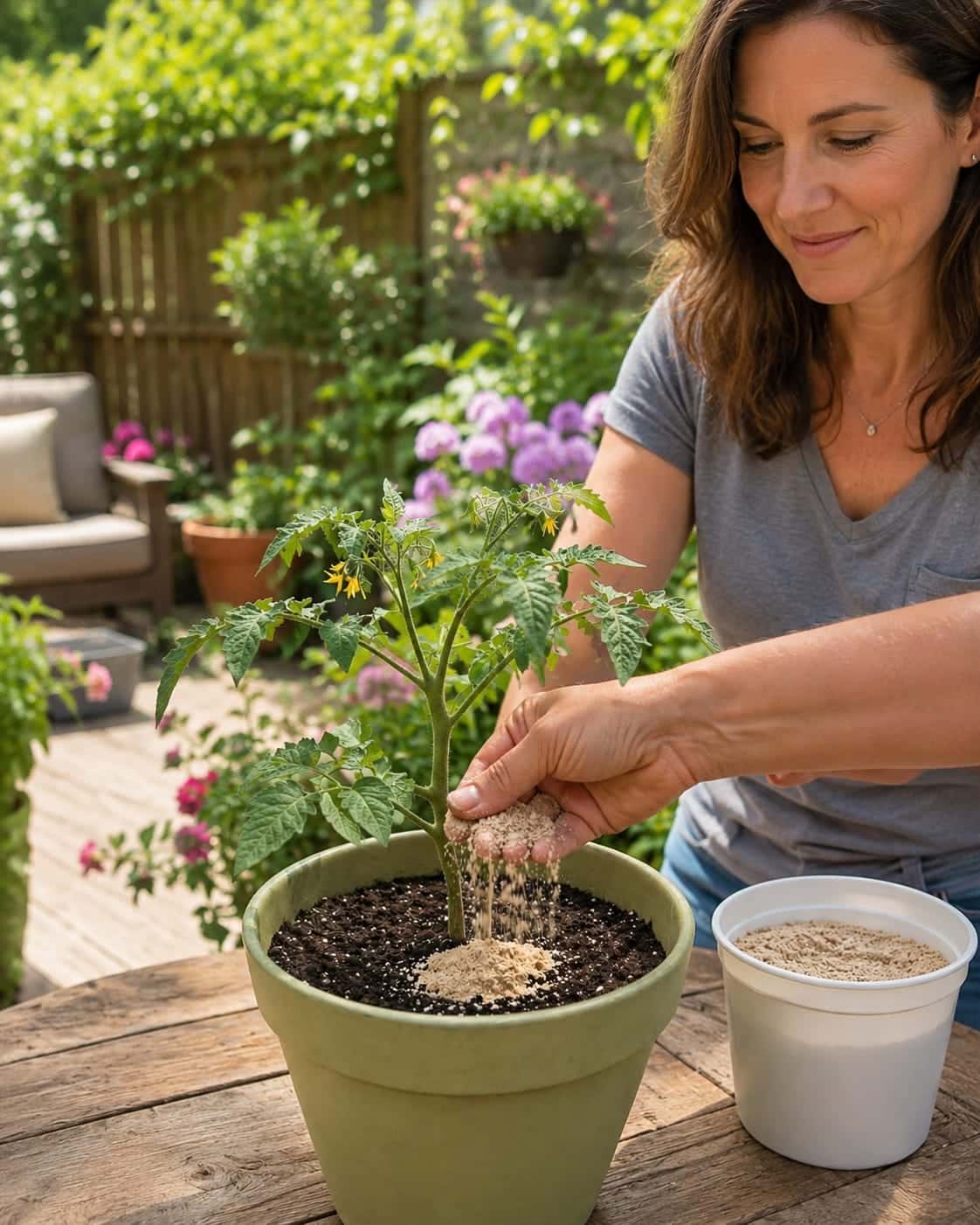
Choosing the Right Pot Size
Tomatoes need room for roots. A small pot can limit growth, dry out too quickly, and reduce fruit production. For most tomato varieties, a large container is best.
Dwarf or patio tomatoes can grow in smaller pots, but full-size tomato plants need a deep container, often at least five gallons or more. Larger indeterminate tomatoes may need even bigger containers.
The pot must have drainage holes. Tomatoes like consistent moisture, but they do not like standing water. A pot without drainage can cause root rot.
If your tomato plant is flowering while still in a small container, consider whether it has enough root space to support fruit. A plant can flower in a small pot but still struggle later when fruit begins forming.
Watering Tomatoes Correctly
Tomatoes need consistent watering. Irregular watering can cause stress, blossom drop, fruit cracking, and blossom-end rot. The soil should stay evenly moist but not soggy.
Water deeply when the top inch or two of soil begins to dry. In hot weather, potted tomatoes may need water daily. In cooler weather, they may need less.
Avoid shallow watering that only wets the surface. Tomato roots grow deeper, and the entire root zone needs moisture.
Water at the soil level rather than splashing the leaves. Wet foliage can increase disease risk, especially if airflow is poor.
Why Mulch Helps Tomato Plants
Mulch is very useful for tomatoes. A thin layer of straw, shredded leaves, compost, or other suitable mulch helps keep soil moisture stable. It also reduces splashing, which can spread soil-borne disease onto leaves.
For potted tomatoes, mulch can reduce how quickly the surface dries. This is helpful in hot weather. However, do not pile mulch tightly against the stem. Keep a little space around the base to prevent moisture from sitting against the stem.
Mulch supports steady growth because tomatoes dislike extreme moisture swings.
Yeast water may be optional, but mulch is often a practical and reliable helper.
Feeding Tomatoes the Right Way
Tomatoes need regular feeding, especially in containers. Early in growth, nitrogen supports leaves and stems. Once the plant begins flowering, it needs more balanced nutrition with enough phosphorus and potassium to support flowers and fruit.
A tomato fertilizer is usually a better foundation than yeast. Organic options may include compost, worm castings, fish emulsion, seaweed extract, bone meal, or tomato-specific organic blends. Synthetic tomato fertilizers can also work when used correctly.
Follow the product directions and avoid overfeeding. Too much fertilizer can burn roots or create excessive leafy growth with fewer fruits.
If using yeast water, do not apply it on the same day as strong fertilizer. Keep treatments mild and spaced apart.
Too Much Nitrogen Can Reduce Fruit
One common tomato mistake is giving too much nitrogen. Nitrogen encourages leafy green growth, but too much can delay flowering or reduce fruiting. The plant may look lush but produce few tomatoes.
If your tomato plant has many leaves but few flowers, check the fertilizer. A lawn fertilizer or high-nitrogen plant food is not ideal for fruiting tomatoes.
Yeast is not usually a high-nitrogen fertilizer, but if used alongside rich nitrogen-heavy feeding, it still will not correct the imbalance. Tomatoes need balanced nutrition.
For flowers and fruit, potassium becomes especially important.
How to Support Tomato Flowers
Tomato flowers need proper conditions to turn into fruit. If flowers drop without forming tomatoes, the plant may be stressed.
Common causes of blossom drop include high heat, cold nights, inconsistent watering, low light, lack of pollination, or nutrient imbalance. Tomatoes are self-pollinating, but vibration helps move pollen. Outdoors, wind and insects usually help. Indoors or on sheltered balconies, gently shaking the plant can improve pollination.
If flowers are forming, keep watering consistent and avoid sudden stress. Do not overfeed with nitrogen. Provide enough sunlight and airflow.
Yeast water may support root activity, but fruit set depends on the whole environment.
Pruning Tomato Plants for Better Growth
Pruning depends on the type of tomato. Determinate tomatoes grow to a set size and produce fruit in a shorter period. They usually need less pruning. Indeterminate tomatoes keep growing and producing over a longer season, and they often benefit from pruning and staking.
Remove lower leaves that touch the soil. This improves airflow and reduces disease risk. For indeterminate tomatoes, you may remove some suckers, which are shoots that grow between the main stem and leaf branches. This can help control the plant and direct energy.
Do not overprune. Leaves produce the energy needed for fruit. Removing too many leaves can weaken the plant or expose fruit to sunscald.
A balanced pruning routine supports healthier growth.
Staking and Supporting Tomato Plants
Tomato plants need support as they grow. Even small plants can become heavy once fruit forms. Use a stake, cage, or trellis to keep the plant upright.
The plant in the image is still young, but it is already flowering. This is a good time to add support before stems become heavy. Waiting too long can damage roots when pushing stakes into the pot later.
Use soft ties to attach stems gently. Do not tie tightly, because stems thicken as they grow.
Good support improves airflow and keeps leaves and fruit off the soil.
Preventing Blossom-End Rot
Blossom-end rot appears as a dark sunken spot at the bottom of tomato fruit. Many gardeners think it is caused simply by lack of calcium in the soil, but the bigger issue is often inconsistent water movement. If the plant cannot move calcium properly into developing fruit, blossom-end rot can appear.
Consistent watering is the best prevention. Avoid letting the plant dry out completely and then flooding it. Use mulch to stabilize moisture. Make sure the soil pH and nutrient balance are suitable.
Yeast water will not prevent blossom-end rot. Proper moisture management and balanced nutrition are more important.
If blossom-end rot appears, remove affected fruits and correct watering habits.
Common Tomato Leaf Problems
Tomato leaves can show stress in many ways. Yellow lower leaves may be natural aging, but they may also indicate overwatering, nutrient deficiency, or disease. Curling leaves can be caused by heat, inconsistent watering, root stress, or pests.
Spots on leaves may indicate fungal or bacterial disease. Remove affected lower leaves and improve airflow. Avoid watering the leaves.
Pale growth may suggest nutrient deficiency or low light. Purple leaves can sometimes indicate phosphorus stress, especially in cool conditions.
Before adding yeast or any treatment, identify the likely cause. A targeted solution is better than random feeding.
Can Yeast Help With Tomato Diseases?
Yeast is not a reliable disease cure. If your tomato has fungal leaf spots, blight, wilt disease, or root rot, yeast water will not solve it.
Disease prevention depends on airflow, proper spacing, clean tools, healthy soil, avoiding wet leaves, and removing infected plant material. Some gardeners use organic fungicides when needed, but prevention is always better.
If the plant is diseased, focus on diagnosis and sanitation. Do not rely on yeast as a treatment.
A strong plant may resist stress better, but yeast is not a substitute for disease management.
Can Yeast Attract Pests?
Yeast mixtures can attract pests if used incorrectly, especially if sugar is added. Ants, fungus gnats, fruit flies, or other insects may be drawn to sweet or fermenting mixtures.
This is one reason sugar should be avoided in indoor or potted tomato routines. A mild yeast solution without sugar is safer.
Do not leave yeast residue on the soil surface. Apply diluted solution and water normally. If you see mold, gnats, or odor, stop using yeast.
Healthy soil should smell earthy, not fermented.
Using Yeast for Garden Tomatoes vs. Potted Tomatoes
Garden tomatoes and potted tomatoes respond differently because the soil environment is different. In a garden bed, ingredients spread through a larger soil area and interact with a broader soil ecosystem. In a pot, everything is concentrated in a small root zone.
This means potted tomatoes need more caution. A small amount of yeast in a large garden bed may not cause issues, but the same amount in a small pot can be too much.
For container tomatoes, always dilute more than you think you need. Use small amounts and observe the plant.
If growing in the ground, yeast water may still be used occasionally, but compost and organic matter are more reliable long-term soil builders.
A Simple Natural Tomato Growth Routine
Start with a large pot and rich, well-draining soil. Place the tomato in full sun. Water deeply and consistently. Add mulch to stabilize soil moisture.
Feed with a balanced tomato fertilizer according to the plant’s stage. Use more nitrogen early, then shift toward bloom and fruit support as flowers appear.
Use yeast water only occasionally as a mild soil-support treatment. Apply it to the soil, not the leaves, and avoid strong mixtures.
Stake the plant early, prune lower leaves, and watch for pests or disease. This complete routine will do far more than any single ingredient.
What Results Can You Expect From Yeast?
Realistic results from yeast are subtle. You may see slightly more vigorous growth if the plant is healthy and conditions are already good. The root zone may become more active, and the plant may respond well when yeast is combined with proper care.
You should not expect instant flowers, sudden fruit growth, or dramatic overnight changes. Tomatoes grow quickly, but they still need time.
The best signs of success are steady new growth, healthy green leaves, strong stems, continued flowering, and fruit set.
If the plant declines after yeast use, stop immediately and check soil moisture, drainage, and roots.
⚠️ Important: Yeast is not a substitute for sunlight, proper watering, or complete fertilizer. Use it rarely and always as a mild supplement, not the main feeding method.
What to Do If You Used Too Much Yeast
If you sprinkled a large amount of yeast powder onto the soil, remove as much as possible from the surface. Scoop away the concentrated layer gently without damaging roots.
If the pot has drainage, water with plain water to help dilute and flush the surface. Let excess drain fully. Do not keep adding more water if the soil is already saturated.
If the soil begins to smell fermented, sour, or moldy, consider repotting into fresh potting mix. This is especially important for container tomatoes.
After correcting the issue, avoid yeast for several weeks and return to basic tomato care.
Common Mistakes to Avoid
- Using yeast as a complete fertilizer – it is not enough for tomatoes.
- Sprinkling too much dry yeast directly onto the soil – a diluted solution is safer.
- Adding sugar to potted tomato soil – this can attract pests and encourage unwanted fermentation.
- Using yeast too often – once every few weeks is enough if used at all.
- Applying yeast to wet, soggy soil – this can worsen root stress.
- Expecting yeast to fix low sunlight – tomatoes need full sun to flower and fruit.
- Ignoring balanced feeding – tomatoes need real nutrients throughout the season.
Frequently Asked Questions
Is yeast good for tomato plants?
Yeast can be used occasionally as a mild soil-support treatment, but it is not a complete fertilizer. It may support microbial activity, but tomatoes still need compost, balanced feeding, sunlight, and proper watering.
How do I use yeast for tomatoes?
Mix one teaspoon of dry baker’s yeast in one liter of water, let it sit for about one hour, then dilute it with three to five parts water. Apply a small amount to the soil only.
Can I sprinkle dry yeast directly on tomato soil?
It is safer to dissolve and dilute yeast in water first. Dry yeast can concentrate in one spot and may cause problems in containers if overused.
How often should I use yeast on tomatoes?
Use it occasionally, about once every three to four weeks during active growth if needed. Do not use it weekly.
Can yeast make tomatoes fruit faster?
No. Yeast cannot force faster fruiting. Fruiting depends on sunlight, pollination, temperature, watering, and balanced nutrition.
Should I add sugar to yeast water?
For potted tomatoes, it is safer to avoid sugar because it can attract pests and encourage fermentation. A mild yeast solution without sugar is better.
Can yeast replace tomato fertilizer?
No. Tomatoes are heavy feeders and need balanced nutrients. Yeast should only be an occasional supplement, not the main food source.
Can yeast harm tomato plants?
Yes, if used too much, too often, or in soggy soil. It can encourage odor, mold, pest attraction, or soil imbalance. Use mild amounts and observe the plant.
🍅 Remember: Yeast is a gentle natural supplement, not a magic cure. Full sun, rich soil, consistent watering, and balanced tomato fertilizer are the real foundations of strong plants and abundant harvests. Use yeast rarely and always diluted.