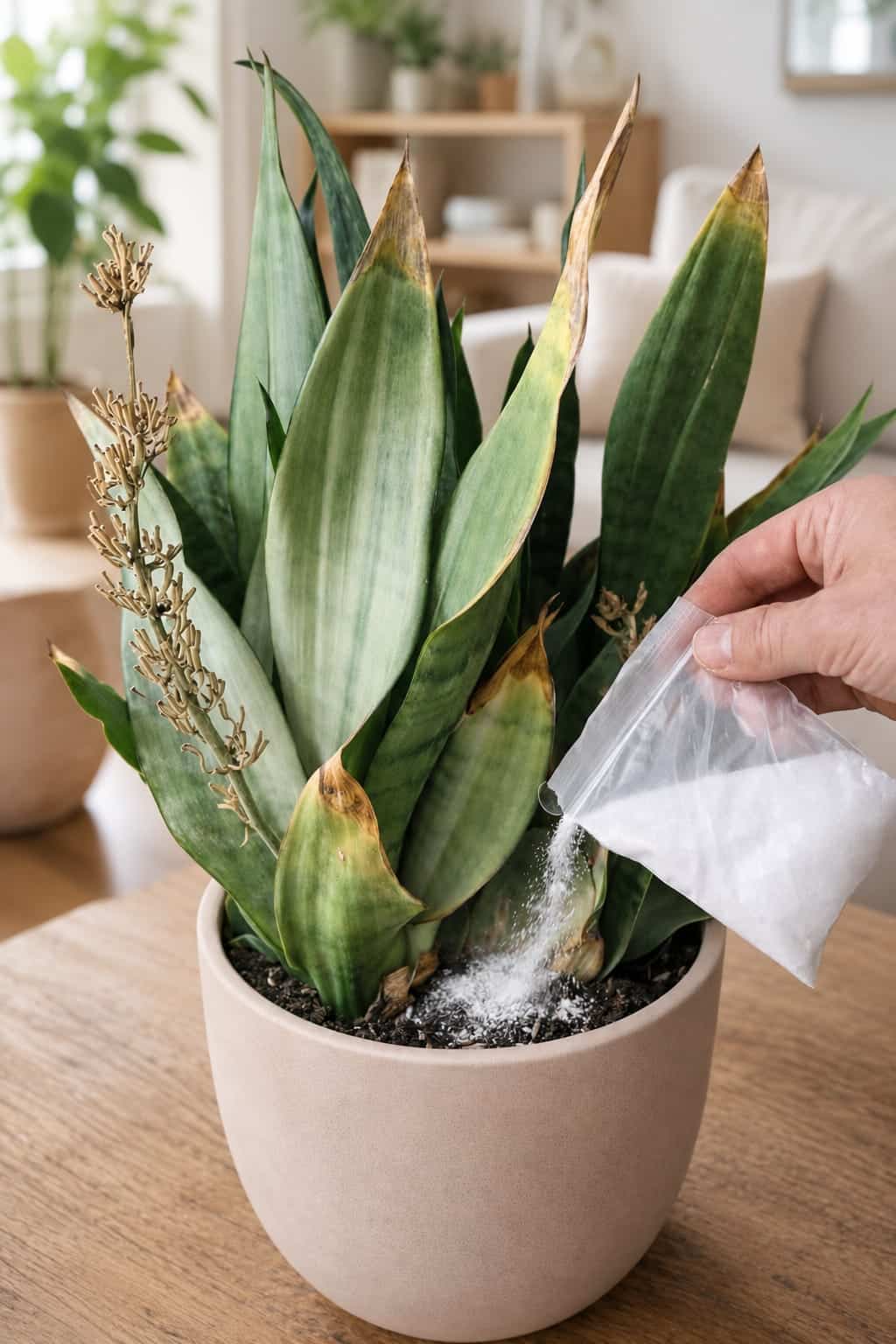
What to Do If You Already Added Baking Soda
If you already sprinkled baking soda into your snake plant pot, do not panic. The next step depends on how much was used.
If only a tiny amount was added to the surface, remove what you can with a spoon and return to normal care. Avoid adding more. Water only when the soil is dry.
If a heavy layer was added, remove as much powder and affected topsoil as possible. Scoop gently so you do not damage the roots. Replace the removed layer with fresh, dry, fast-draining soil.
If the baking soda has already dissolved into the pot, and the pot has drainage holes, you may flush the soil with plain water. Let water run through the pot and drain completely. However, do this only if the soil is not already soggy and the plant is not showing signs of rot.
If the pot has no drainage or the plant is already stressed, repotting into fresh soil may be safer than flushing.
When Repotting Is Better Than Adding Any Powder
Repotting is the better solution when the soil is old, compacted, sour-smelling, or staying wet too long. A snake plant cannot thrive in dense, damp soil. It needs air around the roots.
If the plant has been in the same pot for years, the soil may have broken down. Old potting mix can become compacted and hold too much moisture. This makes root rot more likely.
Repotting gives the plant a fresh start. Use a cactus or succulent mix, or amend regular potting soil with perlite, pumice, coarse sand, or small bark chips. The mix should drain quickly and dry well between waterings.
A fresh, breathable root environment will help more than baking soda, cinnamon, milk, aspirin, or any other kitchen trick.
How to Inspect Snake Plant Roots
To inspect the roots, gently remove the snake plant from its pot. If the plant is crowded, squeeze the pot slightly or loosen the soil around the edges. Be careful not to snap healthy leaves.
Shake away some soil and look at the roots and rhizomes. Healthy roots are usually firm and pale to tan. Healthy rhizomes are thick and firm. Rotten roots are soft, black, brown, mushy, or hollow. Rotten rhizomes may smell bad and feel squishy.
Cut away all rotten tissue using clean scissors or a clean knife. Sterilize the tool before cutting. Keep only firm healthy parts.
After trimming, let the cuts dry and callus before repotting. This helps reduce the chance of rot returning.
Can Baking Soda Be Used on Cut Snake Plant Tissue?
Baking soda is not the best choice for fresh cuts. Because it contains sodium and is alkaline, it may irritate plant tissue if used too strongly. For snake plant cuts, it is usually safer to simply let the cut dry naturally.
Some plant owners use a tiny amount of cinnamon on cut surfaces because cinnamon is dry and commonly used to help wounds stay dry. Even cinnamon should be used lightly. The most important step is still allowing the cut to callus before watering.
If you have trimmed rot from a snake plant, let the healthy pieces sit in a dry, bright, indirect-light location for a day or more before repotting. Thick rhizomes may need longer.
Drying time is more important than powder.
The Best Soil Mix for Snake Plant Recovery
A recovering snake plant needs fast-draining soil. A cactus or succulent mix is a good choice. If the mix still feels too fine or moisture-retentive, add extra perlite, pumice, coarse sand, or small bark pieces.
The soil should feel loose and gritty, not dense and muddy. When watered, it should allow excess water to drain out quickly.
Avoid heavy garden soil in indoor pots. Garden soil can compact, hold too much water, and introduce pests. Regular potting soil alone may also be too moisture-retentive unless amended.
The better the soil drains, the easier it is to keep the snake plant healthy.
Choosing the Right Pot for a Snake Plant
A snake plant pot must have drainage holes. This is not optional. Without drainage, water collects at the bottom of the pot and can rot the roots even if the top of the soil looks dry.
Terracotta is a good choice because it allows moisture to evaporate through the pot walls. Plastic and glazed ceramic pots can also work, but they hold moisture longer, so watering must be less frequent.
The pot should not be too large. A huge pot holds extra soil, and extra soil holds extra water. Snake plants usually prefer a snug container with enough room for roots but not excessive empty soil.
If your plant is in a decorative pot without drainage, use it as a cover pot only. Keep the snake plant in a nursery pot with holes inside it, and remove it for watering.
How to Water a Snake Plant Correctly
Water only when the soil is dry. This is the most important rule. Depending on your home, this may be every two weeks, every three weeks, or even less often.
Check deeper than the surface. The top may be dry while the lower soil is still damp. Use your finger, a wooden stick, or a moisture meter. If there is moisture below the surface, wait.
When you water, water thoroughly and let all excess drain away. Then leave the plant alone until the soil dries again. Do not give small daily sips. Frequent light watering can keep the surface damp and encourage pests.
In winter, water much less often. Snake plants grow slowly in low light and cooler conditions, so they use less moisture.
Why Light Matters for Recovery
Snake plants can tolerate low light, but they recover and grow better in bright indirect light. If a plant is stressed, it needs energy to repair and produce new growth. That energy comes from light.
A bright location near a window is ideal. Morning sun is usually fine. Harsh afternoon sun may burn leaves if the plant is not acclimated, so introduce stronger light gradually.
Low light also keeps soil wet longer. This increases the risk of overwatering. If your snake plant is in a dim corner, water less often and consider moving it closer to indirect light.
No powder can replace proper light.
Should You Fertilize a Stressed Snake Plant?
Do not fertilize a snake plant that is stressed from rot, wet soil, or root damage. Damaged roots can be burned by fertilizer. The plant needs recovery first.
Once the plant is stable and actively growing, you can feed lightly during spring or summer. Use a cactus or succulent fertilizer at a diluted strength. Once or twice during the growing season is usually enough.
Snake plants are not heavy feeders. Too much fertilizer can cause brown tips, salt buildup, and weak growth.
Baking soda is not fertilizer. It should never be used as a feeding method.
How to Trim Brown Snake Plant Tips
Brown tips will not turn green again. If they bother you, you can trim them. Use clean scissors and cut along the natural point of the leaf so the shape still looks neat.
Do not cut too far into healthy green tissue if you can avoid it. A thin brown edge may remain, but the leaf will look cleaner.
If a whole leaf is badly damaged, soft, or yellowing from the base, it may be better to remove the entire leaf. Cut it near the soil line with a clean tool.
After trimming, correct the cause of the damage so new leaves stay healthier.
What to Do With Old Snake Plant Flower Stalks
Snake plants can bloom under certain conditions, producing tall stalks with small fragrant flowers. After flowering, the stalk dries and becomes brown. This is normal.
Old flower stalks can be removed once they are dry. Use clean scissors and cut the stalk near the base. Removing old stalks keeps the plant tidy and prevents dry debris from collecting in the pot.
A dried flower stalk does not mean the plant is dying. It simply means the flowering cycle is finished.
After blooming, continue normal care. Do not overwater or overfeed in an attempt to force more flowers.
Can Baking Soda Treat Fungus on Snake Plant Leaves?
Baking soda sprays are sometimes used in gardening, but snake plant leaf problems should be diagnosed before spraying anything. Brown patches may be sunburn, cold damage, rot, pest damage, or physical injury—not fungus.
If you spray baking soda on leaves too strongly, it can leave residue or damage tissue. It should not be used on a plant already stressed by drought, sun, or root issues.
For snake plant leaves, it is usually better to remove badly damaged tissue, improve airflow, and correct watering. If a true disease is present and spreading, use a proper plant-safe treatment designed for that issue.
Do not rely on baking soda as a universal disease cure.
Can Baking Soda Kill Fungus Gnats?
Baking soda is not a reliable fungus gnat treatment. Fungus gnats usually appear when soil stays too moist. Snake plants should not be kept damp enough for gnats to thrive.
To reduce fungus gnats, let the soil dry thoroughly between waterings. Remove decaying leaves from the soil surface. Use sticky traps to catch adults. If the infestation is serious, use a targeted treatment such as beneficial nematodes or a suitable houseplant product.
Sprinkling baking soda on the soil does not solve the moisture conditions that allow gnats to breed.
Dryer soil and better drainage are the real fixes.
Can Baking Soda Remove Soil Odor?
Baking soda may reduce odor temporarily, but odor in a plant pot usually means something is wrong. Healthy snake plant soil should not smell sour or rotten.
A bad smell usually indicates wet soil, decaying roots, old organic matter, or poor drainage. Covering the smell does not solve the problem. The plant may continue to rot below the surface.
If the pot smells bad, remove the plant and inspect the roots. Replace old soil with fresh fast-draining mix. Make sure the pot drains properly.
A fresh, dry, airy potting mix should solve odor better than baking soda.
How to Encourage New Snake Plant Growth
New snake plant shoots grow from underground rhizomes. These shoots appear when the plant has enough energy, healthy roots, and suitable conditions.
To encourage new growth, give the plant bright indirect light. Use a snug pot with drainage. Water only when the soil is dry. Feed lightly during the growing season if the plant is healthy.
Do not overwater to force growth. Wet soil can rot the rhizomes that produce new shoots.
Growth may be slow, especially indoors. Patience is part of snake plant care. A healthy plant may remain still for months and then suddenly produce new shoots during warmer, brighter conditions.
A Safe Recovery Plan for the Plant in the Image
For a snake plant with browning tips and powder being added, the best recovery plan starts by stopping the powder application. Remove excess baking soda from the soil surface.
Check the soil moisture. If it is wet, do not water. Let it dry and monitor the leaves. If leaves are soft near the base, inspect the roots.
Trim dry brown tips if desired. Remove old flower stalks. If the soil is compacted, old, or sour-smelling, repot into fresh succulent mix.
Place the plant in bright indirect light. Water only when the soil is dry. Avoid fertilizer until the plant is stable.
This simple plan will help more than repeated baking soda use.
🌿 Remember: The best way to save a stressed snake plant is not with baking soda. It’s with fast-draining soil, a pot that drains, bright indirect light, careful watering, and healthy roots.
Common Mistakes to Avoid
- Using baking soda as fertilizer – it does not feed snake plants.
- Sprinkling a heavy layer directly onto the soil – can create salt buildup and stress roots.
- Using baking soda to hide rot smell – bad odor means the roots or soil need inspection.
- Applying baking soda to wet soil – a wet snake plant pot needs drying, not more treatment.
- Ignoring drainage – a snake plant pot must have drainage holes.
- Expecting brown tips to turn green – damaged tissue does not reverse.
- Treating every problem with a kitchen ingredient before checking roots, soil, and light.
Frequently Asked Questions
Is baking soda good for snake plants?
Baking soda is usually not necessary for snake plants. It is not fertilizer and can stress roots if used too heavily. Proper watering, drainage, and soil are much more important.
Can I sprinkle baking soda on snake plant soil?
It is safer not to sprinkle dry baking soda directly into the pot. If too much is used, it can create mineral buildup and affect the root zone.
Can baking soda fix brown tips?
No. Brown tips will not turn green again. Trim them if desired and correct the cause, such as water stress, mineral buildup, cold drafts, or physical damage.
Can baking soda stop root rot?
No. Root rot must be handled by removing rotten tissue, letting healthy parts dry, and repotting into fresh fast-draining soil.
What should I do if I already added baking soda?
Remove excess powder from the soil surface. If a lot dissolved into the pot, consider flushing with plain water if the pot drains well, or repotting into fresh soil if the plant is stressed.
What is better than baking soda for snake plant recovery?
Fast-draining soil, a pot with drainage, bright indirect light, careful watering, and root inspection are much better recovery steps.
Can baking soda kill fungus gnats?
No, not reliably. Fungus gnats are controlled by drying the soil, improving drainage, removing decaying matter, and using targeted treatments if needed.
Should I water after adding baking soda?
Do not water just because baking soda was added. Water only when the soil is dry. If too much baking soda was applied, remove it first.
🌿 A stressed snake plant recovers with good care, not with kitchen powders. Healthy roots, fast-draining soil, proper light, and careful watering are the real keys. Baking soda is rarely needed and should be used with great caution.